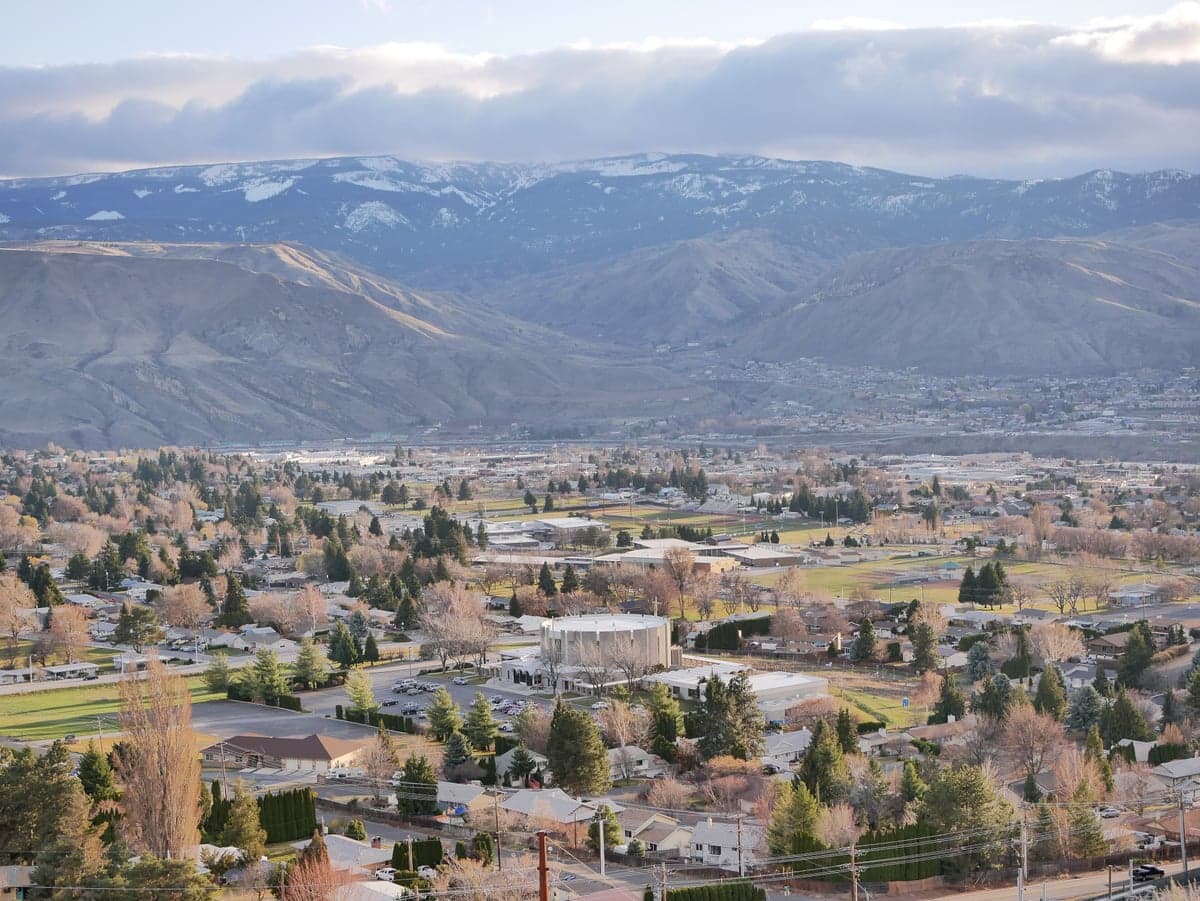
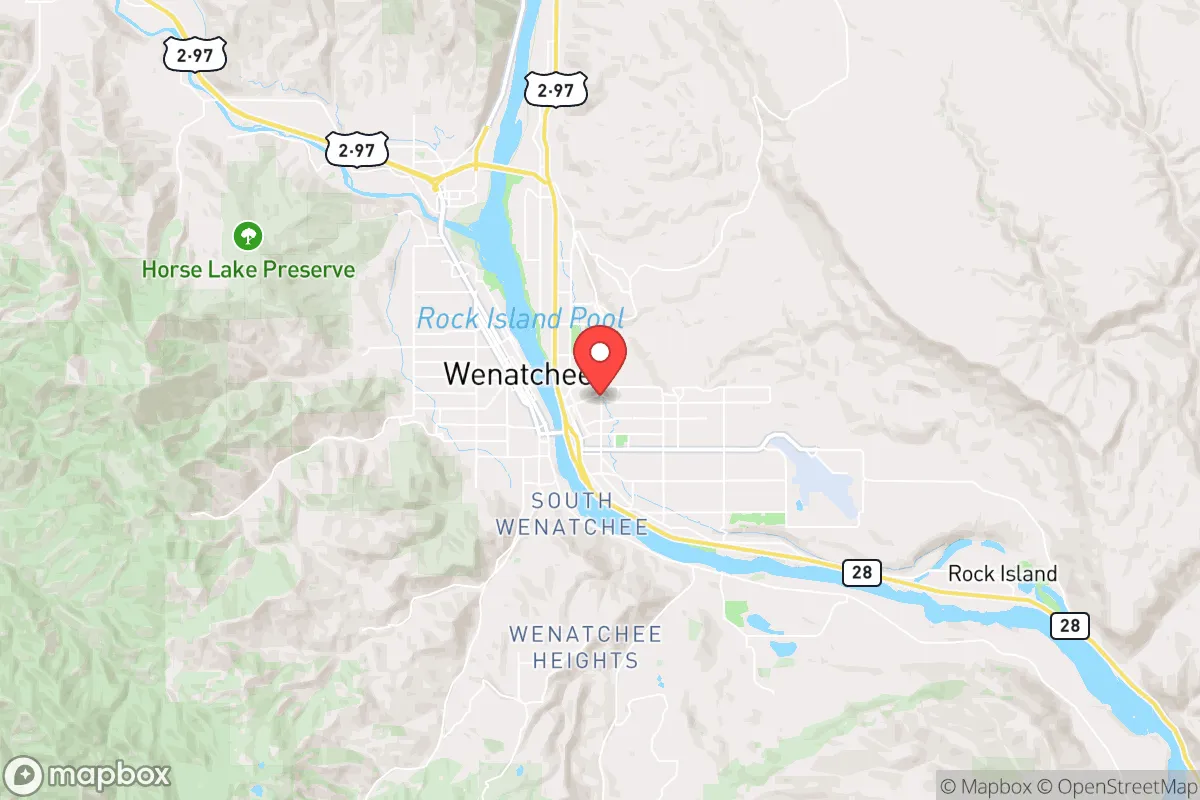
Photo: Wikipedia
Personal Sovereignty in East Wenatchee, WA
Viable for self-reliance. Generally workable, though some barriers may limit total independence.
What does Personal Sovereignty tell us?
Personal Sovereignty measures your capacity for self-reliance and independence with minimal government friction. Higher scores mean fewer barriers between you and the way you want to live... but it assumes you have the space you need and good neighbors.
What does this tell us?
Personal Sovereignty measures your capacity for self-reliance and independence with minimal government friction. Higher scores mean fewer barriers between you and the way you want to live... but it assumes you have the space you need and good neighbors.
State Policy
Energy independence: Importer (55% of energy produced in-state)
Personal Liberty
Homesteading

Personal Liberty Analysis
East Wenatchee, Washington, offers a notably high degree of personal sovereignty relative to the state’s urban centers, anchored by a light-touch regulatory environment in Douglas County and a tax structure that avoids both state income and capital gains taxes. While Washington State imposes some constraints—particularly in areas like firearm magazine capacity and energy codes—the local culture and county-level governance in East Wenatchee lean heavily toward self-reliance, with minimal zoning friction for homesteading and a strong presumption of parental rights. For individuals and families who prioritize autonomy, this area represents a pragmatic balance: state-level limitations exist, but local enforcement is often lenient, and the cost of living—especially housing and land—remains accessible enough to make independent living feasible.
Tax burden and regulatory posture in Douglas County
East Wenatchee benefits from one of the most taxpayer-friendly environments in the Pacific Northwest. Washington has no state income tax, no capital gains tax (a recent state-level capital gains tax was struck down by the state Supreme Court in 2023, and no replacement has been enacted), and no tax on Social Security or retirement distributions. The primary revenue sources are a state sales tax of 6.5% and a local sales tax in Douglas County that brings the total to approximately 8.4%—moderate by national standards. Property taxes are relatively low: the effective rate in Douglas County hovers around 0.85% of assessed value, well below the national average of 1.1%. For a $400,000 home, annual property taxes run roughly $3,400. The regulatory posture at the county level is notably light. Douglas County has no countywide building code for unincorporated areas (though East Wenatchee city limits follow the state’s residential energy code), and the county’s planning department is known for straightforward, low-friction permitting for accessory dwelling units, barns, and workshops. There is no county-level business license requirement for most home-based enterprises, and the city’s zoning code allows home occupations with minimal paperwork. The overall message: the tax burden is low, and the regulatory touch is light, especially compared to King County or even neighboring Chelan County.
Self-defense and gun law specifics in Washington State
Washington is a “shall-issue” state for concealed pistol licenses (CPLs), meaning that if you pass a background check and complete a training course, the county sheriff must issue the permit. Douglas County’s sheriff’s office processes CPL applications efficiently, typically within 30 days. However, Washington State law imposes several restrictions that affect self-defense options. The state bans the manufacture, sale, and transfer of magazines capable of holding more than 10 rounds (enacted in 2022), though possession of pre-ban magazines is legal. Open carry is legal without a permit, but it is restricted in certain public places like courthouses and schools. There is no state preemption for firearms laws, meaning cities like Seattle can impose stricter rules—but East Wenatchee and Douglas County have not enacted any additional local restrictions. Stand-your-ground laws do not exist in Washington; the state follows a “duty to retreat” standard in public spaces, though the Castle Doctrine applies inside one’s home and vehicle. For the self-defense-minded reader, the key takeaway is that while state-level magazine restrictions and duty-to-retreat rules are real constraints, local enforcement in East Wenatchee is generally pro-Second Amendment, and the sheriff’s office is known for issuing CPLs without unnecessary delay. Gun ranges and training facilities are available within a 20-minute drive, including the Wenatchee Rifle and Pistol Club.
Self-reliance and homesteading viability: lot sizes, zoning, and off-grid feasibility
East Wenatchee and the surrounding Douglas County area offer strong potential for self-reliant living, particularly for those seeking acreage. Within city limits, minimum lot sizes are typically 6,000 to 7,000 square feet for single-family homes, but many neighborhoods have larger lots—up to half an acre—especially in the newer subdivisions on the plateau. Outside city limits, Douglas County allows lot splits down to 2.5 acres without a full subdivision process, and many parcels of 5 to 20 acres are available within a 15-minute drive of downtown. Zoning in unincorporated areas is permissive: raising chickens, goats, and up to two horses is allowed on lots of one acre or more without a special permit. Beekeeping is allowed on any lot size. Off-grid feasibility is mixed. Washington State requires new homes to be connected to the electrical grid if grid power is available within 300 feet—a rule that effectively prevents true off-grid solar in most suburban and exurban parcels. However, in more remote areas of Douglas County (e.g., near Rock Island or the Badger Mountain area), properties exist where grid power is not available, and off-grid solar with battery storage is permitted. Rainwater collection is legal and encouraged for outdoor use, but potable water must come from a well or a public system. Wells are common on parcels of 2.5 acres or more, and drilling costs in the area run $15–$25 per foot. Composting toilets are allowed with a county permit, and graywater systems for irrigation are permitted under state guidelines. For the homesteader, the sweet spot is a 5+ acre parcel outside city limits, where zoning is minimal, well water is feasible, and the county’s attitude is “live and let live.”
Personal liberties: parental rights, medical autonomy, speech, and property
Washington State has a mixed record on personal liberties, but East Wenatchee’s local culture and Douglas County governance tilt strongly toward individual freedom. Parental rights are broadly protected: Washington law gives parents the right to direct their children’s education, including homeschooling and private school enrollment, without excessive state oversight. The state requires a simple annual declaration of intent for homeschoolers, and there are no mandated curriculum approvals or home visits. Medical autonomy is more constrained at the state level. Washington has a universal vaccine mandate for school attendance (with medical and philosophical exemptions available, though the philosophical exemption was removed for the MMR vaccine in 2019). However, Douglas County’s health officer has historically taken a less aggressive stance than counterparts in King County, and local enforcement of vaccine mandates in schools has been uneven. Regarding speech, Washington has no state-level hate speech law that criminalizes protected speech, and the state’s public records act is robust, ensuring government transparency. Property rights are strong in Douglas County: there is no countywide rent control, no inclusionary zoning mandates, and no short-term rental bans (though East Wenatchee city limits require a business license for Airbnb rentals). The county’s comprehensive plan is updated every eight years and has historically favored low-density development and minimal land-use restrictions. For the reader who values the right to make decisions for their family without government interference, East Wenatchee offers a local environment that respects those choices, even when state law is more restrictive.
Overall, East Wenatchee presents a compelling sovereignty profile for the conservative-leaning individual or family. The combination of no state income tax, low property taxes, a permissive county zoning code, and a pro-self-defense sheriff’s office creates a foundation for personal independence that is rare in Washington State. The trade-offs are real—state-level magazine restrictions, duty-to-retreat rules, and vaccine mandates for school attendance—but these are largely mitigated by local enforcement patterns and the ability to live outside city limits. Compared to the Seattle metro area, where regulatory friction is high and property costs are prohibitive, East Wenatchee offers a tangible alternative: a place where you can own land, keep firearms, run a home business, and raise your family with minimal government intrusion. For the reader who wants the benefits of Washington’s natural beauty and economic opportunity without surrendering personal autonomy, this area is one of the strongest options in the state.

* Values derived from national, state, county, city and local statistics and may differ in a specific area. Last updated: 2026-08-15T00:47:05.000Z
Narrative content on this page is AI-generated and may contain mistakes. Verify any details that matter before acting on them.
ReloMaps may earn a commission from affiliate links at no extra cost to you.

