Photo: Wikipedia
Quality of Life in Easton, PA
Above-average quality of iife. The area offers a reasonable cost of living, decent mobility, and a mix of neighborhood amenities.
What does Quality of Life tell us?
Quality of Life blends cost of living, nearby amenities, socioeconomic signals, and neighborhood character. City-level scores represent the whole municipality; individual neighborhoods can differ.
What does this tell us?
Quality of Life blends cost of living, nearby amenities, socioeconomic signals, and neighborhood character. City-level scores represent the whole municipality; individual neighborhoods can differ.
Cost of Living
13% below national average
The Real Cost of Living in Easton, PA for 2026
| Tier | Individual | Family (4) |
|---|---|---|
| Survival | $20k | $37k |
| Comfortable | $33k | $48k |
| Luxury | $109k+ | $168k+ |
| Elite (Top 5%) | $128k+ | $198k+ |
132%
The Area Signal
A metric tracking the socioeconomic signals of the area.
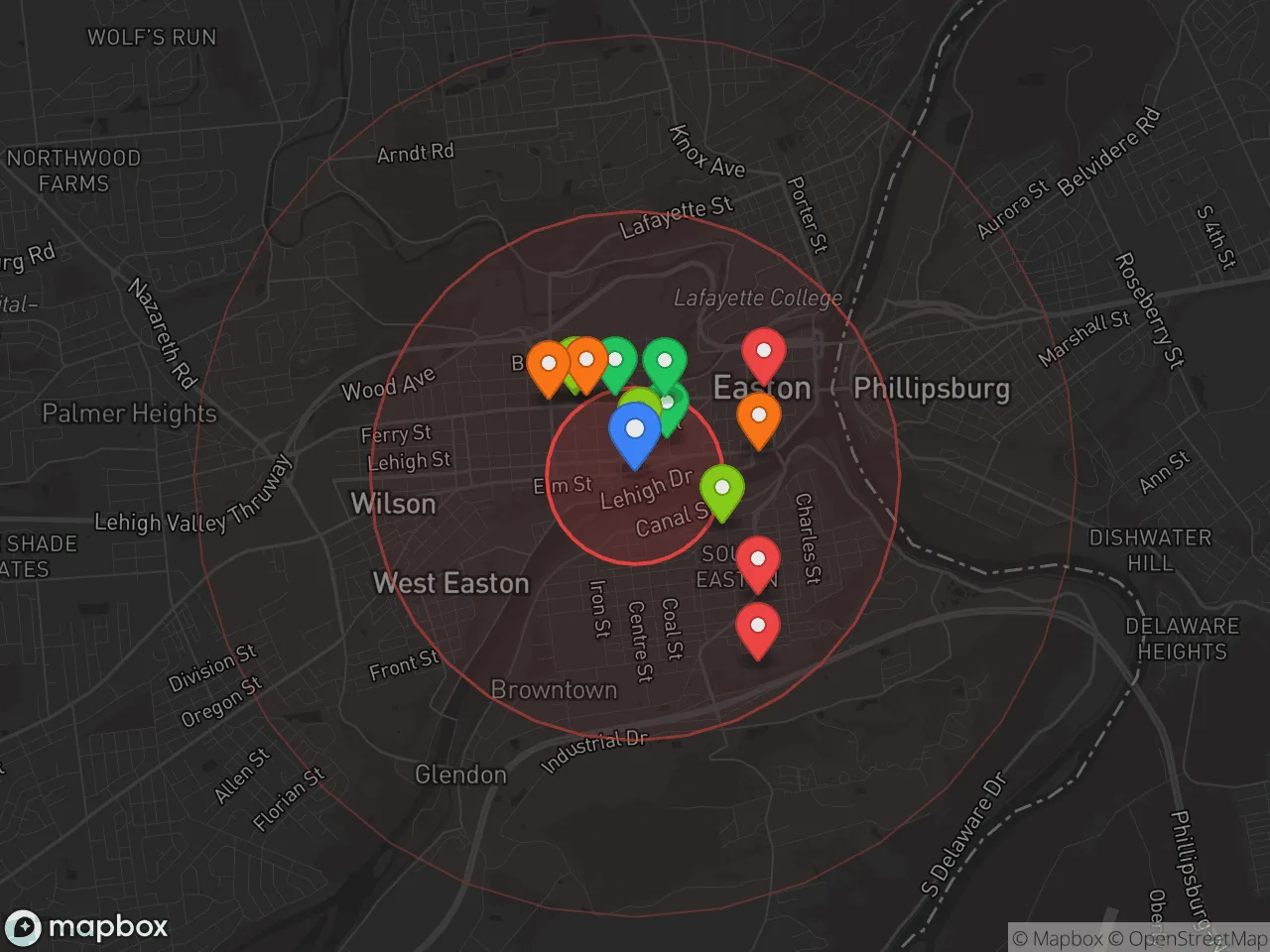
Hobbies
Explore the areaGroceries
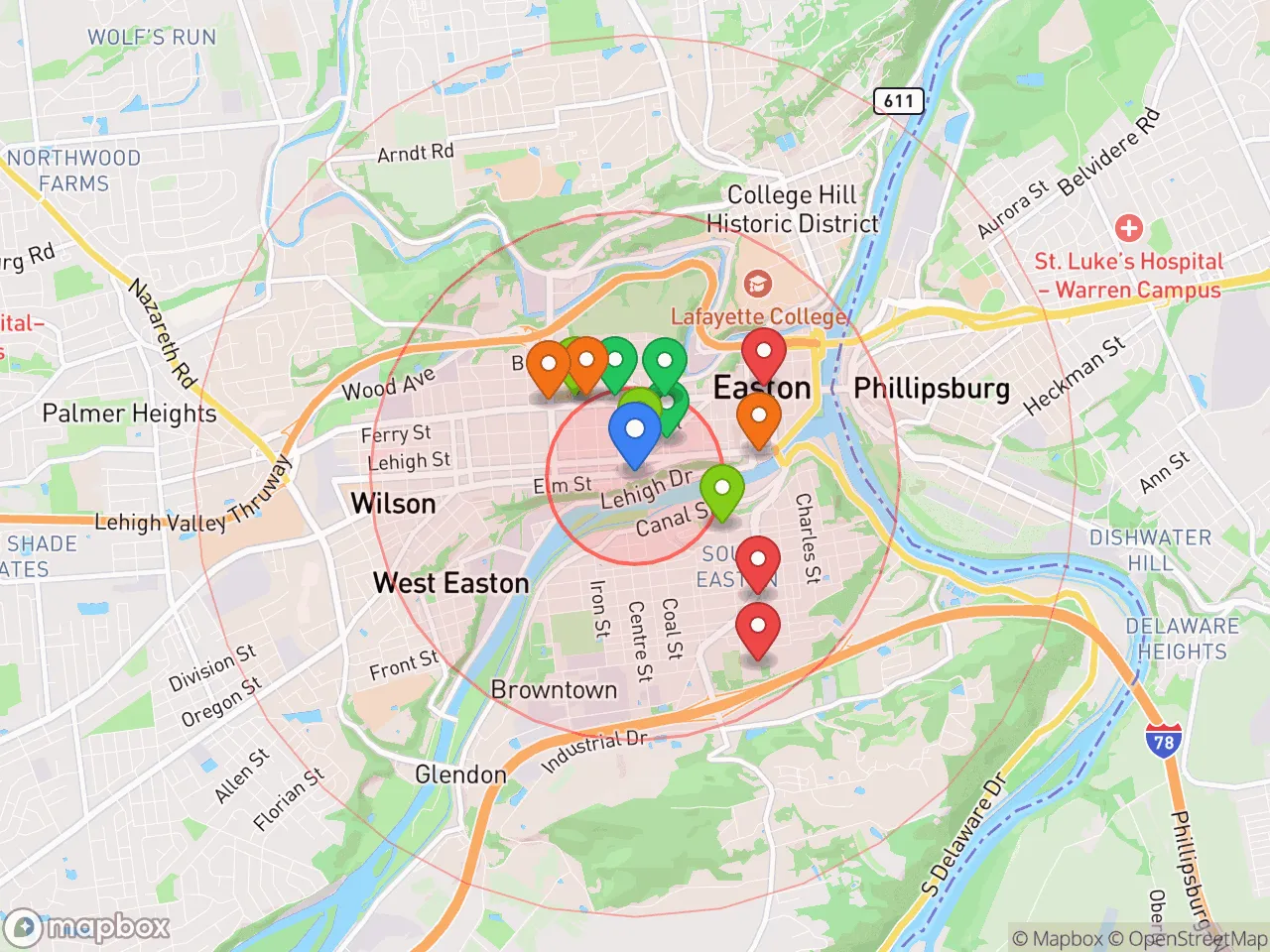
8 within 10 miles
Gas
20 within 10 miles
Hospital
17 within 20 miles
Airport
EWR — Newark Liberty International
Post Office
USPS — Easton, PA
Critical Amenities
Quality-of-Life Analysis
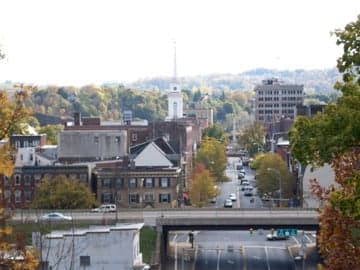
Easton, Pennsylvania, offers a quality of life defined by historic character and relative affordability, attracting a mix of young professionals, families, and long-term residents seeking value near the New Jersey border. With a cost of living index of 87 (13% below the U.S. average), the city provides a financial buffer uncommon in the broader Lehigh Valley, drawing people who prioritize walkable neighborhoods and cultural access over suburban sprawl. The population skews younger and more diverse than surrounding towns, with a median age of 33.5 and a growing creative class anchored by Lafayette College and the city’s revitalized downtown arts scene.
How housing costs and daily expenses compare to Bethlehem and Phillipsburg
Easton’s affordability stands out sharply against nearby cities. The median home value of $169,200 is roughly 35% lower than Bethlehem’s median and less than half the typical price in Phillipsburg, New Jersey, just across the Delaware River. Median rent sits at $1,223, which undercuts the national average by about 15% and offers a realistic entry point for renters who would face $1,600+ in comparable New Jersey towns. The average commute of 28 minutes reflects a practical trade-off: residents gain lower housing costs while traveling to higher-wage jobs in Allentown (20 minutes), Bethlehem (15 minutes), or even northern New Jersey (45 minutes via I-78). Property taxes in Northampton County average 1.8% of assessed value, slightly above the state median but offset by the lower home prices. Utility costs run about 5% below the national average, and grocery prices are roughly 3% lower, making everyday expenses manageable for households earning the area’s median income of $52,000.
What daily life is like for families and professionals in Easton
Daily life in Easton revolves around a compact, walkable downtown anchored by Centre Square, where the Easton Farmers’ Market (the oldest continuous open-air market in the U.S.) operates year-round. The Easton Area School District serves roughly 8,500 students across 11 schools, with an 85% graduation rate and a student-teacher ratio of 14:1; for higher education, Lafayette College provides cultural programming, public lectures, and Division I athletics that spill into the community. The city’s 11 parks, including the 50-acre Hugh Moore Park along the Lehigh Canal, offer hiking, kayaking, and rail-trail access without leaving city limits. For daily errands, residents rely on a mix of national chains (Weis Markets, Walmart) and local shops along Northampton Street, while the Palmer Park Mall provides retail 10 minutes north. The arts scene is a defining feature: the State Theatre Center for the Arts hosts 200+ performances annually, and the Allentown Art Museum is a 15-minute drive. Commuters benefit from LANTA bus service connecting to Bethlehem and Allentown, though most residents drive given the 28-minute average commute. Healthcare access is solid, with St. Luke’s Anderson Campus and Easton Hospital both within 10 minutes.
Easton is best suited for those who value historic walkability, cultural density, and lower housing costs over suburban amenities or top-tier school rankings. Young professionals and remote workers will appreciate the coffee shops, co-working spaces, and 90-minute train access to New York City via the Trans-Bridge Lines bus to Port Authority. Families should weigh the school district’s mixed state rankings against the affordability of larger homes (many Victorians under $250,000). Retirees on fixed incomes will find the low COL and walkable downtown appealing, though the hilly terrain and older housing stock may pose challenges. For anyone priced out of Bethlehem or New Jersey, Easton offers a genuine urban experience at a fraction of the cost—provided they can tolerate the longer commute and more modest school outcomes.

Crime in Easton, PA
Lower crime rates than 82% of comparable U.S. locations.
Violent CrimeViolent Crime Analysis
Property CrimeProperty Crime Analysis
Crime Analysis
Easton, Pennsylvania, presents a mixed safety profile that demands careful consideration from potential residents. While the city's violent crime rate of 167.4 incidents per 100,000 residents is notably lower than the national average, its property crime rate of 672.7 per 100,000 exceeds both state and national benchmarks. This disparity, combined with the influence of progressive judicial policies in the broader Lehigh Valley region, creates a safety environment where property-related risks are a primary concern for daily life.
Crime in context
Easton's violent crime rate sits well below the U.S. average of roughly 380 per 100,000, placing it in a safer tier for serious offenses like homicide and aggravated assault. However, the property crime rate is approximately 30% higher than the Pennsylvania state average and about 15% above the national figure. This pattern is common in small cities adjacent to major metro areas like the Lehigh Valley, where population density and transient traffic elevate opportunities for theft, burglary, and vehicle break-ins. The presence of progressive district attorneys and judges in Northampton County, who often prioritize diversion programs and reduced sentencing for non-violent offenders, has been cited by local law enforcement as a factor contributing to repeat property crime offenses and a perception of leniency that undermines deterrence.
What residents experience
For those living in Easton, the most tangible safety issue is property crime. Residents report frequent incidents of package theft, unlocked vehicle entries, and occasional garage burglaries, particularly in neighborhoods near the downtown core and along major transit corridors. Violent crime is less common but tends to be concentrated in specific areas, often tied to domestic disputes or drug-related activity rather than random attacks. The city's police department has implemented community policing initiatives and increased patrols in high-traffic zones, but the broader judicial environment—where progressive policies emphasize rehabilitation over incarceration—means that many property offenders face minimal consequences, leading to a revolving-door effect that frustrates victims and erodes public confidence in the justice system.
Neighborhood-level variation is significant. The College Hill and West Ward areas generally experience lower crime rates, benefiting from stronger community watch programs and higher property values. In contrast, the downtown South Side and parts of the Easton Terrace neighborhood report higher incidences of both property and violent crime. Prospective residents should research block-by-block data and consider proximity to well-lit, actively patrolled areas. While Easton is not a high-violence city by national standards, its property crime problem—exacerbated by progressive judicial policies—demands vigilance, particularly regarding home security and vehicle safety.
* Values derived from national, state, county, city and local statistics and may differ in a specific area. Last updated: 2026-05-01T02:56:48.000Z
Narrative content on this page is AI-generated and may contain mistakes. Verify any details that matter before acting on them.
ReloMaps may earn a commission from affiliate links at no extra cost to you.

