Photo: Wikipedia
Personal Sovereignty in Eau Claire, WI
Moderate friction. Expect trade-offs in some aspect of personal liberty and independence.
What does Personal Sovereignty tell us?
Personal Sovereignty measures your capacity for self-reliance and independence with minimal government friction. Higher scores mean fewer barriers between you and the way you want to live... but it assumes you have the space you need and good neighbors.
What does this tell us?
Personal Sovereignty measures your capacity for self-reliance and independence with minimal government friction. Higher scores mean fewer barriers between you and the way you want to live... but it assumes you have the space you need and good neighbors.
State Policy
Energy independence: Importer (15% of energy produced in-state)
Personal Liberty
Homesteading

Personal Liberty Analysis
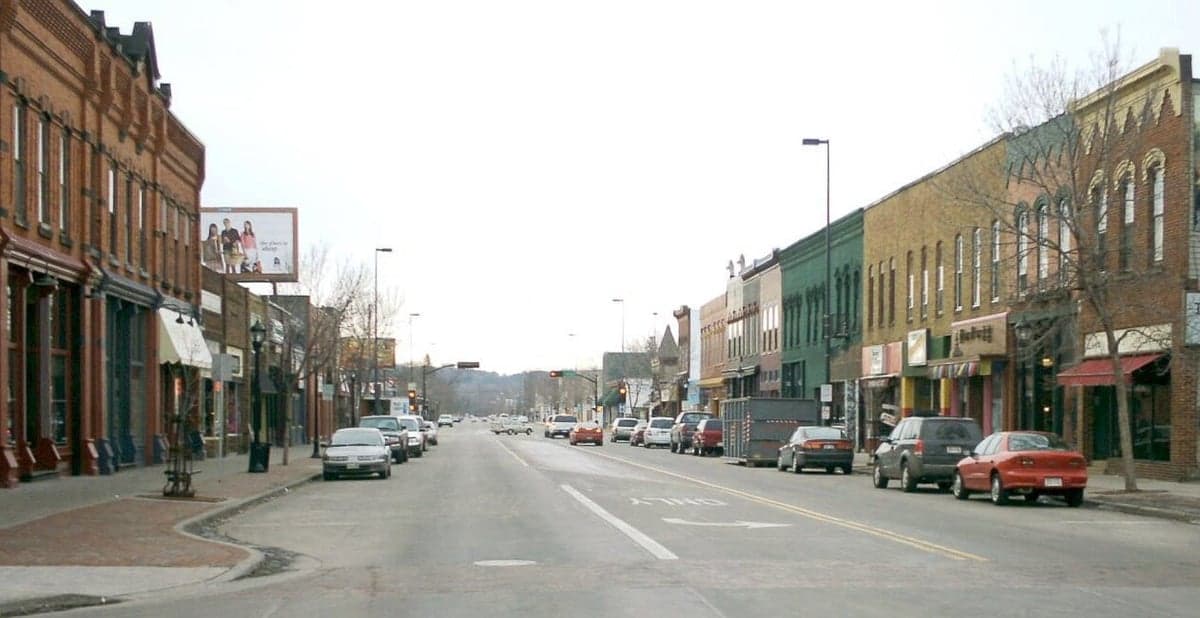
Eau Claire, Wisconsin, offers a mixed bag for those prioritizing personal sovereignty, with the state's generally permissive gun laws and right-to-work status balanced against a moderately high tax burden and a regulatory environment that can feel intrusive to a survivalist or prepper mindset. While the city itself leans progressive, the surrounding Chippewa Valley retains a strong independent streak, and the legal framework in Wisconsin provides more breathing room than neighboring Minnesota or Illinois. For a single individual or family looking to maintain autonomy over their life, health, and property, Eau Claire is a workable base—but only if you understand where the state's thumb presses hardest.
Tax burden and regulatory posture in Wisconsin
Wisconsin's tax climate is a significant consideration for anyone focused on financial self-reliance. The state imposes a progressive income tax with rates ranging from 3.54% to 7.65%, and the top bracket kicks in at a relatively low $336,200 for married filers. Property taxes are among the highest in the nation—averaging roughly 1.73% of assessed home value statewide, with Eau Claire County slightly above that at about 1.8%. This means a $300,000 home carries an annual tax bill near $5,400, a real drag on savings and self-funded retirement. Sales tax is a modest 5.5% (5% state plus 0.5% county), but food and prescription drugs are exempt, which helps. On the regulatory front, Wisconsin is a right-to-work state, meaning you cannot be forced to join a union or pay dues as a condition of employment—a clear win for individual liberty. However, the state maintains a robust Department of Natural Resources (DNR) with broad authority over land use, water rights, and building permits, particularly near wetlands or waterways. For a prepper, this means any off-grid or homesteading project will require navigating local zoning and state environmental review, especially if you plan to drill a well or install a septic system. The regulatory posture is not as heavy as the West Coast, but it is far from the free-for-all of, say, rural Alaska.
Self-defense rights and gun law specifics in Eau Claire
Wisconsin is a shall-issue state for concealed carry, and Eau Claire County generally processes permits without undue delay. The state preempts local firearm ordinances, meaning Eau Claire city council cannot ban guns in most public places—a critical protection against local overreach. Open carry is legal without a permit for anyone 18 or older who can legally possess a firearm, though local law enforcement may still stop you if they receive a call. Stand-your-ground laws are in effect, with no duty to retreat in any place you have a legal right to be, which is a solid foundation for self-defense. Magazine capacity is unrestricted, and there is no state-level assault weapons ban. However, Wisconsin does require a background check for all firearm purchases from licensed dealers, and private sales between strangers are technically legal but carry risk if the buyer is a prohibited person. For a survivalist, the key limitation is that Wisconsin does not recognize permits from all states—only those with reciprocity agreements. If you travel frequently, check the current reciprocity map. Additionally, the state has a "red flag" law (extreme risk protection order) that allows law enforcement to petition a court to temporarily seize firearms from someone deemed a danger. This law has been used sparingly in Eau Claire County, but it remains a tool for potential government overreach that preppers should monitor.
Self-reliance and homesteading viability in the Chippewa Valley
For those seeking to grow food, raise animals, or live partially off-grid, Eau Claire's surrounding rural areas offer genuine opportunity, but the city itself is restrictive. Inside city limits, lot sizes average around 6,000 to 8,000 square feet, and zoning ordinances limit livestock to chickens (hens only, no roosters) and prohibit pigs, goats, or cattle. Backyard beekeeping is allowed with a permit, and vegetable gardens are unrestricted. The real potential lies in the townships within a 20-minute drive—places like Washington, Seymour, or Pleasant Valley—where 1- to 5-acre parcels are common and zoning is far more permissive. In unincorporated areas, you can keep horses, goats, and even a few head of cattle without special permits. Off-grid feasibility is moderate: the growing season is short (about 140 days), but the soil is fertile glacial till, and water tables are high enough that a shallow well (50-100 feet) is usually sufficient. Solar panels are legal and net metering is available through Xcel Energy, but the state does not have strong right-to-solar laws, so HOAs in newer subdivisions can restrict them. Rainwater collection is legal for non-potable uses, but the DNR regulates any pond or dam construction. For a prepper, the ideal move is to buy land in a rural township, build a pole barn or small cabin, and gradually develop self-sufficiency while keeping a job in Eau Claire.
Personal liberties: parental rights, medical autonomy, and property
Wisconsin has a mixed record on parental rights. The state requires parental consent for minors to receive an abortion, and parents have broad authority over their children's education, including the right to homeschool without a teaching license or state-approved curriculum. Homeschooling families must file an annual form with the Department of Public Instruction and provide 875 hours of instruction per year, but there is no standardized testing requirement. This is a strong plus for parents who want to control their children's worldview. On medical autonomy, Wisconsin is not a vaccine-mandate state for adults, but during the COVID-19 pandemic, the governor's emergency orders did impose temporary restrictions that many viewed as overreach. Currently, there is no state-level right-to-try law for experimental treatments, and the medical board has significant disciplinary power over alternative practitioners. Property rights are generally strong: Wisconsin is a "Dillon's Rule" state, meaning local governments have only the powers explicitly granted by the state, which limits municipal overreach on land use. However, the DNR's authority over wetlands and shorelines is extensive, and any construction near a lake or river requires a permit that can take months. For a survivalist, the biggest concern is the potential for future emergency orders that could restrict movement or commerce—Wisconsin's governor has broad emergency powers under state statute 323.10, which were used aggressively in 2020.
Overall, Eau Claire offers a moderate level of personal sovereignty compared to other regions in the Upper Midwest. It is significantly freer than Minnesota or Illinois, where gun laws are tighter and taxes are higher, but it falls short of the libertarian-leaning states like New Hampshire or Idaho. The tax burden is real, the DNR is a constant presence, and the city's progressive politics can feel at odds with a prepper's values. However, the surrounding rural townships, strong gun rights, and homeschooling freedom make it a viable option for those willing to navigate the bureaucracy. If you are a single individual or family looking to build a self-reliant life with access to decent infrastructure and a like-minded community, Eau Claire is worth a serious look—just keep your land outside the city limits and your paperwork in order.

* Values derived from national, state, county, city and local statistics and may differ in a specific area. Last updated: 2026-04-21T10:10:02.000Z
Narrative content on this page is AI-generated and may contain mistakes. Verify any details that matter before acting on them.
ReloMaps may earn a commission from affiliate links at no extra cost to you.

