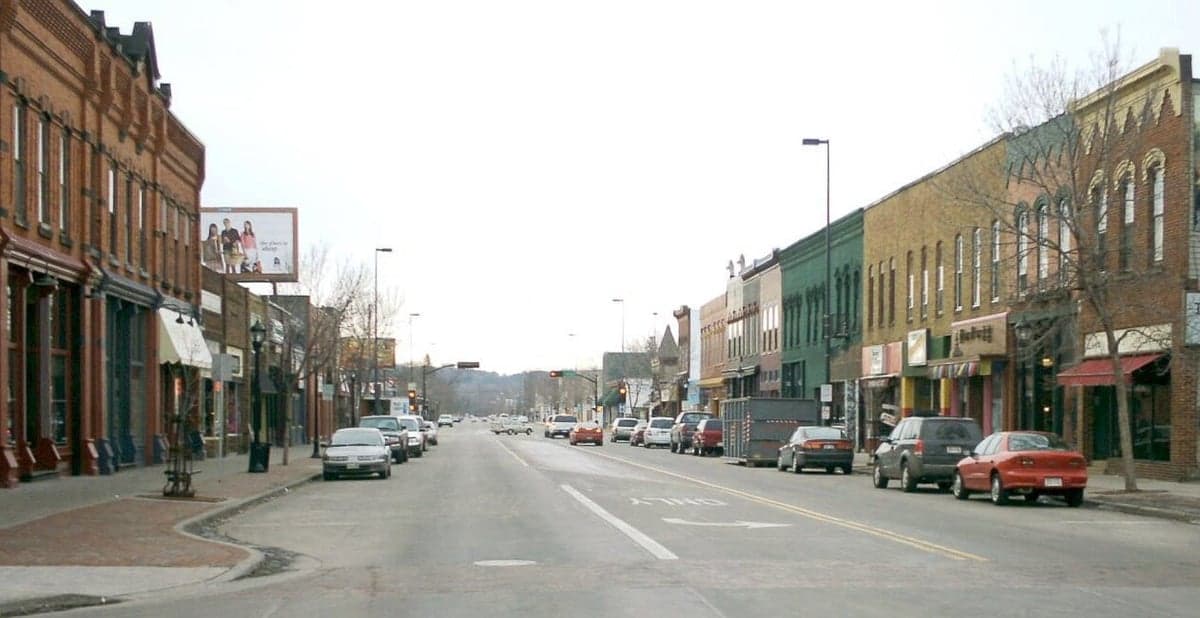
Photo: Wikipedia
Political ClimatePolitical Climate in Eau Claire, WI
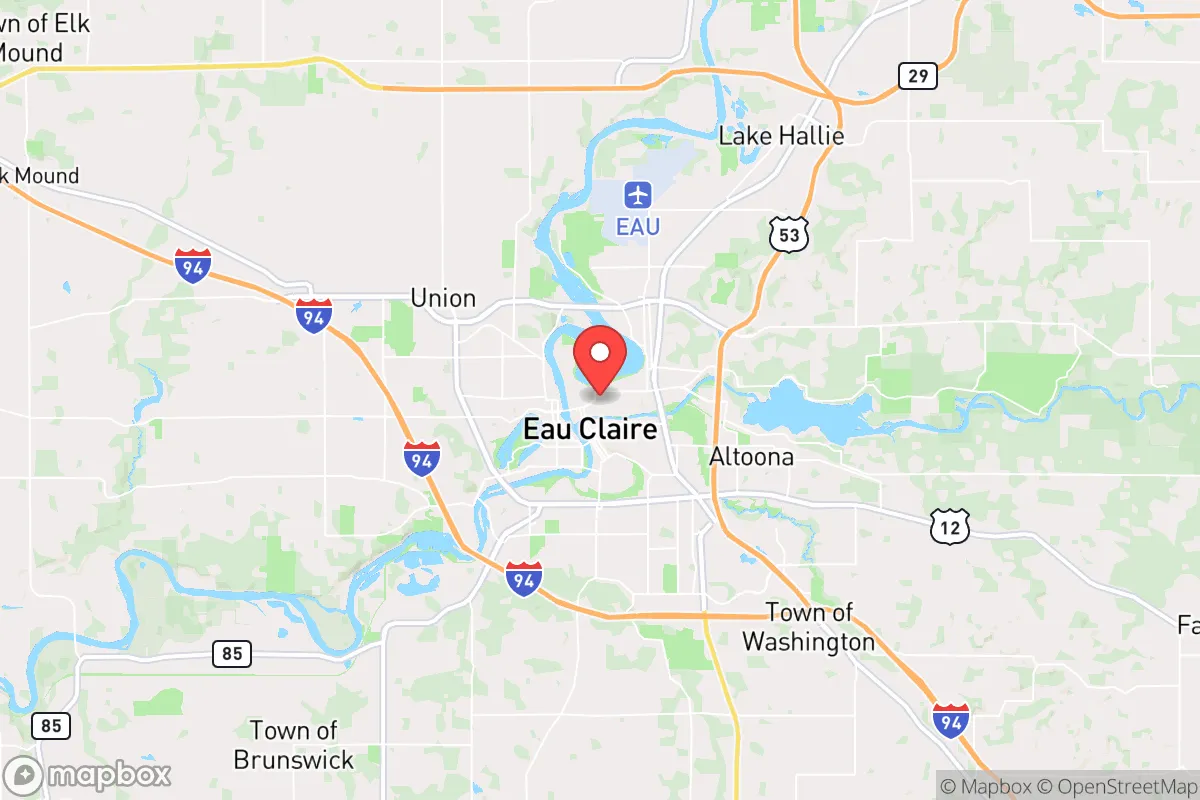
District shown is the primary district for this city’s centroid. Cities may span multiple districts.
Local Political AnalysisPolitical Analysis of Eau Claire, WI
Eau Claire’s political climate has shifted noticeably over the past decade, and if you’ve lived here as long as I have, you can feel it. The city itself leans left, but the surrounding Chippewa Valley—and the county as a whole—still holds a conservative edge, with a Cook PVI of R+3. That means the area is about three points more Republican than the national average, but don’t let that number fool you: the city council and local school boards have been trending in a direction that raises eyebrows for anyone who values limited government and personal freedoms.
How it compares
Drive twenty minutes north to Menomonie, and you’ll find a similar story—a college town with a progressive tilt surrounded by red farmland. But head south to Altoona or west to the smaller towns like Fall Creek and Augusta, and the political landscape flips hard. Those communities vote reliably conservative, and they’re not shy about it. Eau Claire itself, though, is increasingly out of step with its own backyard. The city’s recent elections have seen a push for more government involvement in housing regulations and zoning, while the county board remains more skeptical of such overreach. It’s a classic urban-rural split, but here it’s compressed into a single county, and the tension is real.
What this means for residents
For folks who value personal freedoms—whether that’s the right to keep and bear arms, choose your own healthcare, or run a small business without a pile of new permits—the city’s direction is concerning. The local government has shown a willingness to impose mask mandates and business restrictions that went beyond state guidance during the pandemic, and there’s chatter about stricter rental inspections and energy efficiency mandates that could hit homeowners and landlords hard. Property taxes have crept up to fund new city initiatives, and while the schools are decent, the curriculum debates are heating up. If you’re a conservative or even a moderate who just wants to be left alone, you’ll find yourself voting more often against new proposals than for them. The county sheriff’s office, thankfully, still takes a firm stance on Second Amendment rights and refuses to enforce any state-level gun laws they consider unconstitutional—a small comfort in an otherwise shifting landscape.
One cultural distinction that stands out is the city’s embrace of the arts and festivals, which is great for the local economy but often comes with a side of progressive activism. The Eau Claire Jazz Festival and the Blue Ox Music Festival draw crowds, but they also attract vendors and speakers pushing a political agenda that doesn’t sit well with everyone. Meanwhile, the rural areas just outside town still hold old-fashioned church suppers and county fairs where the conversation stays local and the politics stay conservative. The divide isn’t hostile—yet—but it’s widening. Looking ahead, if the city keeps pushing for more regulations and higher taxes, you’ll see more families and small business owners heading for the outskirts or even across the state line into Minnesota’s more rural counties. For now, Eau Claire is a place where you can still find your own path, but you’ll have to keep a close eye on the ballot box to make sure it stays that way.

State Political ClimatePolitical Climate in Wisconsin
State Political AnalysisPolitical Environment in the State
Wisconsin has long been a classic swing state, but over the past decade it has shifted from a true purple battleground to a state that leans narrowly Republican in presidential elections, while still electing a mix of Democrats at the state level. The 2024 election saw Donald Trump carry the state by roughly 1 point, continuing a trend where the GOP has won four of the last six presidential contests here. The dominant coalition is a mix of conservative exurban and rural voters in the southeastern and western parts of the state, increasingly balanced against a heavily Democratic and growing Madison metro area and a shrinking but still blue Milwaukee. The 10-20 year arc shows a state that is polarizing geographically, with the rural-urban gap widening faster than almost anywhere else in the Midwest.
Urban vs. rural divide
The political map of Wisconsin is a textbook case of the urban-rural split. The Democratic stronghold is Dane County, home to Madison and its suburbs, which delivered over 75% of its vote to Joe Biden in 2020 and Kamala Harris in 2024. This single county now accounts for roughly a quarter of all Democratic votes statewide, making it the party’s indispensable engine. Milwaukee County, while still reliably blue, has seen its Democratic margins shrink as the city’s population declines and suburban areas like Wauwatosa and Brookfield have become more competitive. The real story is the red wave in the rest of the state. The WOW counties (Waukesha, Ozaukee, Washington) north and west of Milwaukee have become some of the most reliably Republican suburbs in the nation, with Waukesha County giving Trump over 60% of the vote. Meanwhile, rural counties like Clark, Taylor, and Rusk in the north and central parts of the state have swung hard to the right, often by 30-40 point margins. The Fox Valley region, anchored by Appleton and Green Bay, remains a key swing area, but it has trended redder as working-class voters there have moved away from Democrats on cultural and economic issues. The Driftless Area in the southwest, including towns like Viroqua and Prairie du Chien, is a mix of conservative farmers and a growing number of liberal transplants, but the overall trend is toward the GOP.
Policy environment
Wisconsin’s policy environment is a mixed bag for conservatives. On the plus side, the state has a flat income tax of 4.4% (down from 7.75% in 2011), and the GOP-controlled legislature has passed several rounds of tax cuts in recent years. Property taxes are moderate, and the state has a right-to-work law (passed in 2015) that weakened public-sector unions. However, the state’s regulatory posture is not as business-friendly as neighboring Indiana or Iowa. The Department of Natural Resources has been a flashpoint, with conservatives arguing it over-regulates farmers and manufacturers. On education, Wisconsin has a robust school choice program, including the Milwaukee Parental Choice Program (the oldest in the nation) and a statewide voucher program, which is a major win for parental rights. Healthcare is a battleground: the state did not expand Medicaid under the Affordable Care Act, but the current Democratic governor, Tony Evers, has used executive orders to push for expansion, which the legislature has blocked. Election laws have been tightened since 2020, with stricter voter ID requirements and limits on absentee ballot drop boxes, though the state still allows same-day voter registration, which conservatives view as a vulnerability. The state also has a constitutional carry law for firearms, passed in 2011, which remains popular.
Trajectory & freedom
On the freedom front, Wisconsin is a state of contradictory trends. The good news for conservatives is that gun rights are well-protected. The state has preemption laws that prevent local governments from enacting their own gun restrictions, and the 2011 concealed carry law was followed by permitless carry in 2021. Property rights are generally respected, with no statewide rent control and relatively low property taxes compared to Illinois. However, there are concerning signs. The Evers administration has used executive orders to impose mask mandates and vaccine passport requirements during the pandemic, which many conservatives saw as government overreach. The state also has a broad emergency powers law that gives the governor unilateral authority during declared emergencies, which the legislature has tried to rein in but has not fully succeeded. On parental rights, the state has seen a push for critical race theory and LGBTQ curriculum in some school districts, particularly in Madison and Milwaukee, leading to heated school board elections. The legislature passed a bill banning transgender athletes from girls’ sports in 2023, but it was vetoed by Evers. The state also has a medical marijuana program that is extremely limited, and full legalization remains stalled. Overall, the trajectory is toward more state-level control being contested between a conservative legislature and a liberal governor, creating a stalemate that prevents major expansions of either freedom or restriction.
Civil unrest & political movements
Wisconsin has been a flashpoint for political unrest in recent years. The 2020 Kenosha riots, following the shooting of Jacob Blake, saw widespread property destruction and the killing of two protesters by Kyle Rittenhouse, which became a national symbol of the debate over self-defense and civil unrest. The Rittenhouse trial in Kenosha drew massive protests from both sides. The state has also seen significant election integrity controversies, with the 2020 election in Milwaukee and Green Bay being the subject of multiple audits and lawsuits. The Wisconsin Election Commission has been criticized by conservatives for its handling of absentee ballots and the use of private funding (Zuckerberg bucks) in 2020. On the left, the Indivisible and Wisconsin Democrats have been highly active, organizing protests against the state’s abortion ban (which was triggered by the Dobbs decision) and pushing for expanded voting access. Immigration politics are less heated than in border states, but there have been clashes over sanctuary city policies in Madison and Milwaukee, with the legislature passing a bill to ban them (vetoed by Evers). The Wisconsin Farm Bureau and other rural groups have been vocal against federal overreach on environmental regulations. A new resident would notice the prevalence of political yard signs and bumper stickers, especially in the WOW counties and Dane County, and the strong sense of civic engagement in local politics.
Projection
Looking ahead 5-10 years, Wisconsin is likely to remain a purple state with a slight red tilt, but the demographic trends are concerning for conservatives. The Madison metro area is growing rapidly, fueled by tech and biotech jobs, and attracting young, liberal transplants from Illinois and the coasts. This will make Dane County an even larger Democratic vote sink. Meanwhile, rural counties are losing population, which could erode the GOP’s base. However, the WOW counties are also growing, and the Fox Valley is trending redder. The wild card is the Milwaukee suburbs, which are becoming more competitive as moderate Republicans move in. The state’s political future will likely be decided by turnout in the suburbs and the ability of the GOP to hold onto working-class voters in the Fox Valley. The 2026 gubernatorial election will be a key test, as Evers is term-limited and the GOP has a strong bench. If the legislature can pass a constitutional amendment to require voter ID for absentee ballots or to limit the governor’s emergency powers, it could lock in conservative gains. The biggest threat to freedom is the potential for a future Democratic governor and legislature to pass a red flag law or expand Medicaid, which would increase government dependency. In-migration from Illinois and Minnesota is bringing more progressive voters, but many of them are also fleeing high taxes and crime, so they may not be as reliably blue as expected.
For a new resident, the bottom line is that Wisconsin offers a relatively high degree of personal freedom compared to neighboring Illinois or Minnesota, especially on gun rights and school choice. The tax burden is moderate and trending downward, and the state has a strong manufacturing and agricultural economy. However, you will need to be politically engaged to protect those freedoms, as the state is evenly divided and the balance of power can shift with a single election. If you move to the WOW counties or the Fox Valley, you will find a community that shares your values. If you move to Madison or Milwaukee, you will be in a blue enclave where your views may be in the minority. The key is to choose your location wisely and stay involved in local politics, because in Wisconsin, every election truly matters.
* Values derived from national, state, county, city and local statistics and may differ in a specific area. Last updated: 2026-04-21T10:10:02.000Z
Narrative content on this page is AI-generated and may contain mistakes. Verify any details that matter before acting on them.
ReloMaps may earn a commission from affiliate links at no extra cost to you.

