 Popular
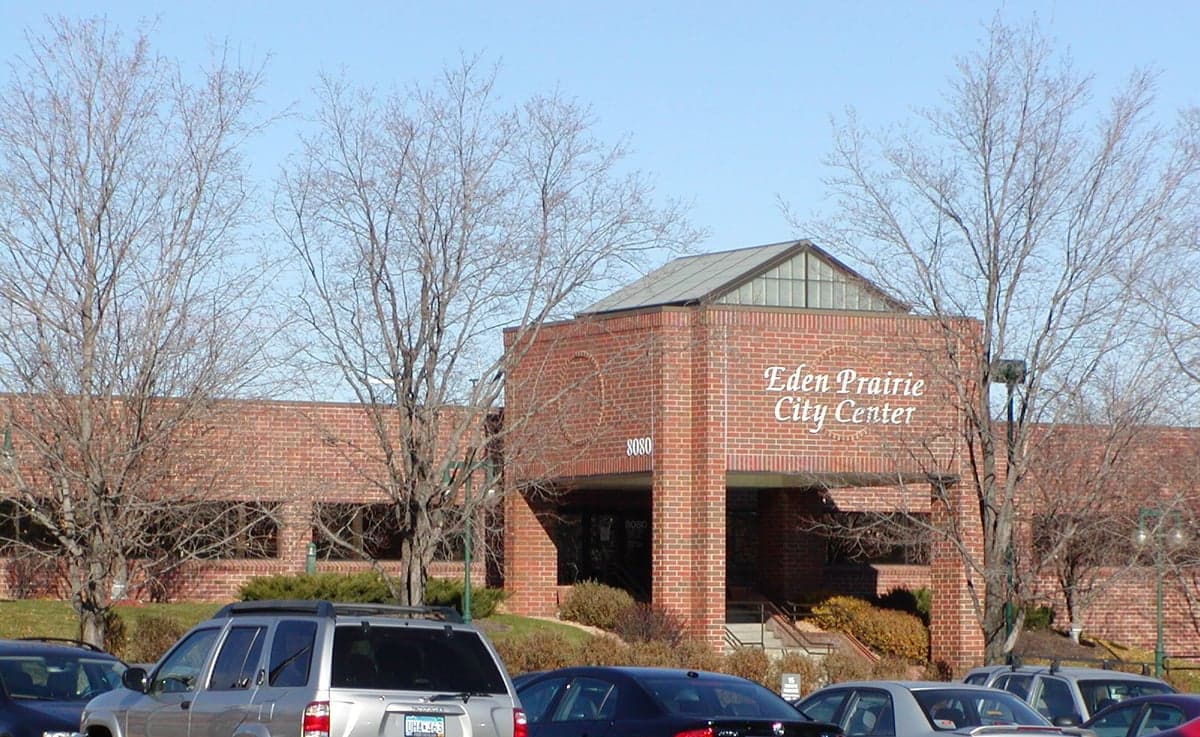
Photo: Wikipedia
Demographics of Eden Prairie, MN
Affluence Level in Eden Prairie, MN
An upper-middle-class area. Household wealth, education levels, and homeownership run ahead of national benchmarks.
People of Eden Prairie, MN
Eden Prairie today is a prosperous, family-oriented suburb of 63,249 residents with a distinctly professional character — 64.7% of adults hold a bachelor's degree or higher, nearly double the national average. The city is notably diverse for a Twin Cities suburb, with a white population of 68.8% alongside significant Indian (8.4%), Black (7.0%), East/Southeast Asian (5.1%), and Hispanic (5.1%) communities. Its identity blends Midwestern neighborliness with the upward mobility of a major employment hub, anchored by corporate headquarters and top-rated schools.
How the city was settled and grew
Eden Prairie's original settlers were European homesteaders drawn by the Minnesota Organic Act of 1849, which opened the territory for land claims. The first wave, arriving in the 1850s, were primarily Yankee farmers from New England and New York, followed by German and Irish immigrants who cleared the prairie for wheat and dairy operations. These families clustered around the Eden Prairie Center area — then called "The Prairie" — and along the Minnesota River bluffs near what is now Staring Lake. The village remained a sleepy agricultural hamlet for a century, with fewer than 2,000 residents as late as 1950. The post-World War II era brought a second wave: returning GIs and their families who built modest ranch homes in the Round Lake and Bryant Lake neighborhoods, drawn by cheap land and the new U.S. 212 highway connecting them to Minneapolis jobs.
Modern era (post-1965)
The 1965 Immigration and Nationality Act reshaped Eden Prairie's population, though the effects took decades to materialize. The city's explosive growth came in the 1980s and 1990s, when corporate relocations — particularly C.H. Robinson Worldwide and SuperValu — brought a wave of domestic white-collar migrants from across the Midwest and coasts. These newcomers filled the sprawling subdivisions of Golden Triangle and Southwest Village, neighborhoods characterized by large single-family homes on cul-de-sacs. Simultaneously, the expansion of high-tech and medical-device employers (including St. Jude Medical, now Abbott) attracted skilled immigrants. The Indian community, now the largest non-white group at 8.4%, began coalescing in the 1990s around the Eden Prairie High School attendance zone and the Pioneer Trail corridor, drawn by the school system's strong STEM programs and the presence of Indian-owned businesses along Prairie Center Drive. East/Southeast Asian families — primarily Vietnamese and Chinese — settled in similar patterns, often in the Bent Creek and Forest Hills neighborhoods. The Black population, at 7.0%, grew more gradually, with many families arriving from other U.S. cities for professional roles in finance and healthcare, concentrating in the Eden Prairie Road corridor near the city's central commercial spine.
The future
Eden Prairie's population is projected to remain stable or grow modestly — the city is nearly built out, with little undeveloped land left. The demographic trajectory points toward continued diversification, but not rapid change. The white share (68.8%) is slowly declining as older residents age in place and younger, more diverse families move in. The Indian community, already the largest immigrant group, is likely to grow further through chain migration and professional recruitment, potentially reaching 10-12% by 2035. East/Southeast Asian and Hispanic populations are expected to plateau, while the Black share may increase slightly as the city's affordable-housing stock (concentrated in the Eden Prairie Town Center area) attracts more renters. The city is not tribalizing into distinct ethnic enclaves — neighborhoods remain largely integrated by income and education level — but subtle clustering persists around school attendance zones and places of worship. The biggest wildcard is housing affordability: with a median home value exceeding $450,000, Eden Prairie risks becoming a preserve of the upper-middle class, potentially slowing in-migration of younger families and lower-income groups.
For a conservative-leaning mover, Eden Prairie offers a stable, high-opportunity environment where traditional suburban values — good schools, low crime, strong civic engagement — coexist with genuine diversity. The city is becoming more pluralistic but not more polarized; its population is sorting by profession and education rather than ethnicity. The bottom line: Eden Prairie is a place where a newcomer can find a neighborhood of like-minded professionals, regardless of background, and where the schools and job market reward ambition. The trade-off is cost — this is not a budget-friendly entry point to the Twin Cities, but for those who can afford it, the demographic and economic fundamentals are among the strongest in Minnesota.

* Values derived from national, state, county, city and local statistics and may differ in a specific area. Last updated: 2026-04-24T13:29:40.000Z
Narrative content on this page is AI-generated and may contain mistakes. Verify any details that matter before acting on them.
ReloMaps may earn a commission from affiliate links at no extra cost to you.

