 Popular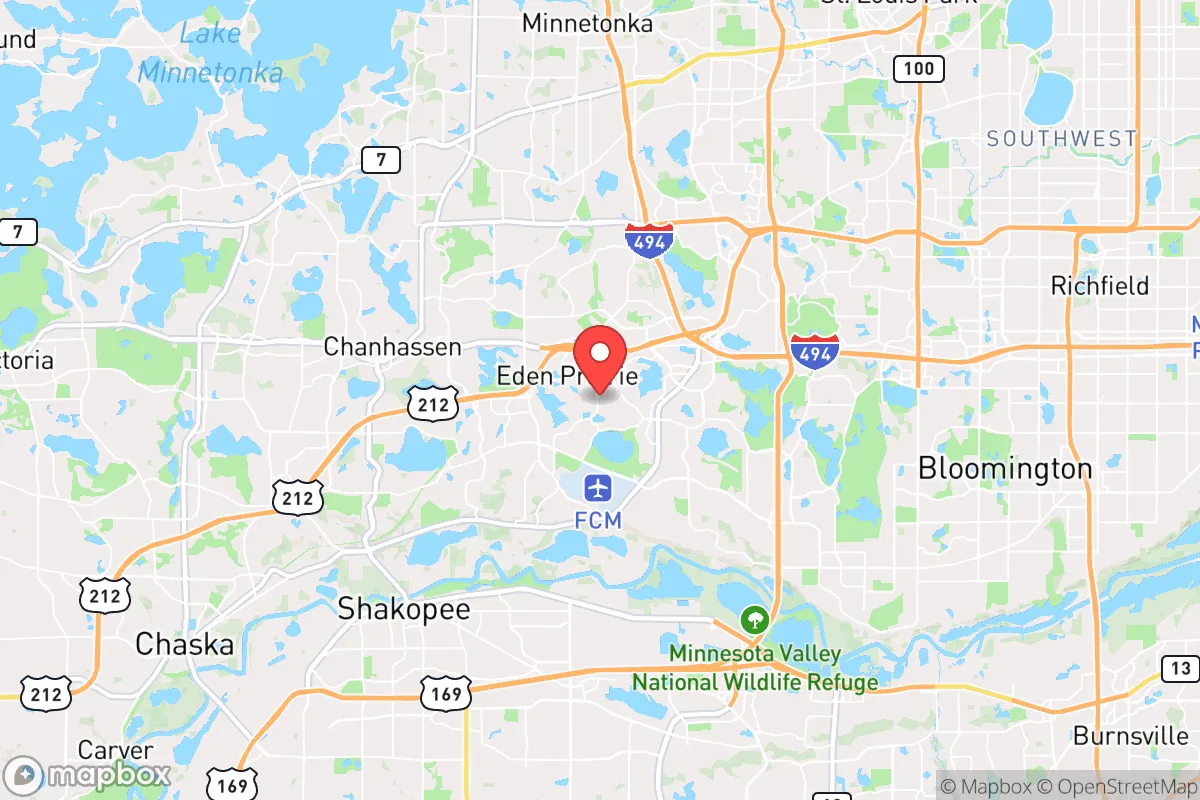
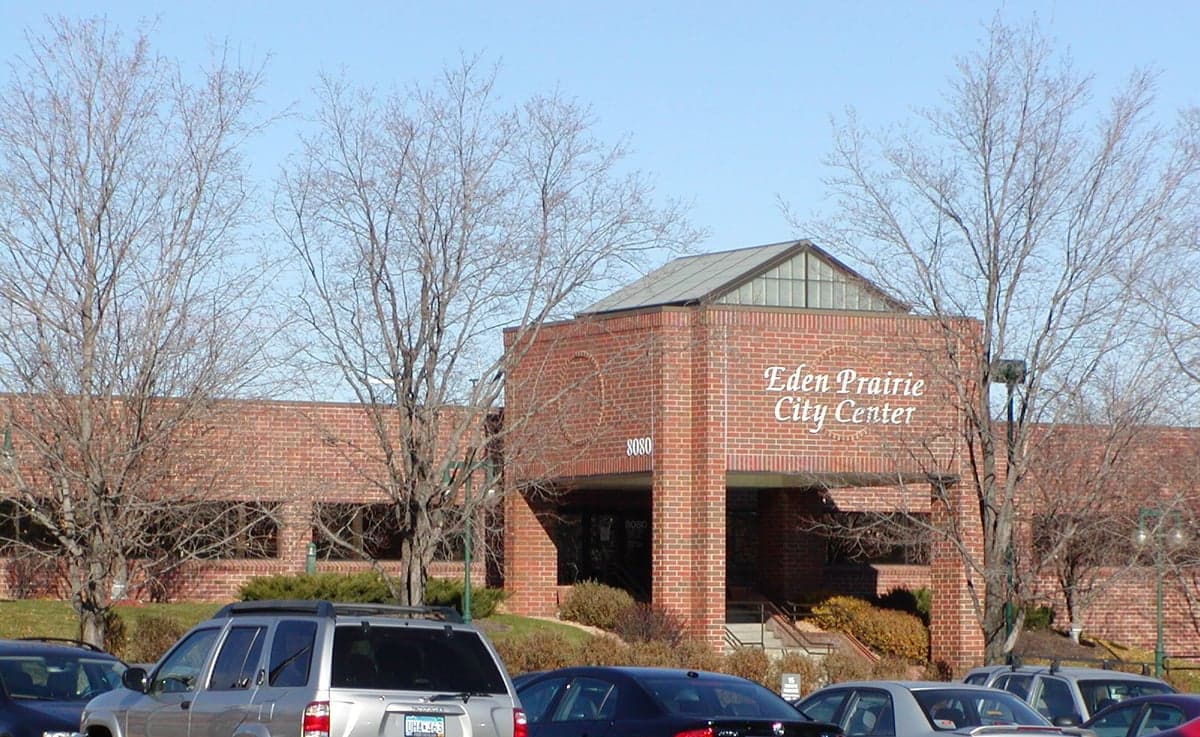
Photo: Wikipedia
Strategic Assessment of Eden Prairie, MN
Multiple tactical vulnerabilities. Population density, target proximity, or disaster risk are likely compounding. A retreat property and exit planning is required.
What does the Strategic Assessment tell us?
Our Strategic Assessment grades tactical survivability of an area. Major population centers, military targets, fallout zones, natural disasters, and border exposure all drive risk — lower exposure means a more defensible position in a crisis.
This is heavily inspired by Joel Skousen's Strategic Relocation book. Highly recommended you checkout the book ($)What does this tell us?
Our Strategic Assessment grades tactical survivability of an area. Major population centers, military targets, fallout zones, natural disasters, and border exposure all drive risk — lower exposure means a more defensible position in a crisis.
This is heavily inspired by Joel Skousen's Strategic Relocation book. Highly recommended you checkout the book ($)Strategic Pillars

Key Distances
Regional Safe Places
Below is our recommended "safe zones" in Minnesota and the surrounding area based on our strategic heuristics. For most people, it's unrealistic to live in a “safe zone” full-time due to work, family or other personal reasons. They tend to be more rural. However, many of these areas are perfect for second homes and retreat properties that double as a vacation home or even a short-term rental.
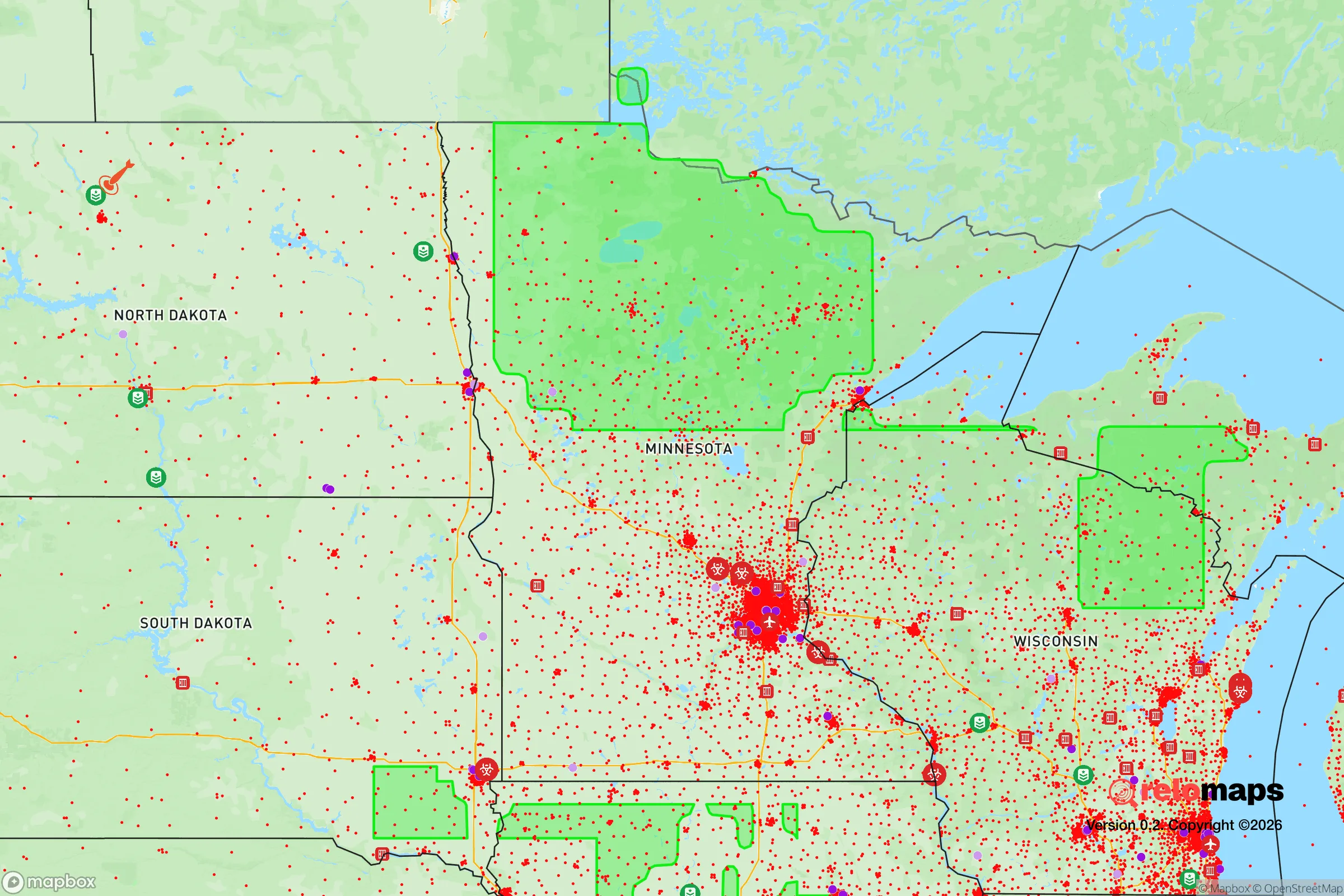
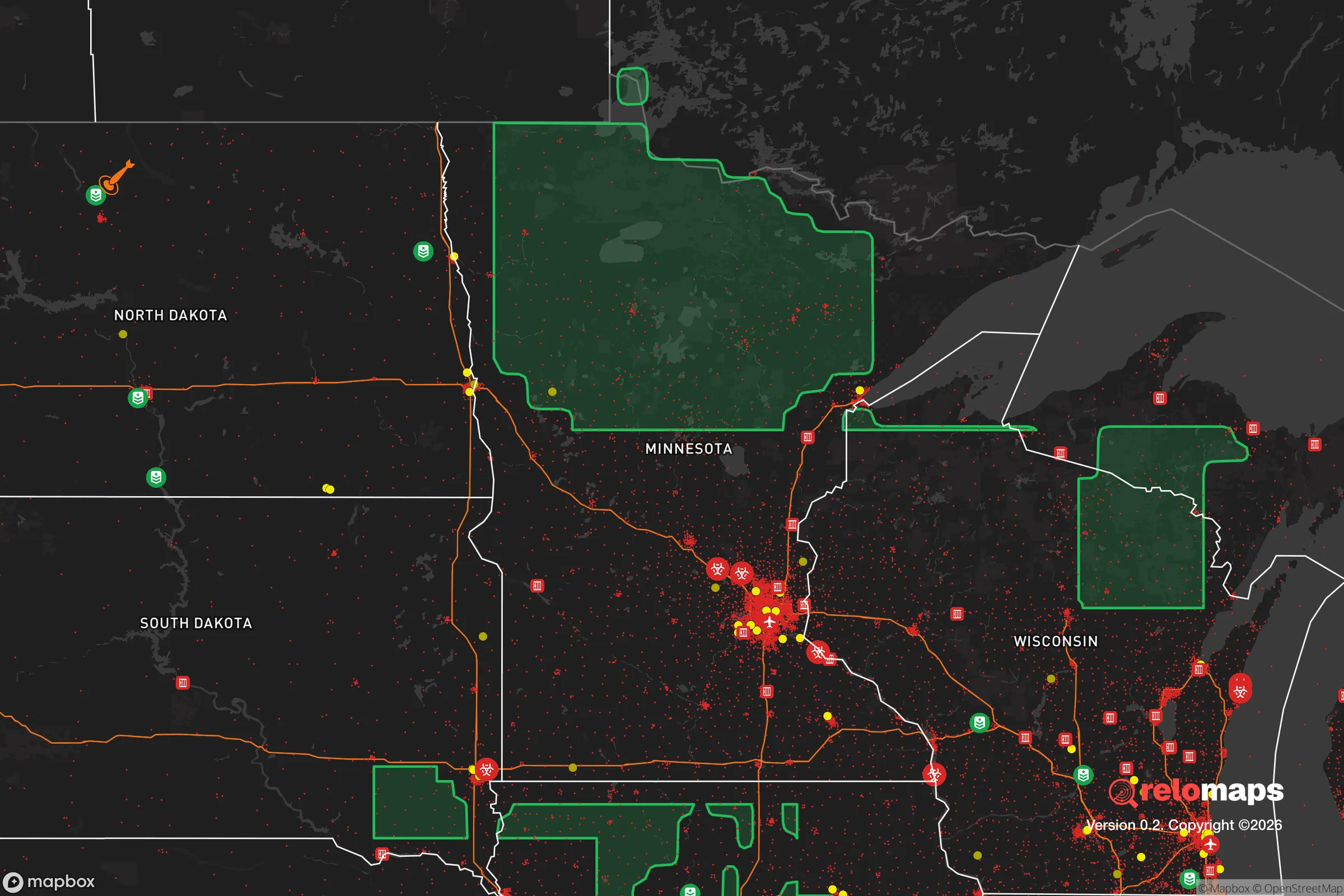


Important Note: For informational purposes only. This does not mean nothing bad ever happens in the green zones. Please use common sense. This is based on public data and modeled with AI. We tried to take a conservative approach but mistakes happen. We update this regularly as new information becomes available.
Solar Generator Recommendations
Backup power matters more here than in safer locations. We've picked three solar generators across budgets and capacity tiers — start with the budget unit if you only need a few essentials, or step up if you want to run a fridge and HVAC for days at a time.

Jackery Portable Power Station Explorer 300
Budget OptionPower on the Go: Weighing only 11 lbs, it's convenient to set up and store with book-sized foldable solar panels

BLUETTI Portable Power Station AC180
Designed for both indoor and outdoor scenarios, AC180 is highly capable as it has a robost capacity and continuous output power.

EF ECOFLOW DELTA Pro Ultra Power Station
Upgraded PickEcoFlow DELTA Pro Ultra is a whole-home energy system designed to grow with your family. Integrated with the Smart Home Panel 2, it scales to meet your evolving energy needs — keeping your home powered, intelligent, and secure through every stage of life.
We earn a commission, at no additional cost to you.
Strategic Assessment Analysis
Eden Prairie, Minnesota, sits in a precarious but potentially advantageous position for those prioritizing resilience and strategic relocation. While its proximity to the Minneapolis-St. Paul metroplex introduces significant risks from civil unrest and infrastructure collapse, the city’s location on the Minnesota River, its robust local governance, and its distance from the immediate urban core offer a mixed bag for the prepared relocator. For a conservative-leaning individual or family seeking a buffer zone—close enough to access resources, far enough to avoid the worst of a societal breakdown—Eden Prairie presents a calculated gamble, not a safe haven.
Geographic position and natural advantages for long-term survival
Eden Prairie’s geography is its strongest card. The city is carved by the Minnesota River Valley, which provides natural terrain breaks, elevated bluffs, and a reliable water source—critical for any long-term survival scenario. The river itself is a double-edged sword: it offers fishing, transport, and a natural barrier against foot traffic from the east, but it also creates floodplains and chokepoints that could become liabilities during a disaster. The city’s position roughly 15 miles southwest of downtown Minneapolis means it’s far enough to avoid the immediate blast radius of a major event—whether that’s a terrorist attack, a grid-down scenario, or civil unrest—but close enough that fallout from a nuclear incident at the Prairie Island Indian Community’s nuclear plant (about 40 miles southeast) or a dirty bomb in the metro would be a real concern. The prevailing westerly winds offer some protection from that specific threat, but not from a ground-level release. The area’s numerous lakes—like Staring Lake, Riley Lake, and Bryant Lake—provide decentralized water sources, but they’re also public and easily contaminated. For a prepper, the key is that Eden Prairie’s topography allows for defensible positions on the bluffs, with good line-of-sight to the valley below, but the suburban sprawl means you’re never truly isolated.
Risks, exposures, and proximity to fallout-relevant landmarks
The biggest red flag for Eden Prairie is its proximity to the Twin Cities metro, a population center of over 3.6 million people. In a collapse scenario—whether from economic turmoil, a pandemic, or a coordinated attack—that mass of humanity will become a liability. The city is directly connected to Minneapolis via Highway 212 and Interstate 494, which are evacuation routes that will clog instantly. The nearby Minneapolis-St. Paul International Airport (MSP) is a prime target for any adversary; a conventional strike or EMP there would cripple the region’s logistics and likely cause a cascade of failures. Additionally, the metro area is home to multiple federal buildings, corporate HQs (like UnitedHealth Group and Target), and critical infrastructure like the Xcel Energy grid control centers. A cyberattack or physical sabotage on these nodes would ripple into Eden Prairie within hours. The city itself has a large corporate presence—including C.H. Robinson and SuperValu—which means it’s a secondary target for any group aiming to disrupt the supply chain. For the survivalist, the risk isn’t just direct attack; it’s the influx of desperate refugees from the urban core. Eden Prairie’s wealth and resources (good hospitals, stocked grocery stores, fuel depots) make it a magnet for looters and those fleeing the city. The local police force is well-funded, but in a widespread breakdown, they’ll be overwhelmed. The city’s lack of natural barriers to the north and east means there’s no easy way to seal off access.
Practical resilience for a relocator: food, water, energy, and defensibility
For a relocator looking to hunker down, Eden Prairie offers a mixed bag. Water is the biggest win: the Minnesota River and the chain of lakes provide ample surface water, but you’ll need filtration and purification gear—the river carries agricultural runoff and industrial contaminants from upstream. The city’s municipal water supply comes from the Mississippi River via the Minneapolis system, which is vulnerable to both contamination and grid failure. A well is ideal, but most suburban lots here are on city water; you’d need to drill or rely on rainwater catchment, which is legal in Minnesota but requires permits. Food production is possible but limited. The soil in the river valley is rich, but typical suburban lots are small (0.25–0.5 acres), and HOA restrictions can be a headache for those wanting chickens or a large garden. The growing season is short—roughly 150 frost-free days—so you’ll need a greenhouse or cold frames for year-round production. Local farmers’ markets and co-ops (like the Eden Prairie Market) are good for barter, but they’ll dry up fast in a crisis. Energy is a vulnerability. The grid is reliable day-to-day, but it’s tied to the metro system. Solar panels are a solid investment here—the area gets about 200 sunny days a year—but you’ll need battery storage for winter months. Natural gas is common for heating, but a pipeline disruption (there are major lines running through the region) would leave you cold. Wood stoves are a smart backup, but firewood is scarce in suburbia. Defensibility is the weak link. Eden Prairie is a classic suburb: cul-de-sacs, open yards, and multiple entry points. A single-family home on a corner lot is a nightmare to secure. The best bet is a property on the bluffs overlooking the river, with a single access road and good sightlines. Even then, neighbors will be a concern—you can’t control who moves in next door. The city’s emergency services are excellent (Eden Prairie Fire Department has a strong reputation), but they’re not a substitute for personal preparedness. Stockpiling is legal, but conspicuous prepping (like visible caches or fortified structures) will draw unwanted attention.
The overall strategic picture for Eden Prairie is one of calculated risk. It’s not a bug-out location—it’s a stay-put option for those who can’t or won’t move to rural Montana. The advantages are real: a strong local economy, decent infrastructure, and a water-rich environment. But the downsides are equally real: proximity to a major target zone, a population that will turn hostile in a crisis, and a layout that’s hard to defend. For a conservative relocator who values community and wants to be near medical care and supply chains while maintaining a low profile, Eden Prairie works—if you’re willing to invest in serious hardening (solar, water filtration, a deep pantry) and have a plan to bug in or bug out within the first 72 hours. The city’s resilience is a function of your own preparation, not the location itself. If you’re looking for a place to ride out the storm without becoming a target, Eden Prairie is a decent bet—but don’t mistake it for a fortress.

* Values derived from national, state, county, city and local statistics and may differ in a specific area. Last updated: 2026-04-24T13:29:40.000Z
Narrative content on this page is AI-generated and may contain mistakes. Verify any details that matter before acting on them.
ReloMaps may earn a commission from affiliate links at no extra cost to you.

