 Popular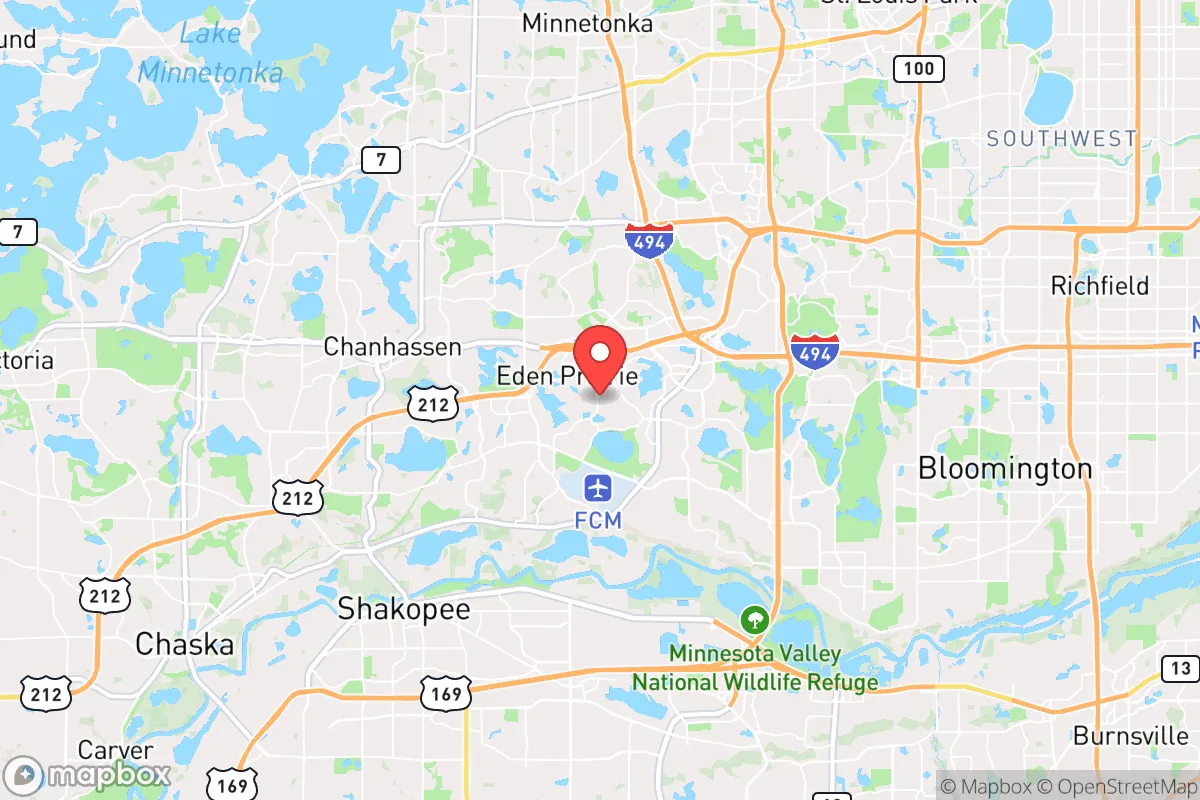
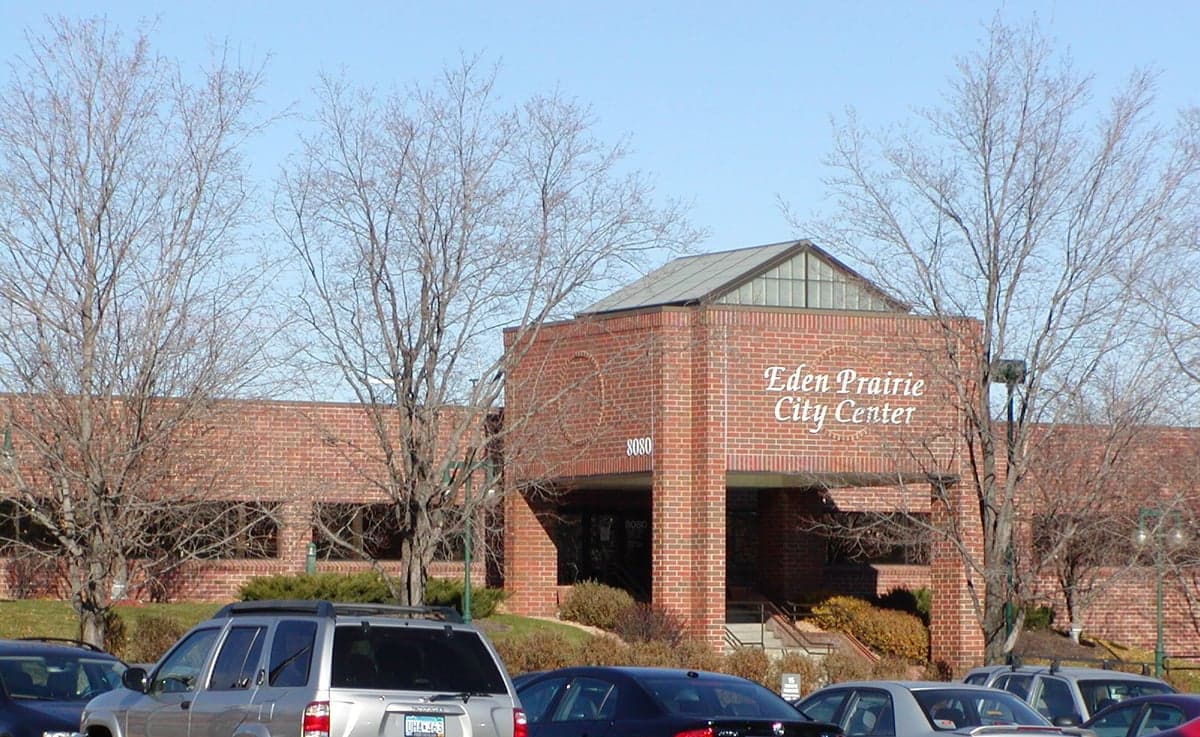
Photo: Wikipedia
Political ClimatePolitical Climate in Eden Prairie, MN
District shown is the primary district for this city’s centroid. Cities may span multiple districts.
Local Political AnalysisPolitical Analysis of Eden Prairie, MN
Eden Prairie’s political climate has shifted noticeably over the past decade, and if you’ve lived here as long as I have, you’ve felt it. The Cook Partisan Voting Index (PVI) now sits at D+11, meaning the area leans about 11 points more Democratic than the national average. That’s a far cry from the moderate, live-and-let-live suburb I remember from the 1990s and early 2000s, where local elections were decided more on fiscal responsibility and school quality than on national culture-war issues. The trajectory is clear: each election cycle, the precincts around the Eden Prairie Center and near the southwest light-rail corridor trend a little bluer, while the more rural edges of the city—closer to Chanhassen and Shakopee—still hold a conservative line. If you value limited government and personal freedoms, this shift is worth watching closely.
How it compares
Eden Prairie sits in a political sandwich. Drive five miles west to Chanhassen or ten miles southwest to Shakopee, and you’ll find communities that still vote reliably red—those areas have PVIs closer to R+5 or R+8, with local officials who talk about property tax caps and school choice without apology. Head east into Edina or north into St. Louis Park, and you’re in D+20 territory, where progressive policies on zoning, policing, and public health mandates are the norm. Eden Prairie used to be the sensible middle ground, but it’s now closer to Edina than to Chanhassen in its voting patterns. The 2022 and 2024 county-level results showed Hennepin County swinging hard left, and Eden Prairie’s precincts followed suit, even as neighboring Carver County stayed conservative. That contrast matters: if you’re concerned about government overreach, you’ll find more breathing room just a few miles west, where local boards are still skeptical of state-level mandates on things like mask requirements or housing density targets.
What this means for residents
For the average family here, the political tilt has real consequences. School board meetings have become battlegrounds over curriculum transparency and parental rights—topics that were once settled with a handshake. The city council has pushed through zoning changes that allow higher-density development near transit corridors, which some see as a necessary step for housing affordability, but others view as a loss of neighborhood character and local control. Property taxes have climbed steadily, partly to fund expanded social services and climate-action plans that not every resident asked for. On the plus side, the schools remain excellent, the parks are well-maintained, and the city services are responsive—but the trade-off is that you’re paying more for a government that’s increasingly comfortable telling you how to live. If you value personal freedom—whether that means choosing your child’s curriculum, deciding on health measures for your family, or keeping your property rights intact—you’ll want to stay engaged in local elections, because the progressive momentum isn’t slowing down.
One cultural distinction worth noting: Eden Prairie still has a strong sense of community and neighborliness that hasn’t been fully politicized. You’ll find block parties, youth sports leagues, and church groups that cross political lines. But the long-term trend is concerning. The metro-area transit expansion, state-level environmental mandates, and a growing population of younger professionals from Minneapolis are all pushing the city leftward. If you’re looking for a place where local government stays out of your business and respects your rights, Eden Prairie is still a good option compared to Edina or Minneapolis—but it’s not the bastion of common-sense conservatism it once was. Keep an eye on the 2026 city council races; that’s where the real fight over the city’s soul will happen.

State Political ClimatePolitical Climate in Minnesota
State Political AnalysisPolitical Environment in the State
Minnesota has shifted from a classic purple battleground to a solidly blue state over the past 15 years, driven largely by the explosive growth of the Twin Cities metro area and a collapse of rural Democratic support. The state hasn’t voted for a Republican for president since 1972, and in 2024, Kamala Harris carried it by about 7 points, though the margin has narrowed slightly from Biden’s 7.4-point win in 2020. The real story is the legislative trifecta Democrats have held since 2023, which has allowed them to push through a sweeping progressive agenda that would have been unthinkable a decade ago. For a conservative considering a move here, the state’s political trajectory is a mixed bag: the rural areas and exurbs still lean red, but the levers of power are firmly in DFL (Democratic-Farmer-Labor Party) hands, and the policy direction is accelerating leftward.
Urban vs. rural divide
The political map of Minnesota is a tale of two worlds. The Twin Cities metro — Hennepin, Ramsey, and Dakota counties — generates roughly 55% of the state’s vote and is overwhelmingly Democratic. Minneapolis and St. Paul are deep blue, with precincts routinely hitting 80-85% for Democrats. The suburbs are where the real action is: Anoka County, once a bellwether, has trended blue since 2016, while Washington County and Carver County have moved from competitive to reliably Democratic. Outstate, the story is different. Greater Minnesota — places like Rochester (Olmsted County) — is a blue island in a sea of red, thanks to the Mayo Clinic workforce. But the Iron Range, once a Democratic stronghold, has flipped hard. St. Louis County (Duluth) still votes blue, but the surrounding mining towns like Eveleth and Virginia have swung 20-30 points toward Republicans since 2012, driven by frustration with environmental regulations and cultural shifts. The rural southwest, including Worthington and Pipestone, is reliably red, but their populations are too small to offset the metro’s weight.
Policy environment
Since the DFL took full control in 2023, the policy environment has shifted dramatically. The state now has a progressive income tax with a top rate of 9.85% on income over $200,000 (single filers), one of the highest in the nation. Property taxes are moderate but vary wildly by county; Hennepin County levies are about 1.1% of assessed value, while rural counties like Kandiyohi are closer to 1.4%. The regulatory posture is aggressive: Minnesota adopted California-style emissions standards for vehicles in 2024, and the state’s environmental review board has effectively halted new mining and pipeline projects. Education policy is a flashpoint: the state passed a universal free school meals program and increased per-pupil funding by 10%, but also enacted a “Parents’ Bill of Rights” that critics say is weaker than the version in Florida. Healthcare is dominated by the state-run MNsure exchange and a new public option law set to launch in 2027. Election laws are among the most liberal in the country: automatic voter registration, same-day registration, no-excuse absentee voting, and a 2023 law restoring voting rights to felons upon release from prison. For a conservative, the policy environment feels like a one-party state where the DFL is using its trifecta to lock in progressive gains.
Trajectory & freedom
On the freedom index, Minnesota is clearly trending downward. The 2023 legislative session was a firehose of bills that expanded government control. The most controversial was the Minnesota Gun Safety Act, which requires universal background checks on private transfers and a 30-day waiting period for handgun purchases — a direct hit on Second Amendment rights. Parental rights took a hit with the Trans Refuge Act, which shields minors seeking gender-affirming care from out-of-state legal action, effectively overriding parental consent laws in other states. Medical autonomy was further eroded by the Minnesota Health Plan study, a precursor to a single-payer system. On the plus side, the state has no right-to-work law, but property rights remain strong outside metro areas, with no statewide rent control. The Clean Energy Standard mandates 100% carbon-free electricity by 2040, which has driven up utility costs and made it harder to build new housing. The trajectory is clear: more regulation, higher taxes, and less personal liberty, especially on guns and medical choices.
Civil unrest & political movements
Minnesota has been a hotspot for civil unrest since the 2020 George Floyd protests, which caused over $500 million in damage in Minneapolis and led to a sustained defund-the-police movement. The Minneapolis City Council attempted to disband the police department in 2020, but a 2021 ballot measure to replace it with a public safety department failed. Since then, the state has seen a rise in organized conservative activism, particularly around school boards and county commissions. The Minnesota Freedom Fund and Anti-War Committee remain active on the left, while groups like the Minnesota Gun Owners Caucus and Action 4 Liberty have mobilized on the right. Immigration politics are tense: Minnesota is a sanctuary state under a 2023 law that limits local cooperation with ICE, and the St. Cloud area has seen significant Somali immigration, leading to cultural friction. Election integrity remains a sore spot: the 2020 election saw a 99.7% turnout in some precincts, and while no widespread fraud was proven, the state’s same-day registration system has been criticized for lacking verification. Visible flashpoints include the State Capitol protests over COVID mandates in 2021 and ongoing clashes at school board meetings over LGBTQ curriculum.
Projection
Over the next 5-10 years, Minnesota will likely become even more Democratic at the state level, but the margin may narrow in presidential races. The Twin Cities metro is growing faster than the rest of the state, adding about 50,000 people annually, while rural counties are losing population. This demographic shift favors the DFL, but the party’s leftward lurch — particularly on guns and energy — could alienate moderate suburbanites. The 2026 governor’s race will be a bellwether: if a Republican can win back the St. Cloud and Rochester suburbs, the state could become competitive again. However, the DFL’s structural advantages — union support, media dominance, and a well-funded party apparatus — make a flip unlikely. For a new resident, expect higher taxes, more regulation, and a continued erosion of Second Amendment rights. The state’s natural beauty and strong economy will remain draws, but the political climate will feel increasingly like a blue state with a red rural fringe.
Bottom line for a conservative moving to Minnesota: You’ll find like-minded communities in the exurbs and rural areas, but you’ll be living under a one-party government that is actively expanding its control over your life. The state’s economy is strong, the schools are good, and the outdoors are world-class, but the cost of that is a political environment that will feel increasingly hostile to your values. If you’re willing to fight for your rights at the local level — school boards, county commissions, and city councils — you can make a difference. But if you’re looking for a state where your freedoms are protected by default, Minnesota is not that place.
* Values derived from national, state, county, city and local statistics and may differ in a specific area. Last updated: 2026-04-24T13:29:40.000Z
Narrative content on this page is AI-generated and may contain mistakes. Verify any details that matter before acting on them.
ReloMaps may earn a commission from affiliate links at no extra cost to you.

