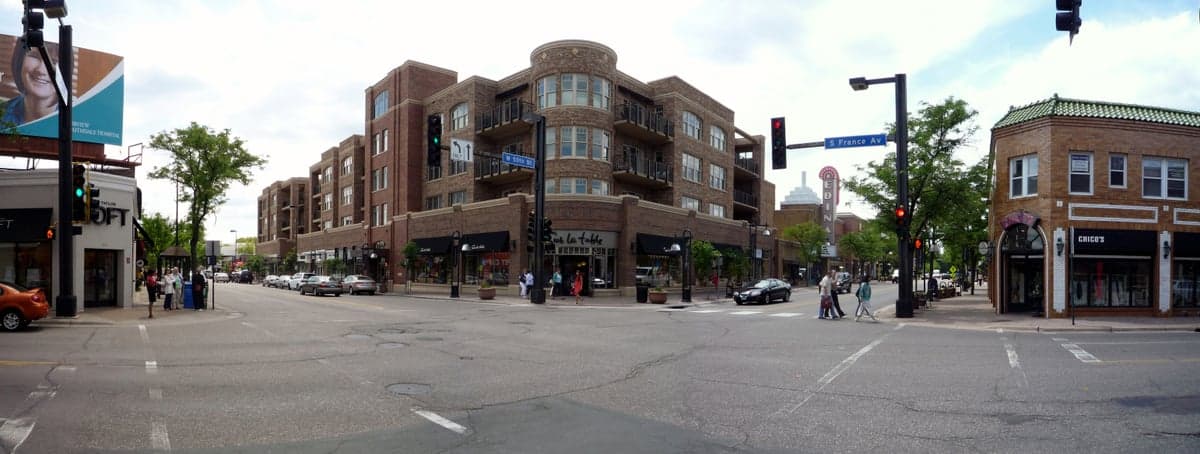
Photo: Wikipedia
Political ClimatePolitical Climate in Edina, MN
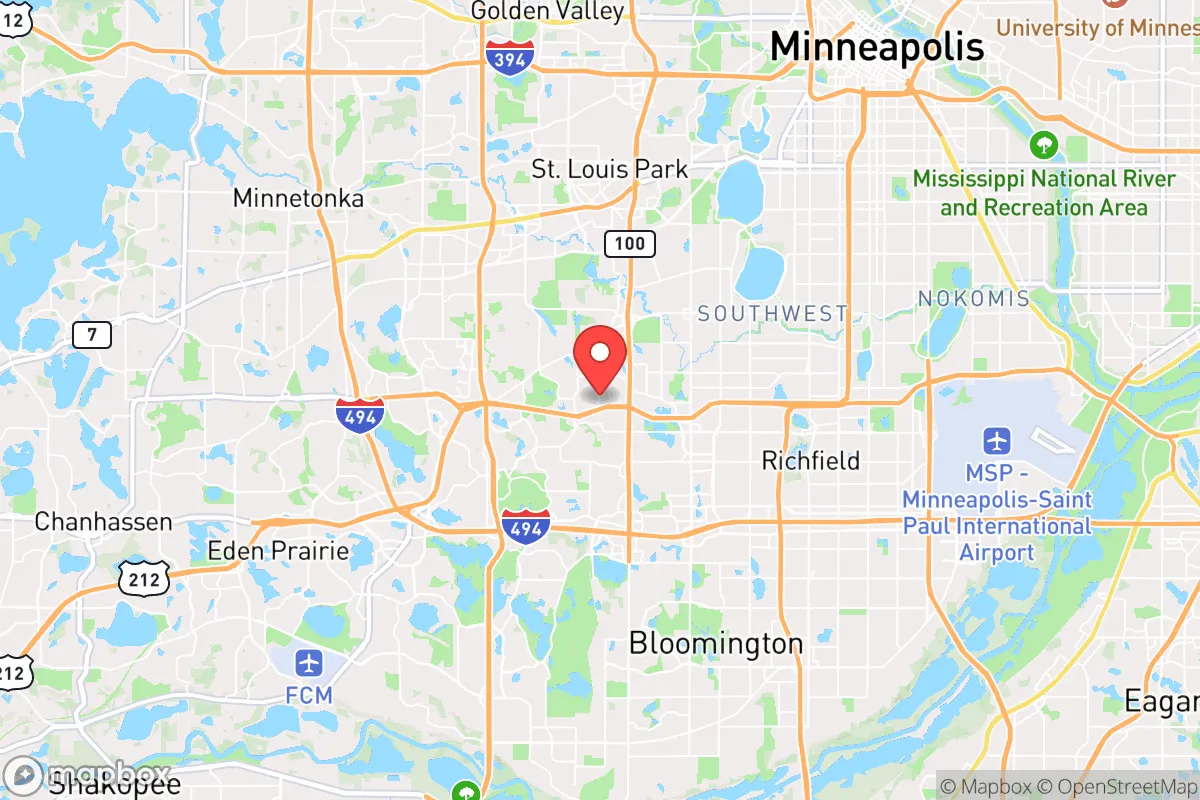
District shown is the primary district for this city’s centroid. Cities may span multiple districts.
Local Political AnalysisPolitical Analysis of Edina, MN
Edina, Minnesota, has a political climate that leans heavily to the left, with a Cook Partisan Voting Index of D+11, meaning it votes about 11 points more Democratic than the national average. This wasn't always the case—I remember when Edina was a reliably conservative, family-focused suburb where folks valued fiscal responsibility and local control. Over the last decade or so, the shift has been dramatic, with progressive policies on taxes, zoning, and social issues becoming the norm. If you're looking at the long-term trajectory, it's clear the city is moving further left, and that trend shows no signs of slowing down.
How it compares
When you look at the surrounding areas, the contrast is stark. Just a few miles west, you've got places like Eden Prairie and Minnetonka, which still have a more balanced mix of conservative and liberal voices—those communities haven't fully embraced the progressive agenda. Head south to Bloomington, and you'll find a similar story to Edina, but with a bit more moderate tone. The real eye-opener is Wayzata or Orono to the northwest, where you'll still see Republican yard signs and hear folks talking about property rights and school choice. In Edina, those conversations are increasingly rare. The city council and school board have been dominated by progressive candidates who prioritize things like equity initiatives and density over single-family home protections. It's a different world than what I grew up with.
What this means for residents
For residents, the political climate translates directly into daily life. Property taxes have climbed steadily as the city funds new social programs and environmental mandates—things like plastic bag bans and electric vehicle charging requirements that feel like government overreach. If you value personal freedoms, like the right to choose how you heat your home or what kind of car you drive, you'll find yourself butting heads with local ordinances. The school district has also shifted, with a focus on diversity, equity, and inclusion training that some parents feel prioritizes ideology over academics. Home values remain high, but the trade-off is a loss of the community's traditional character. Longtime residents I talk to are frustrated, and many are looking at moving to less regulated suburbs where their voices still matter.
Culturally, Edina has become a hub for progressive activism. You'll see more "In This House We Believe" signs than American flags, and the local farmers' market has become a platform for political causes. The city's embrace of sanctuary city policies and its push for higher density housing near transit lines are clear signs of where things are headed. In the near term, expect more zoning changes that allow apartment complexes in single-family neighborhoods, and long-term, I worry about the erosion of the community's independent spirit. If you're considering a move here, just know that the political climate is not neutral—it's actively shaping every aspect of life, from your tax bill to your kids' curriculum. For those who value local control and limited government, it's a tough pill to swallow.

State Political ClimatePolitical Climate in Minnesota
State Political AnalysisPolitical Environment in the State
Minnesota has undergone a dramatic political transformation over the past two decades, shifting from a classic purple battleground to a reliably blue state in presidential elections, though with a deeply entrenched urban-rural split that makes it far more competitive at the local level. The dominant coalition is the DFL (Democratic-Farmer-Labor Party), which now controls all levers of state government, but this power is concentrated in the Twin Cities metro area and a handful of college towns, while vast stretches of Greater Minnesota vote overwhelmingly Republican. The 10-20 year trajectory shows a steady leftward drift in state policy, accelerated by the 2020 George Floyd protests and subsequent legislative sessions, which has created a growing tension between the progressive core and the conservative periphery.
Urban vs. rural divide
The political map of Minnesota is essentially a story of two states. The Twin Cities metro—Hennepin, Ramsey, and Washington counties—drives the DFL's statewide margins, with Minneapolis and St. Paul delivering massive vote banks. In 2024, Hennepin County alone gave Joe Biden a 300,000-vote margin, enough to offset Republican wins in most of the rest of the state. The Iron Range, once a DFL stronghold, has flipped hard to the right; St. Louis County (Duluth) is now a true swing county, while smaller mining towns like Hibbing and Virginia vote Republican by wide margins. Outstate agricultural counties—like those along the Iowa border (Freeborn, Faribault, Martin) and the Red River Valley (Clay, Norman, Polk)—are deeply red, with some precincts hitting 80% Trump. The suburbs are the real battleground: Anoka County, once reliably red, is now a toss-up, while Dakota County has trended blue. Rochester, home to the Mayo Clinic, remains a moderate Republican-leaning city, but its growth is slowly shifting it leftward.
Policy environment
Minnesota's policy environment has become aggressively progressive under DFL control, with a trifecta in 2023-2024 passing a laundry list of legislation that conservatives find alarming. The state now has a progressive income tax with a top rate of 9.85% on income over $190,000, one of the highest in the nation, and a statewide sales tax of 6.875% that local governments can stack on top. Property taxes are moderate but rising, especially in the metro. The regulatory posture is heavy: Minnesota adopted California-style emissions standards, banned new gas-powered leaf blowers starting in 2026, and passed a paid family leave program funded by a new payroll tax. Education policy is a flashpoint: the state eliminated the requirement for parental notification when a student changes their name or pronouns at school, and it passed a "trans refuge" law shielding gender-affirming care for minors from out-of-state parents. Election laws were overhauled in 2023, including automatic voter registration, same-day registration, and the restoration of felon voting rights upon release from prison—no waiting period. Gun rights took a major hit: the state now requires universal background checks for private sales and passed a "red flag" law allowing courts to temporarily seize firearms from individuals deemed a risk, with no criminal conviction required.
Trajectory & freedom
On the freedom scale, Minnesota is moving decisively in the wrong direction for conservatives. The 2023 legislative session was a firehose of bills that expanded government control over personal decisions. The "red flag" law (HF 430) and universal background checks (HF 431) were the biggest gun restrictions in state history, passed without a single Republican vote. The "trans refuge" law (HF 146) effectively nullifies parental rights from other states, allowing minors to receive gender-affirming care without parental consent if they travel to Minnesota. The state also codified abortion rights into law (HF 1), removing all restrictions including viability limits and parental notification for minors. On the positive side, Minnesota has no right-to-work law, but it also has no state income tax on Social Security benefits, which is a draw for retirees. Property rights are under pressure: the state passed a "climate justice" law that could restrict development in certain areas, and the Metropolitan Council has broad land-use authority over the seven-county metro. The trajectory is clear: each DFL trifecta session pushes the state further left, and with no Republican governor since Tim Pawlenty left office in 2011, the trend line is unlikely to reverse without a major political realignment.
Civil unrest & political movements
Minnesota has been a national epicenter of civil unrest since the 2020 murder of George Floyd, which sparked three days of riots in Minneapolis that caused over $500 million in property damage. The aftermath saw the rise of the "defund the police" movement, with the Minneapolis City Council attempting to disband the police department (a plan that ultimately failed). The state has a strong activist infrastructure on the left, including the Minnesota Freedom Fund and various racial justice organizations that have been highly effective at organizing protests and lobbying. On the right, the "Burnsville" and "Lakeville" suburbs have become organizing hubs for conservative groups, including the Minnesota Gun Owners Caucus and the state's chapter of Moms for Liberty. Immigration politics are tense: Minnesota is a "sanctuary state" in practice, with the 2023 Driver's License for All law allowing undocumented immigrants to obtain driver's licenses, and Minneapolis has a "Welcoming City" ordinance that limits cooperation with ICE. Election integrity remains a hot-button issue: the 2020 election saw a massive surge in mail-in voting, and while no widespread fraud was found, the 2023 election law changes have only deepened distrust among conservatives. The "Greater Minnesota" secession movement, while fringe, has gained some traction online, with a few rural counties passing symbolic resolutions exploring the idea of joining South Dakota or forming a new state.
Projection
Looking ahead 5-10 years, Minnesota is likely to become even more polarized and progressive at the state level. Demographic trends favor the DFL: the Twin Cities metro is growing, while rural counties are shrinking, and the state's population is becoming more diverse and younger. In-migration patterns are mixed—some conservatives are moving to Texas, Florida, and the Dakotas, while progressive professionals from the coasts are moving to Minneapolis and St. Paul. The 2026 gubernatorial election is critical: if a Republican wins, they could slow the leftward march with vetoes, but the DFL's structural advantages in the state legislature (thanks to gerrymandered districts and the metro's growth) make a full reversal unlikely. Expect more gun control, more environmental regulation, and more expansion of social welfare programs. The "red flag" law will likely be expanded, and a state-level assault weapons ban is a real possibility if the DFL holds the trifecta. For conservatives, the practical reality is that Minnesota will continue to feel like two different states: a progressive urban core that sets state policy, and a conservative rural and exurban periphery that feels increasingly disenfranchised.
For a conservative considering a move to Minnesota, the bottom line is this: you will be living in a state where your values are increasingly at odds with the government that rules you. The tax burden is high, your gun rights are eroding, your parental rights are under direct assault, and your vote in statewide elections is increasingly irrelevant. If you're looking for a place where your voice matters and your freedoms are respected, Minnesota is not the state it was 20 years ago. The best bet for a conservative is to settle in a red-leaning exurb like Lakeville, Prior Lake, or Woodbury, or a small city like Rochester or St. Cloud, where local government is more aligned with your values—but be prepared to fight for every inch of ground at the state level.
* Values derived from national, state, county, city and local statistics and may differ in a specific area. Last updated: 2026-04-24T06:44:24.000Z
Narrative content on this page is AI-generated and may contain mistakes. Verify any details that matter before acting on them.
ReloMaps may earn a commission from affiliate links at no extra cost to you.

