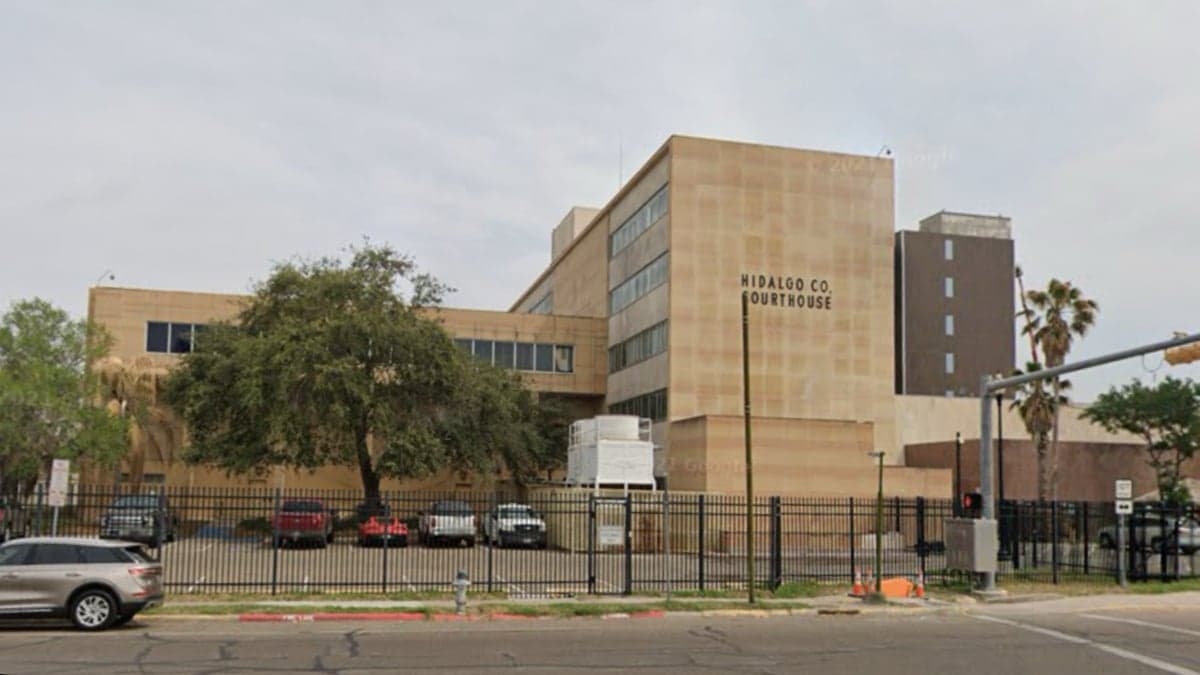
Photo: Wikipedia
Strategic Assessment of Edinburg, TX
Meaningful friction. Expect exposure to either population pressure, blast zones, or natural disaster risk. Consider buying a retreat property.
What does the Strategic Assessment tell us?
Our Strategic Assessment grades tactical survivability of an area. Major population centers, military targets, fallout zones, natural disasters, and border exposure all drive risk — lower exposure means a more defensible position in a crisis.
This is heavily inspired by Joel Skousen's Strategic Relocation book. Highly recommended you checkout the book ($)What does this tell us?
Our Strategic Assessment grades tactical survivability of an area. Major population centers, military targets, fallout zones, natural disasters, and border exposure all drive risk — lower exposure means a more defensible position in a crisis.
This is heavily inspired by Joel Skousen's Strategic Relocation book. Highly recommended you checkout the book ($)Strategic Pillars

Key Distances
Regional Safe Places
Below is our recommended "safe zones" in Texas and the surrounding area based on our strategic heuristics. For most people, it's unrealistic to live in a “safe zone” full-time due to work, family or other personal reasons. They tend to be more rural. However, many of these areas are perfect for second homes and retreat properties that double as a vacation home or even a short-term rental.

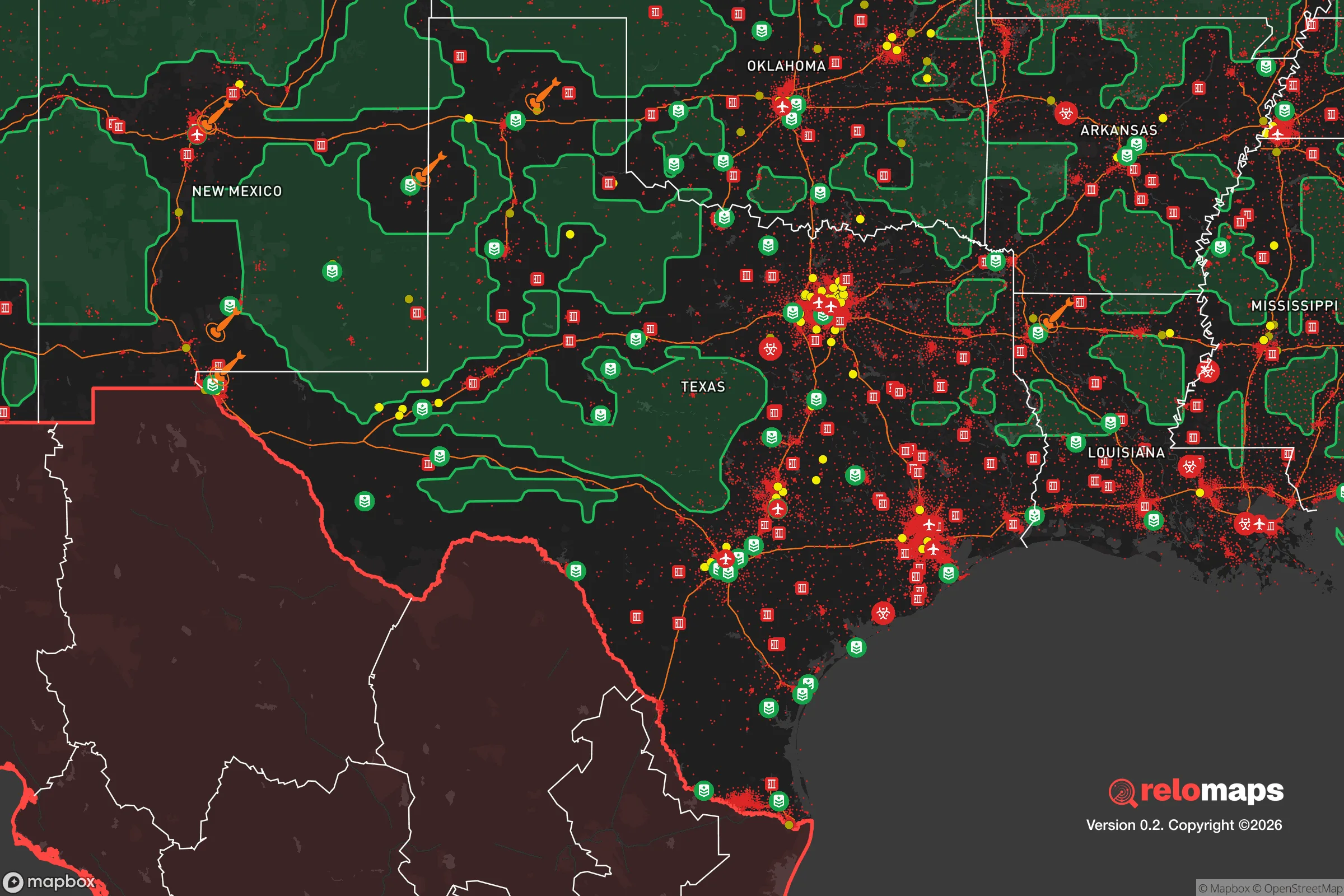


Important Note: For informational purposes only. This does not mean nothing bad ever happens in the green zones. Please use common sense. This is based on public data and modeled with AI. We tried to take a conservative approach but mistakes happen. We update this regularly as new information becomes available.
Solar Generator Recommendations
Backup power matters more here than in safer locations. We've picked three solar generators across budgets and capacity tiers — start with the budget unit if you only need a few essentials, or step up if you want to run a fridge and HVAC for days at a time.

Jackery Portable Power Station Explorer 300
Budget OptionPower on the Go: Weighing only 11 lbs, it's convenient to set up and store with book-sized foldable solar panels

BLUETTI Portable Power Station AC180
Designed for both indoor and outdoor scenarios, AC180 is highly capable as it has a robost capacity and continuous output power.

EF ECOFLOW DELTA Pro Ultra Power Station
Upgraded PickEcoFlow DELTA Pro Ultra is a whole-home energy system designed to grow with your family. Integrated with the Smart Home Panel 2, it scales to meet your evolving energy needs — keeping your home powered, intelligent, and secure through every stage of life.
We earn a commission, at no additional cost to you.
Strategic Assessment Analysis
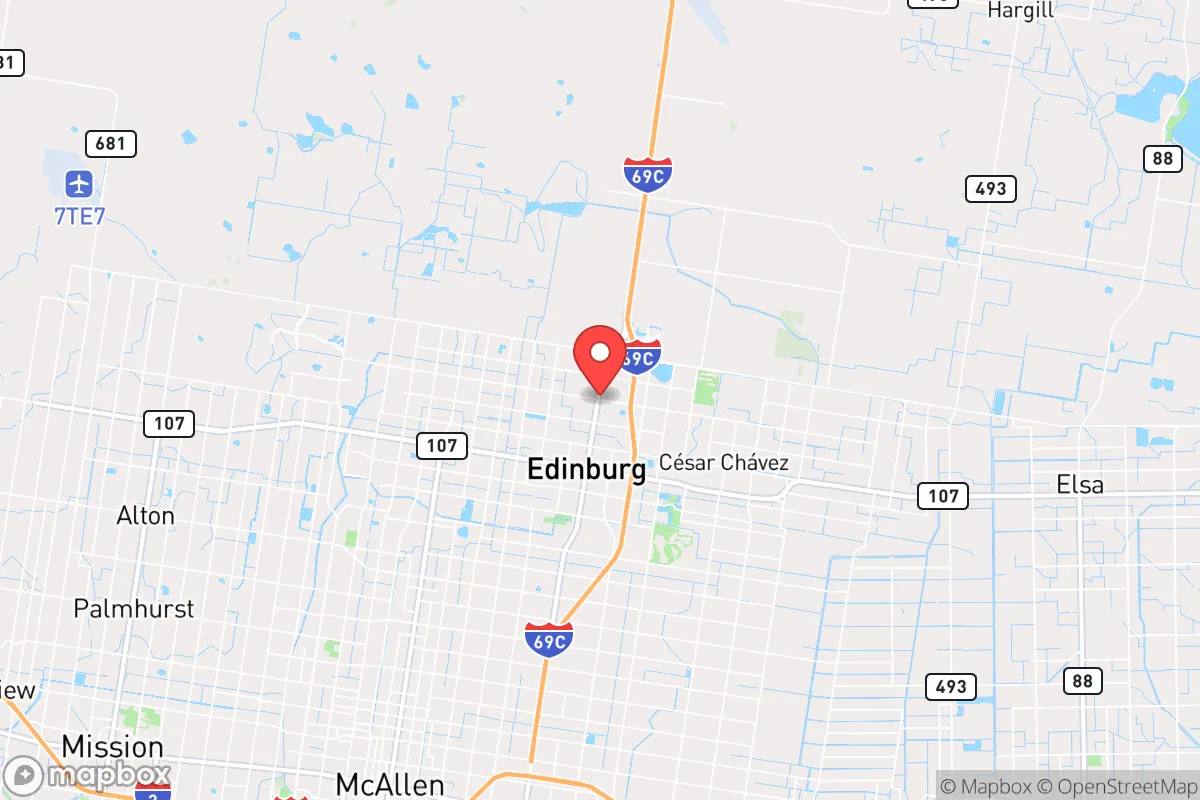
Edinburg, Texas, offers a compelling strategic position for those prioritizing resilience and self-sufficiency, sitting deep in the Rio Grande Valley roughly 20 miles from the Mexican border and 150 miles from the Gulf Coast. Its location provides a buffer from major metropolitan fallout zones like Houston, San Antonio, and Corpus Christi, while still granting access to essential infrastructure and cross-border resources. The area’s agricultural backbone, warm climate, and relatively low population density make it a viable long-term hold for individuals and families seeking to weather societal disruptions without being completely isolated.
Geographic position and natural advantages for long-term survival
Edinburg’s placement in the subtropical Rio Grande Valley gives it a distinct edge in a collapse scenario: a year-round growing season. Unlike northern regions where a single failed harvest can mean starvation, the Valley can produce food continuously, with winter temperatures rarely dipping below freezing. The area sits atop the Gulf Coast Aquifer, providing reliable groundwater access for wells, and the nearby Rio Grande offers a surface water source—though water rights and treaty allocations with Mexico can be contentious during drought. The flat terrain is defensible in a tactical sense; open agricultural land provides clear lines of sight, and the network of irrigation canals and resacas (oxbow lakes) can be used for both water storage and natural barriers. Edinburg is also far from known earthquake zones, major fault lines, and hurricane landfall points (the coast is 150 miles away, reducing storm surge risk), though tropical storms can still bring heavy rain and flooding in low-lying areas.
Risks, exposures, and proximity to fallout-relevant landmarks
The primary strategic liability is the border itself. Edinburg is roughly 20 miles from the Rio Grande and the Mexican city of Reynosa, a major urban center of over 600,000 people with known cartel activity. In a breakdown of civil order, the border could become a funnel for displaced populations, cartel violence, or military checkpoints. The nearby Anzalduas and Pharr-Reynosa International Bridges are chokepoints that could be closed or contested. Additionally, the SpaceX facility at Boca Chica (about 70 miles east) and the Port of Brownsville (60 miles east) are potential targets for state-level adversaries or domestic disruption. The Valley’s electrical grid is part of the Texas Interconnection, which has proven fragile during winter storms (e.g., 2021’s Uri), and local infrastructure is not hardened for prolonged outages. Edinburg’s proximity to McAllen (10 miles north) means it’s not fully rural; a major event in McAllen could spill over quickly. Flooding from the Rio Grande or heavy rains is a recurring risk—check FEMA flood maps before buying property.
Practical resilience for a relocator: food, water, energy, and defensibility
For a prepper or survivalist, Edinburg’s practical resilience hinges on three factors: local food production, water access, and community dynamics. The Valley is one of Texas’s top agricultural regions, with citrus, sugarcane, cotton, and vegetables grown year-round. Farmers markets, roadside stands, and direct-from-farm purchasing are common, reducing reliance on grocery supply chains. For water, a private well drilled into the Gulf Coast Aquifer is the gold standard—depths of 200–400 feet are typical, and water quality is generally good but may require filtration for high mineral content. Rainwater catchment is also viable, with annual rainfall averaging 22 inches. Solar energy is a strong play here: Edinburg averages 230 sunny days per year, and net metering policies (though limited in Texas) allow for grid-tied systems. Battery storage is recommended given grid instability. Defensibility is moderate—the flat terrain means you can’t hide, but you can see threats coming from miles away. Rural properties with acreage offer standoff distance, while suburban neighborhoods near the University of Texas Rio Grande Valley (UTRGV) campus may become contested zones during unrest. The local population is predominantly Hispanic and family-oriented, with strong community ties and a culture of mutual aid—this can be a double-edged sword for outsiders, but building relationships with neighbors is essential for long-term security. Gun laws are favorable: Texas is a constitutional carry state, and Edinburg has a pro-Second Amendment culture. The Hidalgo County Sheriff’s Office and Edinburg Police Department are generally professional but under-resourced for large-scale emergencies.
Overall strategic picture for the conservative prepper
Edinburg is not a bug-out location for those seeking total isolation—it’s a strategic hold for those who want to stay connected to resources while maintaining a buffer from major urban collapse. The border proximity is both a risk and an opportunity: it provides access to Mexican markets and potential cross-border trade in a crisis, but also exposes you to cartel violence and mass migration events. The climate and agriculture make it one of the few places in the continental U.S. where you can realistically achieve food sovereignty without high-tech inputs. The biggest downsides are the heat (summer highs regularly hit 100°F), the flood risk, and the fact that you’re in a politically blue region (Hidalgo County voted +17 Democrat in 2024) that may not align with your values—though local culture is more conservative than the voting patterns suggest. For a single individual or family willing to invest in a well, solar, and a good rifle, Edinburg offers a viable long-term base with low property costs (median home price around $220,000) and a low cost of living. It’s not a fortress, but it’s a solid foundation for riding out the next decade of uncertainty.

* Values derived from national, state, county, city and local statistics and may differ in a specific area. Last updated: 2026-04-22T01:59:09.000Z
Narrative content on this page is AI-generated and may contain mistakes. Verify any details that matter before acting on them.
ReloMaps may earn a commission from affiliate links at no extra cost to you.

