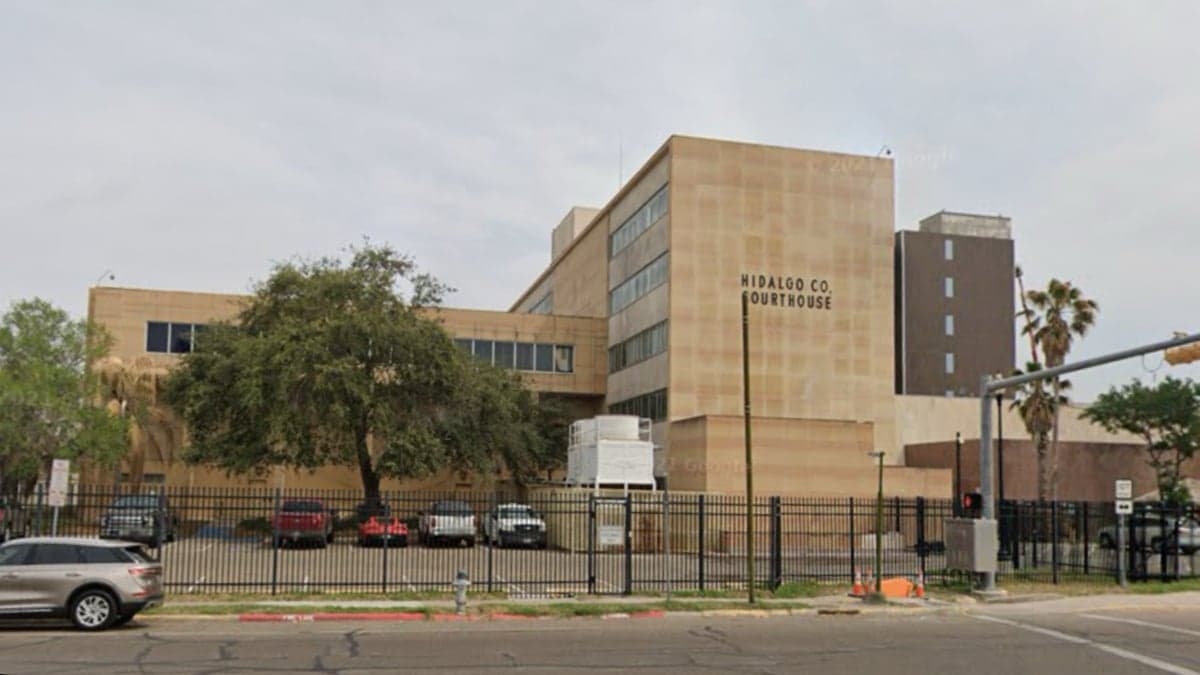
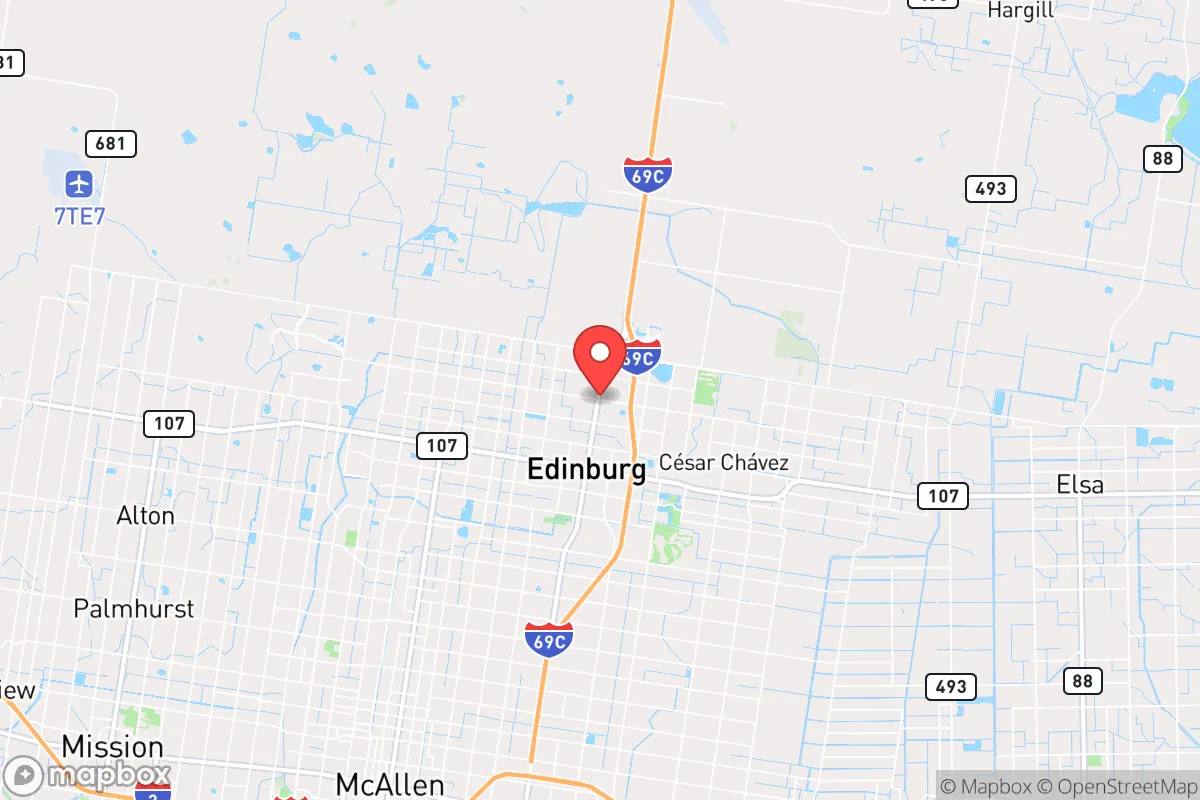
Photo: Wikipedia
Demographics of Edinburg, TX
Affluence Level in Edinburg, TX
A below-average socioeconomic profile. Incomes, home values, and educational attainment trail the U.S., with higher poverty and unemployment.
People of Edinburg, TX
The people of Edinburg, Texas today form a dense, predominantly Hispanic community of 102,561 residents, where 85.8% identify as Hispanic or Latino and only 9.3% as non-Hispanic White. This is a city shaped by generations of Mexican-American families, with a foreign-born population of 11.8% and a notably young median age that reflects strong family-oriented growth. Edinburg’s identity is rooted in its role as the Hidalgo County seat and a hub for healthcare and education, anchored by the University of Texas Rio Grande Valley. The population is characterized by deep local roots, a growing professional class, and a distinct South Texas cultural fabric that sets it apart from the more transient populations of larger Texas metros.
How the city was settled and grew
Edinburg was founded in 1908 as a planned railroad town, deliberately established by the St. Louis, Brownsville and Mexico Railway to serve the expanding citrus and cotton agriculture of the Lower Rio Grande Valley. The original settlers were a mix of Anglo-American farmers and merchants from the Midwest and South, drawn by land grants and irrigation projects, alongside Mexican laborers who built the rail lines and worked the fields. The historic downtown district around Closner Boulevard and Hidalgo Street became the commercial and civic core, where Anglo business owners operated alongside a growing Mexican-American working class. By the 1930s, neighborhoods like La Paloma and Las Milpas emerged as predominantly Mexican-American enclaves, settled by families who crossed the border for agricultural work and stayed to build permanent homes. The post-World War II era saw a steady influx of Mexican-American veterans and their families, who moved into areas like North Edinburg near the current university campus, drawn by the GI Bill and new opportunities in education and public service. The city’s population remained modest—under 10,000 as late as 1960—but the foundation of a bicultural, working-class community was firmly in place.
Modern era (post-1965)
The 1965 Hart-Cellar Immigration Act and subsequent family reunification policies dramatically reshaped Edinburg’s population. Mexican-American families already in the city sponsored relatives from northern Mexico, particularly from Tamaulipas and Nuevo León, accelerating Hispanic growth. By 1980, the Hispanic share had risen past 70%, and by 2000 it exceeded 85%, where it has since stabilized. The Alamito and Los Ebanos neighborhoods absorbed much of this new immigration, developing as dense, working-class areas with strong extended-family networks. Domestic in-migration during this period was modest compared to other Texas cities, as Edinburg lacked the high-tech job base of Austin or Dallas. Instead, growth came from natural increase and the expansion of the University of Texas-Pan American (now UTRGV), which drew Hispanic students from across the Valley. The University District around UTRGV became a magnet for younger, college-educated residents, while Monte Cristo and Treviño subdivisions attracted middle-class families seeking newer housing. The non-Hispanic White population declined from roughly 20% in 1980 to 9.3% today, as older Anglo families aged out or moved to larger metros. East/Southeast Asian residents make up 1.6% of the population, concentrated near the university in professional roles, while Indian-subcontinent residents account for 0.9%, primarily in medical and academic fields. The Black population remains small at 1.8%, with no distinct neighborhood concentration.
The future
Edinburg’s population is heading toward continued Hispanic dominance, with the non-Hispanic White share likely to shrink further as older cohorts pass away. The city is not tribalizing into distinct ethnic enclaves; rather, it is homogenizing around a Mexican-American cultural baseline, with newer immigrant arrivals from Central America and Mexico assimilating into existing Hispanic neighborhoods like Las Milpas and La Paloma. The foreign-born share of 11.8% is stable, suggesting immigration is plateauing rather than accelerating. The East/Southeast Asian and Indian communities are small but growing slowly, drawn by UTRGV’s expanding medical school and research programs, and they tend to settle near the university rather than forming ethnic clusters. The college-educated share of 28.9% is below the national average but rising, driven by UTRGV’s growth and the city’s role as a regional healthcare hub. Over the next 10-20 years, Edinburg will likely become more professionalized and bilingual, with a larger middle class, but its demographic core will remain overwhelmingly Hispanic and family-oriented.
For someone moving in now, Edinburg is becoming a stable, culturally cohesive community where Hispanic identity is the norm, not a minority experience. The city offers a low cost of living, strong family networks, and growing professional opportunities in education and healthcare, but it is not a place of rapid demographic diversification. New residents—whether Anglo, Asian, or Indian—will find a welcoming but culturally distinct environment where Spanish is commonly heard and local traditions run deep. The bottom line: Edinburg is a city that knows what it is, and that clarity is both its strength and its limitation for newcomers seeking diversity or rapid change.

* Values derived from national, state, county, city and local statistics and may differ in a specific area. Last updated: 2026-04-22T01:59:09.000Z
Narrative content on this page is AI-generated and may contain mistakes. Verify any details that matter before acting on them.
ReloMaps may earn a commission from affiliate links at no extra cost to you.

