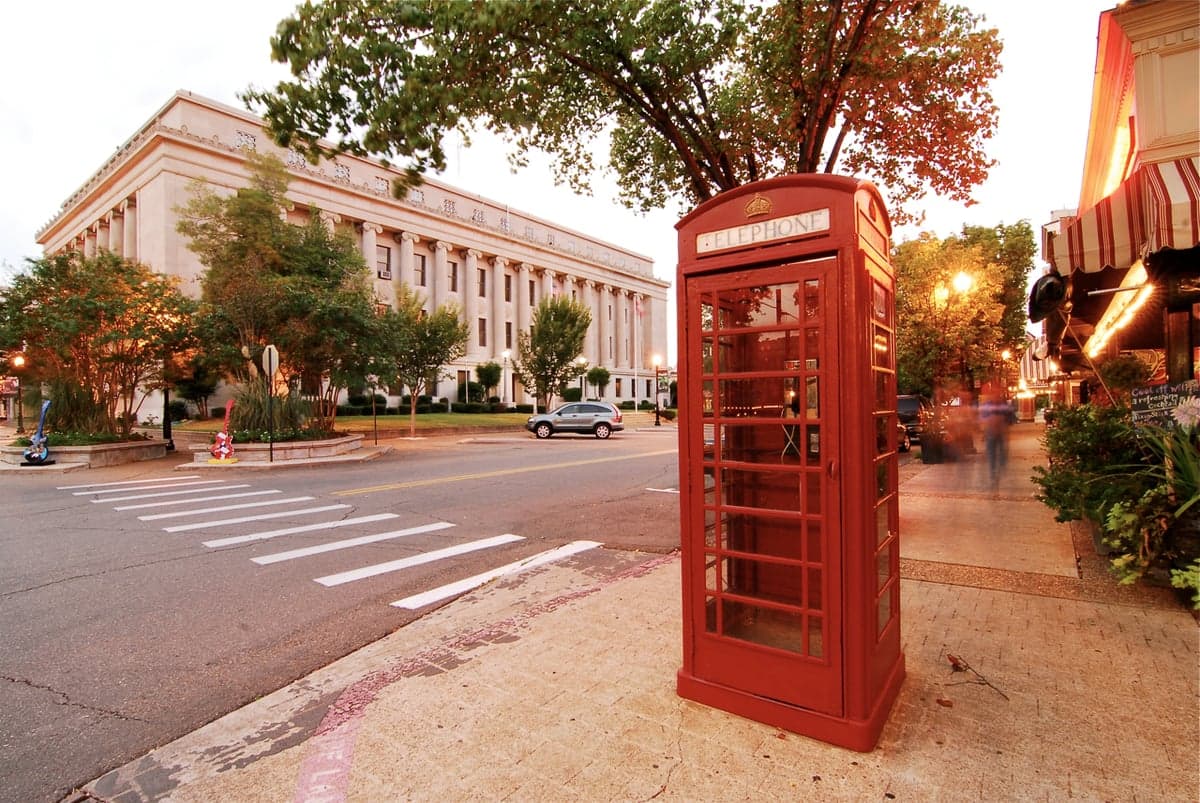
Photo: Wikipedia
Quality of Life in El Dorado, AR
A high quality of life with strong walkability, manageable living costs, healthy neighborhood signals, and solid amenity access.
What does Quality of Life tell us?
Quality of Life blends cost of living, nearby amenities, socioeconomic signals, and neighborhood character. City-level scores represent the whole municipality; individual neighborhoods can differ.
What does this tell us?
Quality of Life blends cost of living, nearby amenities, socioeconomic signals, and neighborhood character. City-level scores represent the whole municipality; individual neighborhoods can differ.
Cost of Living
40% below national average
The Real Cost of Living in El Dorado, AR for 2026
| Tier | Individual | Family (4) |
|---|---|---|
| Survival | $13k | $25k |
| Comfortable | $22k | $33k |
| Luxury | $82k+ | $126k+ |
| Elite (Top 5%) | $99k+ | $153k+ |
137%
The Area Signal
A metric tracking the socioeconomic signals of the area.
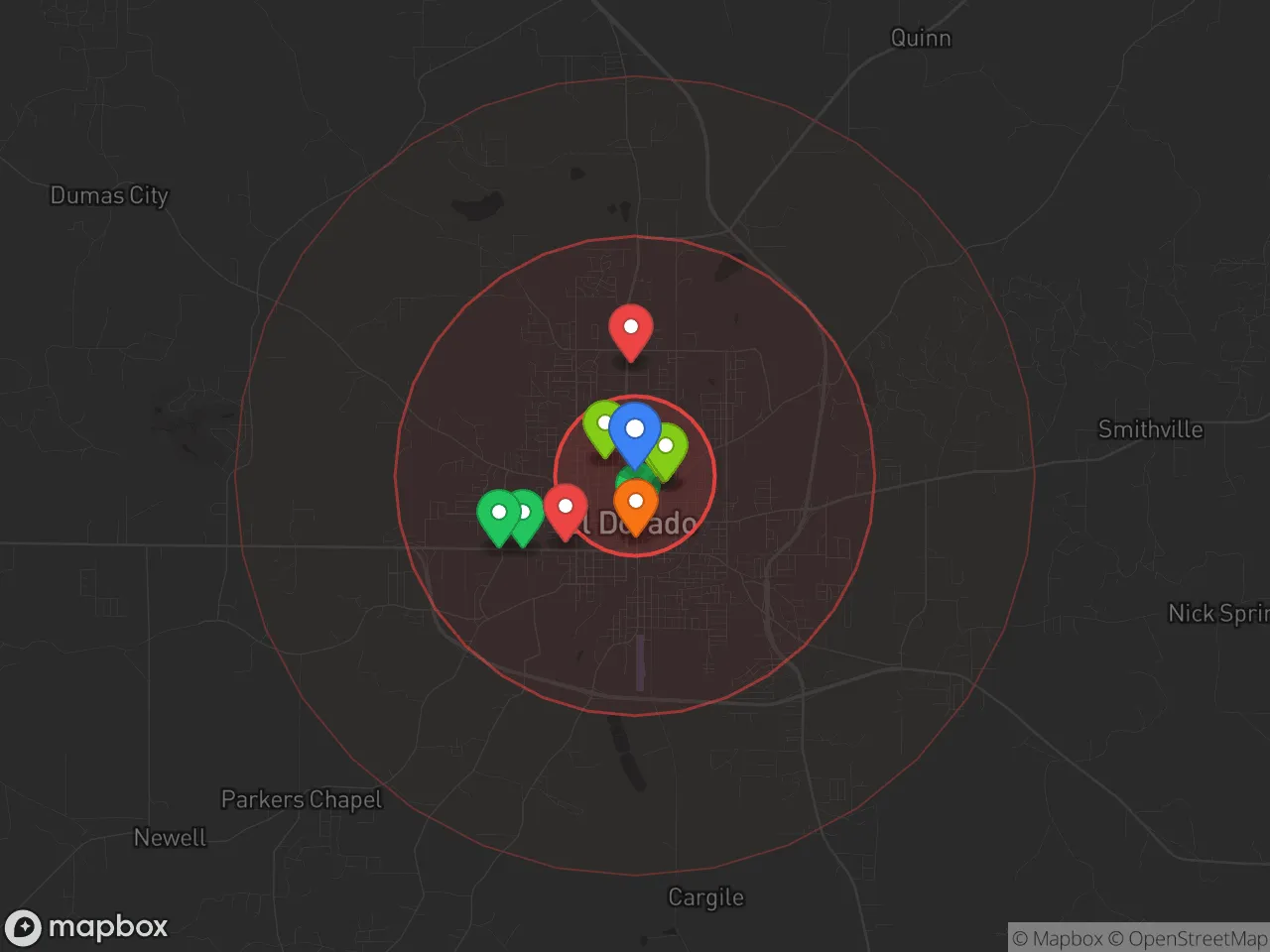
Hobbies
Explore the areaGroceries
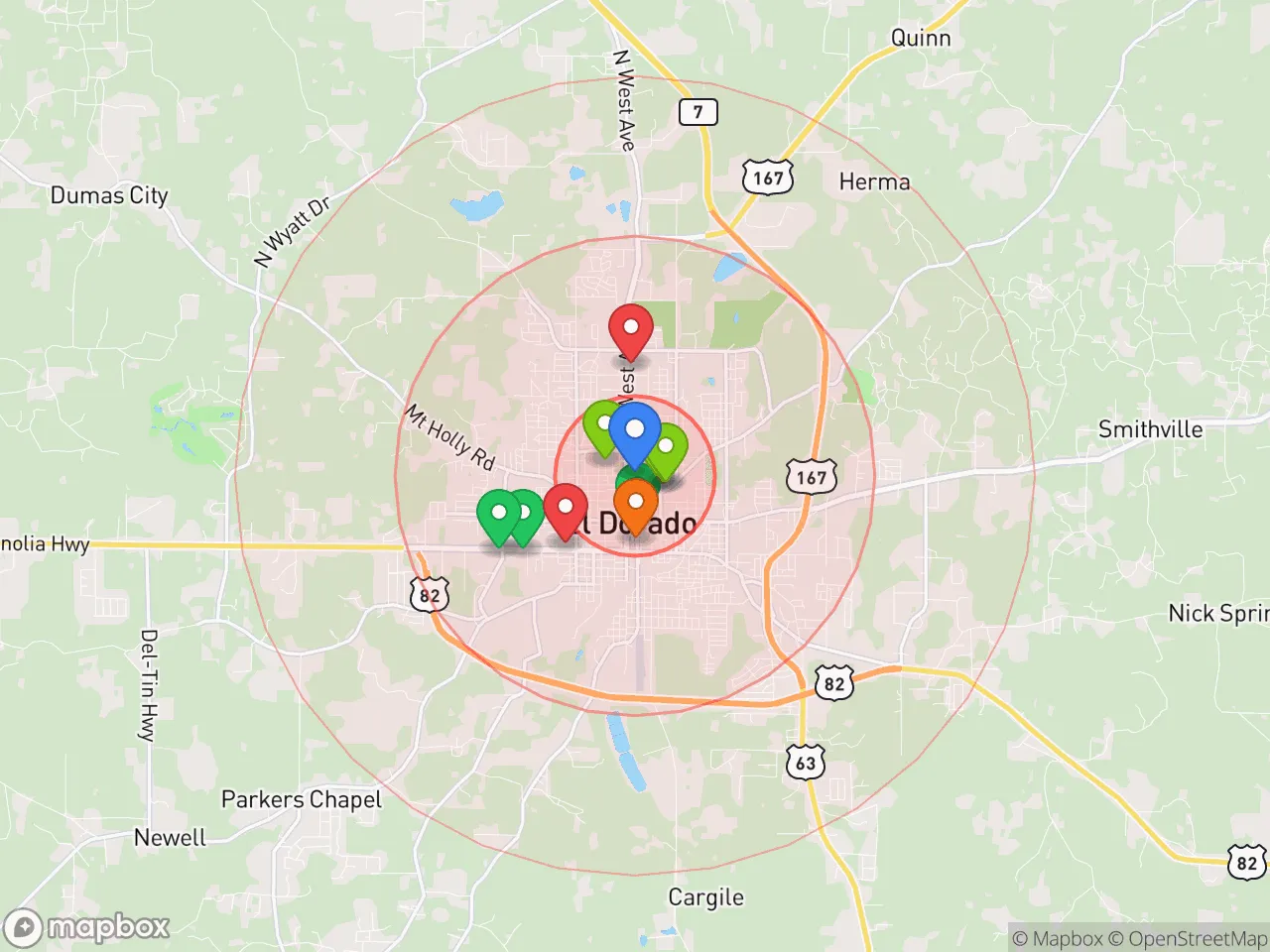
2 within 10 miles
Gas
8 within 10 miles
Hospital
1 within 20 miles
Airport
DFW — Dallas/Fort Worth International
Post Office
USPS — El Dorado, AR
Critical Amenities
Quality-of-Life Analysis
El Dorado, Arkansas, presents a notably affordable quality of life that attracts a mix of retirees, young families, and workers in the energy and manufacturing sectors. With a cost of living index of 60—40 percent below the national average—residents enjoy a low-stress financial environment, though the area’s median household income of roughly $42,000 reflects a modest economic base. The population of about 18,000 leans older and more settled, with a strong sense of community rooted in the city’s history as an oil boomtown and its ongoing role as a regional hub for south-central Arkansas.
How housing costs and everyday expenses compare to nearby cities
Housing in El Dorado is exceptionally affordable by national standards, with a median home value of $113,100 and a median rent of $845 per month. These figures are roughly half the national median, making homeownership accessible even for entry-level workers. Compared to nearby cities like Magnolia (median home value $98,000) or Camden ($87,000), El Dorado’s housing is slightly pricier but offers more amenities and a larger job base. The average commute of just over 15 minutes is among the shortest in the state, cutting transportation costs significantly and freeing up time for family or recreation. Utility costs and grocery prices also track below the national average, reinforcing the area’s reputation as a place where a middle-class lifestyle is attainable on a modest salary.
What daily life is like for families: schools, parks, and local amenities
Daily life in El Dorado centers on a compact, walkable downtown and a network of well-maintained parks. The El Dorado School District serves about 3,500 students and includes the highly regarded El Dorado High School, which offers Advanced Placement courses and a strong athletics program. For younger children, the South Arkansas Arts Center and the Murphy Arts District provide year-round cultural programming, including live theater and concerts. The city’s Medical Center of South Arkansas is the regional healthcare hub, with a Level III trauma center and specialty clinics. Outdoor recreation is anchored by the 1,200-acre South Arkansas Arboretum and the nearby Felsenthal National Wildlife Refuge, a 65,000-acre wetland popular for birding and fishing. The pace of life is unhurried, with most errands and social activities contained within a 10-minute drive, and the lack of heavy traffic is a frequently cited perk by newcomers.
El Dorado is best suited for those who value low costs, short commutes, and a tight-knit community over urban amenities or career diversity. Retirees on fixed incomes find the affordability particularly attractive, while families appreciate the safe neighborhoods and accessible schools. Workers in the oil and gas, timber, or manufacturing sectors will find the most employment alignment, though remote workers can also thrive given the low housing costs. The trade-off is limited nightlife, fewer dining options than larger cities, and a slower pace that may feel isolating to those accustomed to metropolitan energy. For the right resident, however, El Dorado offers a stable, low-friction lifestyle where a dollar stretches further and daily life is refreshingly simple.

Crime in El Dorado, AR
Significantly higher crime rates than 83% of comparable U.S. locations.
Violent CrimeViolent Crime Analysis
Property CrimeProperty Crime Analysis
Crime Analysis
El Dorado, Arkansas, reports a violent crime rate of 1,517.7 per 100,000 residents and a property crime rate of 2,907.5 per 100,000, placing it among the higher-crime communities in the state. These figures indicate that safety is a significant concern for residents and prospective movers, particularly when compared to national benchmarks. The city’s crime profile is shaped by a combination of socioeconomic factors and local justice system policies that directly affect public safety outcomes.
Crime in context
El Dorado’s violent crime rate is roughly 3.5 times the national average of approximately 400 per 100,000, while its property crime rate is about 1.5 times the national average of 1,954 per 100,000. Within Arkansas, the city’s violent crime rate is notably higher than the state average of roughly 600 per 100,000. This disparity is partly attributable to the broader regional trend in which large metro areas—and smaller cities near them—often experience elevated crime due to population density, economic inequality, and, critically, the influence of progressive judicial philosophies. In jurisdictions where judges and district attorneys prioritize leniency and rehabilitation over deterrence, offenders are more likely to return to the streets quickly, undermining public safety. El Dorado, while not a major metro, is situated within a state where such prosecutorial and judicial trends have been documented, contributing to a cycle of recidivism that keeps violent and property crime rates elevated.
What residents experience
For those living in El Dorado, the high crime rates translate into tangible daily concerns. Violent offenses—including aggravated assault, robbery, and homicide—occur at a frequency that makes random victimization a realistic worry, particularly in areas with lower socioeconomic stability. Property crimes such as burglary, theft, and motor vehicle theft are even more common, affecting homeowners and renters alike. Residents often report feeling unsafe walking alone at night or leaving vehicles and homes unsecured. The local police department works to address these issues, but the effectiveness of enforcement is hampered when the justice system’s progressive policies result in shorter sentences and reduced consequences for repeat offenders. This dynamic erodes trust in the system and leaves many residents feeling that the law prioritizes offender rehabilitation over victim protection.
Neighborhood-level variation
Safety in El Dorado is not uniform across the city. Older, more affluent neighborhoods near the historic downtown core and areas with higher home values—such as those around the El Dorado Country Club—tend to have lower crime rates due to stronger community watch programs and better-resourced policing. Conversely, neighborhoods in the southern and eastern parts of the city, particularly near the industrial zones and lower-income housing developments, experience the highest concentrations of both violent and property crime. Prospective residents are advised to consult local crime mapping tools and speak with real estate agents familiar with block-by-block conditions. Choosing a home in a well-established, higher-income pocket can significantly reduce exposure to the city’s elevated crime rates, though no area is entirely immune given the systemic issues at play.
* Values derived from national, state, county, city and local statistics and may differ in a specific area. Last updated: 2026-04-23T03:47:33.000Z
Narrative content on this page is AI-generated and may contain mistakes. Verify any details that matter before acting on them.
ReloMaps may earn a commission from affiliate links at no extra cost to you.

