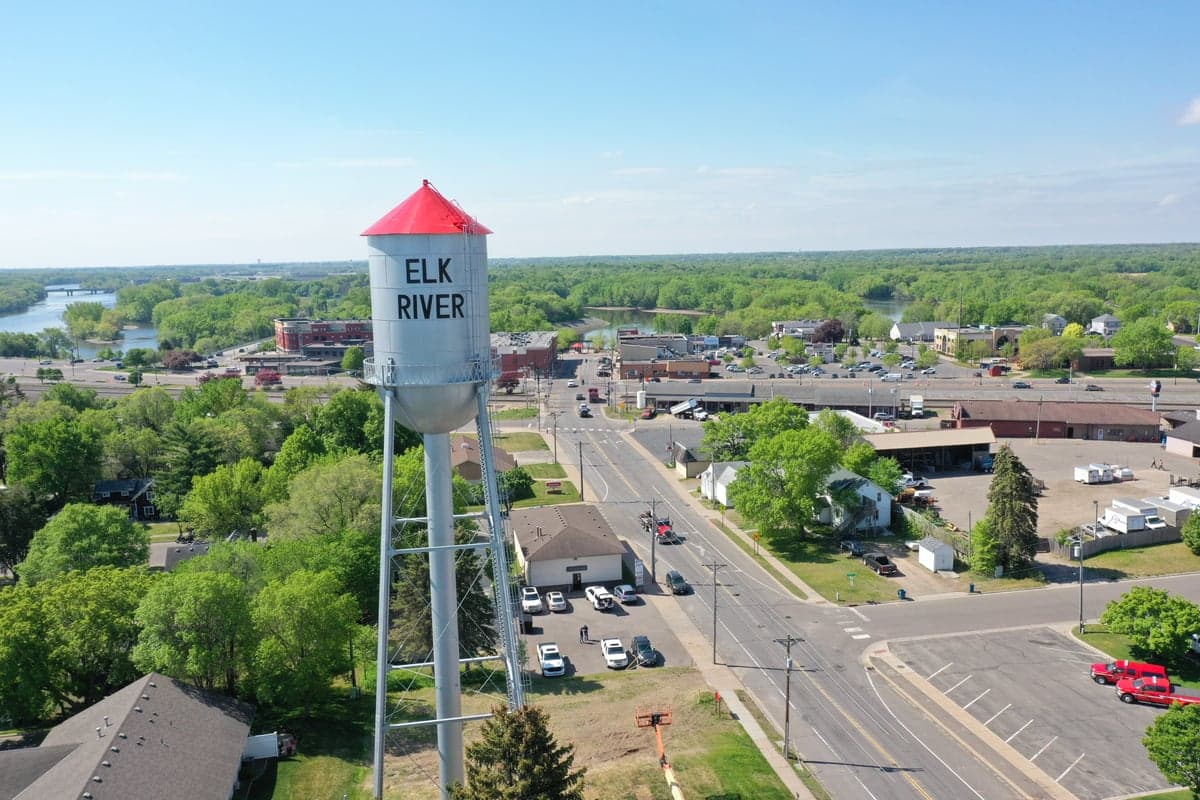
Photo: Wikipedia
Strategic Assessment of Elk River, MN
Meaningful friction. Expect exposure to either population pressure, blast zones, or natural disaster risk. Consider buying a retreat property.
What does the Strategic Assessment tell us?
Our Strategic Assessment grades tactical survivability of an area. Major population centers, military targets, fallout zones, natural disasters, and border exposure all drive risk — lower exposure means a more defensible position in a crisis.
This is heavily inspired by Joel Skousen's Strategic Relocation book. Highly recommended you checkout the book ($)What does this tell us?
Our Strategic Assessment grades tactical survivability of an area. Major population centers, military targets, fallout zones, natural disasters, and border exposure all drive risk — lower exposure means a more defensible position in a crisis.
This is heavily inspired by Joel Skousen's Strategic Relocation book. Highly recommended you checkout the book ($)Strategic Pillars

Key Distances
Regional Safe Places
Below is our recommended "safe zones" in Minnesota and the surrounding area based on our strategic heuristics. For most people, it's unrealistic to live in a “safe zone” full-time due to work, family or other personal reasons. They tend to be more rural. However, many of these areas are perfect for second homes and retreat properties that double as a vacation home or even a short-term rental.
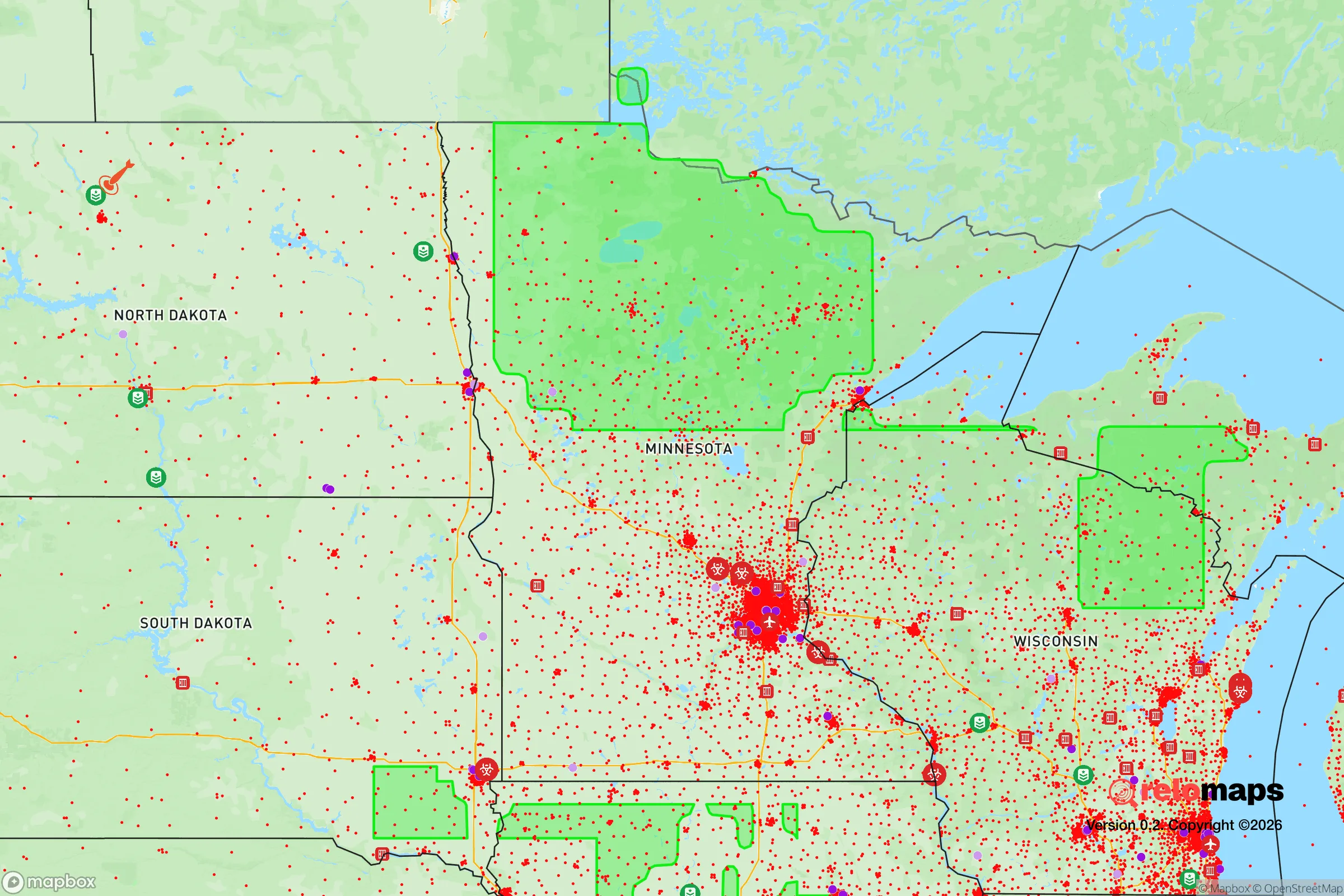
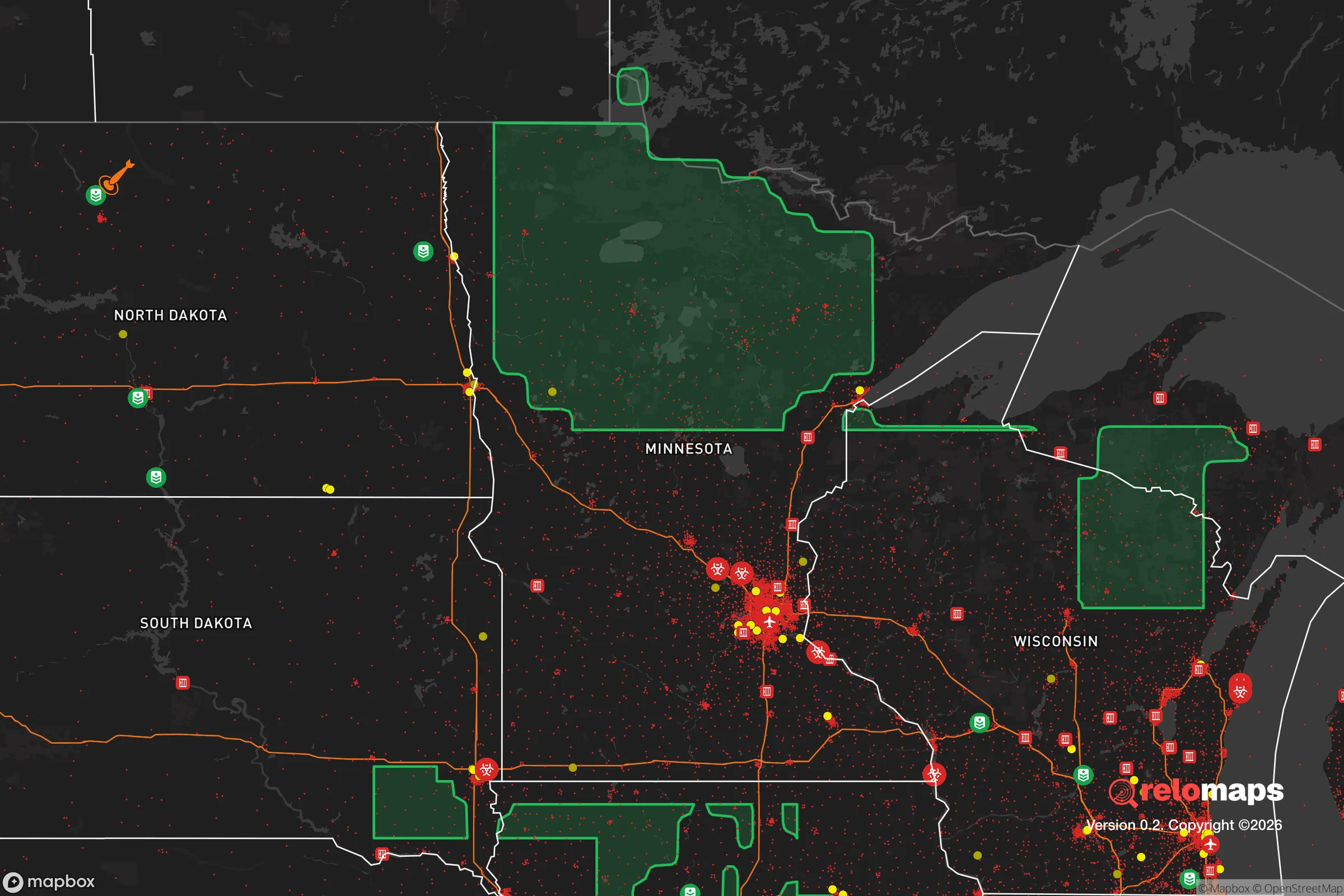


Important Note: For informational purposes only. This does not mean nothing bad ever happens in the green zones. Please use common sense. This is based on public data and modeled with AI. We tried to take a conservative approach but mistakes happen. We update this regularly as new information becomes available.
Solar Generator Recommendations
Backup power matters more here than in safer locations. We've picked three solar generators across budgets and capacity tiers — start with the budget unit if you only need a few essentials, or step up if you want to run a fridge and HVAC for days at a time.

Jackery Portable Power Station Explorer 300
Budget OptionPower on the Go: Weighing only 11 lbs, it's convenient to set up and store with book-sized foldable solar panels

BLUETTI Portable Power Station AC180
Designed for both indoor and outdoor scenarios, AC180 is highly capable as it has a robost capacity and continuous output power.

EF ECOFLOW DELTA Pro Ultra Power Station
Upgraded PickEcoFlow DELTA Pro Ultra is a whole-home energy system designed to grow with your family. Integrated with the Smart Home Panel 2, it scales to meet your evolving energy needs — keeping your home powered, intelligent, and secure through every stage of life.
We earn a commission, at no additional cost to you.
Strategic Assessment Analysis
Elk River, Minnesota, sits in a strategic sweet spot that resilience-minded relocators should take seriously: close enough to the Twin Cities to access critical infrastructure and supply chains, yet far enough out to avoid the worst of urban collapse scenarios. With a population hovering around 25,000 and steady growth driven by families and tradespeople, this Sherburne County seat offers a buffer zone that many preppers find appealing. The area’s mix of river access, agricultural land, and a conservative-leaning local culture makes it a viable base for those who want to be prepared for civic unrest, supply chain disruptions, or natural disasters without going fully off-grid.
Geographic position and natural advantages for long-term security
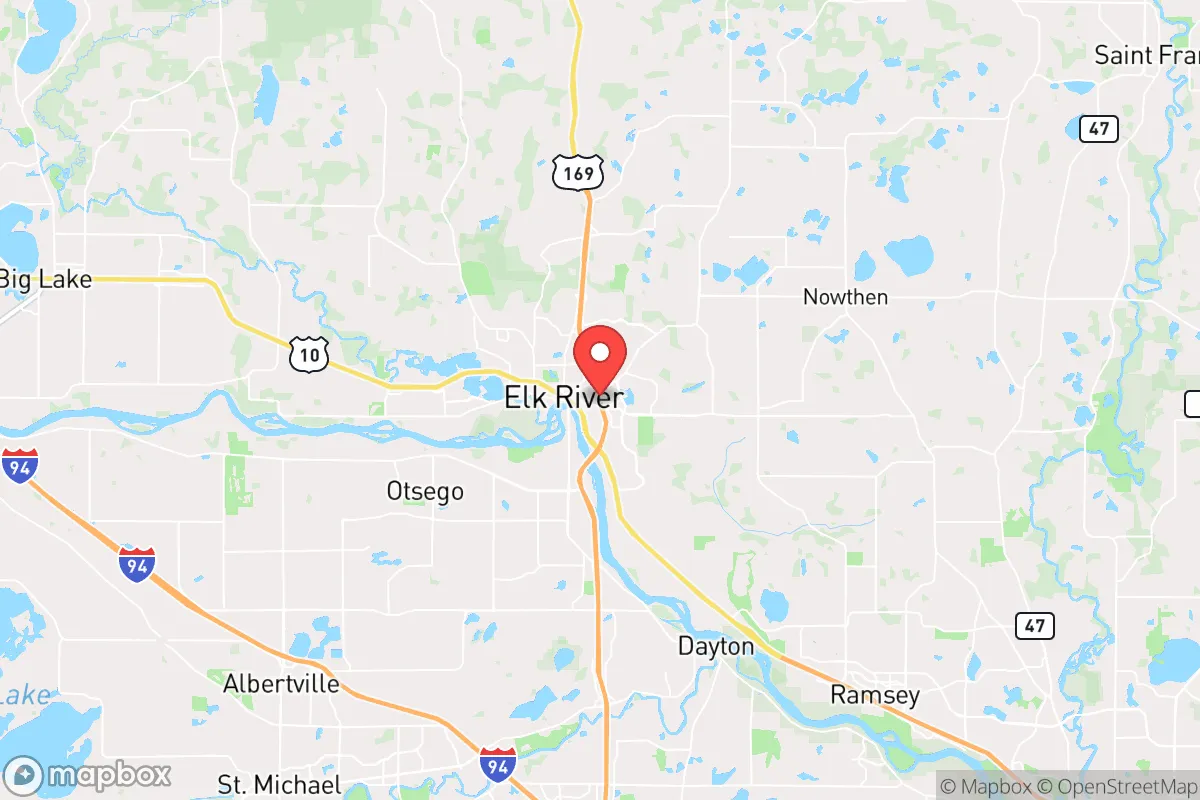
Elk River’s location along the Mississippi River is its most obvious asset, but the real value lies in what surrounds it. The city sits at the junction of US Highway 10 and Minnesota State Highway 101, providing multiple egress routes if major arteries become compromised. To the north and west, vast stretches of farmland, state forests, and wetlands create a natural buffer against urban sprawl. The nearby Sherburne National Wildlife Refuge and Sand Dunes State Forest offer remote areas for retreat or resource gathering, while the Mississippi itself provides a reliable water source—though treatment and filtration would be necessary. The region’s relatively low population density (Sherburne County averages about 150 people per square mile) means fewer competition for resources in a crisis. For a relocator thinking about defensible space, the area’s mix of open fields and wooded river bluffs allows for both visibility and concealment. The local topography is gentle but offers enough variation to create natural choke points if movement becomes restricted.
Risks, exposures, and proximity to fallout-relevant landmarks
No location is without vulnerabilities, and Elk River has several that a prepper must weigh. The most obvious is its proximity to the Twin Cities metropolitan area—roughly 40 miles northwest of downtown Minneapolis. In a major civil unrest event, mass casualty incident, or infrastructure collapse, that distance could be both a blessing and a curse. Refugees from the cities would likely flow along Highway 10 and I-94, potentially overwhelming local resources. The Monticello nuclear power plant sits just 12 miles upriver, which introduces a low-probability but high-consequence risk of radiological release. Elk River also lies within the fallout zone of the Twin Cities’ own critical infrastructure—military installations, government centers, and industrial hubs that could become targets in a conflict scenario. The area is not immune to natural hazards either: the Mississippi River has a history of spring flooding, and severe thunderstorms with tornadoes are a seasonal reality. Winter storms can isolate the area for days, making fuel and food storage non-negotiable. On the plus side, the local government is generally conservative and pro-Second Amendment, which aligns with a self-reliant mindset. Sherburne County has a strong tradition of volunteer fire departments and community emergency response teams, which suggests a population that takes preparedness seriously.
Practical resilience for a relocator: food, water, energy, and defensibility
For someone looking to establish a resilient homestead or smallholding, Elk River offers a workable foundation. The surrounding agricultural land is fertile and well-suited for row crops, livestock, and orchards. Local farmers’ markets and co-ops are common, and the area has a robust network of feed stores, hardware suppliers, and farm equipment dealers. Water is abundant from the Mississippi and numerous smaller lakes and rivers, but well drilling is the standard for rural properties—depths typically range from 100 to 300 feet, with decent yields. Energy infrastructure is conventional, but solar adoption is growing, and the region’s relatively flat terrain makes wind a viable supplement. Natural gas is widely available in town, but rural properties often rely on propane or heating oil. Defensibility is moderate: the river and highway create natural boundaries, but the terrain is not mountainous, so a determined group could approach from multiple directions. The local law enforcement presence is adequate for a town this size, but in a prolonged crisis, residents would need to rely on mutual aid networks. The Elk River area has a strong hunting and outdoor culture, which means many locals already possess firearms, field skills, and a mindset of self-sufficiency. For a relocator, the key is to secure property with good sightlines, multiple access points, and a reliable water source—preferably with a backup well or rainwater catchment system.
The overall strategic picture for Elk River is one of cautious optimism for the prepared relocator. It offers a realistic middle ground: not so remote that you’re cut off from medical care, supplies, or community support, but far enough from the Twin Cities that you’re not in the blast radius of a major urban collapse. The local culture leans conservative, self-reliant, and community-oriented—traits that matter when the grid goes down or the grocery store shelves empty. The risks are real—flooding, nuclear proximity, and the potential for refugee flows—but they are manageable with proper planning. For a single individual or family looking to build a resilient life in the Upper Midwest, Elk River deserves a serious look. It’s not a fortress, but it’s a solid base camp.

* Values derived from national, state, county, city and local statistics and may differ in a specific area. Last updated: 2026-04-19T08:35:51.000Z
Narrative content on this page is AI-generated and may contain mistakes. Verify any details that matter before acting on them.
ReloMaps may earn a commission from affiliate links at no extra cost to you.

