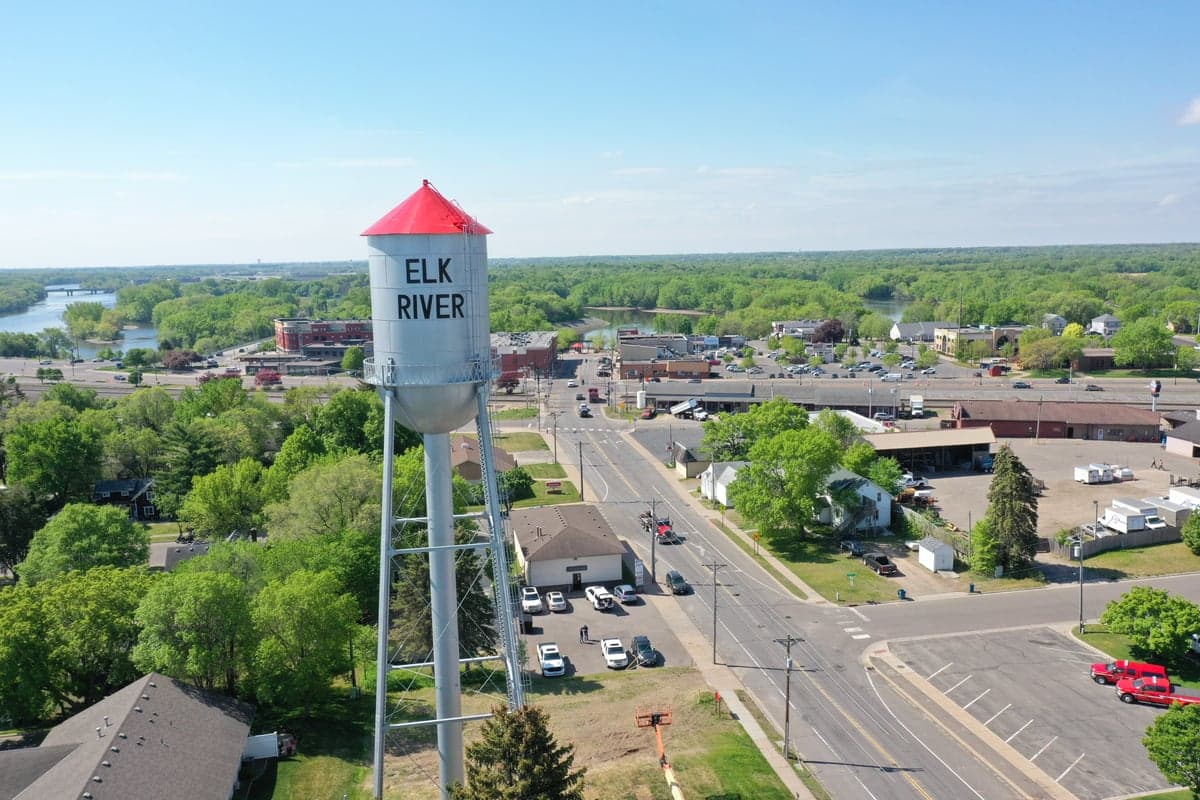
Photo: Wikipedia
Political ClimatePolitical Climate in Elk River, MN
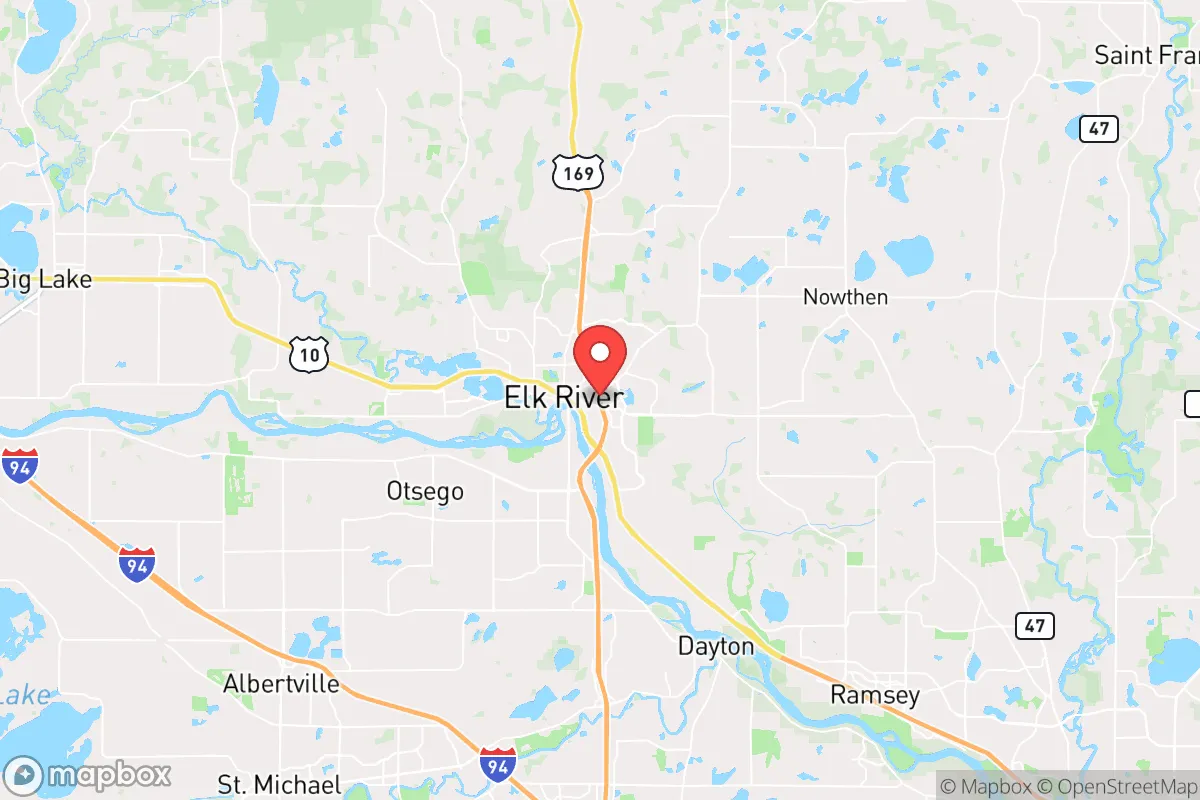
District shown is the primary district for this city’s centroid. Cities may span multiple districts.
Local Political AnalysisPolitical Analysis of Elk River, MN
Elk River leans solidly Republican, with a Cook PVI of R+10 that reflects a deep-rooted conservative tradition in Sherburne County. The area has long been a stronghold for folks who value personal responsibility, limited government, and the right to live life without excessive interference. While the broader Twin Cities metro has shifted leftward over the past decade, Elk River has held its ground, though there are signs of creeping progressive influence that long-time residents find concerning. The political trajectory here is one of cautious resistance—most locals still vote red, but the cultural and policy battles are getting sharper, especially around school boards and local ordinances.
How it compares
Compared to nearby cities, Elk River stands out as a conservative anchor in a region that's becoming more politically mixed. Head south to Otsego or Rogers, and you'll find a similar Republican lean, but those areas are seeing more influx from Hennepin County transplants who bring progressive voting habits. Drive east to Anoka, and the political balance tips closer to purple, with a growing number of Democratic-leaning voters in the older suburbs. The real contrast is with Minneapolis, just 40 miles south, where progressive policies on taxes, policing, and land use are the norm—things that would never fly in Elk River. Even St. Cloud, 20 miles northwest, has a more mixed political landscape due to its university population and growing immigrant communities. Elk River remains one of the few places in the northwest metro where you can reliably count on conservative representation at the county and state level, though that's being tested as development brings new residents from blue areas.
What this means for residents
For residents, the political climate here means a government that generally stays out of your business—lower taxes, fewer regulations, and a school system that hasn't fully embraced the progressive curriculum changes seen in districts closer to the cities. Property taxes in Sherburne County are among the more reasonable in the metro, and there's little appetite for new bond measures or spending initiatives. However, the pressure is mounting. School board meetings have become battlegrounds over critical race theory, gender ideology, and library book content, with conservative parents pushing back against what they see as government overreach into family values. The county commission remains reliably Republican, but local city council races are starting to see progressive challengers funded by outside groups. For now, residents can still enjoy a sense of personal freedom—no mask mandates, no heavy-handed zoning restrictions, and a sheriff's office that prioritizes public safety over social experiments. But the long-term concern is that as Elk River grows, the political culture could shift, bringing the same overreach that has driven many families out of the inner suburbs.
Culturally, Elk River still feels like a place where the Second Amendment is respected, where small businesses aren't buried in red tape, and where community events like the Elk River Heritage Days reflect traditional values. The biggest policy distinction is the area's resistance to regional government consolidation—efforts to tie Sherburne County into metro-wide transit taxes or affordable housing mandates have been met with fierce opposition. Locals see these as backdoor attempts to impose progressive priorities on a conservative community. The near-term outlook is stable, but the long-term trajectory depends on whether the next wave of newcomers embraces the local culture or tries to change it. For now, Elk River remains a place where you can still raise a family without the government looking over your shoulder, but staying that way requires staying vigilant.

State Political ClimatePolitical Climate in Minnesota
State Political AnalysisPolitical Environment in the State
Minnesota has shifted from a classic purple battleground to a reliably blue state over the past two decades, with Democrats now controlling the governorship, both legislative chambers, and the entire federal delegation. The state voted for Hillary Clinton by 1.5 points in 2016, Joe Biden by 7 points in 2020, and Kamala Harris by 4 points in 2024 — a clear leftward drift driven almost entirely by the explosive growth of the Twin Cities metro area. For a conservative considering relocation, the state offers a stark split: the rural and exurban regions remain deeply red, but the political center of gravity in St. Paul and Minneapolis keeps pulling the entire state toward progressive policies that many newcomers find alarming.
Urban vs. rural divide
The political map of Minnesota is a tale of two worlds. The Twin Cities metro — Hennepin, Ramsey, and Dakota counties — now delivers roughly 55% of the state’s vote, and those counties have become Democratic strongholds. Minneapolis and St. Paul themselves are among the most liberal cities in the Midwest, with city councils that have pushed defund-the-police resolutions and rent control. Meanwhile, greater Minnesota is overwhelmingly Republican. The Iron Range (St. Louis, Itasca counties) used to be reliably blue but has flipped hard red in the last two cycles, driven by anger over mining regulations and the Democratic party’s environmental stance. Outstate counties like Stearns (St. Cloud), Olmsted (Rochester), and Washington (suburban exurbs) are now competitive or lean Republican, but they’re not growing fast enough to offset the metro’s population gains. The 2024 election saw Dakota County — once a bellwether — vote for Harris by 10 points, while Beltrami County (Bemidji) flipped back to Trump after a narrow Biden win in 2020. The divide isn’t just geographic; it’s cultural. A farmer near Marshall and a tech worker in Edina live in different political universes.
Policy environment
Minnesota’s policy environment has become aggressively progressive under Governor Tim Walz and the DFL trifecta that took full control in 2023. The state now has a progressive income tax with a top rate of 9.85% — one of the highest in the nation — and a statewide sales tax of 6.875% that local governments can pile on top. Property taxes are above average, especially in the metro. The 2023 session passed a slew of new laws: a paid family and medical leave program funded by a new payroll tax, a carbon-free electricity mandate by 2040, and a sweeping driver’s license-for-all law that grants licenses to undocumented immigrants. Education policy is a flashpoint: Minnesota has a statewide “trans refuge” law that shields minors seeking gender-transition care from out-of-state parents’ legal challenges, and the state’s public schools have adopted “ethnic studies” curriculum requirements. Election laws have also tightened in a blue direction: the state now has automatic voter registration, same-day registration, and no-excuse absentee voting — all of which conservatives argue erode ballot integrity. On the plus side, Minnesota has no right-to-work law, and union membership remains high, which drives up costs for small businesses.
Trajectory & freedom
On the freedom index, Minnesota is clearly trending downward. The 2023 legislative session was a firehose of new restrictions: the Minnesota Gun Control Act (HF 4300) expanded universal background checks and created a “red flag” extreme risk protection order law, making it one of the most restrictive gun states in the Midwest. Parental rights took a hit with the aforementioned trans refuge law and a new law that allows minors 16 and older to consent to gender-affirming care without parental notification. Medical autonomy was further curtailed by a codification of abortion rights into state law (the Protect Reproductive Options Act), removing any parental consent requirements for minors. Property rights are under pressure from a new “climate superfund” law that allows the state to sue fossil fuel companies for past emissions, and from a statewide rent control preemption that lets cities impose rent caps — Minneapolis already has one. On the positive side for conservatives, Minnesota has no state-level occupational licensing for many trades, and the state’s constitutional amendment protecting hunting and fishing rights remains in place. But the overall trajectory is clear: more taxes, more mandates, and less individual discretion.
Civil unrest & political movements
Minnesota has been a national epicenter of civil unrest since the 2020 George Floyd protests, which caused over $500 million in damage in Minneapolis and St. Paul. The aftermath saw a sustained “defund the police” movement that led to the Minneapolis City Council’s (failed) attempt to abolish the police department. The state has become a magnet for progressive activism: the “People’s Movement” coalition, including groups like Reclaim the Block and the Minnesota Freedom Fund, has pushed for bail reform and police accountability. On the right, the Minnesota Gun Owners Caucus and the Minnesota Family Council have organized against the new gun and parental rights laws. Immigration politics are heated: Minnesota is a sanctuary state by executive order, and the driver’s license-for-all law has drawn federal scrutiny. Election integrity remains a sore point — the 2020 election saw a narrow 7,000-vote margin for Biden, and the 2024 race was similarly close, with ongoing lawsuits over ballot harvesting and voter roll maintenance. A new resident will notice the tension: yard signs for “Walz/Walz” and “Trump/Vance” coexist uneasily, and local news is dominated by legislative battles.
Projection
Over the next 5-10 years, Minnesota is likely to become even more blue. The Twin Cities metro is growing faster than the rest of the state, driven by immigration (both international and domestic from blue states) and a booming tech/healthcare economy anchored by Mayo Clinic in Rochester and UnitedHealth Group in Minnetonka. The state’s population is aging, but the younger, more diverse metro voters are replacing older rural conservatives. The DFL trifecta is unlikely to break anytime soon — the state Senate map is favorable to Democrats through 2026, and the governor’s office is safe. Expect more progressive policies: a statewide public option for health insurance is being debated, a carbon tax is on the table, and the push for a statewide rent control law is gaining steam. The one wild card is the Iron Range: if mining jobs continue to decline and the region’s population shrinks, the GOP’s rural base will erode further. For a conservative moving in now, the realistic expectation is that Minnesota will be a one-party state for the foreseeable future, with all the policy consequences that entails.
Bottom line for a new resident: If you’re a conservative considering Minnesota, you’re moving into a state where your vote will likely be a minority, your taxes will be high, and your cultural values will be increasingly at odds with the state government. The rural areas and exurbs offer a more conservative lifestyle, but you’ll still be subject to state-level policies on guns, education, and parental rights that you may find intrusive. The best bet is to target a red-leaning county like Stearns, Wright, or Sherburne, where local government is more aligned with your values, and accept that the state-level political winds are blowing against you. It’s not impossible to live here as a conservative — many do — but it requires a thick skin and a willingness to engage in the fight.
* Values derived from national, state, county, city and local statistics and may differ in a specific area. Last updated: 2026-04-19T08:35:51.000Z
Narrative content on this page is AI-generated and may contain mistakes. Verify any details that matter before acting on them.
ReloMaps may earn a commission from affiliate links at no extra cost to you.

