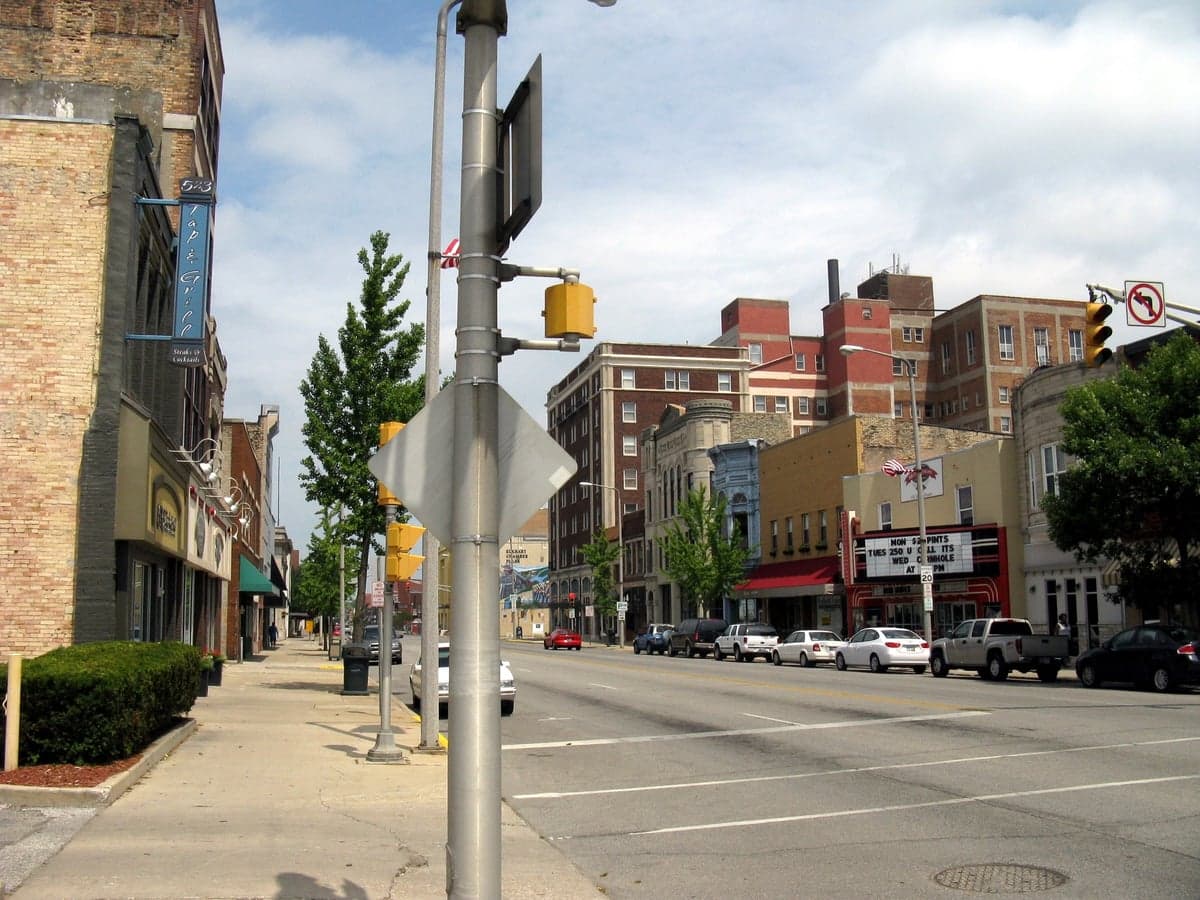
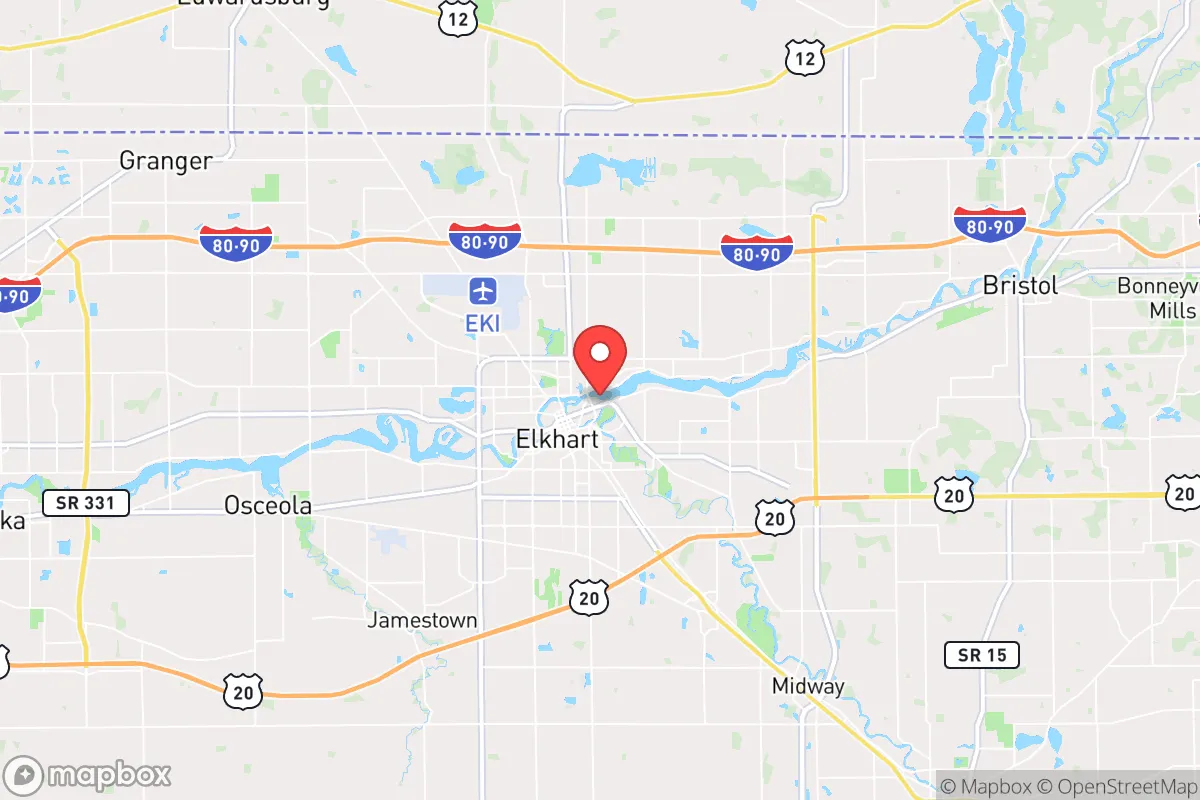
Photo: Wikipedia
Personal Sovereignty in Elkhart, IN
Viable for self-reliance. Generally workable, though some barriers may limit total independence.
What does Personal Sovereignty tell us?
Personal Sovereignty measures your capacity for self-reliance and independence with minimal government friction. Higher scores mean fewer barriers between you and the way you want to live... but it assumes you have the space you need and good neighbors.
What does this tell us?
Personal Sovereignty measures your capacity for self-reliance and independence with minimal government friction. Higher scores mean fewer barriers between you and the way you want to live... but it assumes you have the space you need and good neighbors.
State Policy
Energy independence: Importer (35% of energy produced in-state)
Personal Liberty
Homesteading

Personal Liberty Analysis
Elkhart, Indiana, offers a notably strong environment for personal sovereignty, particularly when viewed through a survivalist and conservative lens. The city sits in a state that has actively pushed back against federal overreach, maintaining a legal and cultural climate where individual autonomy—over your property, your family, and your preparedness—is respected rather than regulated. For those concerned with government overreach and the erosion of personal freedoms, Elkhart provides a practical, grounded alternative to the increasingly restrictive policies found in coastal and urban centers, with a cost of living and regulatory posture that allows for genuine self-reliance.
Tax burden and regulatory posture for individuals and families
Indiana’s tax structure is a significant asset for anyone prioritizing financial sovereignty. The state levies a flat income tax rate of 3.15% as of 2025, with a path toward further reduction, and Elkhart County adds a local income tax of roughly 1.5%, keeping your total bite well below what you’d face in high-tax states. Property taxes are also manageable, with effective rates around 0.85% of assessed value—meaning a $200,000 home carries an annual tax bill of roughly $1,700. There is no inheritance tax, no estate tax, and no state-level tax on Social Security benefits, which matters for long-term planning. On the regulatory side, Indiana is a right-to-work state, which limits union power and keeps the labor market flexible. More importantly for the prepper mindset, the state has a relatively light touch on land use and building codes outside of incorporated city limits. Elkhart itself has zoning, but it’s not the draconian, HOA-style enforcement you see in places like California or Colorado. You can operate a home-based business, keep livestock in many residential zones (with a permit), and store supplies without triggering a code enforcement visit. The state’s overall regulatory burden ranks among the lowest in the nation, which translates directly into fewer government intrusions into your daily life and property decisions.
Self-defense rights and gun law specifics in Elkhart
Indiana is a constitutional carry state, meaning as of July 2022, no permit is required to carry a handgun openly or concealed for any law-abiding adult 18 or older. This is a foundational freedom for anyone serious about self-defense. Elkhart’s local culture is generally supportive of gun ownership, with multiple gun shops, ranges, and a strong hunting tradition in the surrounding county. There is no state-level magazine capacity ban, no assault weapon ban, and no waiting period for firearm purchases. The state also has a robust “stand your ground” law, codified in Indiana Code 35-41-3-2, which removes any duty to retreat before using deadly force if you are lawfully present and reasonably believe it is necessary to prevent death or great bodily harm. Castle doctrine protections extend to your home, vehicle, and place of business. For those building a survival arsenal, Indiana is one of the most permissive states in the Midwest. The only notable restriction is that private firearm sales between individuals do not require a background check, but you should still document transfers for your own records. Elkhart’s local law enforcement, while professional, does not generally harass legal gun owners, and the county sheriff’s office is known for issuing permits for the state’s optional lifetime license (which still provides reciprocity in other states). If self-defense is a core concern, Elkhart scores very high.
Self-reliance and homesteading viability: lot sizes, zoning, and off-grid feasibility
For those looking to reduce dependence on the grid and government systems, Elkhart and its surrounding rural areas offer genuine opportunities. Within city limits, standard residential lots range from 6,000 to 10,000 square feet, but you can find larger parcels—half-acre to full-acre lots—in the outskirts and unincorporated areas of Elkhart County. Zoning in the county allows for agricultural use on parcels as small as 1 acre, which means you can legally keep chickens, goats, and even a small garden without special permits. Off-grid feasibility is moderate: Indiana has no statewide ban on rainwater collection, and you can install solar panels without excessive red tape, though net metering policies are less generous than in some western states. Wells and septic systems are permitted on larger lots (typically 1+ acres) with standard health department approvals. The county’s building code is based on the International Residential Code, but enforcement is less aggressive than in urban areas; many rural homeowners build pole barns, workshops, and storage sheds without permits as long as they’re not used as primary dwellings. The biggest practical limitation is the climate—winters are cold and cloudy, so solar-only off-grid living requires significant battery storage and backup generation. But for a hybrid approach—grid-tied with battery backup, a well, and a wood stove—Elkhart County is very workable. The local Amish and Mennonite communities are a living example of self-reliance, and their presence means you can source tools, lumber, and even off-grid appliances locally. If your goal is to build a resilient homestead with minimal government interference, this area is a strong contender.
Personal liberties: parental rights, medical autonomy, speech, and property
Indiana has taken a clear stand on several fronts of personal liberty. Parental rights are strongly protected: the state passed a law in 2023 requiring schools to notify parents of any changes in a student’s health or well-being, and it prohibits instruction on gender identity and sexual orientation in grades K-3. This aligns with a conservative view that parents, not the state, are the primary authority over children. Medical autonomy is more mixed—Indiana has a near-total abortion ban (with narrow exceptions), which many conservatives see as a protection of life, but it also maintains vaccine mandates for schoolchildren, though religious and medical exemptions are available. The state does not have a general “right to try” law for experimental treatments, but it does allow for the use of CBD and low-THC hemp products without a prescription. Free speech is robust: Indiana has no hate speech laws that criminalize political or religious expression, and public protests are generally permitted with standard permits. Property rights are well-defended, with strong eminent domain protections requiring just compensation and a public purpose. The state also has a “right to farm” law that protects agricultural operations from nuisance lawsuits, which is relevant if you plan to keep livestock. One notable liberty: Indiana does not have a state-level red flag law, meaning your firearms cannot be seized without a criminal conviction or a court order based on specific evidence of danger. This is a critical distinction for those worried about executive overreach or temporary restraining orders being used to disarm law-abiding citizens.
Overall, Elkhart offers a level of personal sovereignty that is increasingly rare in the United States. The combination of low taxes, constitutional carry, minimal zoning restrictions on self-reliance, and strong protections for parental and property rights creates an environment where a determined individual can live largely free from government interference. Compared to states like Illinois, Michigan, or Colorado—where gun laws are tightening, taxes are rising, and parental rights are under assault—Elkhart stands out as a refuge for those who value autonomy and preparedness. It is not a libertarian utopia; you still have to follow building codes, pay property taxes, and register your vehicles. But for a conservative-minded person or family looking to build a resilient, independent life in a community that respects your right to do so, Elkhart, Indiana, is a solid, practical choice.

* Values derived from national, state, county, city and local statistics and may differ in a specific area. Last updated: 2026-04-22T09:09:50.000Z
Narrative content on this page is AI-generated and may contain mistakes. Verify any details that matter before acting on them.
ReloMaps may earn a commission from affiliate links at no extra cost to you.

