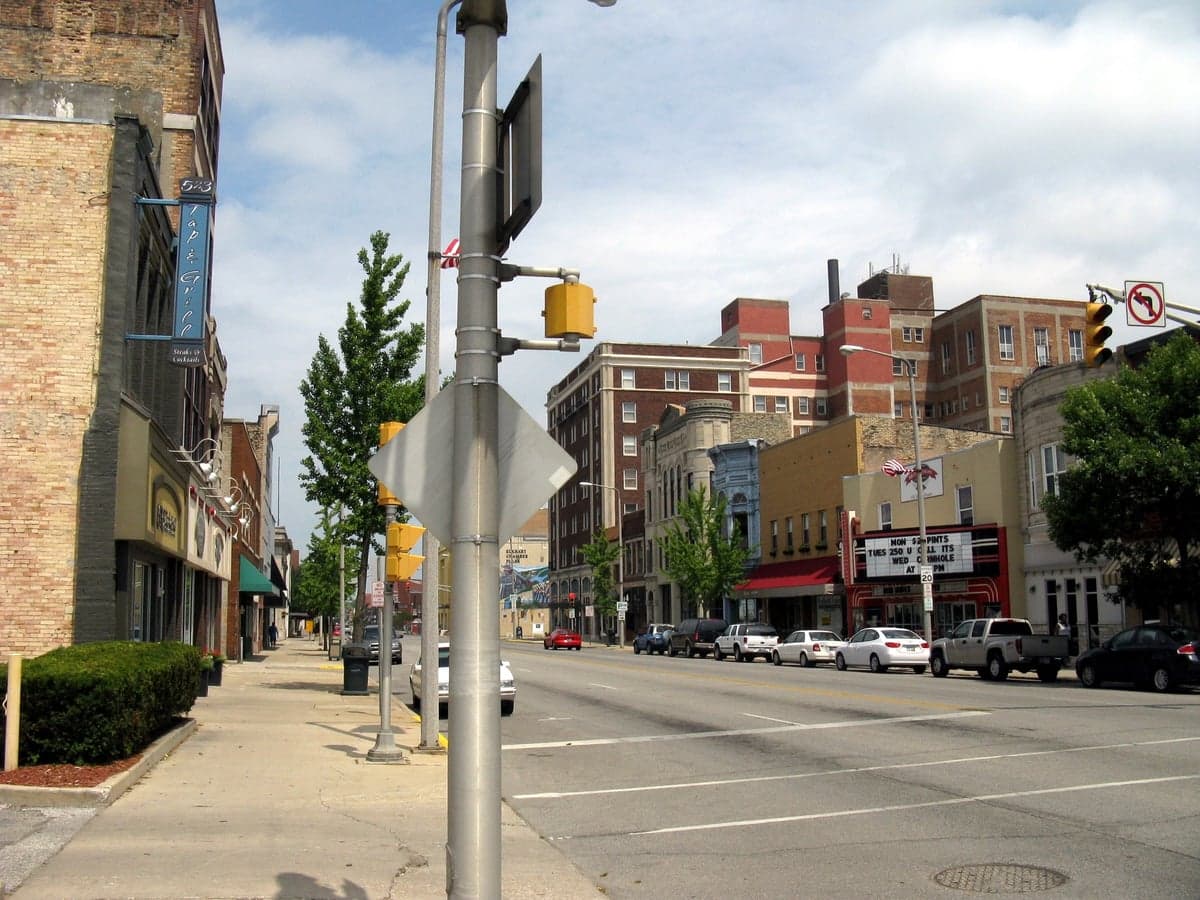
Photo: Wikipedia
Political ClimatePolitical Climate in Elkhart, IN
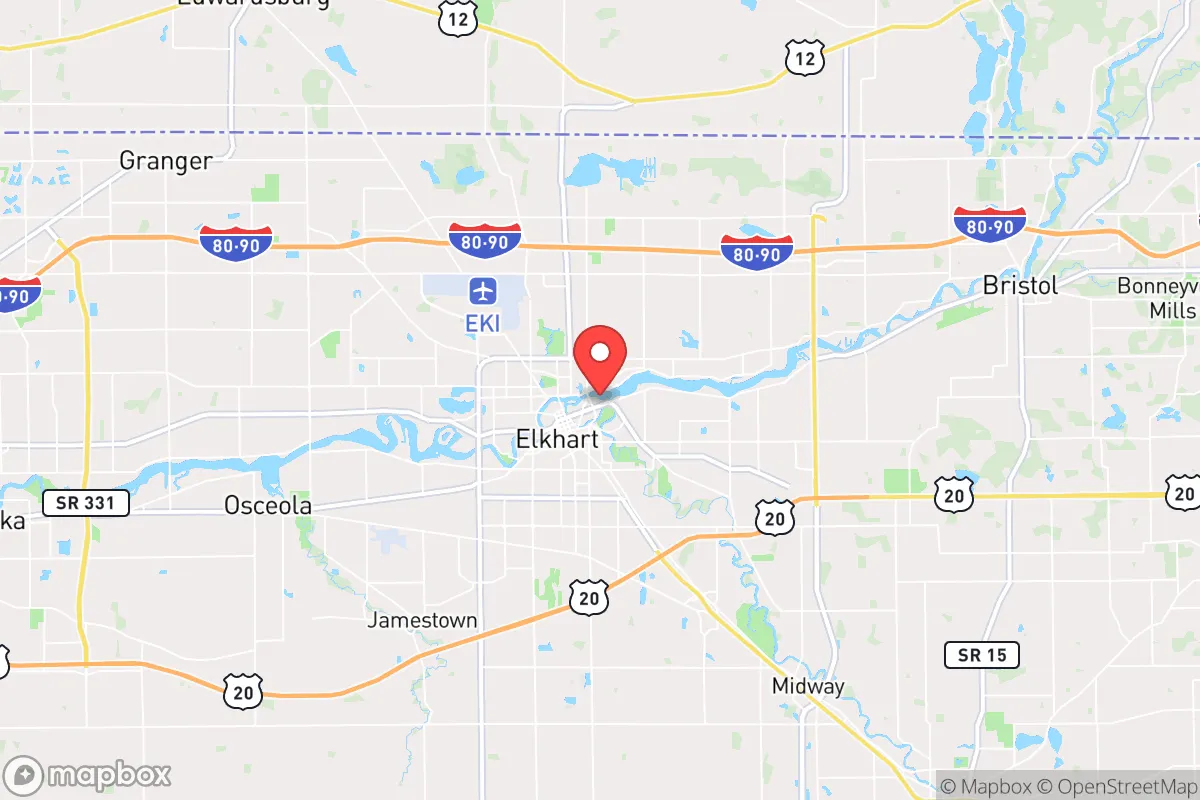
District shown is the primary district for this city’s centroid. Cities may span multiple districts.
Local Political AnalysisPolitical Analysis of Elkhart, IN
Elkhart, Indiana, has long been a solidly conservative area, and the numbers back that up with a Cook PVI of R+13. But if you’ve lived here as long as I have, you know the political climate isn’t just about party registration—it’s about a deep-seated belief in personal responsibility and limited government. For decades, this was a place where folks trusted their neighbors more than they trusted Washington, and that sentiment still runs strong. However, there’s a growing unease as we see some of the same progressive overreach creeping into local conversations that we’ve watched ruin bigger cities. The trajectory here is still conservative, but it’s a fight to keep it that way, especially as new folks move in from places like Chicago or South Bend and bring different ideas about what government should do.
How it compares
Compared to nearby cities, Elkhart is a conservative anchor in a region that’s more mixed than you might think. Just 15 miles west, South Bend leans left with a D+18 PVI, and you can feel the difference in everything from local ordinances to school board decisions. Goshen, just east of us, has a noticeable progressive streak, especially among younger residents and the college crowd. Even smaller towns like Middlebury and Bristol tend to be more reliably conservative, but they don’t have the same industrial base or population pressures. What sets Elkhart apart is its working-class backbone—the RV industry and manufacturing mean people here are less likely to buy into abstract progressive ideals that don’t put food on the table. When you compare us to places like Indianapolis or Bloomington, we’re a different world entirely: less interest in social engineering, more focus on keeping taxes low and government out of your business.
What this means for residents
For residents, the political climate here means you can generally expect a local government that respects your right to live your life without constant interference. Property taxes are manageable, zoning is reasonable, and there’s a healthy skepticism of any new program that sounds like it’s coming from a think tank in D.C. That said, it’s not perfect. We’ve seen some concerning pushes in recent years—like attempts to bring in more restrictive housing regulations or to expand local government’s role in things that used to be handled by families and churches. The real worry is that as the county grows, we’ll see more of that “we know what’s best for you” attitude that’s turned other parts of the state into bureaucratic nightmares. For now, though, if you value your Second Amendment rights, want to keep your kids’ education focused on basics instead of ideology, and don’t want a city council telling you what kind of lightbulb to buy, Elkhart is still a good place to be.
Culturally, Elkhart has a distinct policy distinction that sets it apart from its neighbors: a strong tradition of local control and a resistance to state-level mandates that feel like overreach. You won’t see the kind of mask mandates or business shutdowns here that you saw in places like South Bend or Indianapolis during the pandemic—our leaders trusted people to make their own choices. There’s also a palpable distrust of any “regional planning” initiatives that might dilute our conservative values with input from more progressive cities. The long-term outlook? If we can keep the progressive influence from seeping in through school boards and county commissions, Elkhart will stay a place where freedom isn’t just a word on a bumper sticker. But it’s going to take vigilance—because once that government overreach gets a foothold, it’s a lot harder to push back than it is to keep it out in the first place.

State Political ClimatePolitical Climate in Indiana
State Political AnalysisPolitical Environment in the State
Indiana has long been a reliably Republican state, but the flavor of that conservatism has shifted significantly over the past two decades. The state has moved from a more moderate, business-friendly GOP to a solidly red, culturally conservative stronghold, with Donald Trump winning the state by 16 points in 2020 and 18 points in 2024. The dominant coalition is now a mix of rural traditionalists, suburban fiscal conservatives, and a growing populist wing, but the real story is the urban-rural chasm that has deepened since the 2008 recession.
Urban vs. rural divide
The political map of Indiana is a study in stark contrasts. The Indianapolis metro area, particularly Marion County, is the state’s lone blue stronghold, consistently voting Democratic by double digits. However, the surrounding donut counties—Hamilton, Hendricks, Johnson, and Boone—are among the most Republican in the nation, with Hamilton County (home to Carmel and Fishers) often voting +30 to +40 points for the GOP. Lake County in the northwest corner, near Chicago, is another Democratic bastion, driven by union-heavy industrial towns like Gary and Hammond. Meanwhile, the rest of the state is deeply red. Allen County (Fort Wayne) has been trending redder, while Vanderburgh County (Evansville) flipped from purple to solid red after 2016. The rural counties along the Ohio River, like Switzerland and Ohio counties, are now reliably Republican, a shift from their historically split voting patterns. The key driver is the exodus of moderate Democrats from rural areas and the concentration of college-educated liberals in Indianapolis and Bloomington.
Policy environment
Indiana’s policy environment is aggressively conservative, with a focus on low taxes and limited regulation. The state has a flat income tax rate of 3.05% (down from 3.23% in 2023) and a sales tax of 7%, with no inheritance or estate tax. Property taxes are capped at 1% of assessed value for owner-occupied homes, a constitutional amendment passed in 2010. On education, the state has one of the most robust school choice programs in the nation, with universal vouchers available to all families since 2023. The Indiana Choice Scholarship Program now serves over 70,000 students, and charter schools are plentiful. Healthcare policy is more mixed: the state expanded Medicaid under the Healthy Indiana Plan (HIP 2.0) in 2015, but it also passed a near-total abortion ban in 2022 (Senate Enrolled Act 1), with exceptions only for rape, incest, and life of the mother. Election laws are strict: voter ID is required, early voting is limited to 28 days before an election, and same-day registration is not allowed. The state also passed a law in 2023 requiring all ballots to be hand-counted in counties with fewer than 50,000 residents, a move that has caused logistical headaches but is popular with election integrity advocates.
Trajectory & freedom
Indiana is becoming more free in several key areas, particularly gun rights and parental rights. In 2022, the state passed constitutional carry (House Enrolled Act 1296), allowing any law-abiding adult to carry a handgun without a permit. That same year, the Parental Bill of Rights (Senate Enrolled Act 380) was signed into law, requiring schools to notify parents of any changes to a student’s health or well-being and prohibiting instruction on human sexuality in grades K-3. On medical freedom, the state passed a law in 2023 banning COVID-19 vaccine mandates by private employers (House Enrolled Act 1001). However, there are concerning trends. The state’s property tax caps are under constant pressure from local governments, and a 2024 legislative effort to raise the cap for new construction failed but is expected to return. Additionally, the state’s eminent domain powers were expanded in 2023 to allow private companies to seize land for carbon capture pipelines, a move that alarmed property rights advocates. On speech, the state has not passed any significant restrictions, but local school boards have become battlegrounds over library books and curriculum.
Civil unrest & political movements
Indiana has seen its share of political flashpoints, but they are less frequent than in coastal states. The 2020 George Floyd protests in Indianapolis led to several nights of rioting and property damage, but the state legislature responded with a law increasing penalties for rioting and blocking highways. The Moms for Liberty movement has been very active in suburban counties like Hamilton and Johnson, successfully pushing for book bans and curriculum reviews. On the left, the Indiana Democratic Socialists of America has a small but vocal presence in Bloomington and Indianapolis, but has little electoral success. Immigration politics are relatively quiet, as Indiana is not a border state, but there have been localized tensions in Logansport and Goshen, where meatpacking plants have attracted immigrant labor. The state has no sanctuary cities, and a 2011 law (Senate Enrolled Act 590) requires local law enforcement to cooperate with federal immigration authorities. Election integrity remains a hot topic: the 2020 election in Indiana was largely uncontroversial, but the 2023 hand-counting law has sparked ongoing debates about accuracy and cost.
Projection
Over the next 5-10 years, Indiana is likely to become even more conservative, but with a populist edge that may alienate some suburban moderates. The state is seeing significant in-migration from Illinois and California, particularly to the Indianapolis suburbs and the Michiana region (South Bend, Elkhart). These newcomers tend to be more culturally conservative than the old guard, but they also bring higher expectations for services and infrastructure. The demographic trend is clear: rural counties are shrinking, while the Indianapolis metro and a few college towns (Bloomington, West Lafayette) are growing. This will likely intensify the urban-rural divide, but the state’s legislative maps are heavily gerrymandered in favor of Republicans, so the policy direction will remain red. The biggest wildcard is the property tax debate: if caps are loosened, it could spark a backlash from homeowners. On social issues, expect further restrictions on abortion (the current ban is being challenged in court) and more school choice expansion. The state’s freedom score will likely improve on economic and gun rights, but may slip on property rights and local control.
For a new resident, the bottom line is this: Indiana offers a stable, low-tax environment with strong protections for gun owners and parents, but you need to be comfortable with a state that is deeply culturally conservative and increasingly populist. The urban-rural divide means your experience will vary dramatically depending on where you live—Carmel is a world away from Vincennes. If you value school choice, low taxes, and a government that stays out of your personal business (except on abortion), Indiana is a solid bet. Just be prepared for the property tax debate to heat up, and keep an eye on how the hand-counting law shakes out in future elections.
* Values derived from national, state, county, city and local statistics and may differ in a specific area. Last updated: 2026-04-22T09:09:50.000Z
Narrative content on this page is AI-generated and may contain mistakes. Verify any details that matter before acting on them.
ReloMaps may earn a commission from affiliate links at no extra cost to you.

