Photo: Wikipedia
Personal Sovereignty in Elkins, WV
Viable for self-reliance. Generally workable, though some barriers may limit total independence.
What does Personal Sovereignty tell us?
Personal Sovereignty measures your capacity for self-reliance and independence with minimal government friction. Higher scores mean fewer barriers between you and the way you want to live... but it assumes you have the space you need and good neighbors.
What does this tell us?
Personal Sovereignty measures your capacity for self-reliance and independence with minimal government friction. Higher scores mean fewer barriers between you and the way you want to live... but it assumes you have the space you need and good neighbors.
State Policy
Energy independence: Net exporter (200% of energy produced in-state)
Personal Liberty
Homesteading

Personal Liberty Analysis
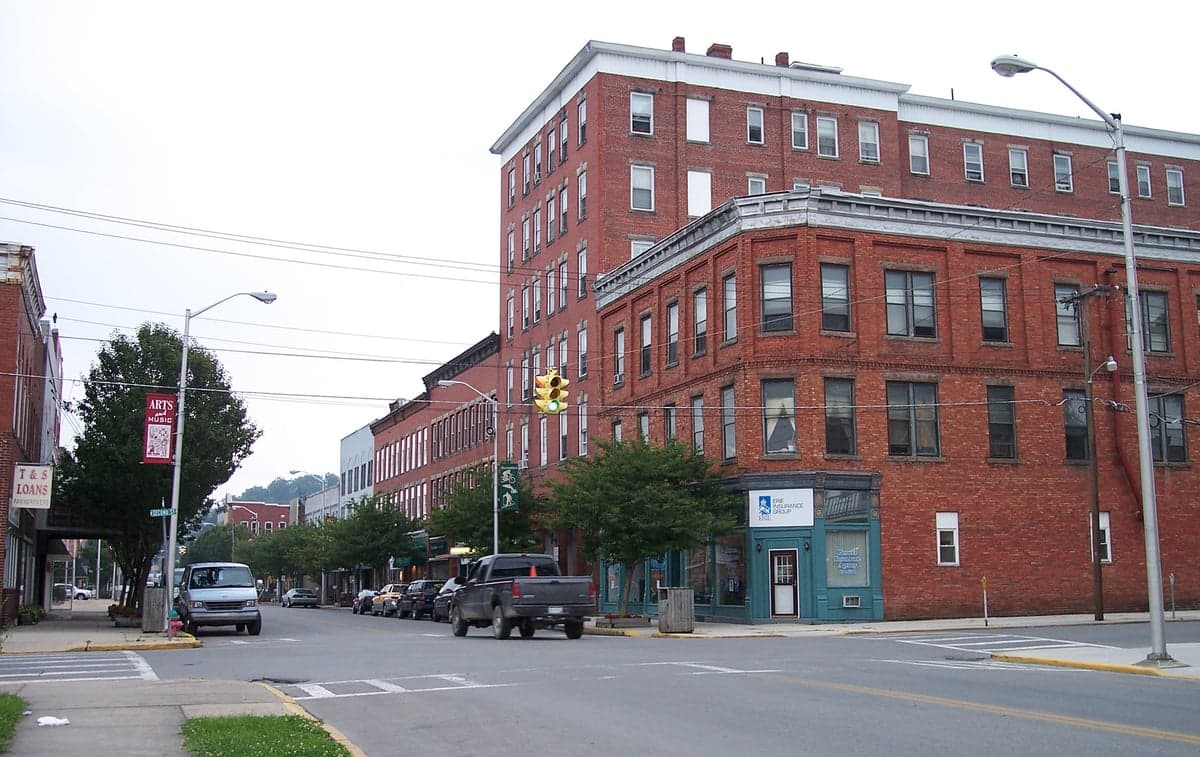
Elkins, West Virginia, offers a personal sovereignty environment that stands apart from much of the Eastern Seaboard, largely because the state’s constitutional and statutory framework actively resists federal overreach and preserves individual decision-making. For those approaching relocation from a survivalist or prepper mindset—concerned with government overreach, economic instability, and the erosion of traditional liberties—Elkins represents a strategic foothold in the Appalachian highlands where autonomy is not just tolerated but structurally protected. The town’s small population (roughly 7,000), its distance from major metropolitan power centers, and West Virginia’s consistent legislative posture of pushing back against federal mandates create a baseline of personal freedom that is increasingly rare in the United States.
Tax burden and regulatory posture: how West Virginia’s fiscal and legal climate supports autonomy
West Virginia’s tax structure is deliberately designed to minimize the state’s intrusion into personal finances, which directly supports individual sovereignty. The state imposes a flat personal income tax rate of 3.99% as of 2026, following a phased reduction from a previously progressive system—a move that signals a long-term commitment to fiscal liberty. Property taxes in Randolph County, where Elkins sits, are among the lowest in the nation, with effective rates often below 0.5% of assessed value, meaning a $150,000 home might carry an annual tax bill of only $750. There is no state-level sales tax on groceries or prescription drugs, and the general sales tax is a modest 6%. More critically for the prepper mindset, West Virginia has no state-level inventory tax or business franchise tax on small operations, making it feasible to stockpile supplies, run a home-based enterprise, or maintain a workshop without triggering a cascade of regulatory fees. The regulatory environment in Elkins itself is notably hands-off: the city does not impose its own business licensing fees beyond state requirements, and zoning ordinances are minimal, especially outside the immediate downtown core. This combination of low taxation and light regulation means that a family or individual can retain a higher percentage of their earnings and time, reducing dependence on government services and increasing capacity for self-reliance.
Self-defense and gun law specifics: what the Second Sanctuary status means for daily carry and home defense
Elkins sits in Randolph County, which has formally declared itself a Second Amendment Sanctuary—a designation that signals local law enforcement’s unwillingness to enforce federal gun restrictions that violate state law. West Virginia is a constitutional carry state for both open and concealed carry, meaning no permit is required for any law-abiding adult 21 or older to carry a firearm in most public spaces. For those under 21, a permit is still required, but the state’s permitting process is shall-issue and relatively quick. The state preempts all local gun ordinances, so Elkins cannot enact its own restrictions on magazine capacity, firearm types, or storage requirements—a critical protection against the patchwork of local gun laws seen in states like Colorado or New York. Stand-your-ground laws are fully in effect, with no duty to retreat in any place where a person has a legal right to be. Castle doctrine protections extend to vehicles and workplaces, not just residences. For the survivalist, this means that a home defense plan, a vehicle carry setup, or a bug-out bag configuration is entirely legal without bureaucratic hurdles. The state also prohibits the seizure of firearms during declared emergencies—a direct response to post-hurricane confiscations in other states—and has a Firearms Freedom Act that attempts to exempt firearms made and kept entirely within West Virginia from federal regulation. While the practical enforceability of that act is debatable, it reflects a legislative intent that aligns with personal sovereignty.
Self-reliance and homesteading viability: lot sizes, zoning, and off-grid feasibility in and around Elkins
For those seeking to reduce dependence on centralized infrastructure, Elkins and its surrounding Randolph County offer exceptional homesteading viability. Unincorporated areas of the county have no zoning restrictions, meaning a landowner can build a dwelling, erect outbuildings, keep livestock, and install alternative energy systems without seeking variances or permits from a planning board. Within the Elkins city limits, zoning is light—primarily focused on commercial districts—and residential lots of half an acre to several acres are common, even inside town. Outside town, land prices are remarkably low: raw acreage can be found for $2,000–$5,000 per acre, with many parcels having existing wells or springs. Off-grid feasibility is high: West Virginia law explicitly protects the right to collect rainwater, and there are no state-level restrictions on solar panel installation, composting toilets, or greywater systems. The county health department does require a permit for septic systems, but the process is straightforward for standard designs. Wood stoves are a primary heat source for many residents, and firewood is abundant and cheap. The biggest practical challenge is the mountainous terrain, which can make road access and construction more expensive than on flat land, but for those willing to put in sweat equity, the regulatory barriers are nearly nonexistent. Internet access via Starlink is reliable, and cell coverage is spotty in the hollows but functional in town—meaning a remote homestead can still maintain communication without being tethered to municipal utilities.
Personal liberties: parental rights, medical autonomy, speech, and property protections
West Virginia has taken a strong stance on several fronts of personal liberty that directly affect families and individuals. Parental rights in education are explicitly protected by state law, including a Parents’ Bill of Rights that requires schools to obtain parental consent before administering surveys or providing instruction on human sexuality, and prohibits school personnel from concealing a child’s mental health or medical information from parents. Homeschooling is deregulated: parents need only notify the county superintendent and provide an annual assessment, with no curriculum approval or home inspection requirements. Medical autonomy is similarly robust: West Virginia has no state-level vaccine mandate for adults, and while school vaccine requirements exist, medical and religious exemptions are available and have not been significantly restricted. The state also passed a law prohibiting discrimination against healthcare providers who refuse to participate in procedures based on conscience—a protection that extends to both providers and patients. On free speech, there are no state-level hate speech laws that criminalize protected expression, and the state’s public forum laws are generally favorable to open debate. Property rights are constitutionally protected against eminent domain abuse, with a 2006 amendment requiring that any taking be for a truly public use and that compensation include lost business value. For the prepper concerned about future government overreach, these legal protections create a buffer zone—not impenetrable, but far stronger than in states where local ordinances can be weaponized against dissenting lifestyles.
Compared to other regions of the country, Elkins offers a personal sovereignty profile that is genuinely competitive with the most liberty-oriented areas of the rural West and Upper Midwest. The tax burden is lower than in Texas or Florida when factoring in property taxes, the gun laws are as permissive as any state in the union, and the homesteading and off-grid regulations are among the most accommodating east of the Mississippi. The trade-offs are real: economic opportunity is limited, winters are long and cold, and the nearest major medical center is over an hour away in Morgantown. But for a single individual or family whose primary concern is maximizing personal autonomy and minimizing government entanglement, Elkins represents a rare convergence of low cost, light regulation, and deep constitutional protections that is increasingly difficult to find in modern America.

* Values derived from national, state, county, city and local statistics and may differ in a specific area. Last updated: 2026-05-03T11:11:35.000Z
Narrative content on this page is AI-generated and may contain mistakes. Verify any details that matter before acting on them.
ReloMaps may earn a commission from affiliate links at no extra cost to you.

