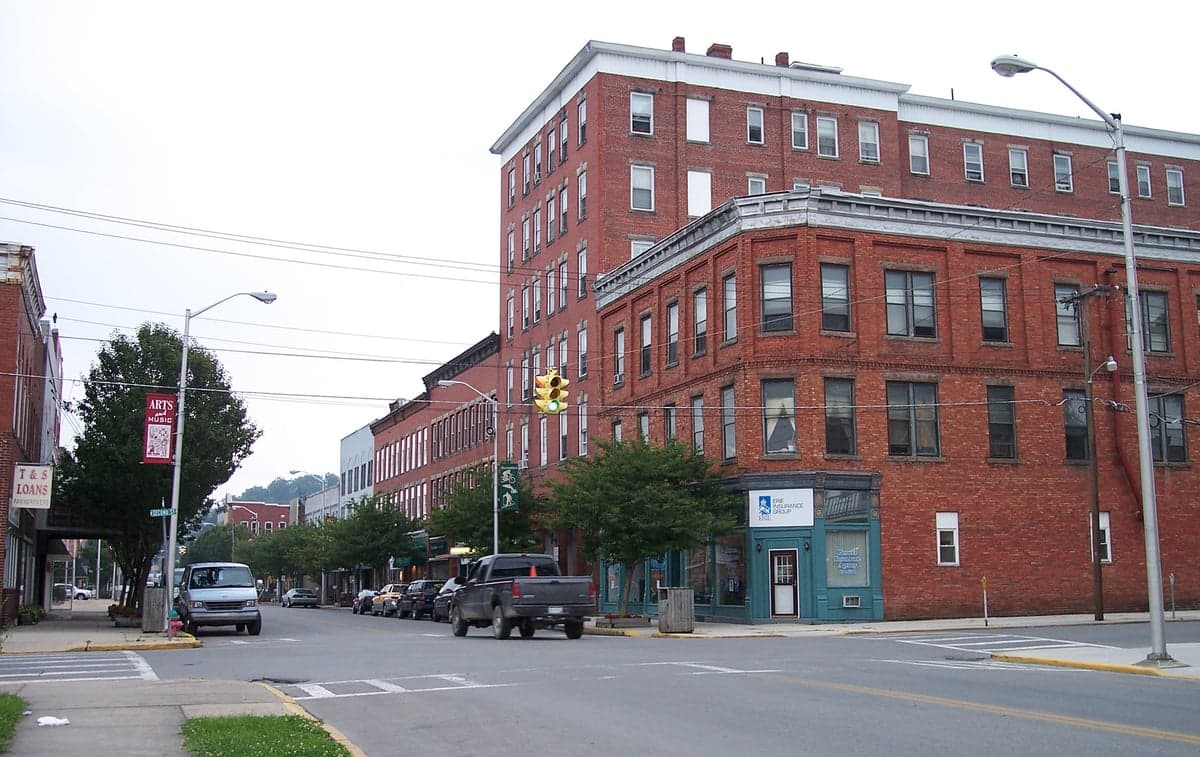
Photo: Wikipedia
Political ClimatePolitical Climate in Elkins, WV
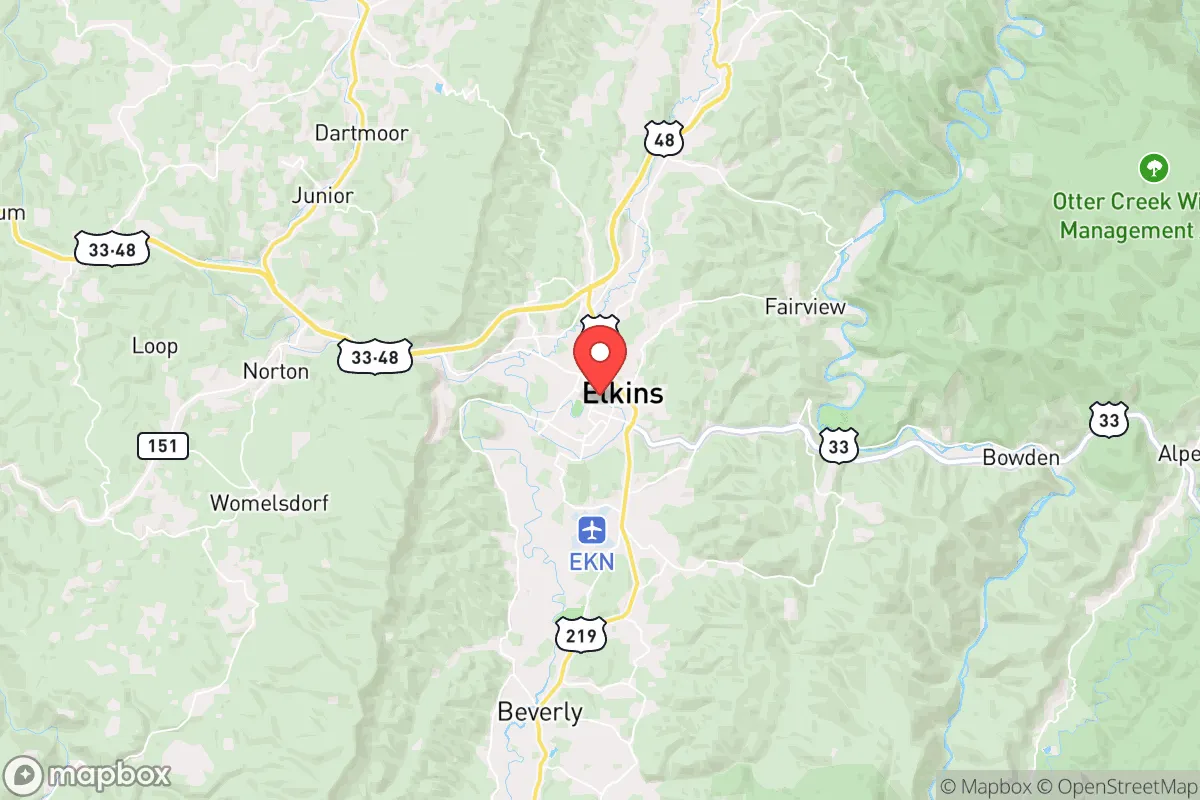
District shown is the primary district for this city’s centroid. Cities may span multiple districts.
Local Political AnalysisPolitical Analysis of Elkins, WV
Elkins, West Virginia, is about as solidly conservative as they come, with a Cook PVI of R+20 that tells you everything you need to know about the local voting habits. This isn't a place that flips on a dime; the political lean here has been reliably Republican for decades, and the trajectory is actually getting redder as more folks move in from places like California and New York who are fed up with progressive overreach. The local culture is deeply rooted in personal responsibility, self-reliance, and a healthy skepticism of government telling you how to live your life. If you're looking for a place where the Second Amendment isn't up for debate and where the local government mostly stays out of your business, you're in the right spot.
How it compares
Drive thirty minutes south to Buckhannon, and you'll find a slightly more moderate vibe, thanks to West Virginia Wesleyan College's influence, but it's still a conservative area overall. The real contrast is with Morgantown, about an hour and a half north, where the University of West Virginia creates a bubble of progressive politics that feels like a different state entirely. Elkins itself, though, is the anchor of conservative values in Randolph County. The surrounding towns like Beverly and Huttonsville are even more rural and traditional, with little tolerance for the kind of government overreach you see in bigger cities. When you look at the voting maps, Elkins is a deep red island in a sea of red, while Morgantown and Charleston are the blue outliers. That R+20 rating isn't just a number; it means the local elections are decided by who can best defend individual freedoms, not by who promises the most government programs.
What this means for residents
For the people living here, the political climate translates into a daily life with fewer regulations and less interference. You won't find the kind of zoning battles or mask mandates that plague places like Harrisonburg or even parts of Fairmont. The local government tends to take a hands-off approach to business and property rights, which is a big reason why the cost of living stays low and why you can still run a small operation without drowning in paperwork. The downside is that some folks worry about the long-term trend of national politics creeping in, especially with younger generations getting exposed to more progressive ideas through social media and college. But for now, the community holds firm on core issues: low taxes, limited government, and the freedom to live as you see fit. If you value that kind of independence, you'll fit right in.
One thing that sets Elkins apart is its cultural stubbornness. While other small towns in West Virginia have started to bend on issues like property rights or energy policy, Elkins has held the line. The local paper, the Inter-Mountain, still reflects a conservative worldview, and the annual events like the Mountain State Forest Festival are a celebration of heritage, not a platform for progressive activism. That said, there's a quiet concern among long-time residents about the influx of out-of-state money buying up land and pushing for "green" policies that could restrict logging or hunting access. So far, the community has pushed back hard, but it's a fight worth keeping an eye on. If you're looking for a place where your voice still matters and where the government remembers it works for you, Elkins is a solid bet.

State Political ClimatePolitical Climate in West Virginia
State Political AnalysisPolitical Environment in the State
West Virginia has been a reliably Republican state for over two decades now, with a partisan lean that’s only gotten deeper. In 2024, Donald Trump carried the state by nearly 40 points, and every statewide office is held by a Republican. But it wasn’t always this way—the Mountain State was a Democratic stronghold for most of the 20th century, and the shift has been dramatic. The dominant coalition today is a mix of rural conservatives, working-class voters who abandoned the national Democratic Party over energy and cultural issues, and a growing number of out-of-state transplants seeking lower taxes and fewer restrictions. The trajectory over the last 10-20 years has been a steady march rightward, with the state legislature becoming one of the most conservative in the country.
Urban vs. rural divide
The political map of West Virginia is starkly divided between a few small urban centers and the vast rural expanse. The state’s largest city, Charleston, is a Democratic-leaning island in a sea of red, driven by government workers, healthcare employees, and a shrinking union base. Morgantown, home to West Virginia University, is another blue dot, with a younger, more educated population that leans left on social issues. Huntington and Wheeling are more purple but still trend Republican in statewide races. The real action is in the rural counties—places like Mingo, Logan, and McDowell in the southern coalfields, which have flipped from solidly Democratic to overwhelmingly Republican over the past two decades. In 2024, Trump won Mingo County with over 80% of the vote. The divide isn’t just about geography; it’s about economics. The urban centers are tied to healthcare, education, and government, while rural areas are still reeling from the collapse of coal and manufacturing, making them receptive to populist conservative messaging.
Policy environment
West Virginia’s policy environment is aggressively conservative. The state has no personal income tax on Social Security benefits and has been phasing out its personal income tax entirely—a major draw for retirees and remote workers. The corporate tax rate is a flat 6.5%, and there’s no estate tax. Regulatory posture is light, especially for energy extraction, with the state actively courting natural gas and chemical industries. Education policy has been a battleground: the state passed a universal school choice law in 2021, allowing public funds to follow students to private or homeschool options, though it’s been challenged in court. Healthcare is a mixed bag—West Virginia expanded Medicaid under the Affordable Care Act, but the state legislature has resisted further expansion of government-run options. Election laws are strict: voter ID is required, and the state purges inactive voters regularly. There’s no early voting by mail without an excuse, and absentee ballot drop boxes are limited. This is a state that values election integrity and isn’t shy about it.
Trajectory & freedom
West Virginia is becoming more free in several key areas, but not without some concerning backsliding. On the positive side, the state passed a constitutional carry law in 2016, allowing permitless carry of firearms, and has preempted local gun ordinances. Parental rights were strengthened with the 2021 “Parental Bill of Rights,” which requires schools to notify parents about curriculum changes and medical services. Medical autonomy took a hit with the near-total abortion ban passed in 2022, with no exceptions for rape or incest—a move that pleased social conservatives but worried some libertarians. Property rights are strong, with no state-level property tax on vehicles and low property taxes overall. The biggest red flag is the state’s addiction to federal money—West Virginia receives more federal funding per capita than almost any other state, which creates a dependency that could be exploited by Washington. Recent legislation like the 2023 “Medical Freedom Act” protects healthcare workers from being forced to participate in procedures they object to, but it’s a mixed bag when it comes to individual choice.
Civil unrest & political movements
West Virginia has a history of labor unrest, but modern political movements are more focused on cultural battles. The 2018 teachers’ strike shut down schools across the state for weeks, but it was a rare moment of left-leaning activism. Since then, the energy has shifted to the right. The “Moms for Liberty” chapter in Berkeley County has been active in school board meetings, pushing for book bans and curriculum transparency. There’s a strong Second Amendment movement, with regular gun rights rallies at the state capitol in Charleston. Immigration politics are muted—the state has a tiny foreign-born population, but local governments in Jefferson County have passed resolutions opposing sanctuary city policies. Election integrity controversies flared in 2020, with the state legislature holding hearings on Dominion voting machines, but no major fraud was found. The most visible flashpoint for a new resident would be the constant tension between the old union Democratic culture and the new conservative populism—it’s a state that’s still figuring out its identity.
Projection
Over the next 5-10 years, West Virginia will likely become even more conservative, but with some demographic wrinkles. The state is losing population overall, but the areas that are growing—like the Eastern Panhandle (Berkeley, Jefferson, and Morgan counties)—are attracting transplants from the D.C. suburbs who are fleeing high taxes and crime. These newcomers tend to be more moderate or even libertarian, which could soften the hard edge of the state’s politics. The southern coalfields will continue to shrink and harden in their conservatism. The biggest wildcard is the state’s reliance on federal money—if Washington tightens the purse strings, West Virginia’s budget could be in trouble, forcing tax hikes or service cuts. The income tax phase-out is a gamble; if it works, it could attract more people and businesses. If it doesn’t, the state could face a fiscal crisis. For someone moving in now, expect a state that’s deeply red, culturally traditional, and increasingly skeptical of government—but also one that’s struggling with economic decline and an aging population.
For a new resident, the bottom line is this: West Virginia offers a high degree of personal freedom in terms of gun rights, low taxes, and limited government interference in daily life. But that freedom comes with trade-offs—poor infrastructure, limited healthcare access in rural areas, and a heavy reliance on federal dollars. If you’re looking for a place where your vote actually counts and where conservative values are the norm, you’ll find it here. Just be prepared for a state that’s still wrestling with its past while trying to build a future. It’s not for everyone, but for the right person, it’s a refuge.
* Values derived from national, state, county, city and local statistics and may differ in a specific area. Last updated: 2026-05-03T11:11:35.000Z
Narrative content on this page is AI-generated and may contain mistakes. Verify any details that matter before acting on them.
ReloMaps may earn a commission from affiliate links at no extra cost to you.

