Photo: Wikipedia
Political ClimatePolitical Climate in Elkton, MD
District shown is the primary district for this city’s centroid. Cities may span multiple districts.
Local Political AnalysisPolitical Analysis of Elkton, MD
Elkton, Maryland, sits in a reliably conservative pocket of the state, with a Cook Partisan Voting Index of R+8 that reflects a long-standing preference for limited government and traditional values. The town itself has leaned Republican for decades, but the real story is how the surrounding Cecil County has shifted even further right in recent cycles, while the state government in Annapolis pushes policies that feel increasingly out of step with local priorities. If you’ve been here a while, you’ve watched the political center of gravity move from a quiet, live-and-let-live conservatism to a more assertive stance on protecting personal freedoms, especially around property rights, school choice, and Second Amendment access.
How it compares
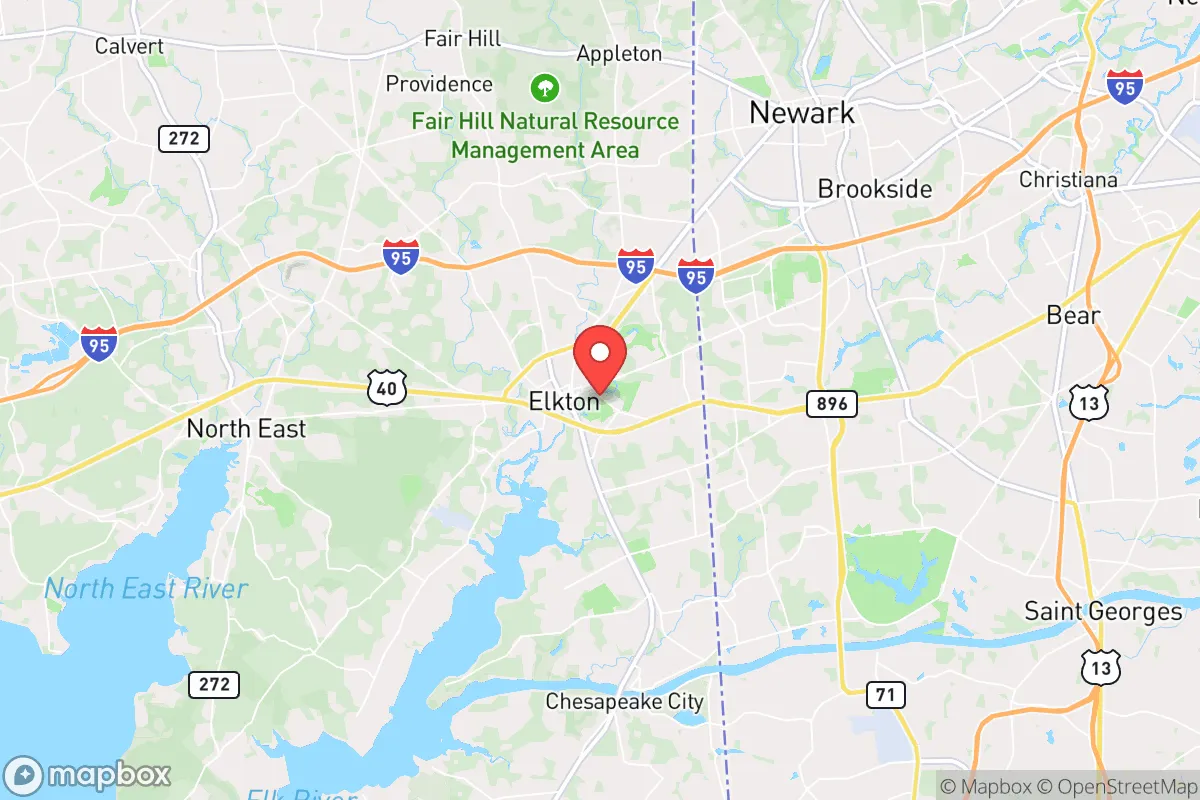
Drive 15 miles south into Newark, Delaware, and you’ll hit a blue-leaning college town where progressive zoning and higher taxes are the norm. Head west toward Bel Air in Harford County, and you’ll find a similar conservative tilt, but with more suburban sprawl and a slightly softer edge on fiscal issues. The real contrast is with Baltimore, just 45 minutes southwest—a city where one-party rule has produced rising crime and declining school performance, which only reinforces why Elkton residents value local control. Within Cecil County itself, the rural areas north of town vote even more conservatively than Elkton proper, while the waterfront communities near Chesapeake City sometimes split tickets on environmental regulations. The R+8 rating understates the cultural divide: Elkton feels more like a small Southern town than a Maryland suburb, and that’s by design.
What this means for residents
For daily life, the conservative tilt means lower property taxes than comparable counties in Maryland, fewer zoning restrictions on home businesses and agricultural use, and a sheriff’s office that doesn’t enforce state gun laws it considers unconstitutional. The school board has resisted critical race theory and gender ideology curricula, keeping parent oversight strong. You won’t see mask mandates or business shutdowns here unless the county commissioners vote locally—they don’t just rubber-stamp state orders. The downside? State-level policies still affect you: Maryland’s income tax is high, and Annapolis keeps trying to impose stricter emissions standards on vehicles and heating systems that would hit rural homeowners hardest. The long-term concern is that as the D.C. and Baltimore exurbs creep north, developers and new arrivals could dilute the local political culture. For now, though, Elkton remains a place where your vote actually counts on local issues, and where the county government generally stays out of your way.
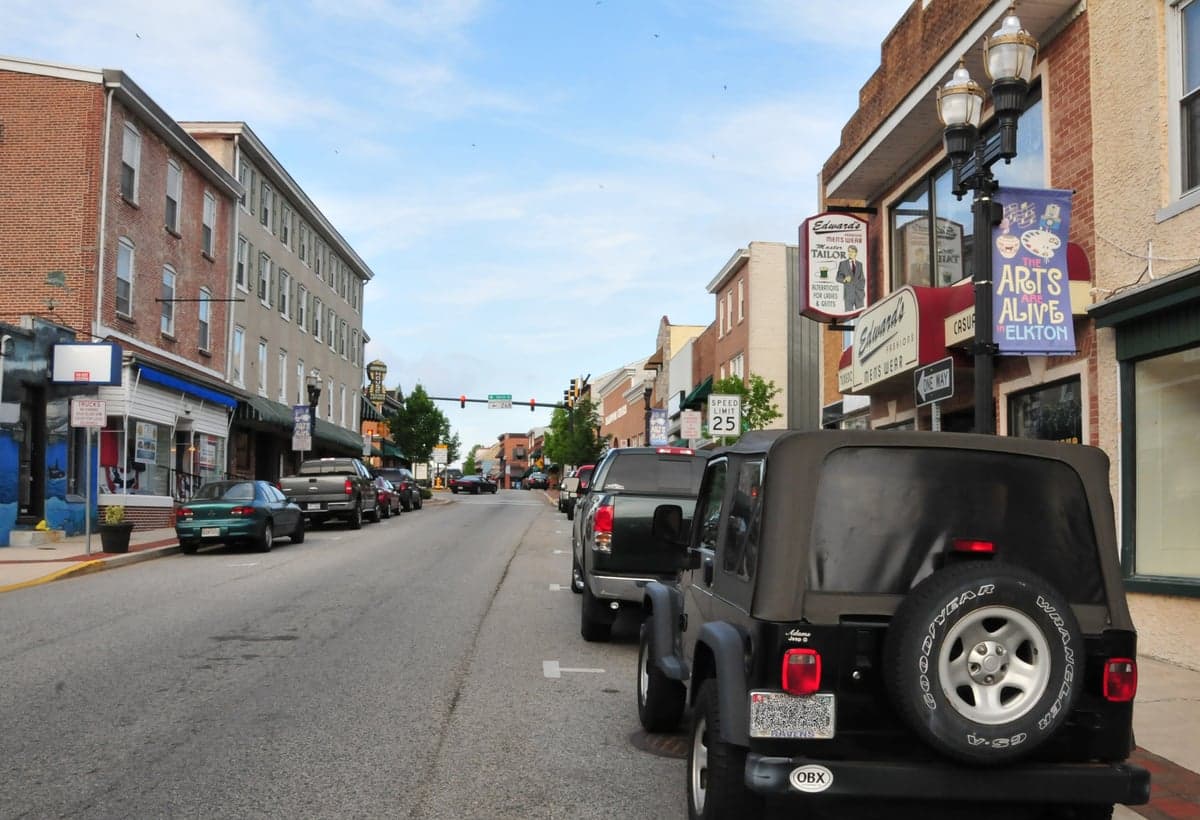
Culturally, Elkton stands apart from much of Maryland by maintaining a strong volunteer fire service, a robust local gun show circuit, and a downtown that hasn’t been overrun by chain stores or boutique regulations. The town’s historic role as a “Gretna Green” for eloping couples is a reminder of a time when government didn’t meddle in personal decisions—a spirit that still animates local politics. The biggest policy distinction is the county’s resistance to state-mandated affordable housing quotas, which locals see as a backdoor to denser development and higher crime. If you value being left alone to raise your family, run your business, and keep what you earn, Elkton’s political climate is a rare refuge in an increasingly overregulated state. Just keep an eye on the county council elections—that’s where the real fights over your freedoms will happen in the next decade.

State Political ClimatePolitical Climate in Maryland
State Political AnalysisPolitical Environment in the State
Maryland has long been a solidly blue state, but its political climate is far more nuanced than the statewide numbers suggest. Democrats hold a supermajority in the legislature and have won every presidential election since 1992, but the state’s deep-blue complexion is driven almost entirely by the Washington, D.C. suburbs and Baltimore City. Over the past 20 years, the state has shifted leftward on social and economic policy, with recent cycles accelerating that trend—though a growing conservative foothold in rural and exurban counties offers a counterbalance that any relocation-minded conservative should weigh carefully.
Urban vs. rural divide
The political map of Maryland is a tale of two worlds. The western and eastern shores, along with the central Appalachian counties, lean heavily Republican. Garrett County and Allegany County routinely vote +30 to +40 points Republican, while the Eastern Shore’s Caroline County and Talbot County are reliably red. Meanwhile, the D.C. suburbs—Montgomery County and Prince George’s County—are among the most liberal jurisdictions in the nation, delivering 75-80% of their votes to Democrats. Baltimore City is similarly deep blue. The swing counties that decide state-level races are Anne Arundel County (home to Annapolis), Howard County, and Frederick County. Frederick, in particular, has been a bellwether: it voted for Obama in 2008 and 2012, then flipped to Trump in 2016 and 2020, but backed Democrat Wes Moore for governor in 2022. The urban-rural divide is stark, and the political culture you’ll experience depends almost entirely on which side of the Chesapeake Bay Bridge you live.
Policy environment
Maryland’s policy environment is a mixed bag for conservatives. The state has a progressive income tax structure with rates up to 5.75%, plus local county taxes that push the effective top rate near 9% in places like Montgomery County. Property taxes are high, and the state’s estate tax kicks in at $5 million, which is lower than the federal exemption. On the regulatory front, Maryland has some of the strictest environmental rules in the nation, particularly around the Chesapeake Bay, which affects farmers and developers. Education policy is dominated by the Blueprint for Maryland’s Future, a massive funding plan that pours billions into public schools but has drawn criticism for expanding bureaucracy and limiting school choice. Election laws are among the most permissive: no-excuse mail-in voting, same-day registration, and automatic voter registration are all in place. For conservatives, the policy environment feels like a slow, steady drift toward a European-style social democracy, with high taxes and heavy regulation as the baseline.
Trajectory & freedom
Maryland’s trajectory on personal freedom is concerning for those who value limited government. In 2023, the legislature passed the Maryland Gun Safety Act, which banned the open carry of firearms in most public places, required a permit for concealed carry, and expanded the state’s “red flag” law. This came after the Supreme Court’s Bruen decision, and the state has aggressively fought to maintain restrictions. On parental rights, Maryland passed a law in 2022 that allows minors as young as 12 to consent to certain mental health treatments without parental notification—a flashpoint for many families. The state also expanded Medicaid under the Affordable Care Act and has a state-run health insurance exchange. On the plus side, Maryland has no statewide mask or vaccine mandates currently in effect, and the state’s Taxpayer Protection Act requires a three-fifths supermajority in the legislature to raise income taxes—a rare fiscal restraint. But the overall trend is toward more government involvement in daily life, not less.
Civil unrest & political movements
Maryland has seen its share of political flashpoints. The 2015 Baltimore riots following the death of Freddie Gray left a lasting scar, and the city’s crime rate remains a top concern. Organized activist movements are strong on both sides: Moms for Liberty has active chapters in Frederick and Anne Arundel counties, pushing back on school curriculum and library content, while progressive groups like Indivisible and Our Revolution are deeply entrenched in the D.C. suburbs. Immigration politics are a live wire: Maryland is a sanctuary state, with a 2023 law prohibiting state and local law enforcement from cooperating with federal immigration authorities in most cases. This has created tension in counties like Harford County and Carroll County, where local sheriffs have publicly resisted. Election integrity remains a hot topic, with the state’s universal mail-in ballot system drawing scrutiny from conservative groups. A new resident will notice the political divide in everyday life—yard signs, bumper stickers, and even local news coverage are sharply polarized.
Projection
Over the next 5-10 years, Maryland is likely to become more, not less, blue. The D.C. suburbs continue to grow, fueled by federal government expansion and remote-work migration from higher-cost areas. The rural counties, meanwhile, are aging and losing population. The 2020 census cost Maryland one congressional seat, and that trend will continue. However, there are pockets of hope for conservatives: Frederick County is growing fast with families seeking more space and lower taxes, and its political balance could shift further right if in-migration from the D.C. suburbs slows. The state’s tax burden will eventually become a liability, as high earners—who fund the progressive agenda—may start leaving for Florida, Texas, or Tennessee. But don’t expect a political realignment anytime soon. A conservative moving to Maryland should expect to live in a state where their vote is a minority voice, but where local control in red counties still offers a measure of freedom.
For a new resident, the bottom line is this: Maryland offers excellent schools, beautiful natural landscapes, and proximity to D.C., but it comes with a high tax bill and a government that is increasingly comfortable regulating personal choices. If you’re a conservative, your best bet is to settle in a red county like Carroll, Harford, or Frederick, where local politics can buffer some of the state-level overreach. Just know that the state legislature in Annapolis will continue to push policies that feel like a slow erosion of the freedoms you value. It’s a beautiful place to live, but you’ll need to stay engaged—and maybe keep a moving truck on speed dial.
* Values derived from national, state, county, city and local statistics and may differ in a specific area. Last updated: 2026-04-22T03:47:34.000Z
Narrative content on this page is AI-generated and may contain mistakes. Verify any details that matter before acting on them.
ReloMaps may earn a commission from affiliate links at no extra cost to you.

