Demographics of Elm Grove, WI
Affluence Level in Elm Grove, WI
An upper-middle-class area. Household wealth, education levels, and homeownership run ahead of national benchmarks.
People of Elm Grove, WI
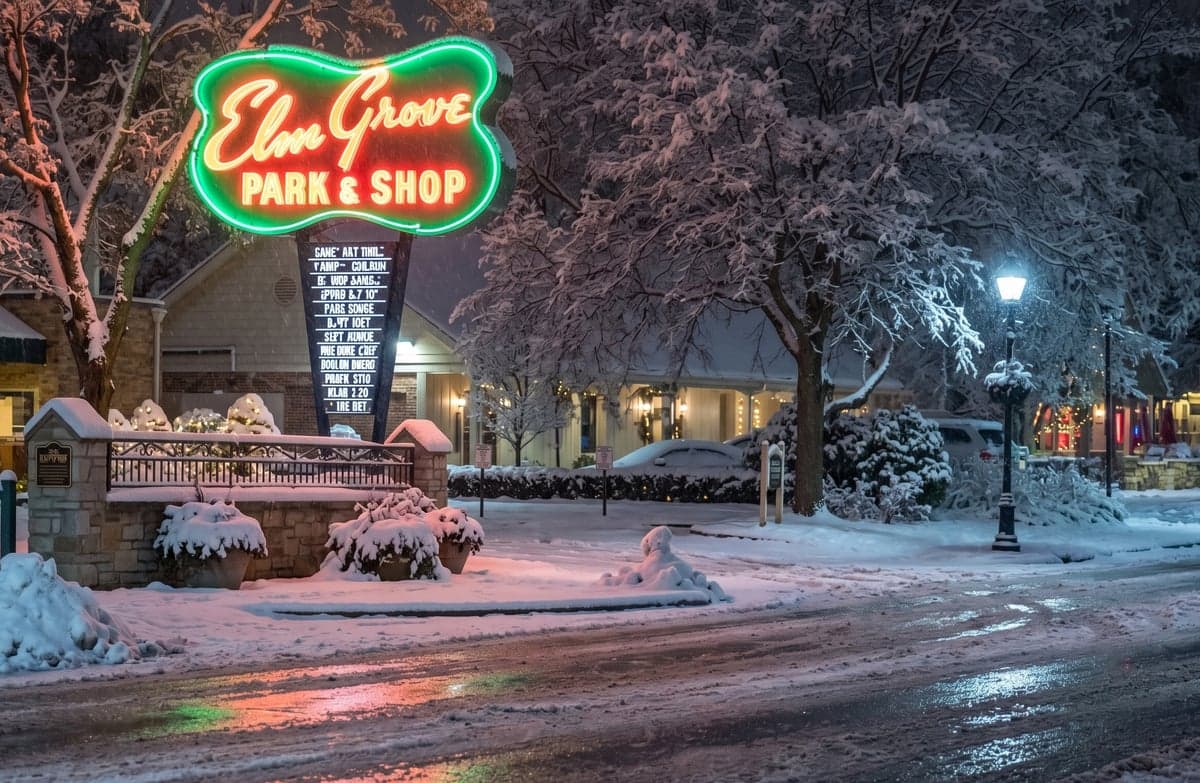
Elm Grove, Wisconsin, is a small, affluent village of 6,428 residents that stands as one of the most demographically homogeneous communities in the Milwaukee metropolitan area. With a population that is 90.3% white, a foreign-born rate of just 0.3%, and 67.0% of adults holding a college degree, the village projects an image of stable, upper-middle-class family life. Its identity is defined by quiet, tree-lined streets, top-ranked public schools, and a deliberate small-town character that has resisted the rapid suburban change seen in neighboring Waukesha and Brookfield.
How the city was settled and grew
Elm Grove’s human history begins not with industry but with the railroad. The village was platted in 1846 along the Milwaukee and Mississippi Railroad line, which drew a first wave of Yankee settlers from New England and upstate New York. These early families—names like Spring, Green, and Merrill—built farms and small businesses along what is now Watertown Plank Road. The village’s original core, Historic Elm Grove Village (centered on Juneau Boulevard and Elm Grove Road), retains the 19th-century homes and churches these families constructed. A second, smaller wave of German Catholic farmers arrived in the 1870s, settling the Pilgrim Road corridor on the village’s western edge, where St. Mary’s Visitation Parish became their anchor. Unlike nearby Waukesha or Milwaukee, Elm Grove never industrialized; its population remained under 1,000 until the 1950s, when the post-war suburban boom transformed it. The village incorporated in 1955 specifically to control development, attracting white, college-educated professionals from Milwaukee who built custom homes in the Wooded Hills and Idlewood neighborhoods. These subdivisions, with their large lots and strict zoning, cemented Elm Grove’s reputation as an exclusive enclave.
Modern era (post-1965)
The 1965 Hart-Cellar Act had virtually no effect on Elm Grove’s demographics. The village’s high property values, lack of rental housing, and zero industrial base made it inaccessible to the immigrant waves that reshaped Milwaukee and its inner suburbs. Instead, the post-1965 period saw domestic in-migration: white families from Milwaukee’s east side and north shore, drawn by the Elmbrook School District’s reputation. The Elm Grove Highlands neighborhood, developed in the 1970s and 1980s, absorbed many of these relocating professionals. The village’s Asian population—currently 2.1%, primarily East and Southeast Asian—began arriving in the 1990s, concentrated in the Pilgrim Estates area near the western edge, where newer, larger homes attracted second-generation Chinese and Korean families from Brookfield. The Hispanic share (3.0%) is largely domestic, not foreign-born, and is dispersed rather than clustered. The Indian subcontinent population (0.2%) is negligible and statistically flat. Elm Grove’s Black population (0.2%) has remained essentially unchanged since 1970. The village has not experienced the racial or ethnic diversification seen in Wauwatosa or West Allis; its demographic story is one of sustained homogeneity, not transition.
The future
Elm Grove’s population is aging and slowly shrinking. The village lost roughly 200 residents between 2010 and 2020, a trend driven by empty-nesters aging in place and younger families being priced out. The median home value exceeds $500,000, and new construction is nearly impossible due to build-out. The foreign-born rate (0.3%) is among the lowest in Waukesha County and is unlikely to rise significantly, as the village lacks the rental stock, transit access, or employment base that attracts immigrants. The East/Southeast Asian share (2.1%) may grow modestly as second-generation professionals from Brookfield seek similar school districts, but the Indian subcontinent and Hispanic shares are expected to remain static. The village is not tribalizing into distinct ethnic enclaves; rather, it is homogenizing further by income and education. The next decade will likely see continued graying, with younger families replaced by older, wealthier empty-nesters or childless couples. Elm Grove is becoming a retirement haven for the upper-middle class, not a destination for new immigrant communities.
For a conservative-leaning mover seeking stability, low crime, and top-tier schools, Elm Grove offers exactly what its history promises: a predictable, homogeneous, and well-maintained community. The trade-off is demographic stagnation and a lack of diversity that some may find limiting. The village is not changing—it is solidifying. That predictability is its core appeal and its defining limitation.

* Values derived from national, state, county, city and local statistics and may differ in a specific area. Last updated: 2026-04-27T18:08:00.000Z
Narrative content on this page is AI-generated and may contain mistakes. Verify any details that matter before acting on them.
ReloMaps may earn a commission from affiliate links at no extra cost to you.

