Quality of Life in Elm Grove, WI
A high quality of life with strong walkability, manageable living costs, healthy neighborhood signals, and solid amenity access.
What does Quality of Life tell us?
Quality of Life blends cost of living, nearby amenities, socioeconomic signals, and neighborhood character. City-level scores represent the whole municipality; individual neighborhoods can differ.
What does this tell us?
Quality of Life blends cost of living, nearby amenities, socioeconomic signals, and neighborhood character. City-level scores represent the whole municipality; individual neighborhoods can differ.
Cost of Living
59% above national average
The Real Cost of Living in Elm Grove, WI for 2026
| Tier | Individual | Family (4) |
|---|---|---|
| Survival | $29k | $54k |
| Comfortable | $91k | $134k |
| Luxury | $241k+ | $373k+ |
| Elite (Top 5%) | $311k+ | $481k+ |
100%
The Area Signal
A metric tracking the socioeconomic signals of the area.
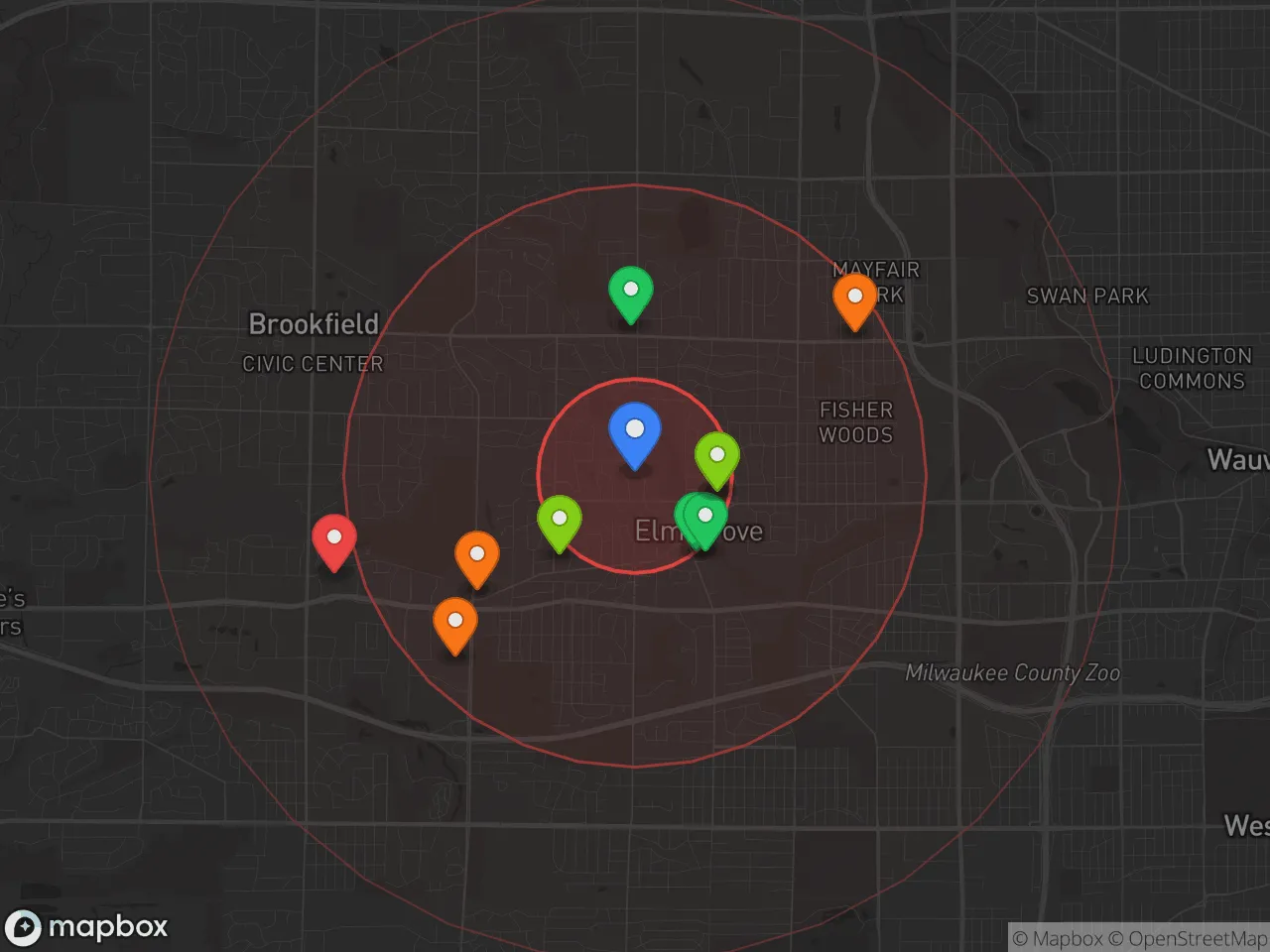
Hobbies
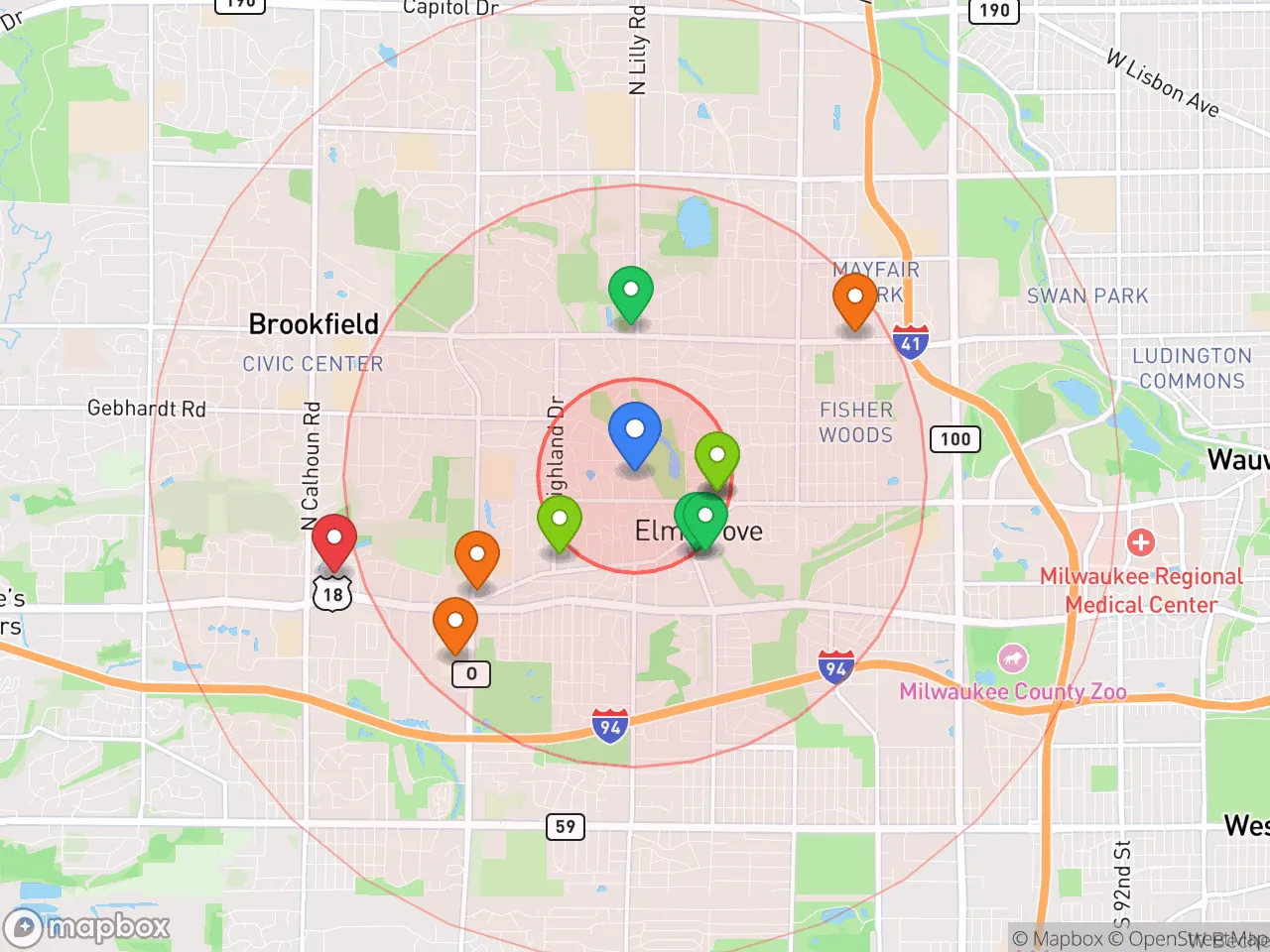
Explore the areaGroceries
8 within 10 miles
Gas
20 within 10 miles
Hospital
20 within 20 miles
Airport
ORD — O'Hare International
Post Office
USPS — Elm Grove, WI
Critical Amenities
Quality-of-Life Analysis
Elm Grove, Wisconsin, is an affluent western Milwaukee suburb where quality of life is defined by top-tier public schools, low crime, and a strong sense of community, attracting professionals and families who prioritize space and safety over urban convenience. With a cost of living index of 159—well above the national average of 100—the village commands a premium for its large lots, quiet streets, and proximity to Milwaukee’s job centers. Residents are typically upper-middle-class homeowners, many commuting to corporate roles in downtown Milwaukee, Brookfield, or Waukesha, drawn by Elm Grove’s reputation as one of the most desirable small towns in Waukesha County.
Cost of living, housing, and affordability compared to nearby suburbs
Elm Grove’s housing market is the primary driver of its elevated cost of living. The median home value sits at $468,000, significantly higher than the national median and above neighboring suburbs like Brookfield (around $420,000) and Waukesha (around $350,000). Renters face a median rent of $1,788, which is steep for the region but reflects the village’s limited rental inventory—most housing is owner-occupied single-family homes on half-acre or larger lots. Property taxes in Waukesha County average roughly 1.8% of assessed value, adding roughly $8,400 annually on a median-priced home. While affordability is a challenge for first-time buyers, the premium buys into the Elmbrook School District, consistently ranked among Wisconsin’s top five, and a low crime rate that is roughly 70% below the national average. For comparison, a comparable home in Milwaukee’s eastern suburbs (e.g., Whitefish Bay) might cost 10-15% more, making Elm Grove a relative value for those seeking suburban space without the North Shore price tag.
Daily life, amenities, and what makes the community tick
Daily life in Elm Grove revolves around its walkable village center, which features a handful of locally owned restaurants, a coffee shop, and a public library. The village’s 22-minute average commute—22.4 minutes—is shorter than the national average of 26 minutes, thanks to easy access to I-94 and I-43, making downtown Milwaukee a 20-minute drive and General Mitchell International Airport a 25-minute trip. The Elmbrook School District serves the village with three elementary schools (Dixon, Brookfield, and Swanson), one middle school (Wisconsin Hills), and Brookfield Central High School, all of which boast test scores in the top 10% statewide. For recreation, residents use the Elm Grove Village Park (with a pool, tennis courts, and sports fields) and the nearby Retzer Nature Center in Waukesha. The rhythm is quiet and family-oriented: weekend mornings see families biking to the farmers market, and evenings are spent on large porches or at community events like the Fourth of July parade. There is no nightlife to speak of—most dining and entertainment options are a 10-minute drive to Brookfield Square mall or downtown Waukesha.
Elm Grove is best suited for families and professionals who value exceptional schools, low crime, and a spacious suburban lifestyle, and who can comfortably absorb a cost of living 59% above the national average. Empty-nesters downsizing from larger homes in the area also find appeal in the village’s maintenance-free condos and proximity to medical facilities like Froedtert Hospital in nearby Wauwatosa. Singles and young renters may find the social scene too quiet and the rental market too limited, but for those seeking a safe, well-run community with a strong tax base and excellent public services, Elm Grove delivers a quality of life that justifies its premium.

Crime in Elm Grove, WI
Lower crime rates than 98% of comparable U.S. locations.
Violent CrimeViolent Crime Analysis
Property CrimeProperty Crime Analysis
Crime Analysis
Elm Grove, Wisconsin, is one of the safest communities in the Milwaukee metropolitan area, with violent crime rates that are a fraction of both state and national averages. The village's overall crime rate of roughly 517 incidents per 100,000 residents is driven almost entirely by property crime, while the risk of violent victimization is statistically negligible. However, residents should be aware that Elm Grove sits within Waukesha County, which has a conservative prosecutorial philosophy, a stark contrast to the more progressive justice policies found in neighboring Milwaukee County.
Crime in context
Elm Grove's violent crime rate stands at 15.7 per 100,000 residents, which is approximately 95% lower than the national average and roughly 90% lower than the Wisconsin state average. Property crime, at 501.6 per 100,000, is also well below the national benchmark of roughly 1,950 per 100,000, though it is closer to the Wisconsin state average of about 1,400 per 100,000. The vast majority of reported incidents are larceny-thefts and vehicle break-ins, often opportunistic crimes tied to unlocked cars or unattended property. For context, the nearby city of Milwaukee reported a violent crime rate of roughly 1,100 per 100,000 in 2024, making Elm Grove's rate nearly 70 times lower.
What residents experience
Daily life in Elm Grove is characterized by a strong sense of security. The village is patrolled by the Elm Grove Police Department, which maintains a visible presence and responds quickly to calls. Most residents report feeling safe walking alone at night, and the community's low population density and well-lit streets contribute to that comfort. The primary safety concern is property crime, particularly thefts from vehicles and occasional package thefts. Elm Grove's location in Waukesha County is a significant factor in its safety profile: the county's district attorney and judiciary consistently apply tough-on-crime sentencing standards. This stands in direct contrast to the progressive prosecutorial policies in Milwaukee County, where district attorneys have implemented bail reform and diversion programs that critics argue lead to higher recidivism and more offenders on the street. For Elm Grove residents, the conservative legal environment means that those who commit crimes in the village face certain and meaningful consequences, reinforcing the area's low crime rates.
Neighborhood-level variation
Crime in Elm Grove is remarkably uniform across the village, with no statistically significant high-crime pockets. The most notable variation is seasonal: property crime ticks up slightly in summer months when more homes are unoccupied during vacations<|begin▁of▁file|> . The areas immediately adjacent to the village's commercial corridor along Watertown Plank Road see a marginally higher number of larcenies, but these remain infrequent. For the highest level of security, homes on the village's eastern edge, bordering the more densely populated Wauwatosa, may experience slightly more foot traffic and opportunistic crime, though the difference is negligible. Overall, Elm Grove's neighborhood safety is consistently excellent, a direct result of both community vigilance and a justice system that prioritizes public safety over offender rehabilitation.
* Values derived from national, state, county, city and local statistics and may differ in a specific area. Last updated: 2026-04-27T18:08:00.000Z
Narrative content on this page is AI-generated and may contain mistakes. Verify any details that matter before acting on them.
ReloMaps may earn a commission from affiliate links at no extra cost to you.

