Political ClimatePolitical Climate in Elm Grove, WI
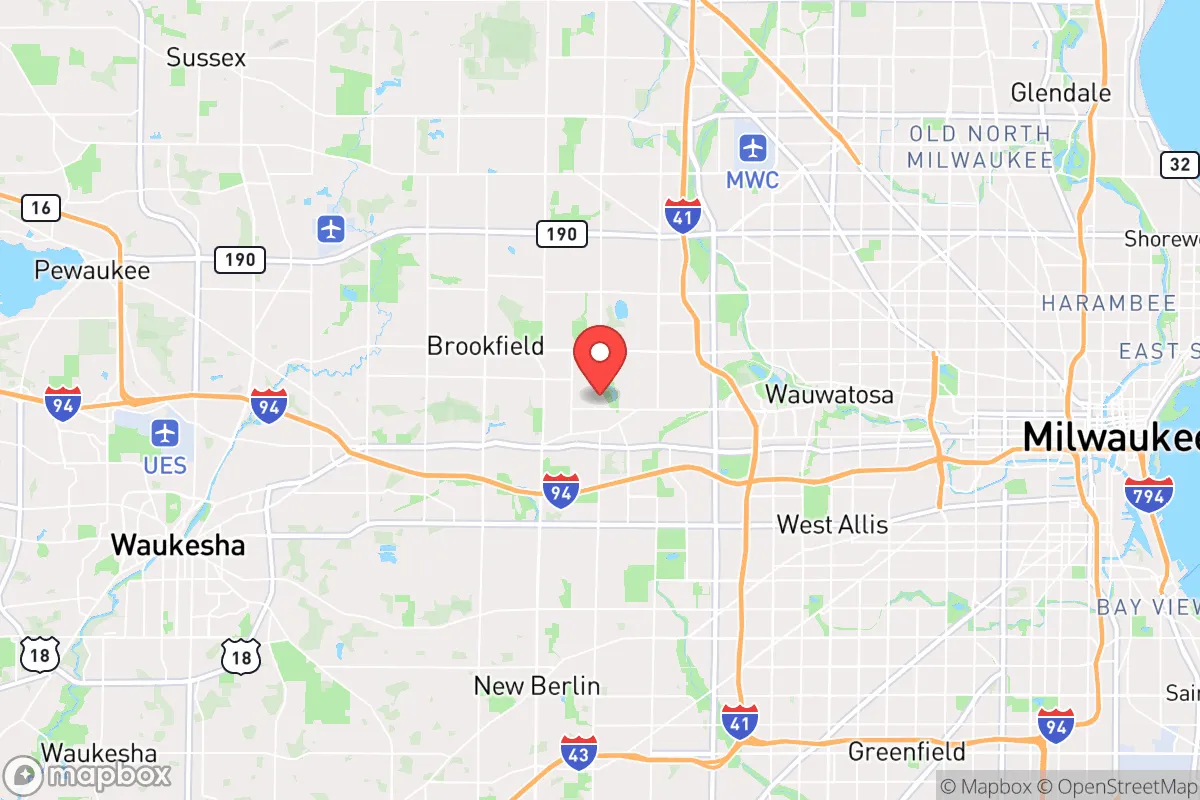
District shown is the primary district for this city’s centroid. Cities may span multiple districts.
Local Political AnalysisPolitical Analysis of Elm Grove, WI
Elm Grove has long been a reliably conservative community, and the numbers back that up with a Cook PVI of R+11, meaning the area votes about 11 points more Republican than the national average. That’s not just a statistic—it’s a reflection of the values you see in daily life here: a strong preference for local control, low taxes, and a general skepticism of government overreach. In recent years, though, you’ve probably noticed the political winds shifting a bit, especially as Milwaukee’s progressive influence creeps westward. Places like Wauwatosa and Shorewood, just a few miles east, have swung noticeably left, and while Elm Grove hasn’t flipped, there’s a quiet concern among longtime residents that the same pressures—on school boards, zoning, and local ordinances—could start nudging things in a direction that feels less like the community we’ve known.
How it compares
Compared to its neighbors, Elm Grove stands out as a conservative anchor in a region that’s becoming more politically mixed. Head east into Wauwatosa, and you’ll find a city that voted for Biden in 2020 and has embraced progressive policies like sanctuary city status and higher-density housing mandates. To the north, Brookfield is similarly conservative, but it’s larger and more diverse politically, with a growing number of younger families who lean moderate. Elm Grove, by contrast, remains a tight-knit village where local elections are still decided by a few hundred votes, and the Republican lean is consistent across most precincts. The contrast is starkest when you look at Milwaukee County as a whole, which is solidly Democratic—Elm Grove is one of the few red dots in a sea of blue, and that’s something residents here take pride in, even if it means feeling a bit like an island.
What this means for residents
For folks living here, the political climate translates into a few concrete realities. First, property taxes are relatively low for the area, and the village government tends to keep its hands off—no overreaching mask mandates or business shutdowns like you saw in some neighboring towns during the pandemic. Second, the school board has historically been conservative, focusing on academic rigor and parental rights rather than pushing social agendas. That’s a big deal for families who want their kids educated without the ideological baggage. Third, there’s a sense that your voice actually matters in local decisions—town hall meetings are small, and you can still get a straight answer from a village trustee. But the flip side is that as the region shifts, there’s a growing worry that state-level mandates or county policies could start overriding local preferences, especially on issues like land use and public health. If you value personal freedom and limited government, Elm Grove is still a good bet, but you’ll want to keep an eye on those school board and village board elections—they’re where the real battles are fought.
Culturally, Elm Grove has a distinct identity that sets it apart from the more progressive enclaves nearby. You won’t find the same push for bike lanes, density bonuses, or climate action plans that dominate conversations in Wauwatosa or Milwaukee. Instead, the focus is on preserving the village’s character—quiet streets, single-family homes, and a sense of order that doesn’t need a government committee to enforce. There’s a strong tradition of volunteerism and community events, like the Fourth of July parade and the farmers market, that feel genuinely local rather than performative. The biggest policy distinction is probably the village’s approach to development: Elm Grove has resisted high-density housing and commercial sprawl, keeping things low-key and residential. That’s a deliberate choice, and it reflects a broader philosophy that the people who live here know what’s best for their own community—without needing outside bureaucrats to tell them otherwise. If that sounds like your kind of place, you’ll fit right in.

State Political ClimatePolitical Climate in Wisconsin
State Political AnalysisPolitical Environment in the State
Wisconsin has long been a classic swing state, but over the past decade it has shifted from a true battleground to a state that leans slightly Republican in statewide elections, with a deeply entrenched political divide. The state’s overall partisan lean is roughly 50-50, but the GOP has won five of the last six presidential elections here, and the 2022 gubernatorial race was decided by just 3.4 points. The dominant coalition is a mix of conservative exurban and rural voters, while Democrats rely on the urban cores of Milwaukee and Madison and a handful of college towns. The 10-20 year trajectory shows a slow but steady rightward drift in the rural and suburban areas, while the cities have become more uniformly progressive, creating a political map that looks like a checkerboard of deep red and deep blue.
Urban vs. rural divide
The political map of Wisconsin is a textbook example of the urban-rural split. Milwaukee County is the Democratic stronghold, delivering roughly 70% of its vote to Democrats in recent cycles, while the surrounding WOW counties (Waukesha, Ozaukee, Washington) are among the most reliably Republican suburbs in the nation, often voting 60-65% GOP. Madison (Dane County) is even more lopsided, with Democrats routinely pulling 75-80% of the vote, driven by the University of Wisconsin and state government workers. Meanwhile, the rest of the state—places like Wausau, Green Bay, and Eau Claire—has been trending redder. The Fox Valley region, anchored by Appleton and Oshkosh, was once a swing area but has moved right as manufacturing jobs declined and cultural issues took center stage. The rural northwoods and the Driftless Region in the southwest are now solidly Republican, with counties like Vilas and Sawyer voting 65-70% GOP. The key battlegrounds are the suburban Milwaukee counties and the smaller cities like Kenosha and Racine, which have flipped between parties in recent cycles.
Policy environment
Wisconsin’s policy environment is a mixed bag for conservatives. On the plus side, the state has a flat income tax (currently 4.4% as of 2026, down from 7.65% in 2011) and no estate tax, which is a major win for families and small business owners. The state is a right-to-work state (passed in 2015), and Act 10 (2011) effectively ended collective bargaining for most public employees, saving local governments billions. However, the regulatory posture is uneven: the DNR has been a flashpoint, with conservative legislators pushing back on wetland and mining regulations, but environmental lawsuits from Dane County often slow things down. On education, Wisconsin has a robust school choice program—the oldest in the nation—allowing parents in Milwaukee, Racine, and the statewide program to use vouchers for private or religious schools. That’s a huge plus for parental rights. Healthcare is a mixed bag: the state expanded Medicaid under Walker in 2013 (a compromise), but private insurance markets are relatively stable. Election laws have been a major battleground: Wisconsin has strict voter ID laws (upheld in 2022), but the state’s use of drop boxes and absentee ballot rules have been in constant litigation, creating uncertainty. The 2020 election saw massive controversy, with the state’s Supreme Court eventually banning most private grant funding for election administration (2022).
Trajectory & freedom
On the freedom front, Wisconsin has been a tale of two trends. On the positive side, constitutional carry became law in 2011, and the state has a strong preemption law that prevents local governments from passing their own gun restrictions—a direct rebuke to Milwaukee and Madison’s attempts to ban firearms in city parks. In 2023, the legislature passed a parental bill of rights (Act 1), requiring schools to get parental consent before teaching about sexual orientation or gender identity, and giving parents access to all curriculum materials. That’s a major win for family autonomy. However, the state’s eminent domain powers have been used aggressively for the Foxconn project in Racine County (which largely fizzled), and property taxes remain high relative to the Midwest, though the state’s levy limits (2005) have kept them from skyrocketing. The biggest red flag for freedom is the state’s emergency powers: during COVID, Governor Evers used executive orders to shut down businesses and mandate masks for over a year, and the GOP legislature had to sue to rein him in. The state Supreme Court eventually ruled that the governor cannot extend emergency orders without legislative approval (2020), but the precedent of unilateral executive power remains a concern. Medical freedom is a mixed bag: Wisconsin has no vaccine mandate for adults, but the state’s health department pushed hard for COVID shots for kids, and there’s no religious exemption for school vaccines.
Civil unrest & political movements
Wisconsin has been a hotbed of political activism, both left and right. The 2020 Kenosha riots were a national flashpoint, with businesses burned and two people killed during protests after the Jacob Blake shooting. The unrest led to a massive backlash, with Kenosha County flipping from Obama to Trump in 2016 and then to Biden by just 600 votes in 2020—a sign of how volatile the area is. The Waukesha Christmas parade attack in 2021, where a man drove through a parade killing six, was a major cultural flashpoint, with the suspect’s criminal history and bail reform becoming a rallying cry for conservatives. On the right, the Wisconsin Grassroots Network and local Moms for Liberty chapters have been active in school board races, particularly in Waukesha and Washington counties. The 2020 election integrity controversy is still simmering: the state’s bipartisan election commission was sued multiple times, and the legislature created a special investigative committee (led by former Supreme Court Justice Michael Gableman) that found irregularities but no widespread fraud. Immigration politics are relatively quiet compared to border states, but the Eau Claire area has seen tensions over Hmong refugee resettlement, and the state’s sanctuary city ban (2019) prevents local governments from limiting cooperation with ICE. The John Doe investigations (2010-2014) into conservative groups were a major scandal, with prosecutors eventually sanctioned for targeting political opponents—a reminder that the state’s legal system can be weaponized.
Projection
Looking ahead 5-10 years, Wisconsin is likely to become more Republican at the state level, but the margin will remain razor-thin. The key demographic shift is the continued exodus from Milwaukee and Madison to the exurbs and smaller cities—places like Beaver Dam, Watertown, and Marshfield are growing as remote workers and retirees flee high taxes and crime. The Hispanic population is growing in the Fox Valley and Milwaukee suburbs, but these voters are not reliably Democratic; many are conservative on social issues. The biggest wildcard is the state Supreme Court: the 2023 election flipped the court to a 4-3 liberal majority, which could lead to redistricting challenges that might flip the state Assembly and Congressional maps. If that happens, expect a decade of gridlock. The 2024 election will be a test: if Trump wins Wisconsin again, the GOP will likely double down on election integrity laws and further restrict absentee voting. If Democrats win, expect a push for automatic voter registration and no-excuse absentee voting. For a new resident, the bottom line is that Wisconsin is a state where your local government matters more than the statehouse—if you live in Waukesha County, you’ll have low taxes, good schools, and conservative neighbors; if you live in Dane County, you’ll have high taxes, progressive policies, and a different cultural vibe. The state as a whole is trending redder, but the fight over the courts and the maps will determine whether that trend accelerates or stalls.
For a conservative family or individual moving to Wisconsin, the practical takeaway is this: choose your county carefully. The WOW counties (Waukesha, Ozaukee, Washington) offer the best combination of low taxes, school choice, and cultural alignment. The Fox Valley (Appleton, Green Bay) is a solid second choice, with a strong manufacturing base and a more moderate conservative vibe. Avoid Dane County unless you’re prepared for high property taxes and progressive governance. The state’s political climate is volatile, but the structural advantages—right-to-work, school choice, flat income tax, and constitutional carry—are durable and unlikely to be reversed anytime soon. The biggest risk is the state Supreme Court, which could redraw maps and shift the balance of power. But for now, Wisconsin remains a state where conservative values can thrive if you pick the right zip code.
* Values derived from national, state, county, city and local statistics and may differ in a specific area. Last updated: 2026-04-27T18:08:00.000Z
Narrative content on this page is AI-generated and may contain mistakes. Verify any details that matter before acting on them.
ReloMaps may earn a commission from affiliate links at no extra cost to you.

