Photo: Wikipedia
Personal Sovereignty in Emmett, ID
Moderate friction. Expect trade-offs in some aspect of personal liberty and independence.
What does Personal Sovereignty tell us?
Personal Sovereignty measures your capacity for self-reliance and independence with minimal government friction. Higher scores mean fewer barriers between you and the way you want to live... but it assumes you have the space you need and good neighbors.
What does this tell us?
Personal Sovereignty measures your capacity for self-reliance and independence with minimal government friction. Higher scores mean fewer barriers between you and the way you want to live... but it assumes you have the space you need and good neighbors.
State Policy
Energy independence: Importer (25% of energy produced in-state)
Personal Liberty
Homesteading

Personal Liberty Analysis
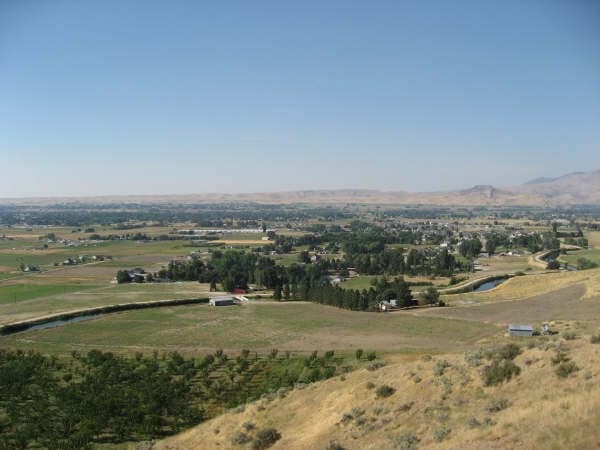
Emmett, Idaho, offers a notably high degree of personal sovereignty, particularly when viewed through the lens of individual autonomy and resistance to government overreach. Nestled in Gem County, this community of roughly 8,000 people operates within a state framework that consistently ranks among the most liberty-oriented in the nation, with a legal and cultural environment that prioritizes self-reliance over bureaucratic control. For those concerned with the erosion of personal freedoms elsewhere, Emmett represents a place where the default posture of local and state governance is to stay out of your life, your home, and your decisions.
Tax burden and regulatory posture: How Idaho’s low-tax, light-touch approach affects daily life
Idaho’s tax structure is a primary pillar of its sovereignty appeal. There is no state inheritance tax, no estate tax, and no tax on Social Security benefits, which directly preserves wealth transfer and retirement income from government claims. The state income tax is a flat 5.8% (as of 2026), and Gem County’s property tax rates are among the more moderate in the state, typically landing between 0.6% and 0.8% of assessed value depending on the specific school and fire districts. More critical than the rates themselves is the regulatory philosophy: Idaho operates under a "right to farm" statute that protects agricultural operations from nuisance lawsuits, and the state has actively resisted adopting California-style environmental and land-use mandates. In Emmett, you will not encounter the kind of zoning overreach common in coastal states—no strict limits on rainwater collection, no bans on wood-burning stoves, and no aggressive energy-efficiency codes that dictate your home’s construction. The regulatory burden is light, and the county planning department generally views property owners as capable of managing their own land.
Self-defense and gun law specifics: Constitutional carry, stand your ground, and the legal framework for armed preparedness
Idaho is a constitutional carry state, meaning no permit is required to carry a concealed firearm for any law-abiding adult 18 or older. This is not a privilege granted by the state; it is recognized as a pre-existing right. The state also has a strong "stand your ground" statute (Idaho Code § 19-202A), which removes any duty to retreat before using deadly force if you are lawfully present and reasonably believe it is necessary to prevent death or great bodily harm. There is no state-level red flag law, no magazine capacity restrictions, and no firearm registration. Gem County’s sheriff’s office has a public reputation for being supportive of Second Amendment rights, and the local culture treats firearm ownership as a normal, everyday aspect of life. For the survivalist-minded, this means you can maintain a well-stocked armory without fear of sudden legislative confiscation, and you can train and carry without bureaucratic interference. The legal environment is explicitly designed to let you be the first line of defense for your family and property.
Self-reliance and homesteading viability: Lot sizes, zoning, and off-grid feasibility in Gem County
Emmett’s surrounding area is where the sovereignty promise becomes tangible for those wanting to live off the grid or pursue serious homesteading. Outside the city limits, Gem County allows residential lots as small as one acre with a well and septic, but the real opportunity lies in the unincorporated areas where five- to forty-acre parcels are common and affordable—often $3,000 to $8,000 per acre as of 2026. Zoning in these areas is permissive: there are no county-wide bans on keeping livestock, no restrictions on building your own home as an owner-builder, and no prohibition on alternative energy systems. Solar panels, wind turbines, and rainwater catchment are all legal and unregulated at the county level. The main practical constraint is water—drilling a well in the basalt-heavy terrain can cost $15,000 to $30,000, but once you have it, you are not subject to municipal water rates or usage limits. Septic systems require a permit and inspection, but the process is straightforward and not used as a pretext for denying development. For those seeking to reduce dependency on supply chains and utility grids, Emmett’s rural fringe offers a realistic path to a self-sufficient lifestyle with minimal government oversight.
Personal liberties: Parental rights, medical autonomy, free speech, and property rights in practice
Idaho has been a national leader in codifying parental rights. The "Parental Rights in Education" statutes (Idaho Code § 33-138) explicitly affirm that parents have the fundamental right to direct their children’s education, medical care, and moral upbringing. This means no school district can withhold information about a child’s health or well-being from parents, and there are strong opt-out provisions for curriculum materials parents find objectionable. Medical autonomy is similarly robust: Idaho has banned nearly all forms of government-mandated medical procedures, including vaccine passports and forced treatments, and the state’s "Medical Freedom" law (Idaho Code § 39-4801) prohibits discrimination based on vaccination status. Free speech protections are reinforced by state law, and Emmett’s small-town culture means that expressing dissenting or traditional views does not carry the social or professional penalties common in more urbanized, ideologically uniform areas. Property rights are protected by Idaho’s "Private Property Protection Act," which requires the government to compensate landowners for any regulatory taking that reduces property value by more than 20%. In practice, this means the county is hesitant to impose restrictive zoning changes that would trigger compensation claims, preserving your ability to use your land as you see fit.
Compared to most other regions in the United States, Emmett, Idaho, stands out as a stronghold of personal sovereignty. The combination of constitutional carry, low taxes, permissive land-use rules, and explicit legal protections for parental and medical autonomy creates an environment where the government is a limited partner in your life, not a dominant one. For the individual or family looking to insulate themselves from federal overreach and state-level social engineering, Gem County offers a legal and cultural buffer that is increasingly rare. It is not a perfect libertarian utopia—there are still building codes, property taxes, and the occasional county regulation—but the trajectory here is toward more freedom, not less, and that makes Emmett a serious consideration for anyone prioritizing sovereignty in their relocation decision.

* Values derived from national, state, county, city and local statistics and may differ in a specific area. Last updated: 2026-05-03T20:23:59.000Z
Narrative content on this page is AI-generated and may contain mistakes. Verify any details that matter before acting on them.
ReloMaps may earn a commission from affiliate links at no extra cost to you.

