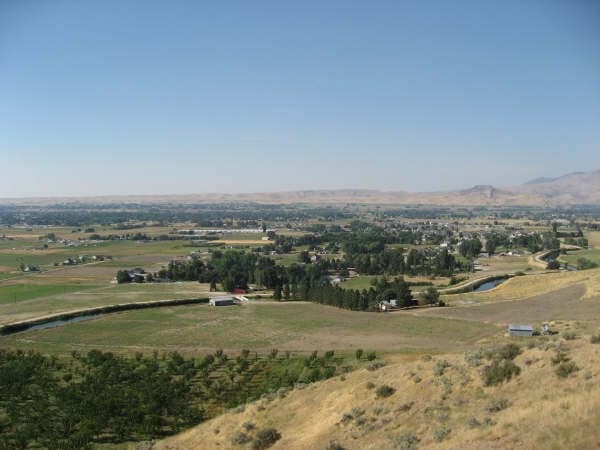
Photo: Wikipedia
Strategic Assessment of Emmett, ID
Deep buffer from population centers and strategic targets. Low natural disaster risk and minimal exposure to border or coastal threats.
What does the Strategic Assessment tell us?
Our Strategic Assessment grades tactical survivability of an area. Major population centers, military targets, fallout zones, natural disasters, and border exposure all drive risk — lower exposure means a more defensible position in a crisis.
This is heavily inspired by Joel Skousen's Strategic Relocation book. Highly recommended you checkout the book ($)What does this tell us?
Our Strategic Assessment grades tactical survivability of an area. Major population centers, military targets, fallout zones, natural disasters, and border exposure all drive risk — lower exposure means a more defensible position in a crisis.
This is heavily inspired by Joel Skousen's Strategic Relocation book. Highly recommended you checkout the book ($)Strategic Pillars

Key Distances
Regional Safe Places
Below is our recommended "safe zones" in Idaho and the surrounding area based on our strategic heuristics. For most people, it's unrealistic to live in a “safe zone” full-time due to work, family or other personal reasons. They tend to be more rural. However, many of these areas are perfect for second homes and retreat properties that double as a vacation home or even a short-term rental.
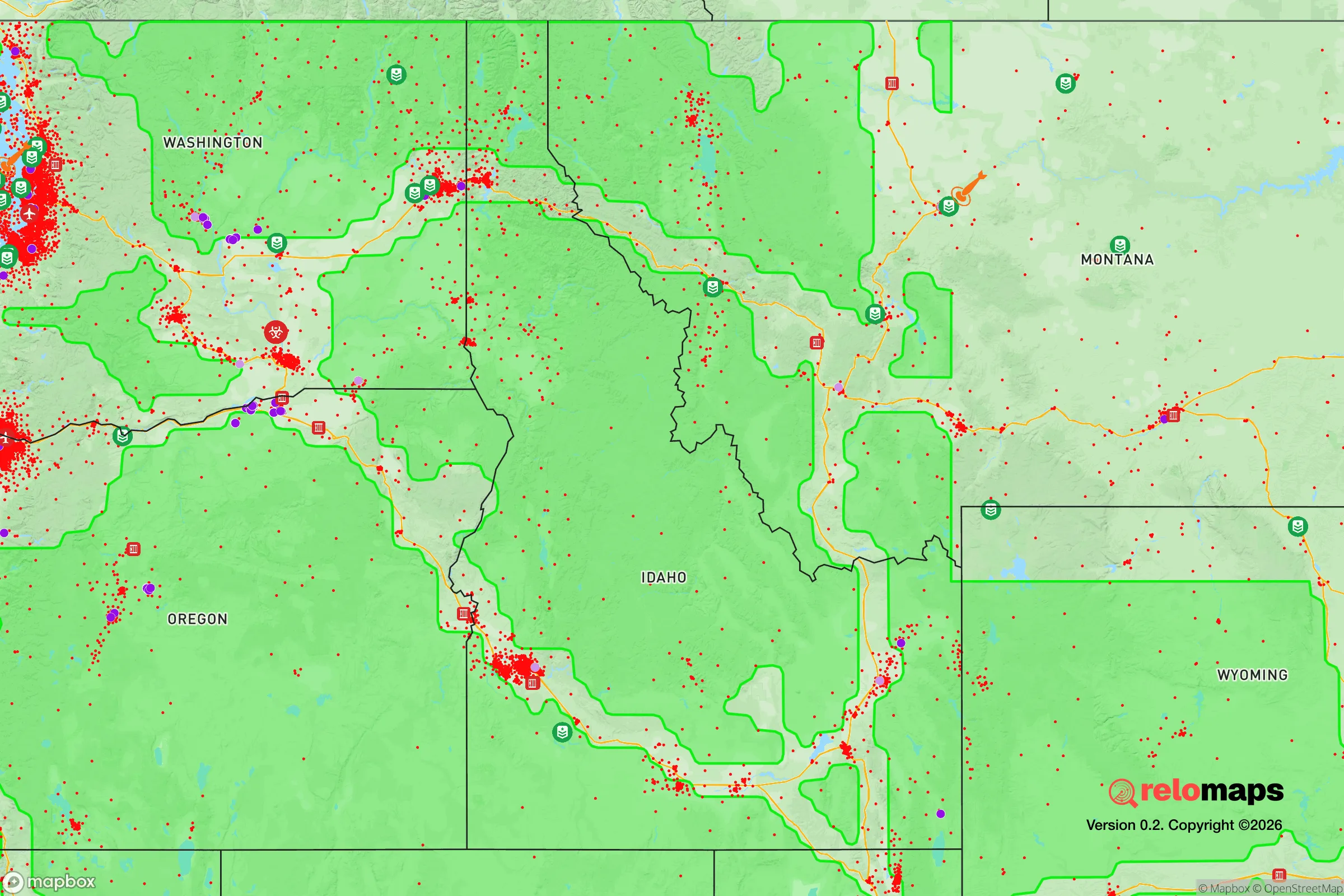
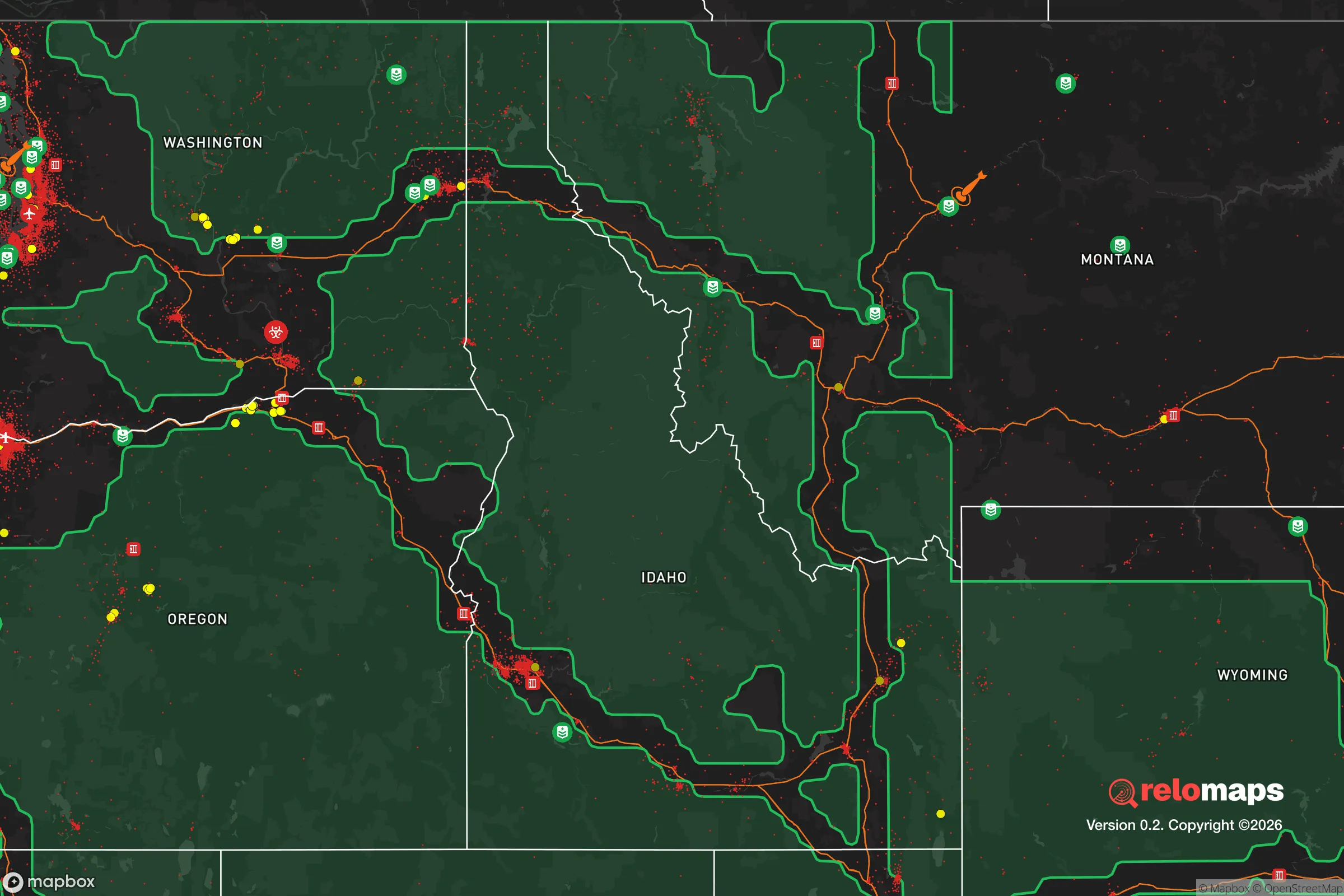


Important Note: For informational purposes only. This does not mean nothing bad ever happens in the green zones. Please use common sense. This is based on public data and modeled with AI. We tried to take a conservative approach but mistakes happen. We update this regularly as new information becomes available.
Solar Generator Recommendations
Backup power matters more here than in safer locations. We've picked three solar generators across budgets and capacity tiers — start with the budget unit if you only need a few essentials, or step up if you want to run a fridge and HVAC for days at a time.

Jackery Portable Power Station Explorer 300
Budget OptionPower on the Go: Weighing only 11 lbs, it's convenient to set up and store with book-sized foldable solar panels

BLUETTI Portable Power Station AC180
Designed for both indoor and outdoor scenarios, AC180 is highly capable as it has a robost capacity and continuous output power.

EF ECOFLOW DELTA Pro Ultra Power Station
Upgraded PickEcoFlow DELTA Pro Ultra is a whole-home energy system designed to grow with your family. Integrated with the Smart Home Panel 2, it scales to meet your evolving energy needs — keeping your home powered, intelligent, and secure through every stage of life.
We earn a commission, at no additional cost to you.
Strategic Assessment Analysis
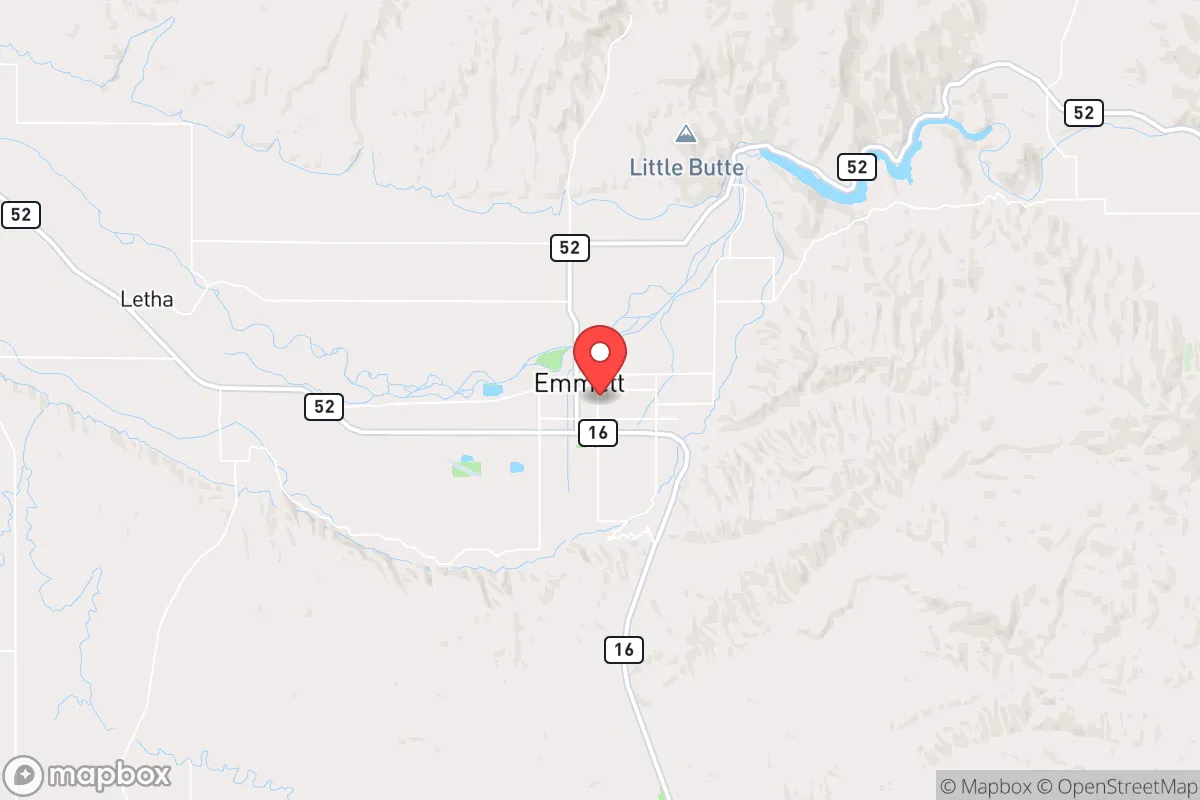
Emmett, Idaho, sits in a strategic pocket of the Gem State that offers genuine resilience for those thinking long-term about security, self-sufficiency, and distance from the chaos of major urban centers. Located in Gem County, roughly 30 miles northwest of Boise as the crow flies, Emmett provides a buffer from the metropolitan sprawl while still being close enough to access critical supplies and medical care when needed. For a relocator with a prepper mindset, this balance of isolation and accessibility is a rare find in the modern West, especially when considering the state of the country and the world in 2026.
Geographic position and natural advantages for long-term security
Emmett’s geography is its first and strongest asset. Nestled in the Payette River Valley at the confluence of the North and South Forks of the Payette River, the town benefits from abundant water resources—a non-negotiable for any serious resilience plan. The surrounding landscape is a mix of irrigated farmland, sagebrush-covered hills, and timbered mountains, offering multiple layers of natural defense. The Boise National Forest and Payette National Forest lie to the north and east, providing vast areas for hunting, foraging, and retreat if urban areas become untenable. The valley floor sits at roughly 2,400 feet elevation, with the nearby West Mountains rising to over 7,000 feet, creating a natural barrier that slows access from the south and west. This topography means that any large-scale movement of people or vehicles toward Emmett would be funneled through a limited number of routes—primarily Idaho Highway 16 and Highway 52—making the area inherently more defensible than flat, open terrain. For a conservative-leaning individual concerned with civic unrest or mass casualty events, the ability to control chokepoints is a significant advantage that few suburban or exurban locations can match.
Risks, exposures, and proximity to fallout-relevant landmarks
No location is without vulnerabilities, and Emmett has its share. The most immediate concern is its proximity to Boise, which sits about 35 miles southeast. While that distance provides a meaningful buffer, Boise is the state’s largest population center and a potential target for civil unrest, infrastructure collapse, or even a coordinated attack. The city hosts the Idaho State Capitol, the Boise Airport (a regional hub), and a concentration of federal and state government offices—all of which could become flashpoints in a national crisis. Additionally, the Mountain Home Air Force Base, located about 50 miles southeast of Emmett, is a strategic military installation that could be a target in a conflict scenario. While Emmett is far enough to avoid direct blast effects from a conventional or nuclear event in Boise, fallout patterns depend heavily on wind direction. Prevailing winds in the region are from the southwest, meaning that a detonation in Boise could push radioactive material toward Emmett under certain conditions. The risk is moderate but real, and any serious prepper should factor in the need for a basement or shielded shelter—something that is not standard in most Emmett homes. Wildfire is another recurring threat; the 2020 and 2021 fire seasons saw large burns in the nearby Payette and Boise National Forests, and the valley’s dry summers create a persistent fire risk. Flooding along the Payette River is also a concern during spring snowmelt, though modern levees and floodplain management have reduced the worst-case scenarios.
Practical resilience for a relocator: food, water, energy, and defensibility
For the individual or family serious about self-reliance, Emmett offers concrete advantages that go beyond geography. Water is the foundation of any long-term survival plan, and the Payette River system provides a reliable surface water source that can be treated with basic filtration or boiling. The area also has a significant agricultural base—Gem County is home to orchards, hay fields, and livestock operations—meaning that local food production is a reality, not just a theory. Farmers markets and direct-from-farm sales are common in season, and the growing season (roughly 130 frost-free days) allows for substantial home gardening. For energy resilience, the region has strong solar potential, with over 200 sunny days per year. Off-grid solar setups are feasible, and the rural nature of much of Gem County means that building codes are generally less restrictive than in Boise or Ada County, making it easier to install alternative power systems without bureaucratic hurdles. Defensibility is where Emmett truly shines. The town itself has a population of roughly 7,000, with the entire county under 20,000. This low density means that in a crisis, you are not competing with millions for resources. The surrounding rural properties offer options for retreat-style living with acreage, and the local culture is heavily oriented toward hunting, fishing, and firearms ownership—a practical advantage for those who prioritize self-defense and food procurement. The Gem County Sheriff’s Office is small but responsive, and the community’s conservative values mean that neighbors are more likely to be armed and capable than in urban areas. For a relocator, the key is to secure a property with its own well and septic system, ideally on a minimum of 5-10 acres, to ensure water independence and a buffer from neighbors.
The overall strategic picture for Emmett as a relocation destination
Emmett presents a compelling case for the conservative prepper who wants to be out of the blast radius of major cities but not so remote that daily life becomes a grind. It is not a bug-out location for the end of the world—it is a place to build a sustainable, resilient life that can weather the shocks of a declining empire. The trade-offs are clear: you trade the convenience of Boise’s amenities for a quieter, more defensible existence with abundant water and farmland. The risks—wildfire, flooding, and the shadow of Boise’s potential collapse—are manageable with proper planning. For the single individual or family looking to plant roots in a community that still values self-reliance, Emmett is a solid bet. It is not a fortress, but it is a strong position from which to operate. In a world where the grid is fragile, the government is overextended, and urban centers are increasingly unstable, Emmett offers a realistic path forward for those willing to put in the work.

* Values derived from national, state, county, city and local statistics and may differ in a specific area. Last updated: 2026-05-03T20:23:59.000Z
Narrative content on this page is AI-generated and may contain mistakes. Verify any details that matter before acting on them.
ReloMaps may earn a commission from affiliate links at no extra cost to you.

