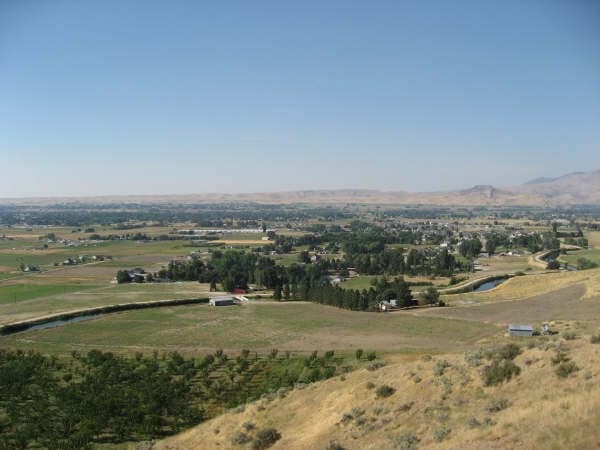
Photo: Wikipedia
Political ClimatePolitical Climate in Emmett, ID
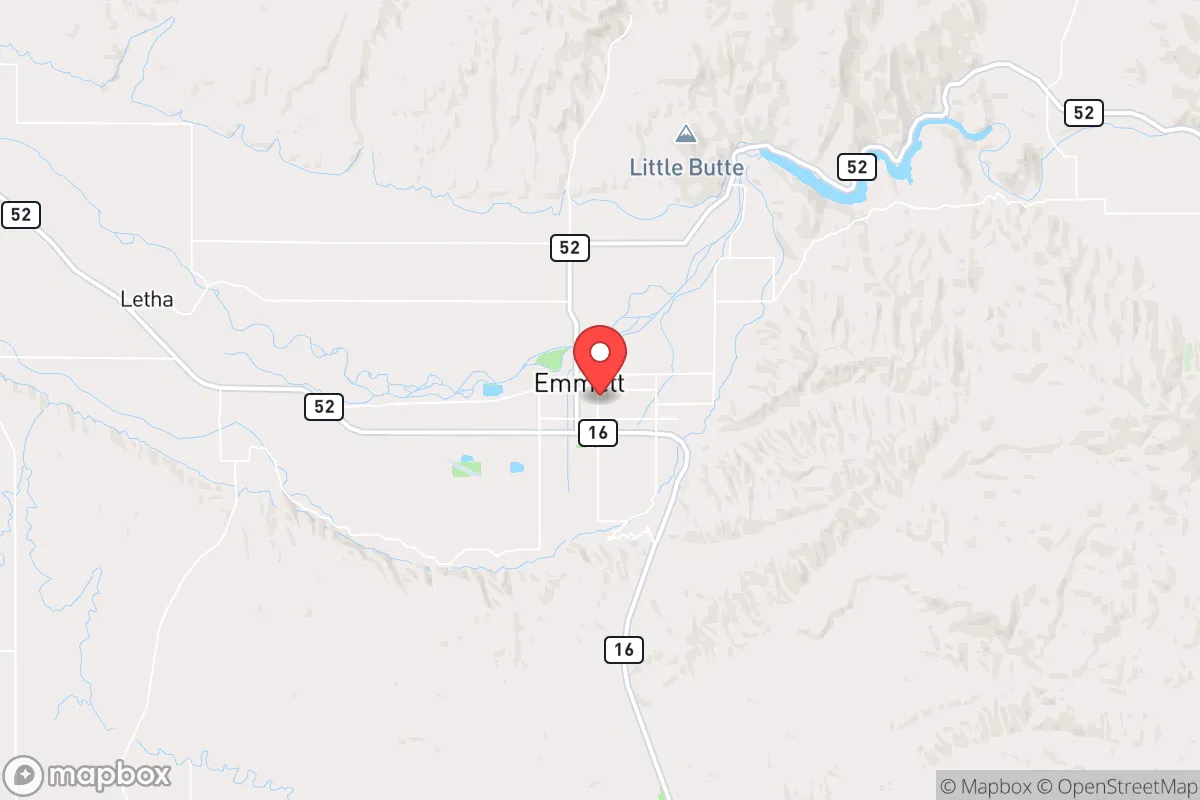
District shown is the primary district for this city’s centroid. Cities may span multiple districts.
Local Political AnalysisPolitical Analysis of Emmett, ID
Emmett, Idaho, is about as solidly conservative as it gets, and that’s not changing anytime soon. The Cook PVI of R+22 tells you the story in a single number—this area votes Republican by a massive margin, and it’s been that way for as long as anyone can remember. In the 2024 election, Gem County went for the Republican candidate by over 70%, and local races rarely see a serious challenge from the left. If you’re looking for a place where the political winds don’t shift with every national trend, Emmett is it.
How it compares
Drive 20 minutes south to Boise, and you’re in a different world. Ada County has been trending purple for years, with Boise itself leaning increasingly progressive—especially in the North End and downtown. Emmett, by contrast, feels like a time capsule of traditional Idaho values. Neighboring towns like Horseshoe Bend and New Meadows are similarly conservative, but Emmett has a more established, family-oriented feel. The contrast with Boise is stark: while the capital debates zoning for bike lanes and affordable housing mandates, Emmett’s county commissioners are more likely to be arguing about property rights and Second Amendment protections. It’s a place where people still wave at each other on the street, and that’s not just nostalgia—it’s a political choice.
What this means for residents
For folks who value personal freedom and limited government, Emmett is a breath of fresh air. There’s no city-wide mask mandate or vaccine passport drama here—those fights barely made a ripple. The Gem County Sheriff’s Office has a reputation for being pro-Second Amendment, and you’ll see “Don’t Tread on Me” flags flying alongside American ones. Property taxes are low compared to Boise, and there’s no income tax in Idaho, which keeps more money in your pocket. But it’s not all perfect: the county’s rapid growth—up about 15% since 2020—has brought some pressure from developers and newcomers who don’t always share the local mindset. Some worry that as more people flee California and Oregon, they’ll bring progressive voting habits with them. So far, that hasn’t happened in Emmett, but it’s something to keep an eye on. The school board and city council remain firmly conservative, and local elections are still decided by a few hundred votes—meaning your voice actually matters here.
What sets Emmett apart culturally
One thing that stands out is the strong sense of community self-reliance. There’s no big-box store on every corner—Emmett’s downtown is full of locally owned shops and cafes, and the annual Cherry Festival is a big deal. Politically, the area has a libertarian streak: people here don’t like being told what to do, whether it’s by the state or the feds. You’ll hear grumbling about BLM land-use restrictions and water rights regulations, which hit close to home for ranchers and farmers. The county has also pushed back on state-level mandates in the past, like when it declared itself a “Second Amendment Sanctuary” in 2021. That kind of local defiance is part of the culture. If you’re moving here, expect to be welcomed—but also expected to pull your own weight. Emmett isn’t a place that coddles, and that’s exactly how most residents like it.

State Political ClimatePolitical Climate in Idaho
State Political AnalysisPolitical Environment in the State
Idaho has become one of the most reliably conservative states in the nation, with a Republican trifecta controlling the governorship, supermajorities in both legislative chambers, and a solidly red congressional delegation. Over the past 20 years, the state has shifted from a more libertarian-leaning Western conservatism to a harder, culturally conservative posture, driven by explosive growth in the Boise metro and an influx of out-of-state transplants seeking lower taxes and fewer restrictions. The 2024 election saw Donald Trump carry Idaho by over 30 points, with every single county voting red except for Blaine County (home to Sun Valley) and a narrow Democratic hold in Latah County (Moscow).
Urban vs. rural divide
The political map of Idaho is starkly divided between a handful of urban and suburban islands and a vast, deeply conservative rural expanse. The Treasure Valley, anchored by Boise, Meridian, and Nampa, is the state’s population center and the primary engine of Republican votes, though it has seen a noticeable shift toward the center as tech workers and Californians pour in. Ada County (Boise) voted for Trump by 12 points in 2024, down from 18 in 2020, signaling a slow suburban drift. Meanwhile, Canyon County (Nampa, Caldwell) remains a Republican stronghold, voting +35 for Trump. The rural north, including Coeur d’Alene and Sandpoint, is even more conservative, with Bonner County voting +45 for Trump. The only blue dots are Moscow, home to the University of Idaho, and Ketchum/Sun Valley, a wealthy resort enclave. The vast central and eastern counties—like Lemhi, Custer, and Clark—routinely vote 80-90% Republican, making Idaho one of the most geographically polarized states in the West.
Policy environment
Idaho’s policy environment is aggressively pro-business and culturally conservative. The state has a flat income tax rate of 5.8% (down from 6.5% in 2023) and no corporate income tax on pass-through entities, making it a low-tax haven relative to the West Coast. Property taxes are moderate, with a 1% cap on annual increases for primary residences. Education policy is a flashpoint: the state passed a universal school choice program in 2025, allowing families to use public funds for private or homeschool expenses, a major win for parental rights advocates. Healthcare is largely deregulated, with no state-level individual mandate and limited Medicaid expansion (Idaho expanded in 2020 but with work requirements). Election laws are among the most secure in the nation: voter ID is required, same-day registration is not allowed, and the state uses paper ballots with mandatory audits. The legislature has also passed laws banning ranked-choice voting and restricting ballot initiatives, a direct response to the 2018 Medicaid expansion that bypassed the GOP supermajority.
Trajectory & freedom
Idaho is moving in a decidedly more free direction on most fronts, but with some caveats. The 2024 legislative session saw the passage of the Idaho Freedom Act, which prohibits any state or local enforcement of federal gun control measures, including red flag laws and NFA restrictions. The state also enacted a near-total abortion ban (the Idaho Defense of Life Act) with no exceptions for rape or incest, and a law banning gender-affirming care for minors. On the property rights front, the Private Property Protection Act was strengthened, making it harder for local governments to impose zoning restrictions that reduce property values. However, some conservatives worry about the growing influence of the Church of Jesus Christ of Latter-day Saints in state politics, which has pushed for more moderate stances on immigration and environmental issues. The biggest threat to freedom, in many locals’ eyes, is the rapid urbanization of the Treasure Valley, which is bringing California-style housing policies and traffic congestion—though the state legislature has preempted local rent control and inclusionary zoning mandates.
Civil unrest & political movements
Idaho has a long history of anti-government sentiment, from the Ruby Ridge standoff in 1992 to the more recent rise of the People’s Rights network founded by Ammon Bundy. The state has seen periodic protests over COVID-19 mandates, with large rallies at the State Capitol in 2020-2021 that drew national attention. More recently, the Idaho Freedom Foundation has become a powerful force in Republican primaries, pushing for school choice, tax elimination, and the abolition of property taxes. On the left, the Idaho Democratic Party is nearly nonexistent outside of Boise and Moscow, but activist groups like Reclaim Idaho have successfully used ballot initiatives to expand Medicaid and increase education funding. Immigration politics are relatively quiet, as Idaho is not a border state and has a small foreign-born population (around 6%), but the legislature passed a law in 2024 requiring local law enforcement to cooperate with ICE. Election integrity remains a hot topic, with the state’s Republican secretary of state, Phil McGrane, implementing strict voter roll maintenance and criminal penalties for ballot harvesting.
Projection
Over the next 5-10 years, Idaho will likely become even more conservative in policy but more moderate in demographics. The influx of new residents—mostly from California, Washington, and Oregon—is concentrated in the Treasure Valley and the Coeur d’Alene area. These transplants tend to be fiscally conservative but socially moderate, which could slowly shift the suburbs of Boise and Meridian toward the center. However, the rural counties are growing faster than the urban core in terms of political weight, thanks to gerrymandered legislative districts that favor rural areas. The state’s Republican supermajority is likely to hold, but internal fights between the Idaho Freedom Caucus (hardline) and the Main Street Republicans (business-friendly) will intensify. The biggest wildcard is the Boise housing crisis: if the state fails to address affordability, younger conservatives may leave, while wealthy liberals continue to buy up property. For now, the trajectory is clear: Idaho will remain a red state, but the flavor of that red is shifting from libertarian to culturally conservative, with a growing emphasis on parental rights, school choice, and gun freedom.
For a new resident, the bottom line is this: Idaho offers a high degree of personal freedom, low taxes, and a government that is generally on your side when it comes to property rights, gun rights, and parental control over education. The trade-off is a rapidly growing population that is straining infrastructure in the Boise area, and a political climate that can feel insular and dominated by a single party. If you value a state where your vote actually counts in a Republican primary and where the government stays out of your business, Idaho is one of the best bets in the country. Just be prepared for the winters and the fact that everyone else had the same idea.
* Values derived from national, state, county, city and local statistics and may differ in a specific area. Last updated: 2026-05-03T20:23:59.000Z
Narrative content on this page is AI-generated and may contain mistakes. Verify any details that matter before acting on them.
ReloMaps may earn a commission from affiliate links at no extra cost to you.

