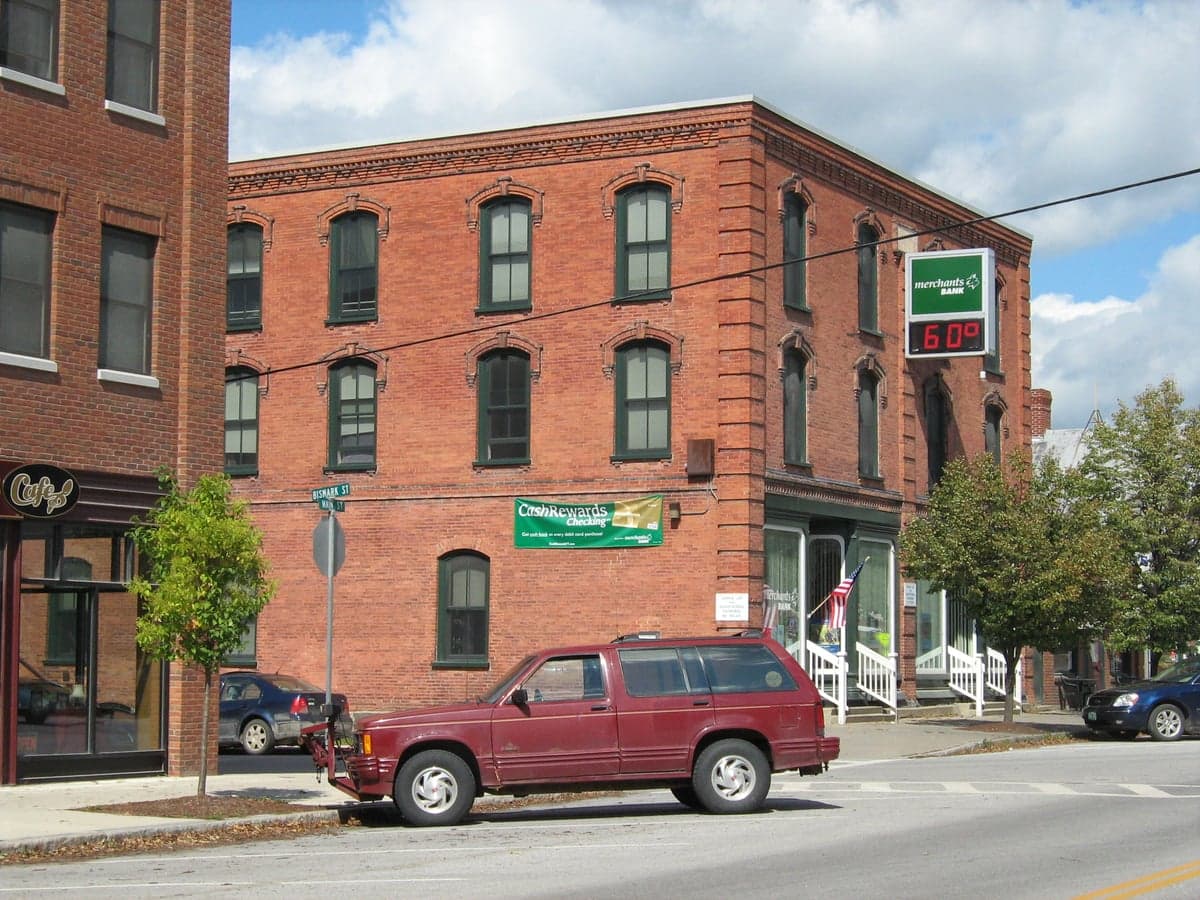
Photo: Wikipedia
Political ClimatePolitical Climate in Enosburg Falls, VT
District shown is the primary district for this city’s centroid. Cities may span multiple districts.
Inherited from parent state — no local data available.
Local Political AnalysisPolitical Analysis of Enosburg Falls, VT
Enosburg Falls, Vermont, leans heavily Democratic, with a Cook PVI of D+17, meaning the area votes about 17 points more Democratic than the national average. That’s a stark shift from what many longtime locals remember—this used to be a place where folks voted for the person, not the party, and where common-sense independence mattered more than any label. Today, the political winds have changed, and it’s not just about elections; it’s about a growing sense that government is creeping into decisions best left to families, small businesses, and local communities. If you’re considering a move here, you need to understand that the local culture is increasingly shaped by progressive policies that can feel like overreach, especially on issues like property rights, school curriculum, and land use.
How it compares
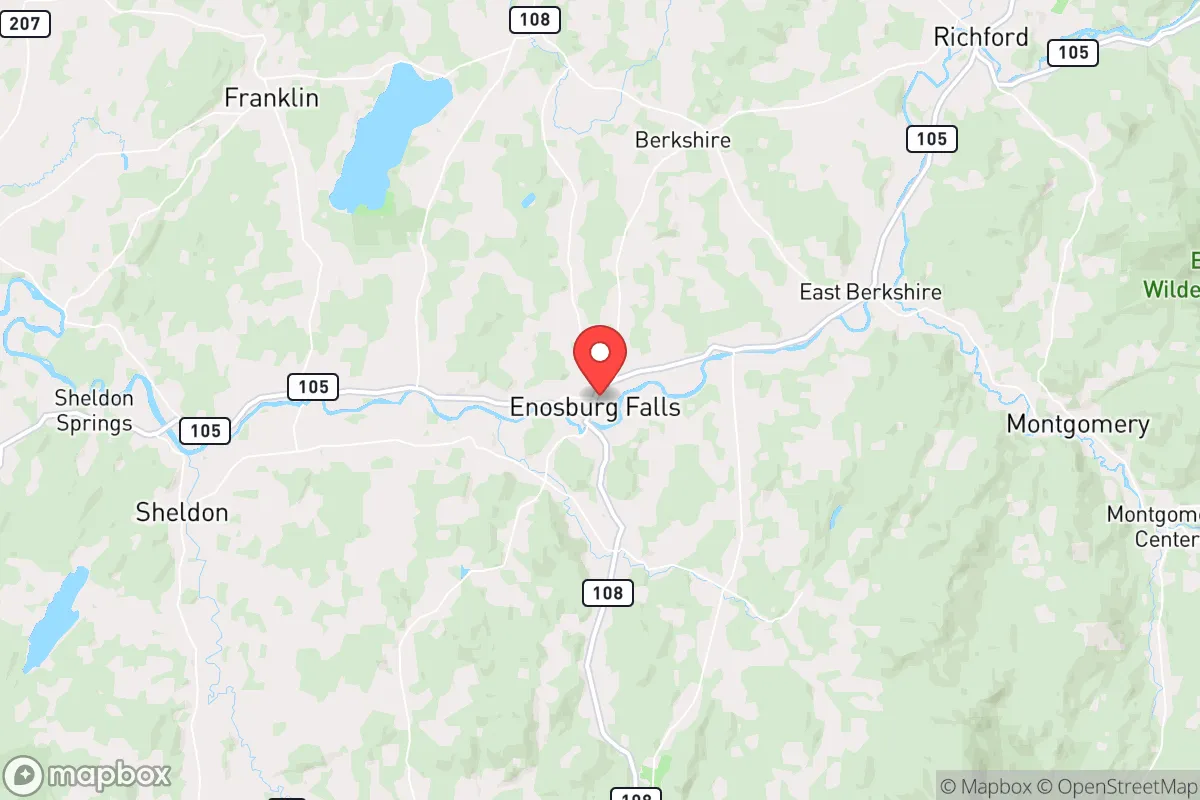
To get a real feel for Enosburg Falls’ politics, look at the surrounding towns. Head south to Richford or east to Montgomery, and you’ll find communities that still lean more conservative—places where the Second Amendment is a given, not a debate, and where town meetings are about fixing roads, not redefining social norms. Even St. Albans, just 15 miles away, has a more mixed political vibe, with a stronger independent streak. Enosburg Falls, by contrast, has become a hub for progressive activism, with local boards and school committees pushing agendas that many residents feel prioritize ideology over practicality. The D+17 rating isn’t just a number; it reflects a real shift in who’s showing up to vote and who’s running for office. If you value personal freedoms—like choosing your own healthcare, deciding how to educate your kids, or running a business without endless red tape—this contrast matters.
What this means for residents
For daily life, the political climate here means you’ll see more regulations and mandates than in neighboring towns. Property taxes have climbed to fund expanded social programs and school initiatives that some residents feel don’t reflect their values. There’s also growing pressure on small farms and local businesses to comply with state-level environmental and labor rules that can feel like a burden, especially for family operations that have been here for generations. On the plus side, if you align with progressive ideals—like universal pre-K, renewable energy mandates, or strict gun control—you’ll find plenty of like-minded neighbors. But if you’re wary of government overreach, you might feel like your voice is getting drowned out. The local school board, for instance, has debated curriculum changes that some parents see as pushing ideology over academics, and town meetings can be tense when issues like housing density or land use come up.
Culturally, Enosburg Falls still holds onto its small-town charm—the maple sugaring, the dairy farms, the close-knit community feel—but the political undercurrent is unmistakable. Longtime residents often joke that the “Vermont way” of live-and-let-live is being replaced by a “you-will-comply” attitude. In the near term, expect more state-level mandates on energy and education to trickle down, and in the long term, the area could become even more polarized as younger, more progressive transplants move in. If you’re considering a move here, my advice is to visit during a town meeting or school board session. Listen to the debates. You’ll get a real sense of whether this community’s direction aligns with your own values—or whether it’s time to look a little further down the road.

State Political ClimatePolitical Climate in Vermont
State Political AnalysisPolitical Environment in the State
Vermont has long been one of the most reliably Democratic states in the nation, but its political climate is far more nuanced than a simple blue label suggests. Over the past 20 years, the state has shifted from a moderate, fiscally conservative Yankee Republican tradition to a solidly progressive stronghold, with Democrats holding a supermajority in the legislature and the governor’s office since 2017. However, this shift masks a deep and growing urban-rural divide, with the Burlington metro area and a handful of college towns driving the leftward march, while vast swaths of the Northeast Kingdom and southern counties remain stubbornly conservative. For a conservative considering relocation, the state’s trajectory is a cautionary tale of how a once-proud independent streak has been steadily eroded by top-down government expansion.
Urban vs. rural divide
The political map of Vermont is a study in contrasts. The Burlington metro area, including Chittenden County and the city of Burlington itself, is the engine of the state’s progressive politics. This region routinely votes 75-80% Democratic, driven by the University of Vermont, a dense tech and healthcare sector, and a young, transplant-heavy population. In contrast, the Northeast Kingdom—counties like Orleans, Essex, and Caledonia—votes reliably Republican, often by margins of 20-30 points. Towns like Newport and St. Johnsbury are bastions of gun rights and local control, where voters feel increasingly alienated by Montpelier’s one-party rule. The divide is also visible in the southern tier: Rutland County, once a swing area, has trended redder in recent cycles, while Windham County (Brattleboro) remains a deep-blue outlier thanks to its artsy, activist population. The key takeaway: if you’re a conservative, you’ll find your people in the rural hill towns and the Northeast Kingdom, but you’ll be fighting an uphill battle against the urban vote that dominates state policy.
Policy environment
Vermont’s policy environment is a textbook case of progressive governance with a heavy hand. The state has the highest combined state and local tax burden in the nation, according to the Tax Foundation, driven by a progressive income tax (top rate 8.75%) and one of the highest property tax rates in the country. The education funding system is a statewide pool, meaning your property taxes in a rural town like Danville directly subsidize schools in Burlington. The regulatory posture is aggressive: Vermont was the first state to mandate a renewable energy standard (75% by 2032), and it has a statewide land-use law (Act 250) that makes building anything—homes, businesses, even a shed—a costly, multi-year ordeal. On healthcare, the state runs a single-payer-like system through Green Mountain Care, and it was the first to implement a public option for health insurance. Election laws are among the most liberal: universal mail-in voting, same-day registration, and no voter ID requirement. For a conservative, this environment feels like a slow-motion erosion of personal autonomy, where the state dictates everything from your heating fuel to your children’s curriculum.
Trajectory & freedom
Vermont’s trajectory over the past decade is unmistakably toward less freedom, especially for those who value individual rights. The most glaring example is gun policy: in 2018, after a foiled school shooting plot, the legislature passed Act 95, which banned magazines over 10 rounds, required background checks on private sales, and raised the purchase age to 21. In 2023, they added a ban on “ghost guns” and a 72-hour waiting period. For a state with a deep hunting tradition, this was a gut punch. On parental rights, Vermont was one of the first states to pass a law (Act 1 in 2023) that explicitly protects gender-affirming care for minors, overriding parental consent in some cases. The state also has a “sanctuary” law (Act 7) that limits local law enforcement cooperation with federal immigration authorities. On the economic front, the state’s paid family leave program (Act 203) mandates up to 12 weeks off with partial pay, funded by a payroll tax on both employees and employers. These policies, while popular in Burlington, have accelerated an exodus of small businesses and families to neighboring New Hampshire, which has no income tax and a far lighter regulatory touch.
Civil unrest & political movements
Vermont has a long history of civil disobedience, but the flashpoints have shifted. The most visible recent unrest came in 2020, when Burlington saw weeks of Black Lives Matter protests, including the toppling of a statue of a Union soldier. The state’s progressive wing has since organized around climate activism (the “Extinction Rebellion” group has been active in Montpelier) and housing policy, with rent control advocates clashing with property owners. On the right, the “Vermonters for Liberty” movement has grown, organizing against vaccine mandates and school curriculum changes. The state’s sanctuary policy has created tension with federal immigration authorities, though Vermont’s small immigrant population means this is less a flashpoint than in larger states. Election integrity is a quiet concern: Vermont’s universal mail-in system and lack of voter ID have drawn scrutiny from conservative groups, but no major fraud cases have been proven. For a new resident, the most visible political expression is the proliferation of yard signs—you’ll see far more “Black Lives Matter” and “Pride” flags in Chittenden County than “Don’t Tread on Me” flags in the Northeast Kingdom.
Projection
Looking ahead 5-10 years, Vermont’s political trajectory is likely to continue leftward, driven by two demographic forces. First, the state is aging rapidly—it has the second-oldest population in the nation—and younger, more progressive transplants from New York and Massachusetts are replacing retiring conservatives. Second, the urban-rural divide will widen as Burlington and its suburbs grow denser while rural towns depopulate. This means more of the same: higher taxes, stricter regulations, and expanded government programs. The recent passage of a clean heat standard (2024) will force homeowners to switch to heat pumps or biofuels, a costly mandate that will hit rural residents hardest. The state is also exploring a universal basic income pilot and a public bank. For a conservative moving in now, expect to be a permanent minority in state politics, with your vote largely irrelevant in statewide races. Your best bet is to find a rural town with a strong local government and a tradition of ignoring Montpelier’s edicts—places like Brownington or Shoreham—but even there, the long arm of the state is reaching.
For a conservative considering Vermont, the bottom line is this: you’ll find beautiful landscapes, low crime, and a strong sense of community in the right town, but you’ll be swimming against a powerful political current. The state’s government is actively expanding its reach into your home, your wallet, and your family’s decisions. If you value low taxes, gun rights, and local control, you’ll find a more welcoming environment in New Hampshire or even northern Maine. Vermont is a place where your vote matters less than your ability to adapt to a system that increasingly sees individual freedom as a problem to be managed. Come for the scenery, but don’t expect the politics to change anytime soon.
* Values derived from national, state, county, city and local statistics and may differ in a specific area. Last updated: 2026-04-30T08:10:15.000Z
Narrative content on this page is AI-generated and may contain mistakes. Verify any details that matter before acting on them.
ReloMaps may earn a commission from affiliate links at no extra cost to you.

