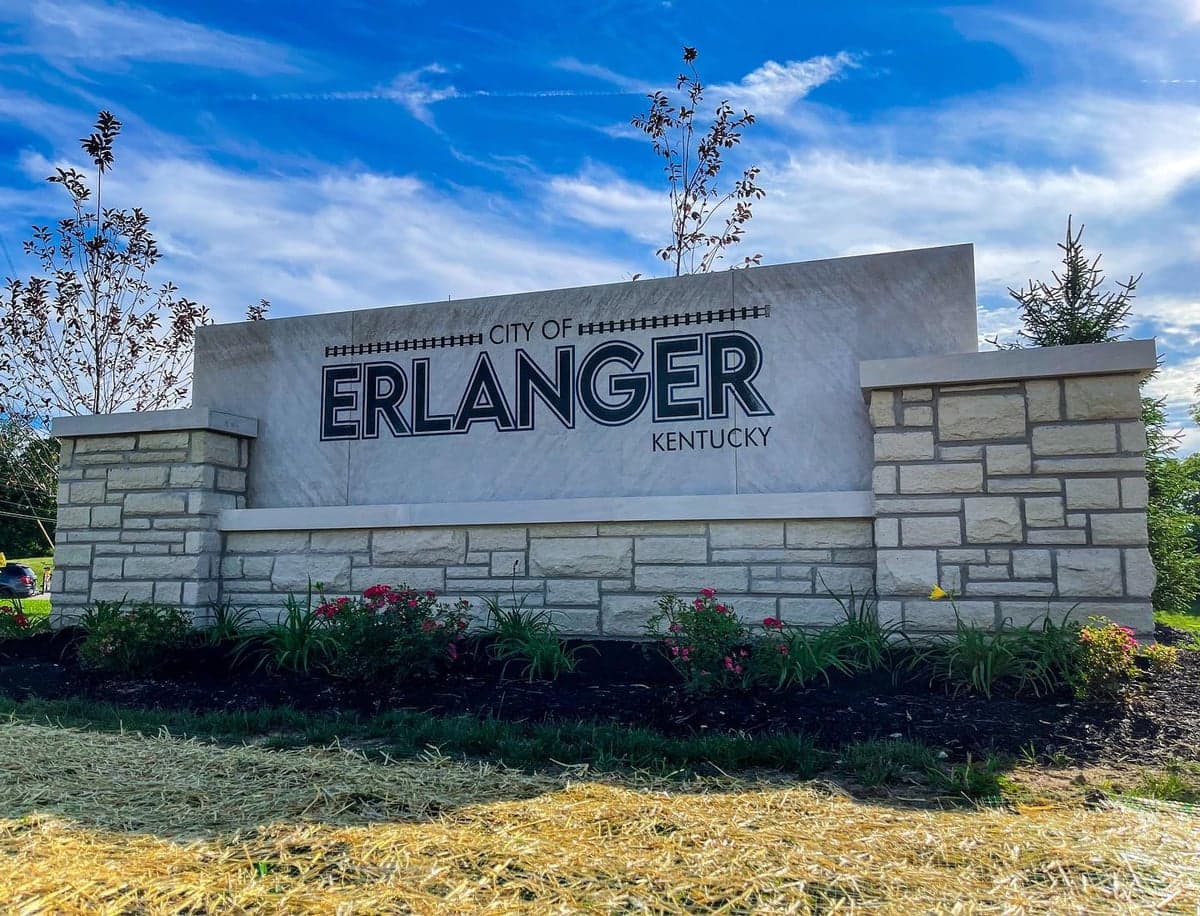
Photo: Wikipedia
Political ClimatePolitical Climate in Erlanger, KY
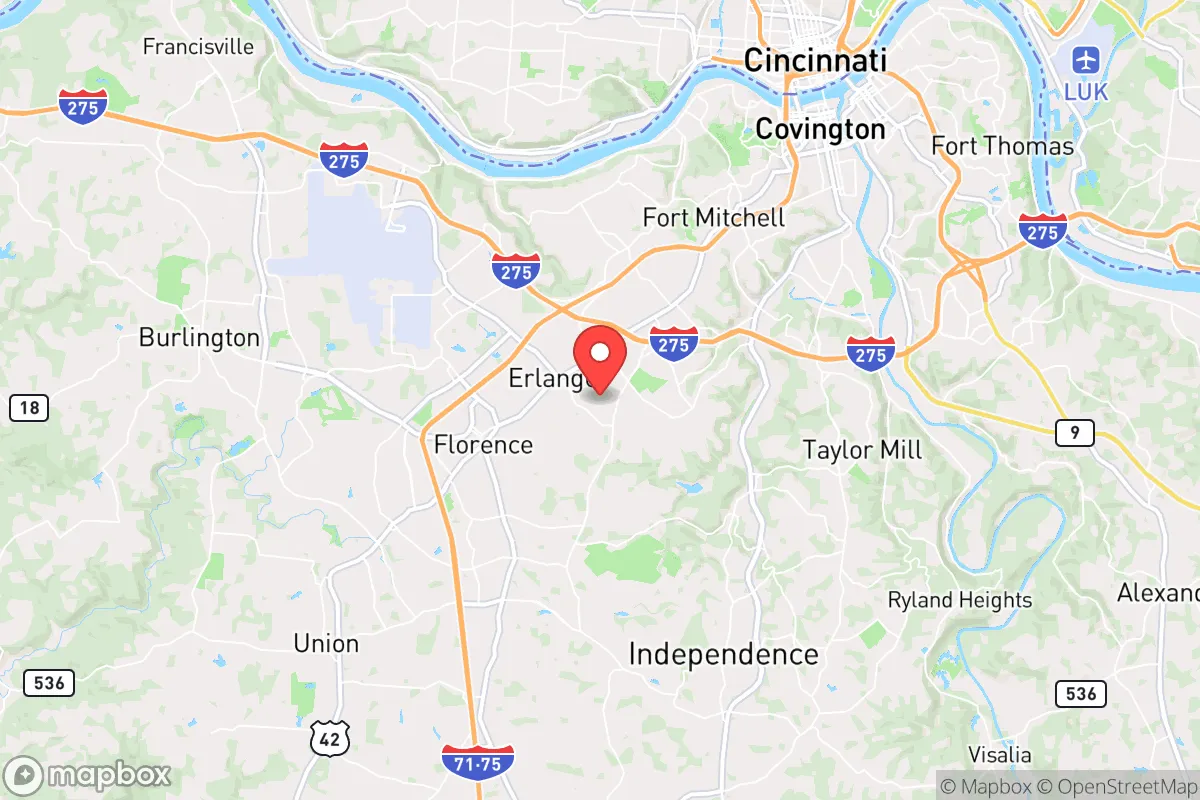
District shown is the primary district for this city’s centroid. Cities may span multiple districts.
Local Political AnalysisPolitical Analysis of Erlanger, KY
Erlanger, Kentucky, sits solidly in the red column, with a Cook PVI of R+18 that reflects a deeply ingrained conservative tradition. This isn’t a purple suburb that flips on a dime; it’s a community where the default assumption is limited government, personal responsibility, and a healthy skepticism of any politician who promises to “fix” things from Frankfort or Washington. The political trajectory here has been remarkably stable for decades, though you can feel a subtle shift as the Cincinnati metro area’s influence creeps southward—more transplants, more out-of-state plates, and a slow but noticeable uptick in progressive-leaning yard signs in certain pockets.
How it compares
Drive ten minutes north into Covington or Newport, and you’ll hit a different political reality—those river cities are trending bluer, with younger renters and a more transient population that leans left on social issues. Head east to Fort Mitchell or Edgewood, and you’re in similar conservative territory, but with a slightly more corporate, country-club Republican vibe. The real contrast is with Cincinnati proper, just across the Ohio River: a reliably Democratic stronghold where city council debates revolve around defunding police and sanctuary city policies. Erlanger, by contrast, still elects officials who talk about keeping taxes low, supporting law enforcement, and pushing back against state-level mandates on everything from vaccine passports to energy regulations. The surrounding Boone County as a whole votes R+20 or better, so Erlanger is actually a touch more moderate than its rural neighbors—but that’s a relative thing. You won’t find a single Democrat holding a countywide office here.
What this means for residents
For the average family, this political climate translates into a few concrete realities. First, property taxes stay reasonable—Boone County’s rate is among the lowest in Northern Kentucky, and there’s no appetite for the kind of bond measures or special assessments you see in liberal suburbs. Second, school policy tends to be parent-driven: the Erlanger-Elsmere school board has resisted critical race theory curricula and kept mask mandates optional long before the state dropped them. Third, gun rights are respected—Kentucky is a constitutional carry state, and you won’t get sideways looks for open carrying at the local Kroger. The downside? If you’re hoping for a city-funded universal basic income pilot or a dedicated equity office, you’re in the wrong place. The city council’s idea of “progressive” is approving a new roundabout. That’s fine by most residents, but it does mean the area can feel insular to newcomers used to more government services and social programming.
Culturally, Erlanger still has that small-town Kentucky feel where the Fourth of July parade is a bigger deal than any election. The biggest policy distinction you’ll notice is the absence of zoning overreach—you can park a boat in your driveway, run a small home business, and generally do what you want with your property as long as it doesn’t bother the neighbors. There’s a quiet pride in that independence, a sense that the government’s job is to pave the roads and keep the lights on, not to engineer social outcomes. Looking ahead, the long-term concern is the same one facing every conservative suburb near a blue city: as housing prices push people out of Cincinnati, the demographic mix will change. If that wave brings more voters who see government as a solution rather than a necessary evil, Erlanger’s political character could erode. But for now, it’s still a place where a “political climate” conversation starts with a handshake and ends with a cold beer, not a shouting match.

State Political ClimatePolitical Climate in Kentucky
State Political AnalysisPolitical Environment in the State
Kentucky has long been a reliably red state in federal elections, but its political landscape is more nuanced than a simple partisan label suggests. The state has voted Republican in every presidential election since 2000, with margins growing from a narrow 1.5-point win in 2000 to a commanding 26-point victory for Donald Trump in 2024. However, this Republican dominance masks a deep internal divide: the state’s rural and suburban areas have shifted hard right, while Louisville and Lexington have become increasingly blue. For a conservative-leaning individual or family, Kentucky offers a solidly conservative policy environment at the state level, but the cultural and political experience varies dramatically depending on where you land.
Urban vs. rural divide
The political map of Kentucky is a study in contrasts. The two major urban centers—Louisville (Jefferson County) and Lexington (Fayette County)—are Democratic strongholds. Jefferson County went for Joe Biden by 19 points in 2020, and Fayette County by 23 points. These cities are home to the University of Louisville, the University of Kentucky, and a growing professional class that leans left on social issues. In contrast, the rest of the state is overwhelmingly Republican. The rural counties of eastern Kentucky, like Pike, Knox, and Letcher, routinely deliver 70-80% of their votes to GOP candidates. The suburban ring around Louisville, particularly Oldham County, is a conservative bastion—Oldham voted 65% for Trump in 2020. The Bowling Green area (Warren County) has also trended red, driven by a growing manufacturing base and a strong military presence at Fort Knox. The Northern Kentucky suburbs of Cincinnati, including Boone, Kenton, and Campbell counties, are reliably Republican, though they have a more moderate, business-friendly flavor than the deep-red rural counties.
Policy environment
Kentucky’s state-level policy environment is among the most conservative in the nation. The state has a flat income tax rate of 4.5% (down from 6% in 2018) and is on a path to eliminate the income tax entirely by 2029. Property taxes are low, with an average effective rate of 0.83% of home value. The state is a right-to-work state, and its regulatory posture is business-friendly, with no state-level minimum wage above the federal $7.25. On education, Kentucky has a robust school choice movement: the state passed a charter school law in 2017, and in 2022, it enacted the "Education Opportunity Account Act," which provides tax-credit scholarships for private school tuition. However, the state’s public school system remains a mixed bag, with rural districts often underfunded. On healthcare, Kentucky expanded Medicaid under the Affordable Care Act in 2014, but the state has since imposed work requirements (currently tied up in litigation). Election laws are conservative: Kentucky requires a photo ID to vote, has no-excuse absentee voting only for 65+ or disabled, and has a 14-day early voting period. The state also has a Republican supermajority in both legislative chambers, meaning little resistance to conservative policy priorities.
Trajectory & freedom
Kentucky has been moving in a decidedly more free direction over the past decade, particularly on gun rights, parental rights, and tax policy. In 2019, the state passed constitutional carry (permitless concealed carry), making it the 16th state to do so. In 2021, it enacted a "Second Amendment Sanctuary" law that prohibits state and local law enforcement from enforcing federal gun laws that violate the Second Amendment. On parental rights, Kentucky passed the "Parental Rights in Education" bill in 2023, which requires schools to notify parents of any changes to a student’s mental, emotional, or physical health—a direct response to concerns about gender ideology in schools. The state also banned gender-affirming care for minors in 2023, overriding a veto from Democratic Governor Andy Beshear. On taxes, the aforementioned income tax reduction is a clear expansion of economic freedom. However, there are concerns: the state’s medical marijuana program (legalized in 2023) is heavily regulated, and sports betting was also legalized that year, which some conservatives view as a moral hazard. Overall, the trajectory is toward greater personal liberty, especially for gun owners and parents, but with some caveats on social issues.
Civil unrest & political movements
Kentucky has seen its share of political flashpoints. The most notable was the 2020 protests in Louisville following the death of Breonna Taylor, which led to months of demonstrations, property damage, and a heavy police presence. The city became a national symbol of the Black Lives Matter movement, and the protests were a major factor in the 2022 mayoral election, which saw Democrat Craig Greenberg win on a platform of public safety. On the right, the "We the People" movement and local Tea Party groups remain active, particularly in rural counties and the Bowling Green area. Immigration politics are less visible in Kentucky than in border states, but there is a growing concern about illegal immigration in the Louisville and Lexington areas, where some local officials have resisted cooperation with ICE. There is no sanctuary city policy in Kentucky, but Louisville has a "Fairness Ordinance" that protects LGBTQ+ individuals from discrimination, which has been a point of contention with the state legislature. Election integrity remains a hot topic: in 2020, Kentucky’s election was widely seen as secure, but the state legislature passed a law in 2021 tightening absentee ballot rules and requiring signature verification. There is no serious secession or nullification movement in Kentucky, but the state’s rural-urban divide means that political movements are largely localized.
Projection
Over the next 5-10 years, Kentucky is likely to become more conservative at the state level, but the urban-rural divide will deepen. In-migration is modest but growing, with people moving from blue states like California and Illinois to the Lexington and Bowling Green areas for lower costs and a more traditional lifestyle. This influx could moderate some of the state’s hardline positions, particularly on social issues, but the Republican supermajority is unlikely to be threatened. The income tax elimination is on track, which will make Kentucky even more attractive to conservatives. However, the state’s aging population and brain drain from rural areas could create a political tension: rural counties will become even more Republican, but their population decline will reduce their electoral weight. The Louisville and Lexington metros will continue to grow and become more Democratic, potentially leading to more clashes over issues like abortion (currently banned with limited exceptions) and gun control. For a conservative moving in now, expect a state that remains deeply red on most issues, but with a growing blue urban core that will keep cultural battles alive.
For a conservative individual or family considering a move to Kentucky, the bottom line is this: you will find a state that respects gun rights, keeps taxes low, and protects parental authority. The rural and suburban areas offer a safe, traditional lifestyle, while the cities provide economic opportunity but come with a more progressive cultural environment. The key is to choose your location wisely—Oldham County or Boone County for a suburban conservative haven, Bowling Green for a growing conservative city, or the rural counties for a deep-red, slower-paced life. Avoid Louisville and Lexington if you want to avoid progressive politics and the associated cultural friction. Kentucky is a state that is trending in the right direction for conservatives, but it’s not a monolith—your experience will depend heavily on where you plant your flag.
* Values derived from national, state, county, city and local statistics and may differ in a specific area. Last updated: 2026-04-21T09:45:34.000Z
Narrative content on this page is AI-generated and may contain mistakes. Verify any details that matter before acting on them.
ReloMaps may earn a commission from affiliate links at no extra cost to you.

