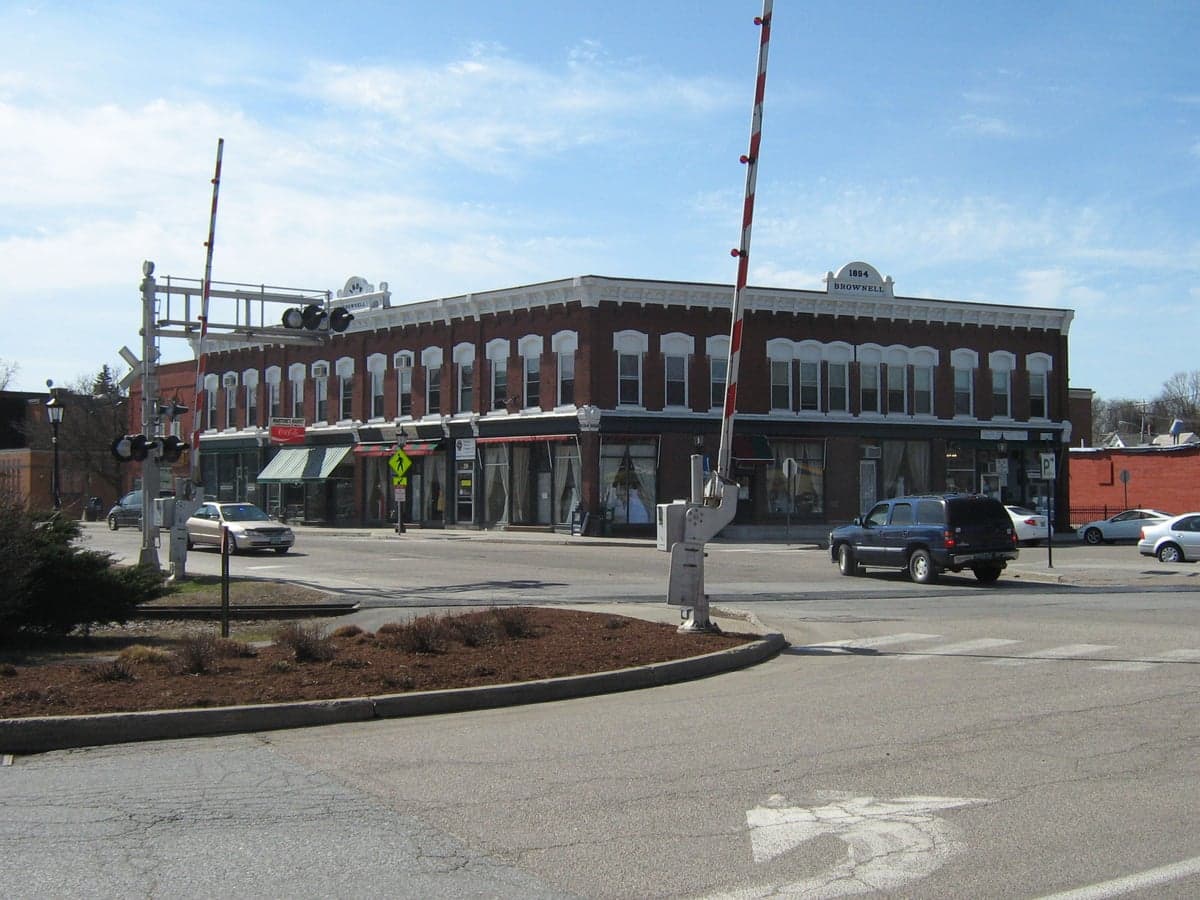
Photo: Wikipedia
Personal Sovereignty in Essex Junction, VT
Moderate friction. Expect trade-offs in some aspect of personal liberty and independence.
What does Personal Sovereignty tell us?
Personal Sovereignty measures your capacity for self-reliance and independence with minimal government friction. Higher scores mean fewer barriers between you and the way you want to live... but it assumes you have the space you need and good neighbors.
What does this tell us?
Personal Sovereignty measures your capacity for self-reliance and independence with minimal government friction. Higher scores mean fewer barriers between you and the way you want to live... but it assumes you have the space you need and good neighbors.
State Policy
Energy independence: Importer (15% of energy produced in-state)
Personal Liberty
Homesteading

Personal Liberty Analysis
Essex Junction, Vermont, presents a complex and often contradictory picture for those prioritizing personal sovereignty. While the town's small size and New England tradition of local governance offer some latitude, it operates squarely within a state framework that has aggressively expanded its reach into individual decision-making, particularly regarding health mandates, taxation, and property use. For the survivalist or prepper, the calculus here is not about finding a haven of liberty, but about assessing whether the area's specific trade-offs—a relatively high degree of personal safety and community cohesion against a heavy regulatory and fiscal burden—align with a long-term strategy of self-reliance. The state's political trajectory, especially since 2020, has made it a challenging environment for those who view government overreach as a primary threat to personal freedom.
Tax burden and regulatory climate for residents and small businesses
Vermont's tax burden is among the highest in the nation, and Essex Junction residents feel this acutely. The state levies a progressive income tax with a top marginal rate of 8.75%, and property taxes are notoriously high to fund education, with effective rates often exceeding 2% of a home's assessed value. This creates a significant financial drag on anyone trying to build wealth or maintain a self-sufficient homestead. The regulatory environment is equally dense. Vermont has some of the strictest land-use and environmental regulations in the country, overseen by Act 250, a state-level permitting process that can add months or years to any construction or development project. For a prepper looking to build a root cellar, install a large solar array, or construct a workshop, the permitting hurdles are substantial and costly. The state's recent push for mandatory paid family leave and a public option for health insurance, while popular in some circles, represent a further expansion of state control over personal finances and life choices. For the conservative individual, this is not a low-tax, low-regulation environment; it is a high-cost, high-intervention state where the government is deeply embedded in daily economic life.
Self-defense rights and Vermont's gun laws after 2024
Vermont has a historically strong tradition of gun rights, being a "constitutional carry" state where no permit is required to carry a concealed firearm. However, this tradition has been significantly eroded in recent years. In 2023 and 2024, the state legislature passed a series of restrictions, including a ban on "assault weapons" and large-capacity magazines, a mandatory waiting period for handgun purchases, and a "red flag" law that allows for the temporary seizure of firearms without a criminal conviction. These laws represent a direct infringement on the Second Amendment as understood by many conservatives and preppers. While the state still allows for the ownership of many common firearms, the legal landscape is shifting, and the ability to defend one's home and family with the tools of one's choice is now constrained. The local culture in Essex Junction and Chittenden County is generally more liberal than in rural parts of the state, meaning that open carry or even visible firearm ownership may draw unwanted attention or social friction. For the survivalist, the legal environment for self-defense is no longer a clear advantage; it is a contested space where rights are being actively curtailed.
Self-reliance and homesteading viability in Chittenden County
The practical feasibility of a self-reliant lifestyle in Essex Junction is limited by the town's suburban character and zoning laws. Most residential lots are small, typically under a quarter-acre, and zoning regulations often restrict keeping livestock, building outbuildings, or installing large-scale off-grid systems like wind turbines. While a backyard garden and a few chickens are usually permissible, the space for serious food production or water independence is simply not there. The town is fully connected to municipal water, sewer, and grid electricity, making a true off-grid existence both legally difficult and practically unnecessary. For those seeking a homesteading lifestyle, Essex Junction is a poor fit; the real opportunity lies in the more rural towns of Washington, Orange, or Caledonia counties, where land is cheaper and zoning is far more permissive. The trade-off is that those areas lack the employment base and community services of Chittenden County. For the prepper who wants to be near a job market while maintaining a retreat property, Essex Junction might serve as a base of operations, but it cannot itself be the retreat.
Personal liberties: parental rights, medical autonomy, and free speech
This is the area where Essex Junction and Vermont as a whole present the greatest challenges for a conservative or libertarian-leaning individual. Vermont has been a national leader in expanding state authority over family and medical decisions. The state mandates comprehensive sex education in public schools, has a strong "informed consent" process for parents that can be overridden by a minor's request for certain medical procedures, and has passed laws that effectively shield medical providers from parental notification requirements for gender-affirming care. Parental rights, particularly in education and healthcare, are significantly weaker here than in many other states. Medical autonomy was also severely tested during the COVID-19 pandemic, when Vermont had some of the most prolonged and stringent vaccine mandates and public health restrictions in the country, including for school attendance and employment. The state's response was widely seen as a model of government overreach by those who value bodily autonomy and informed consent. Free speech is generally protected, but the dominant political culture in Chittenden County is heavily progressive, and expressing dissenting views on topics like vaccine policy, gender ideology, or government spending can lead to social ostracism or professional repercussions. Property rights are also constrained by Act 250 and local zoning, meaning a homeowner's ability to use their land as they see fit is heavily circumscribed.
In the final analysis, Essex Junction offers a low-crime, well-educated community with good infrastructure, but at the cost of high taxes, heavy regulation, and a political climate that is actively hostile to many core tenets of personal sovereignty. For the survivalist or prepper, it is a place to live and work, but not a place to build a fortress of self-reliance. The state's trajectory on gun rights, parental authority, and medical freedom is clearly toward greater government control, not less. Compared to states like New Hampshire, which has no income or sales tax and a stronger culture of individual liberty, or even more rural parts of Vermont itself, Essex Junction represents a trade-off: convenience and community in exchange for a significant surrender of personal autonomy. For those whose primary concern is preserving the ability to make independent decisions about their family, their health, and their property, this area is likely a strategic compromise, not a destination. The wise move is to treat it as a temporary base while securing a more liberty-friendly location for the long haul.

* Values derived from national, state, county, city and local statistics and may differ in a specific area. Last updated: 2026-04-24T12:16:37.000Z
Narrative content on this page is AI-generated and may contain mistakes. Verify any details that matter before acting on them.
ReloMaps may earn a commission from affiliate links at no extra cost to you.

