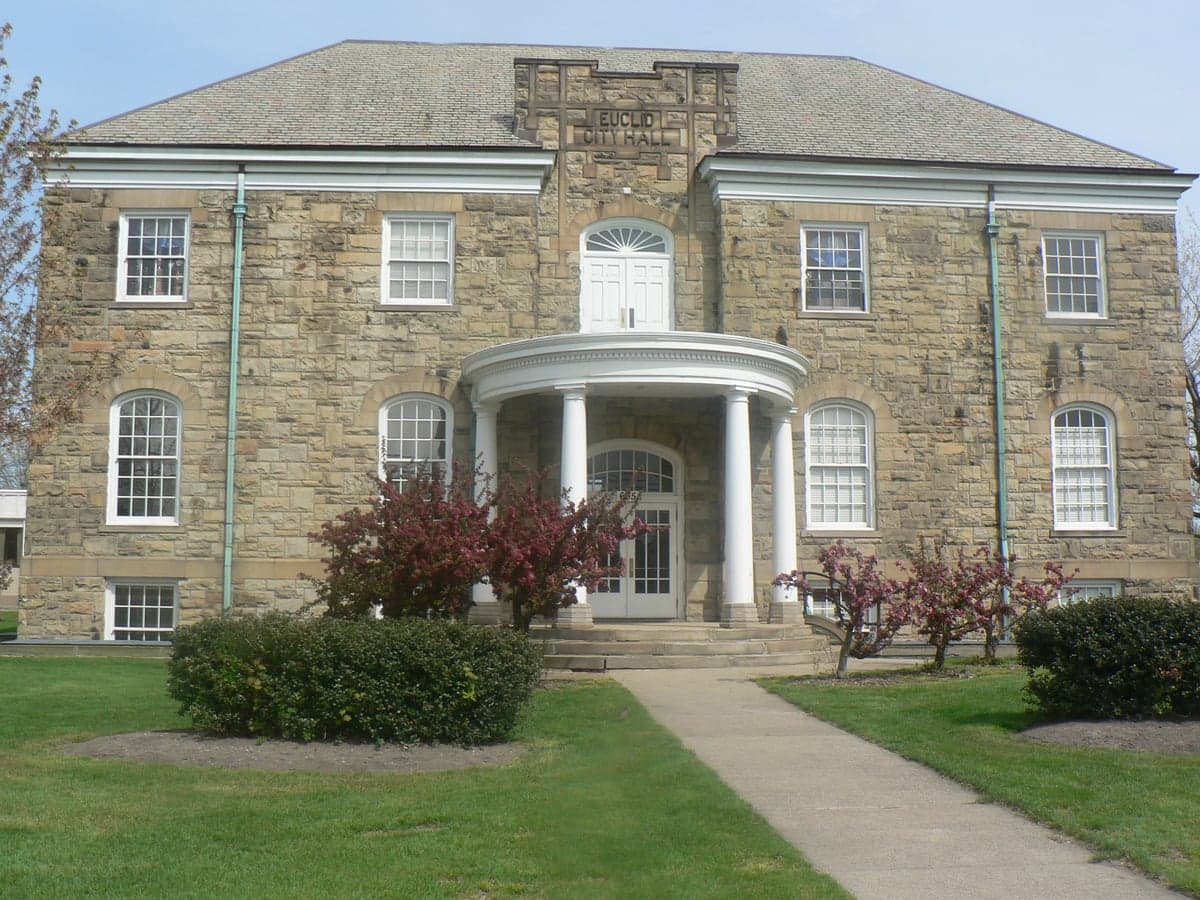
Photo: Wikipedia
Demographics of Euclid, OH
Affluence Level in Euclid, OH
A below-average socioeconomic profile. Incomes, home values, and educational attainment trail the U.S., with higher poverty and unemployment.
People of Euclid, OH
The people of Euclid, Ohio, in 2026 form a predominantly Black (65.9%) and working-class city of 48,991 residents, with a notably low foreign-born population of just 1.2% and a college attainment rate of 21.6%. The city’s identity is shaped by its legacy as a Lake Erie industrial suburb of Cleveland, where a once-dominant white ethnic population has been replaced over the past five decades by a Black majority. Today, Euclid is a dense, older-ring suburb with a distinctively stable, family-oriented character, though it faces the demographic challenges of population decline and limited immigration-driven growth.
How the city was settled and grew
Euclid’s original settlement began in the early 19th century as a farming community along the Lake Erie shore, part of the Connecticut Western Reserve land grant. The arrival of the railroad in the 1850s and the subsequent industrialization of Cleveland’s eastern lakefront transformed Euclid into a manufacturing hub. By the early 1900s, the city’s lakefront and rail corridor attracted waves of European immigrants—primarily Italian, Polish, and Slovenian families—who found work in steel mills, auto plants, and machine shops. These groups built dense, walkable neighborhoods like Shore Acres (along the lake) and East 200th Street corridor, where ethnic clubs and Catholic parishes anchored community life. The post-World War II boom brought a second wave of white ethnic families from Cleveland’s inner city, settling into new subdivisions such as Euclid Heights and Babbitt Road area, drawn by affordable single-family homes and good schools. By 1960, Euclid’s population peaked at roughly 62,000, nearly entirely white and native-born.
Modern era (post-1965)
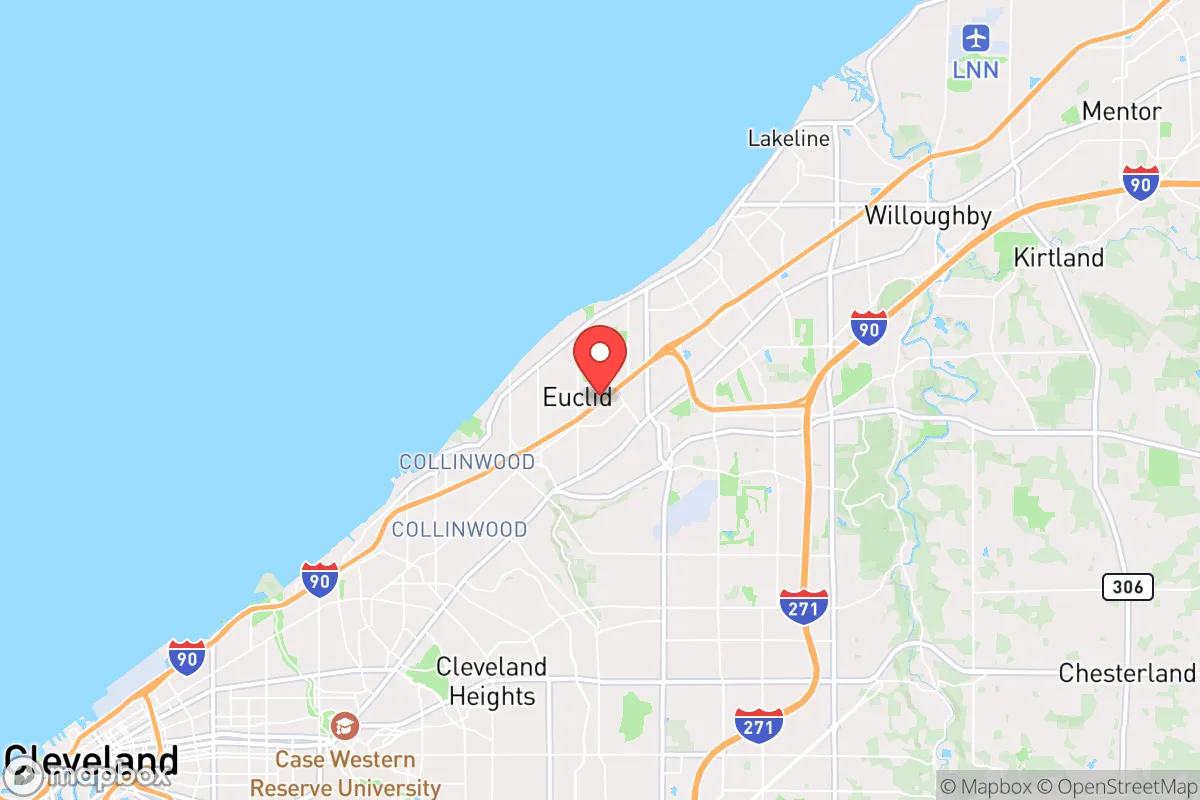
The 1968 Fair Housing Act and the broader suburbanization of Black families from Cleveland’s East Side triggered Euclid’s most dramatic demographic shift. Between 1970 and 2000, the city transitioned from over 95% white to a Black majority, a process that accelerated white flight to outer-ring suburbs like Mentor and Willoughby. The Euclid Avenue corridor and neighborhoods south of the Norfolk Southern rail line—including Central Euclid around the Euclid Square Mall site—absorbed most of the incoming Black population, many of whom were middle-class families seeking better housing stock and lower crime rates than Cleveland proper. By 2020, the Black share had reached 65.9%, while the white population fell to 27.7%. Unlike many inner-ring suburbs, Euclid saw almost no new immigrant settlement during this period: the foreign-born share remains at just 1.2%, with East/Southeast Asian communities (0.6%) and Hispanic residents (1.7%) forming tiny enclaves, primarily in the Lake Shore Boulevard apartment districts. The Indian subcontinent population is effectively zero (0.0%), and Arab communities are negligible.
The future
Euclid’s population is projected to continue its slow decline, from 48,991 today toward perhaps 45,000 by 2040, as the city struggles to retain young families and attract new residents. The population is homogenizing rather than diversifying: the Black majority is growing as a share (due to white out-migration and lower white birth rates), while immigrant communities remain stagnant. The city’s low college attainment rate (21.6%) and limited high-wage job base constrain its ability to draw the skilled immigrants or young professionals that are revitalizing other Cleveland suburbs like Lakewood or Shaker Heights. The Euclid Waterfront District redevelopment and the Euclid Hospital expansion offer some hope of stabilizing the tax base, but without significant new housing construction or immigration, the demographic trajectory points toward an older, poorer, and more racially homogenous population over the next decade.
For a conservative-leaning mover considering Euclid, the bottom line is this: the city is a stable, majority-Black, working-class suburb with deep roots but limited upward mobility. It offers affordable housing and lakefront access, but the population is aging and shrinking, with little of the immigrant-driven dynamism seen in other parts of the region. A move here means joining a community that values stability over growth, but one that will likely look much the same in 2035 as it does today.

* Values derived from national, state, county, city and local statistics and may differ in a specific area. Last updated: 2026-04-21T20:19:19.000Z
Narrative content on this page is AI-generated and may contain mistakes. Verify any details that matter before acting on them.
ReloMaps may earn a commission from affiliate links at no extra cost to you.

