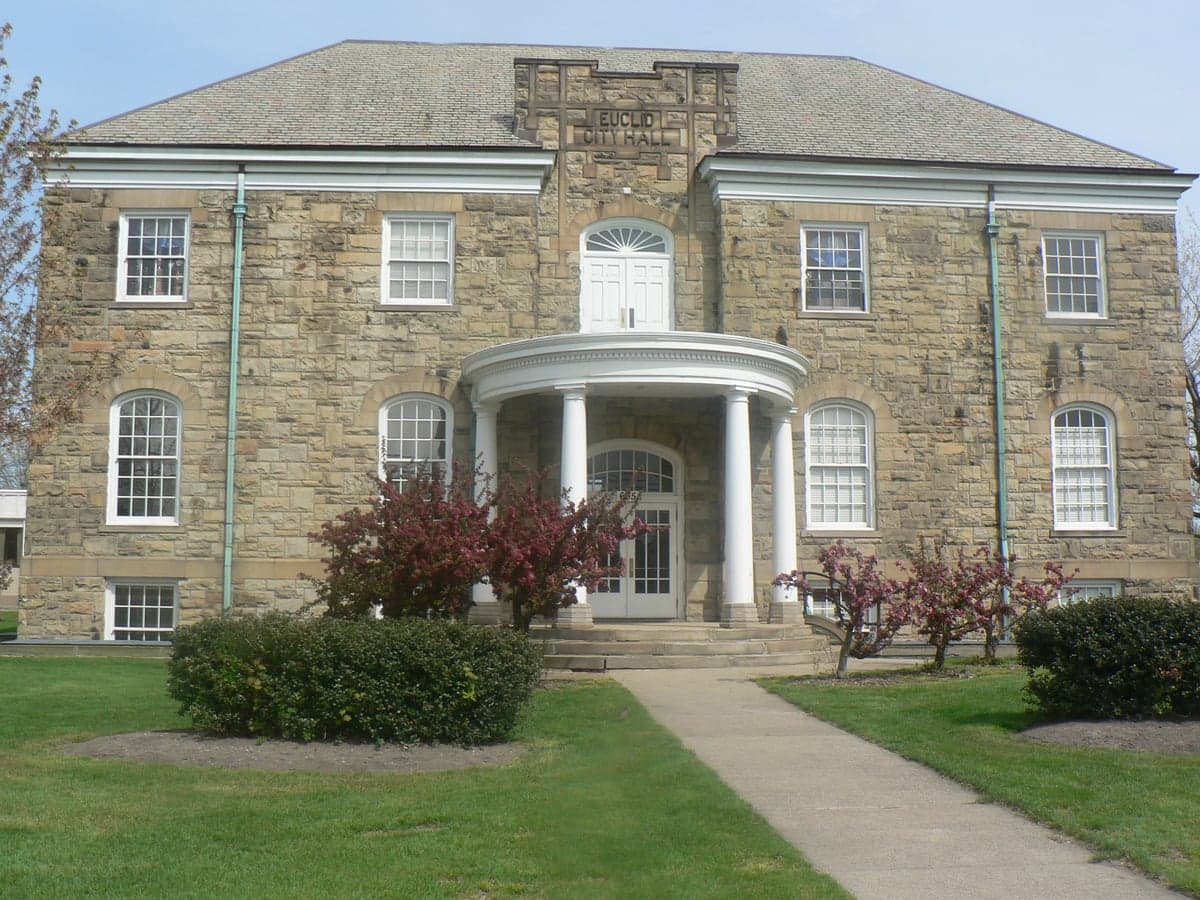
Photo: Wikipedia
Strategic Assessment of Euclid, OH
Multiple tactical vulnerabilities. Population density, target proximity, or disaster risk are likely compounding. A retreat property and exit planning is required.
What does the Strategic Assessment tell us?
Our Strategic Assessment grades tactical survivability of an area. Major population centers, military targets, fallout zones, natural disasters, and border exposure all drive risk — lower exposure means a more defensible position in a crisis.
This is heavily inspired by Joel Skousen's Strategic Relocation book. Highly recommended you checkout the book ($)What does this tell us?
Our Strategic Assessment grades tactical survivability of an area. Major population centers, military targets, fallout zones, natural disasters, and border exposure all drive risk — lower exposure means a more defensible position in a crisis.
This is heavily inspired by Joel Skousen's Strategic Relocation book. Highly recommended you checkout the book ($)Strategic Pillars

Key Distances
Regional Safe Places
Below is our recommended "safe zones" in Ohio and the surrounding area based on our strategic heuristics. For most people, it's unrealistic to live in a “safe zone” full-time due to work, family or other personal reasons. They tend to be more rural. However, many of these areas are perfect for second homes and retreat properties that double as a vacation home or even a short-term rental.

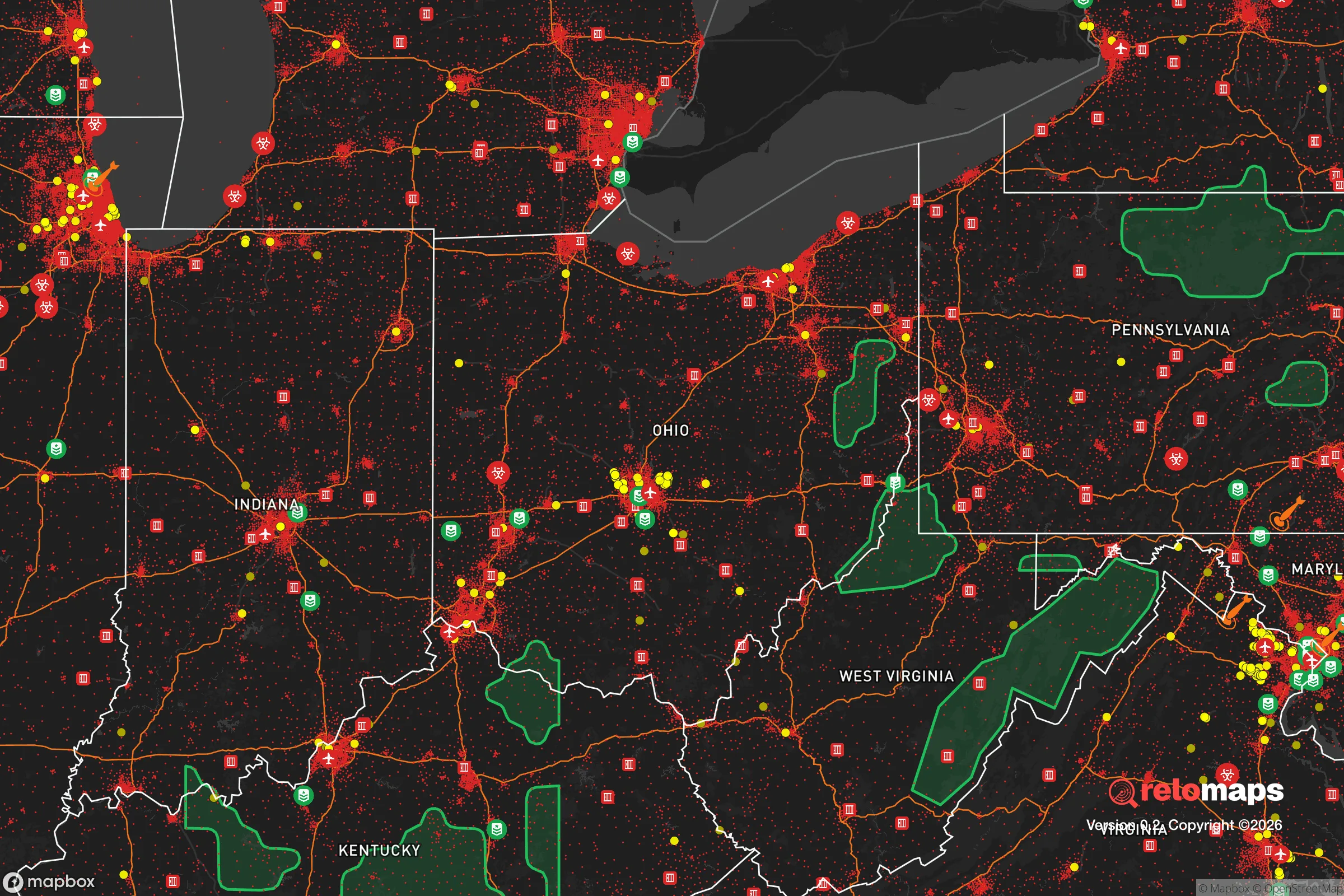


Important Note: For informational purposes only. This does not mean nothing bad ever happens in the green zones. Please use common sense. This is based on public data and modeled with AI. We tried to take a conservative approach but mistakes happen. We update this regularly as new information becomes available.
Solar Generator Recommendations
Backup power matters more here than in safer locations. We've picked three solar generators across budgets and capacity tiers — start with the budget unit if you only need a few essentials, or step up if you want to run a fridge and HVAC for days at a time.

Jackery Portable Power Station Explorer 300
Budget OptionPower on the Go: Weighing only 11 lbs, it's convenient to set up and store with book-sized foldable solar panels

BLUETTI Portable Power Station AC180
Designed for both indoor and outdoor scenarios, AC180 is highly capable as it has a robost capacity and continuous output power.

EF ECOFLOW DELTA Pro Ultra Power Station
Upgraded PickEcoFlow DELTA Pro Ultra is a whole-home energy system designed to grow with your family. Integrated with the Smart Home Panel 2, it scales to meet your evolving energy needs — keeping your home powered, intelligent, and secure through every stage of life.
We earn a commission, at no additional cost to you.
Strategic Assessment Analysis
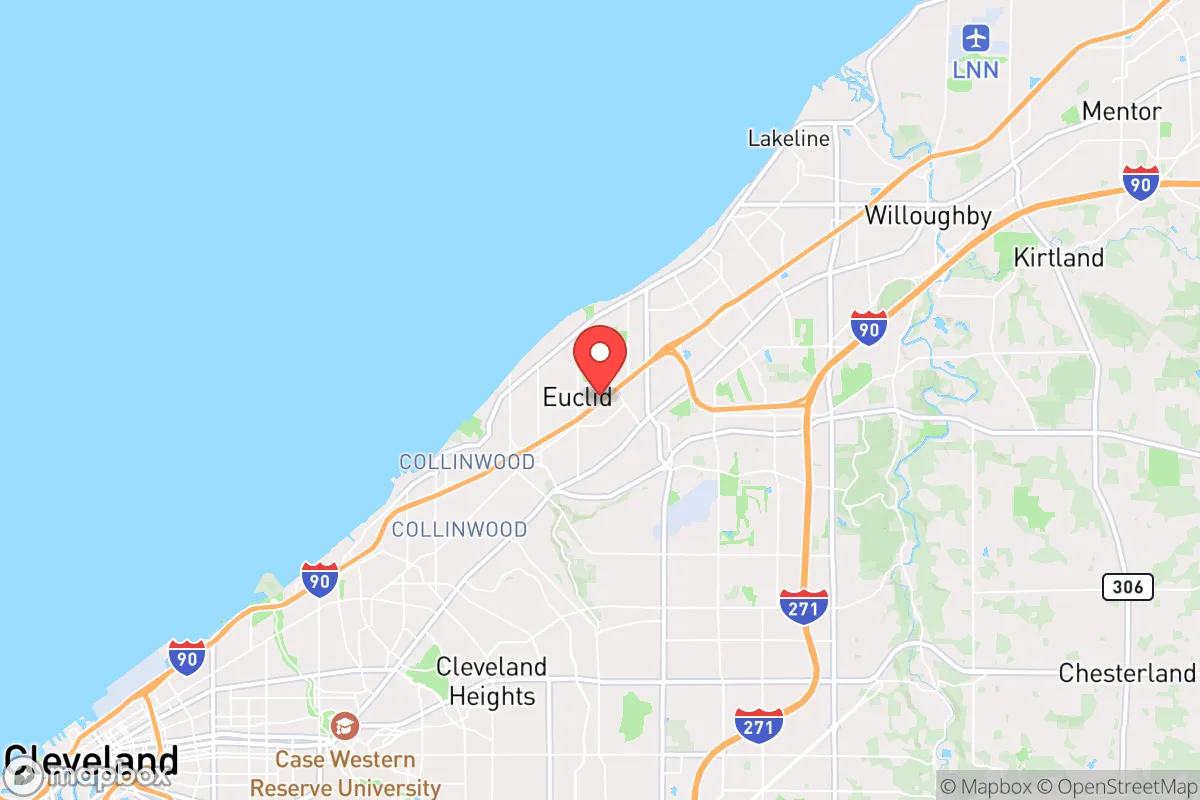
Euclid, Ohio, sits in a precarious strategic position that demands a hard-nosed assessment from anyone serious about resilience. Located on the Lake Erie shore just 12 miles northeast of downtown Cleveland, this city of roughly 49,000 offers a mix of genuine geographic advantages and glaring vulnerabilities that a prepper or survivalist cannot ignore. The lake provides a massive freshwater resource, but the proximity to a major urban center and critical industrial infrastructure introduces risks that may outweigh the benefits for those seeking true long-term security. This analysis strips away the marketing gloss and looks at Euclid through the lens of civic unrest, mass casualty events, and disaster preparedness, with a clear-eyed view of what it means to be within the blast radius of a major American city.
Geographic position and natural advantages for long-term survival
Euclid's primary strategic asset is its direct access to Lake Erie, one of the Great Lakes, which holds roughly 20% of the world's surface freshwater. In a grid-down scenario or prolonged drought, that water source is irreplaceable. The city sits on a relatively flat coastal plain with modest elevation changes, which means flooding from the lake is a real concern during severe storms, but the land itself is arable and capable of supporting small-scale agriculture. The surrounding Cuyahoga County has a temperate climate with four distinct seasons, allowing for year-round food production in greenhouses or cold frames if properly managed. The lake also moderates temperatures slightly, reducing the risk of extreme cold snaps compared to inland areas. However, the region's heavy snowfall—averaging over 60 inches annually—can be a double-edged sword: it provides a natural water source when melted, but it also complicates travel, supply runs, and outdoor activities during winter months. The area's position along the Lake Erie shoreline also means prevailing westerly winds can carry airborne contaminants from industrial sites in Cleveland and beyond, a factor often overlooked in prepper calculations.
Risks, exposures, and proximity to fallout-relevant landmarks
The single greatest liability for Euclid is its proximity to Cleveland, a major population center with over 370,000 residents and a sprawling metropolitan area of nearly 2 million. In the event of civil unrest, mass casualty events, or a coordinated attack, Euclid sits directly in the path of any chaos radiating outward from the city. The I-90 and I-271 corridors, which run through or near Euclid, would become choke points for evacuation or supply movement, likely gridlocked within hours of any major incident. More concerning is the concentration of critical infrastructure within a 20-mile radius. The Cleveland-Hopkins International Airport, the Port of Cleveland, multiple rail yards, and the Perry Nuclear Power Plant—located just 30 miles east in North Perry—are all high-value targets in a conflict scenario. A conventional or EMP attack on any of these could cripple the region's power grid, communications, and transportation networks, leaving Euclid residents stranded without basic services. The city itself has a history of industrial pollution, with legacy contamination from steel mills and chemical plants along the lakefront, meaning any disruption could release hazardous materials into the air and water. For a relocator prioritizing defensibility and isolation, Euclid's location is a net negative—too close to too many targets.
Practical resilience for a relocator: food, water, energy, and defensibility
When assessing day-to-day survival capability, Euclid presents a mixed bag. The lake provides an abundant water source, but treating it for consumption requires robust filtration or boiling capacity, especially given the industrial runoff and sewage overflows that plague the Great Lakes during heavy rains. Municipal water treatment plants are vulnerable to both cyberattacks and physical sabotage, so a prepper should assume they will fail in a prolonged crisis. The local soil is generally fertile, and community gardens exist, but the urban and suburban density means most residential lots are small, limiting the potential for significant food production. Backyard chickens are permitted in Euclid with a permit, but larger livestock is impractical. Energy resilience is a major concern: the grid is aging and heavily dependent on natural gas and coal, with limited renewable penetration. Solar panels are viable but face reduced efficiency during the region's cloudy winters, and battery storage is essential for any off-grid capability. Defensibility is poor. Euclid is a densely populated suburb with a grid-like street layout, offering few natural chokepoints or elevated positions for observation. The city's crime rate is above the national average, with property crime being a particular issue, meaning that in a collapse scenario, neighbors may become threats rather than allies. The best strategy for a relocator here would be to establish a small, fortified compound with a reliable water purification system, a substantial food cache, and a low-profile presence to avoid drawing attention. OPSEC (operational security) is paramount—advertising preparedness through visible modifications like solar panels or large gardens could make a household a target.
For those willing to invest in hardening, Euclid offers access to a network of like-minded individuals through local gun clubs, shooting ranges, and prepper meetups, though these communities are smaller than in more rural parts of Ohio. The Cuyahoga County Sheriff's Office and Euclid Police Department are professional but under-resourced, with response times likely to stretch dramatically during a widespread event. Medical facilities are relatively close, with Euclid Hospital and the Cleveland Clinic network within 15 minutes, but these would be overwhelmed in a mass casualty scenario. Evacuation routes are limited: heading east along Lake Shore Boulevard or I-90 leads to more rural areas like Lake County, but those roads would be clogged. A better option for a strategic retreat would be to pre-position supplies at a secondary location further inland, such as in Geauga or Ashtabula counties, where population density drops and defensible terrain increases.
The overall strategic picture for a conservative-minded relocator
Euclid, Ohio, is not a top-tier relocation destination for someone serious about long-term survival and preparedness. Its proximity to Cleveland and the concentration of high-value targets in the region create unacceptable risks for those prioritizing isolation and security. The lake is a genuine asset, but it is offset by the city's density, limited defensibility, and vulnerability to both natural and man-made disasters. For a single individual or family with a conservative, self-reliant mindset, the better play is to look further east into the rural stretches of Ohio's snowbelt, where land is cheaper, neighbors are fewer, and the fallout radius from urban centers is measured in hours of driving, not minutes. Euclid could serve as a temporary staging point or a location for maintaining a professional career while building out a more secure retreat, but it should not be the final destination. The bottom line: if you are preparing for the worst, Euclid is too close to the bullseye to offer real peace of mind.

* Values derived from national, state, county, city and local statistics and may differ in a specific area. Last updated: 2026-04-21T20:19:19.000Z
Narrative content on this page is AI-generated and may contain mistakes. Verify any details that matter before acting on them.
ReloMaps may earn a commission from affiliate links at no extra cost to you.

