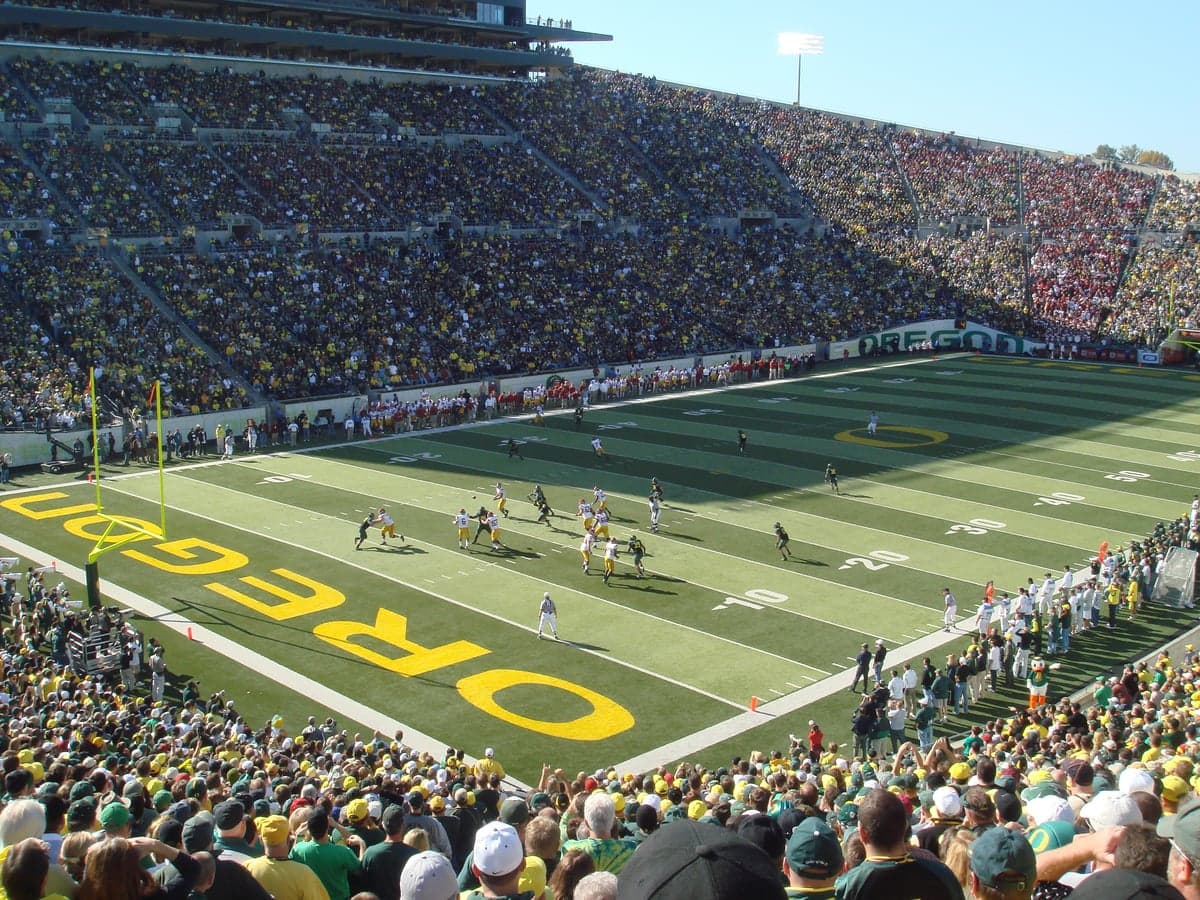
Photo: Wikipedia
Personal Sovereignty in Eugene, OR
Viable for self-reliance. Generally workable, though some barriers may limit total independence.
What does Personal Sovereignty tell us?
Personal Sovereignty measures your capacity for self-reliance and independence with minimal government friction. Higher scores mean fewer barriers between you and the way you want to live... but it assumes you have the space you need and good neighbors.
What does this tell us?
Personal Sovereignty measures your capacity for self-reliance and independence with minimal government friction. Higher scores mean fewer barriers between you and the way you want to live... but it assumes you have the space you need and good neighbors.
State Policy
Energy independence: Importer (35% of energy produced in-state)
Personal Liberty
Homesteading

Personal Liberty Analysis
Eugene, Oregon, presents a deeply conflicted environment for personal sovereignty, where the region's natural abundance and strong DIY culture clash with one of the most interventionist state governments in the Pacific Northwest. For the survivalist or prepper weighing relocation, the core tension is clear: you can own land with water and timber, but the state will aggressively regulate how you use it, what you can build, and what you can keep for defense. The city itself leans heavily progressive, but the surrounding Lane County offers pockets of rural independence that attract those seeking to opt out of urban dependency. Understanding where the lines are drawn between local autonomy and state overreach is critical before making a move.
Tax burden and regulatory posture: how Oregon's system affects your independence
Oregon's tax structure is a double-edged sword for those prioritizing financial sovereignty. The state has no sales tax, which is a significant advantage for large purchases and prepping supplies, but it compensates with the 5th highest personal income tax rate in the nation, topping out at 9.9% for high earners. Property taxes in Lane County are moderate, averaging around 1.0% of assessed value, but the state's property tax compression system limits how much local districts can raise rates, which can be a stabilizing factor for long-term landowners. The regulatory posture is where the friction intensifies. Oregon's Land Use Planning system, established in the 1970s, strictly controls urban growth boundaries and rural development. In Eugene, this means building a standalone workshop, adding a second dwelling for family, or even installing a large rainwater catchment system can trigger permitting delays and inspections. For the prepper wanting to quietly develop a self-sufficient property, the state's building code enforcement and environmental review processes are among the most intrusive in the West. You can own the land, but the state retains significant say in what you do with it.
Self-defense and gun law specifics: what you can and cannot keep in Eugene
Oregon's firearm landscape has shifted dramatically, and Eugene sits in a county where local sentiment often runs counter to state mandates. The state now requires permit-to-purchase for all handguns, a background check for every transfer (including private sales), and a ballistic fingerprint database for new handgun sales. Magazine capacity is limited to 10 rounds for rifles and handguns purchased after the ban took effect, though pre-ban magazines are grandfathered. Open carry is legal without a permit in unincorporated areas of Lane County, but Eugene city ordinance prohibits open carry of loaded firearms in public places within city limits. Concealed carry requires a license, which Lane County issues on a "shall-issue" basis, but the process includes a fingerprint-based background check and a firearms safety course. For the survivalist, the most concerning development is the 2022 voter-approved Measure 114, which remains tied up in court but would require a permit to purchase any firearm and ban magazines over 10 rounds. The practical reality: you can keep what you already own, but expanding your arsenal or buying new defensive weapons involves more paperwork and cost than in most other Western states. Self-defense in the home is legally protected under the state's "castle doctrine," but there is no stand-your-ground law; you have a duty to retreat if safely possible outside your home.
Self-reliance and homesteading viability: lot sizes, zoning, and off-grid feasibility
For those seeking to live off-grid or semi-independently, Eugene's immediate urban area is restrictive, but the surrounding rural zones offer genuine opportunity. Inside city limits, standard residential lots average 5,000 to 7,000 square feet, and zoning codes prohibit keeping livestock like chickens or goats on most standard lots without special permits. The city also requires connection to municipal water and sewer where available, making true off-grid living within city boundaries nearly impossible. However, Lane County's rural residential zones (RR-5 and RR-10) allow for 5- to 10-acre minimum lot sizes, where you can keep livestock, install septic systems, and drill wells. The state's building code still applies to any permanent structure, but many preppers work around this by building "sheds" under 200 square feet or using RV/tiny house setups on rural land, which can skirt some permitting requirements. Solar panels are legal and common, but net metering rules require utility interconnection if you want to sell power back. Rainwater collection is legal for outdoor use but requires a permit for indoor potable use, and the state's water rights system means you cannot simply dig a pond or divert a creek without approval. The bottom line: true off-grid independence is possible in the county's rural fringe, but it requires navigating Oregon's regulatory maze with patience and often legal help.
Personal liberties: parental rights, medical autonomy, speech, and property
Eugene's cultural climate is overwhelmingly progressive, which creates friction for conservative-leaning individuals on several fronts. Parental rights in education are under active debate; Oregon law does not require schools to notify parents of a child's gender identity changes, and Eugene's school district has policies that prioritize student privacy over parental involvement. The state has also mandated comprehensive sex education starting in elementary school, with no opt-out for parents who object. On medical autonomy, Oregon was the first state to legalize physician-assisted suicide (1994) and has broad medical marijuana access, but vaccine mandates for school attendance are strict, with only medical and religious exemptions (no philosophical exemption). The COVID-era emergency orders also demonstrated the state's willingness to impose business closures and gathering limits, which many in the prepper community viewed as government overreach. Free speech is protected under the First Amendment, but Eugene's city council has passed resolutions condemning "hate speech" and local social norms can lead to social ostracism for expressing conservative views in public forums. Property rights are the most contentious area: Oregon's land use laws give the state veto power over local zoning decisions, and the 2019 "tenant protection" laws limit rent increases and make eviction difficult for landlords, which can affect those who want to rent out portions of their property for income. For the survivalist, the biggest concern is the state's eminent domain authority and environmental regulations that can restrict timber harvesting, water use, and even gardening practices if they involve certain pesticides or fertilizers.
When stacked against other relocation options, Eugene offers a mixed sovereignty profile. The no-sales-tax benefit and abundant natural resources are real advantages, and the rural fringe of Lane County provides some of the best affordable land with water access in the Pacific Northwest. However, the state-level regulatory apparatus is among the most assertive in the nation on gun control, land use, education, and public health mandates. For the prepper who values low-profile independence and is willing to navigate bureaucracy, the area can work—especially if you buy rural land outside city limits and keep a low political profile. But for those who want maximum personal sovereignty with minimal government interference, states like Idaho, Montana, or even eastern Oregon's more conservative counties will offer a far more permissive environment. Eugene is a place where you can build a self-reliant life, but only if you're prepared to fight for every inch of your autonomy against a state that believes it knows better.

* Values derived from national, state, county, city and local statistics and may differ in a specific area. Last updated: 2026-05-02T08:40:01.000Z
Narrative content on this page is AI-generated and may contain mistakes. Verify any details that matter before acting on them.
ReloMaps may earn a commission from affiliate links at no extra cost to you.

