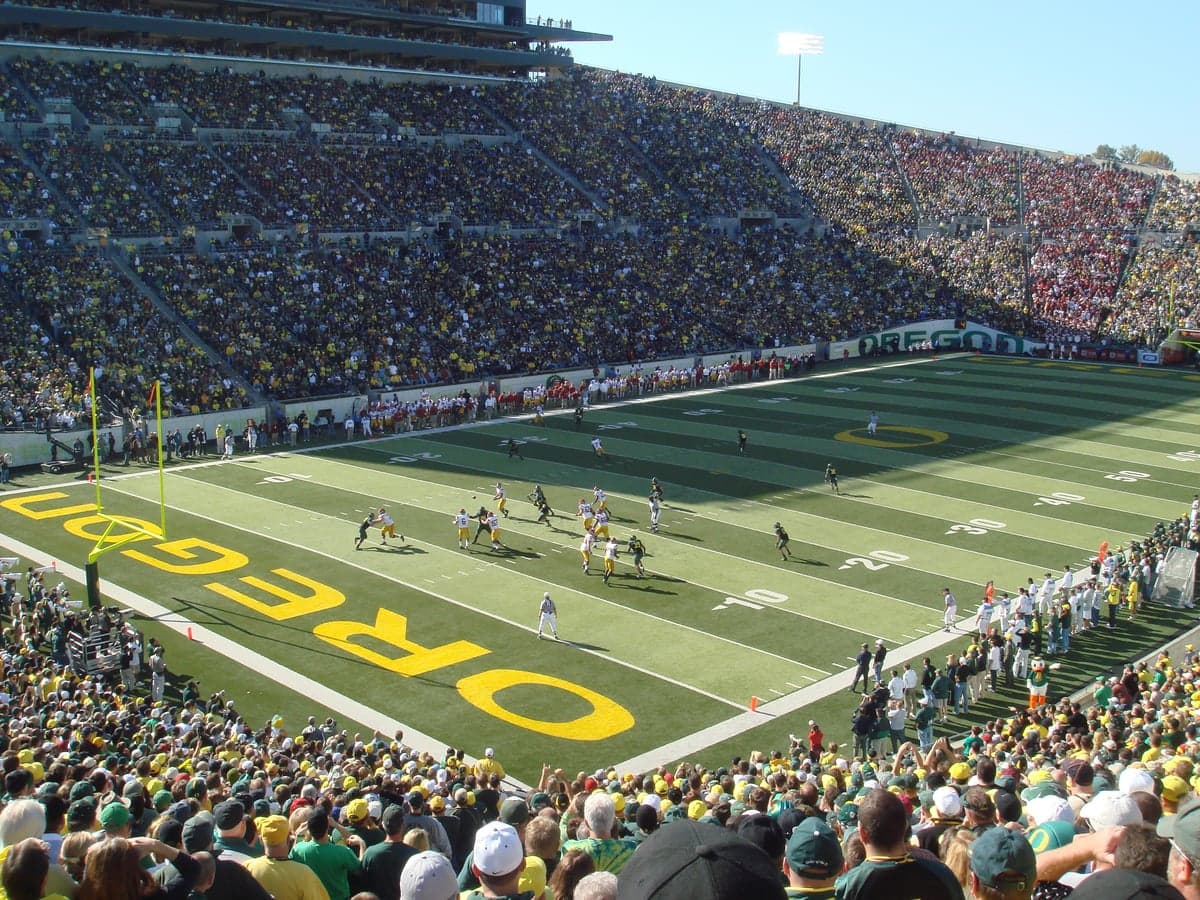
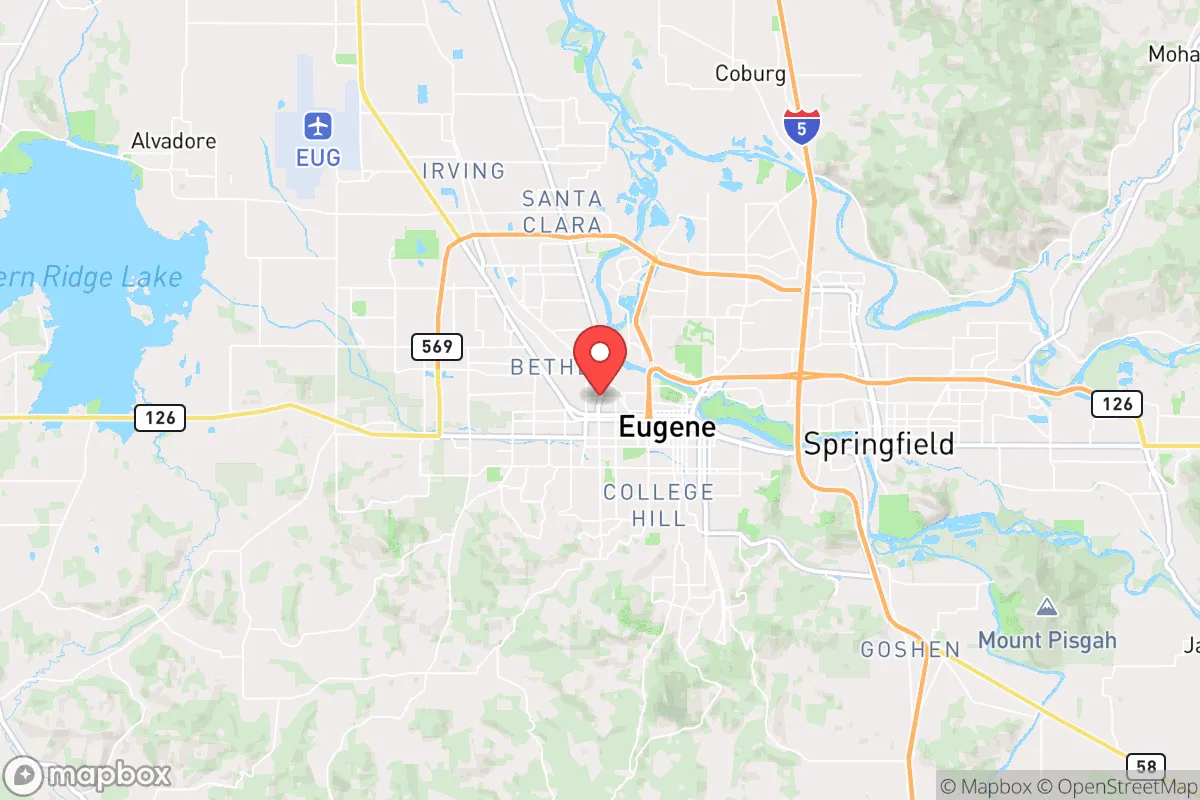
Photo: Wikipedia
Quality of Life in Eugene, OR
Above-average quality of iife. The area offers a reasonable cost of living, decent mobility, and a mix of neighborhood amenities.
What does Quality of Life tell us?
Quality of Life blends cost of living, nearby amenities, socioeconomic signals, and neighborhood character. City-level scores represent the whole municipality; individual neighborhoods can differ.
What does this tell us?
Quality of Life blends cost of living, nearby amenities, socioeconomic signals, and neighborhood character. City-level scores represent the whole municipality; individual neighborhoods can differ.
Cost of Living
31% above national average
The Real Cost of Living in Eugene, OR for 2026
| Tier | Individual | Family (4) |
|---|---|---|
| Survival | $21k | $40k |
| Comfortable | $85k | $124k |
| Luxury | $115k+ | $179k+ |
| Elite (Top 5%) | $159k+ | $247k+ |
51%
The Area Signal
A metric tracking the socioeconomic signals of the area.
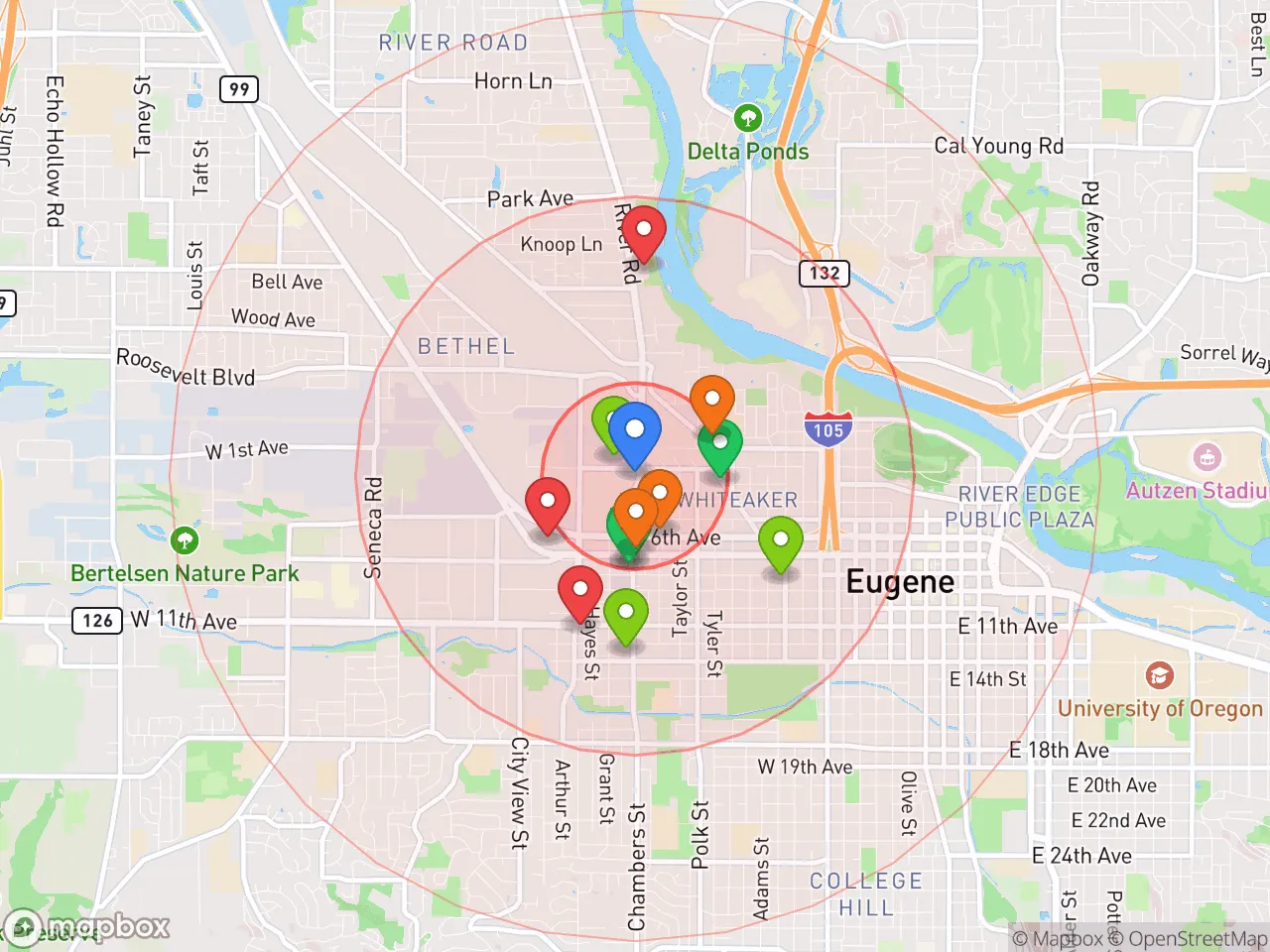
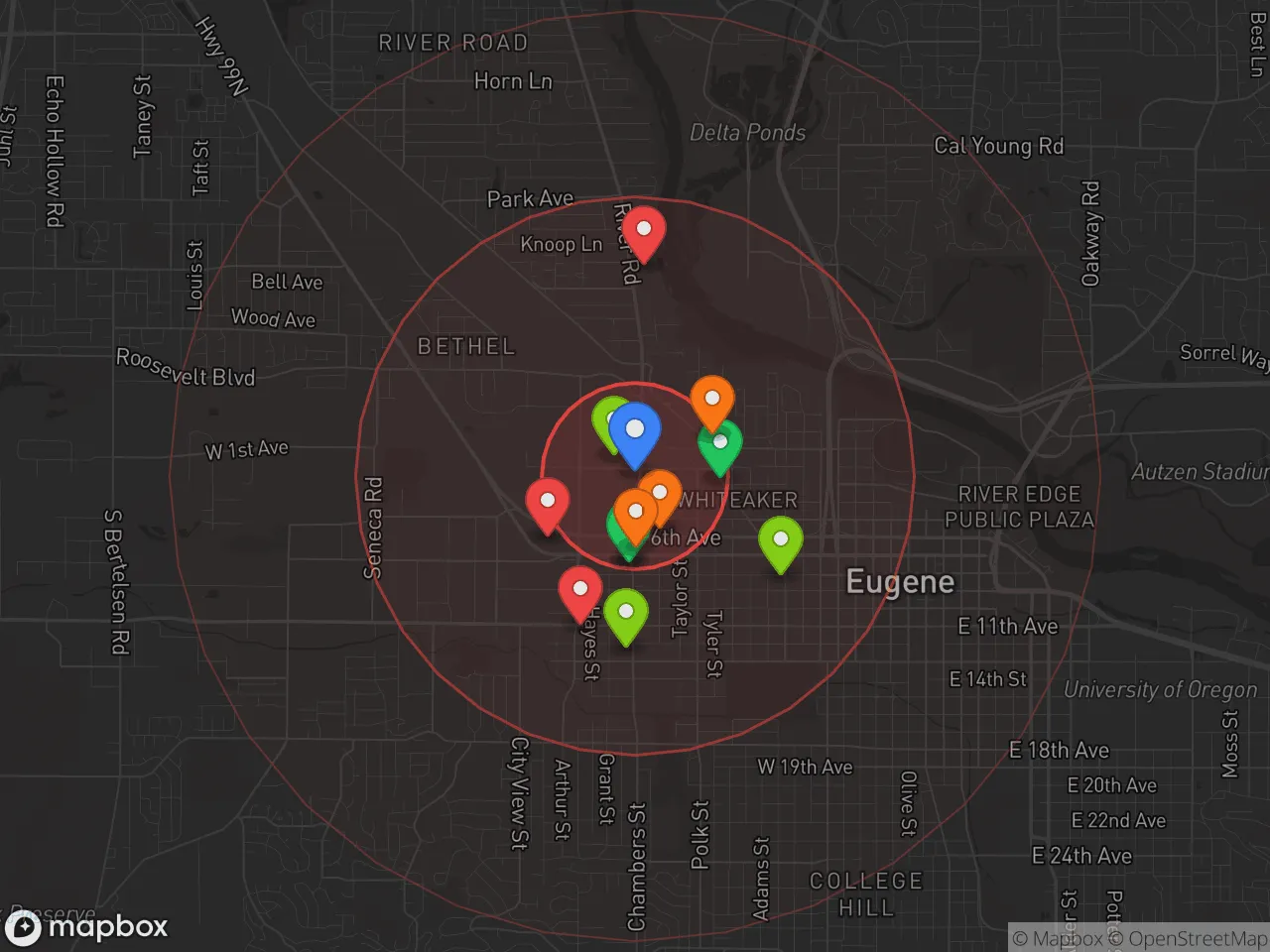
Hobbies
Explore the areaGroceries
9 within 10 miles
Gas
20 within 10 miles
Hospital
10 within 20 miles
Airport
PDX — Portland International
Post Office
USPS — Eugene, OR
Critical Amenities
Quality-of-Life Analysis
Eugene, Oregon, presents a quality of life shaped by a blend of college-town energy, outdoor access, and a cost of living that sits notably above the national average but below the most expensive West Coast metros. The city’s population of roughly 177,000 is a mix of University of Oregon students and faculty, long-time working-class residents, and a growing cohort of remote workers and retirees drawn to the Willamette Valley’s temperate climate and progressive culture. With a cost of living index of 131 (31% above the U.S. average), Eugene is more affordable than Portland (index ~145) but pricier than nearby Springfield (index ~118), creating a clear economic gradient within the metro area.
Cost of living, housing affordability, and how Eugene compares to nearby cities
Housing is the primary driver of Eugene’s elevated cost of living. The median home value sits at $435,400, roughly 1.5 times the national median, while the median rent of $1,347 is about 20% above the U.S. average. For context, a comparable home in Portland’s inner neighborhoods would cost $550,000–$600,000, and in Corvallis (40 miles north) the median is around $470,000. Renters face a tight market: vacancy rates have hovered near 4% in recent years, pushing competition for units under $1,200. However, wages in Eugene’s dominant sectors—education, healthcare, and government—have not kept pace with housing inflation. The average commute of 18.6 minutes is notably short for a metro of this size, reflecting the city’s compact layout and the fact that many workers live within a few miles of the university or downtown core. This short commute partially offsets housing costs by reducing transportation expenses, a factor often overlooked in raw COL comparisons.
Schools, parks, and the daily rhythm of life in Eugene
Eugene’s daily life is defined by its walkable neighborhoods, extensive bike network, and a strong emphasis on local food and culture. The Eugene 4J School District serves most of the city, with South Eugene High School and Sheldon High School consistently ranking among Oregon’s top 20 public high schools for college readiness. The University of Oregon anchors the city’s east side, bringing Division I athletics, a robust performing arts calendar (Hult Center for the Performing Arts), and a steady influx of young adults. Outdoor amenities are a major draw: the 2,500-acre Ridgeline Trail system offers hiking within city limits, while the Willamette River runs through town with a 12-mile riverside path network. The Saturday Market, one of the oldest in the nation, operates April through November and is a central social hub. Crime is a noted concern—Eugene’s property crime rate is roughly 40% above the national average, with bike theft and car break-ins being the most common complaints—but violent crime remains below the U.S. median for cities of its size.
Eugene is best suited for people who prioritize outdoor recreation, a slower pace than Portland, and a politically progressive environment, but who can absorb a housing premium that outpaces local wage growth. Families with school-age children will find strong public schools and ample parks, though they should budget carefully for homeownership. Remote workers earning coastal salaries will find the cost of living manageable, while those in service or retail jobs may struggle with rent burdens. Retirees and empty-nesters are increasingly moving to Eugene for the mild climate and access to healthcare (PeaceHealth Sacred Heart Medical Center is a top regional hospital). Ultimately, the city offers a high quality of life for those who can afford its housing market and tolerate its property crime issues—a trade-off that defines much of the Pacific Northwest’s midsized cities in 2026.

Crime in Eugene, OR
Crime rates similar to the national median for U.S. locations.
Violent CrimeViolent Crime Analysis
Property CrimeProperty Crime Analysis
Crime Analysis
Eugene, Oregon, presents a crime and safety profile that is notably worse than both state and national averages, with property crime rates nearly double the U.S. figure. The city's overall safety picture is heavily influenced by its progressive judicial philosophy, which prioritizes rehabilitation and decarceration, a factor that directly contributes to higher recidivism and a greater number of offenders on the street. For potential residents, this means a heightened risk of property theft and a justice system that often prioritizes the rights of offenders over the safety of victims and the public.
Crime in context
Eugene's violent crime rate stands at 344.9 incidents per 100,000 residents, which is significantly higher than the national average of roughly 380 per 100,000 and well above Oregon's state rate. More concerning is the property crime rate of 2,827.5 per 100,000, which is nearly double the U.S. average of approximately 1,954 per 100,000. These figures place Eugene among the higher-crime cities in Oregon, a state that itself struggles with property crime due to progressive policies like Measure 110, which decriminalized possession of small amounts of drugs. The combination of a liberal district attorney's office and lenient sentencing guidelines means that repeat property offenders are frequently cycled back into the community with minimal consequences, directly fueling these elevated rates.
What residents experience
Daily life for Eugene residents is marked by a pervasive sense of vulnerability to property crime. Car break-ins, bicycle theft, and package theft are endemic, particularly in neighborhoods near the University of Oregon campus and the downtown core. Many residents report that filing a police report for a stolen item feels futile, as the justice system rarely pursues property crimes with vigor. The progressive approach of the Lane County District Attorney's office, which emphasizes diversion programs and avoids jail time for many non-violent offenses, means that individuals caught stealing are often released quickly. This creates a cycle where the same offenders operate with impunity, negatively impacting the quality of life for law-abiding citizens who bear the financial and emotional cost of repeated victimization.
Neighborhood-level variation
While crime is a citywide concern, significant variation exists between neighborhoods. The downtown area and the Whiteaker neighborhood (known locally as "The Whit") experience the highest concentrations of both property crime and drug-related activity, including open-air drug use and theft. In contrast, the more affluent and family-oriented neighborhoods in south Eugene, such as the Amazon and Crest Drive areas, see lower rates of violent crime but are not immune to property theft. The safest areas tend to be the far south hills and the Coburg Road corridor, where single-family homes and gated communities offer more security. However, no neighborhood in Eugene is entirely insulated from the effects of the city's lenient criminal justice policies, as property crime can and does occur everywhere.
* Values derived from national, state, county, city and local statistics and may differ in a specific area. Last updated: 2026-05-02T08:40:01.000Z
Narrative content on this page is AI-generated and may contain mistakes. Verify any details that matter before acting on them.
ReloMaps may earn a commission from affiliate links at no extra cost to you.

