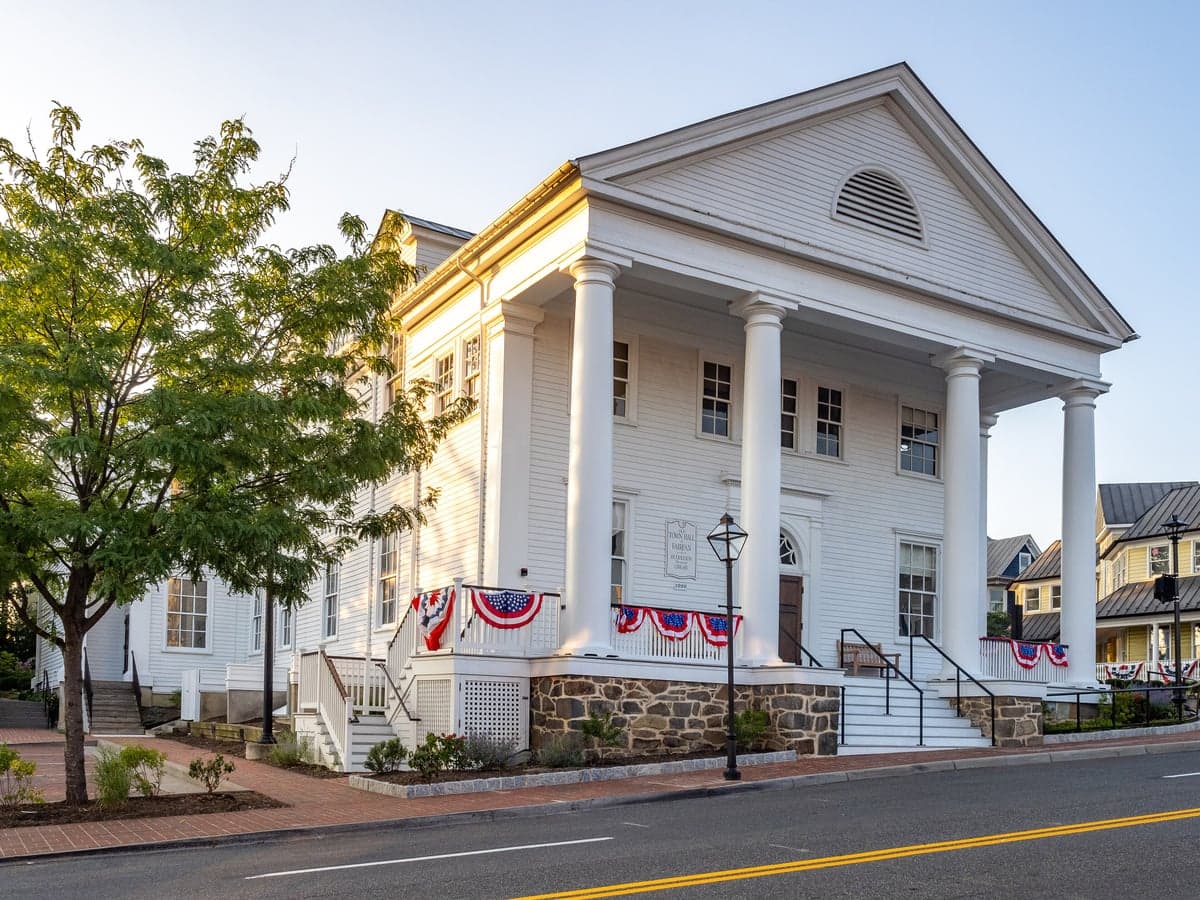
Photo: Wikipedia
Personal Sovereignty in Fairfax, VA
Viable for self-reliance. Generally workable, though some barriers may limit total independence.
What does Personal Sovereignty tell us?
Personal Sovereignty measures your capacity for self-reliance and independence with minimal government friction. Higher scores mean fewer barriers between you and the way you want to live... but it assumes you have the space you need and good neighbors.
What does this tell us?
Personal Sovereignty measures your capacity for self-reliance and independence with minimal government friction. Higher scores mean fewer barriers between you and the way you want to live... but it assumes you have the space you need and good neighbors.
State Policy
Energy independence: Importer (20% of energy produced in-state)
Personal Liberty
Homesteading

Personal Liberty Analysis
Fairfax, Virginia presents a complex environment for personal sovereignty, where the promise of individual autonomy is heavily mediated by one of the most powerful and interventionist local governments in the Mid-Atlantic. For the survivalist or prepper, this is not a place of unchecked freedom but a tightly regulated zone where every aspect of self-reliance—from what you can build on your property to how you defend your home—is subject to county approval and state oversight. While Virginia’s state-level legal framework offers some protections, particularly around firearms, the daily reality in Fairfax is one of high taxes, restrictive zoning, and a political culture that prioritizes collective governance over individual prerogative. This analysis examines the specific constraints and limited opportunities for personal sovereignty in Fairfax, tailored for those who view government overreach as a primary threat to their way of life.
Tax burden and regulatory posture: the cost of autonomy in Fairfax County
The financial and regulatory environment in Fairfax is the first and most persistent challenge to personal sovereignty. The county’s tax burden is among the highest in Virginia, with a real estate tax rate of $1.11 per $100 of assessed value as of 2025, applied to some of the highest property valuations in the state. For a family seeking to own land outright and minimize recurring government obligations, this is a significant drain. The personal property tax on vehicles and business equipment is another annual levy that feels like a constant reminder of the state’s reach. Beyond taxes, the regulatory posture is dense. Fairfax County’s zoning ordinance is a thick document that governs everything from fence heights (typically 4 feet in front yards, 6 in rear) to the number of unrelated adults who can share a dwelling. The county’s Department of Code Compliance actively enforces these rules, meaning that even minor modifications to your property—like adding a shed or parking a work truck—can trigger inspections and fines. For someone accustomed to rural or exurban freedom, this creates a persistent friction: every attempt at self-reliance is met with a permitting process. The state-level income tax, which tops out at 5.75%, further reduces the capital available for independent projects. In short, Fairfax’s tax and regulatory posture is designed to fund extensive public services, but it does so by systematically limiting the financial and operational autonomy of its residents.
Self-defense and gun law specifics: navigating Virginia’s shifting landscape
On the surface, Virginia is a shall-issue state for concealed carry permits, and Fairfax County does not have its own additional gun bans beyond state law. However, the practical reality for a prepper is more restrictive. Since the 2020 legislative session, Virginia has enacted a one-handgun-per-month purchase limit, universal background checks on all firearm transfers (including private sales), and a "red flag" law that allows law enforcement to petition for the temporary seizure of firearms based on hearsay or third-party reports. In Fairfax, these laws are enforced aggressively. The county’s police department has a history of proactive engagement with the red flag process, and the local courts are generally sympathetic to such petitions. For the survivalist, this means that building a robust personal armory is legally constrained, and the risk of temporary confiscation based on a neighbor’s complaint or a family dispute is real. Open carry is legal in Virginia, but in Fairfax, it invites police contact and social friction. The county’s political leadership has also passed symbolic resolutions supporting further restrictions, such as bans on "assault weapons" and standard-capacity magazines, though these have not yet become state law. For those prioritizing self-defense, Fairfax offers a legal framework that is increasingly hostile to the concept of an armed citizenry, requiring careful legal compliance and a low-profile approach to avoid unwanted attention from authorities.
Self-reliance and homesteading viability: lot sizes, zoning, and off-grid feasibility
Fairfax County’s zoning code is the primary obstacle to any serious homesteading or off-grid living. The vast majority of residential lots are in the R-1 through R-4 districts, which mandate minimum lot sizes of 20,000 to 40,000 square feet in many older neighborhoods, but newer subdivisions often squeeze homes onto 5,000 to 10,000 square foot lots. This density makes large-scale gardening, livestock, or water independence nearly impossible. Keeping chickens is permitted on lots of at least 20,000 square feet, but only with a permit and strict limits on coop placement and noise. Goats, pigs, or any larger livestock are prohibited in most residential zones. Off-grid systems face even steeper hurdles. The county requires connection to public water and sewer in virtually all developed areas, and solar panel installations must comply with building codes and homeowner association covenants. Rainwater collection is legal but limited to 1,000 gallons of storage without a permit, and any system must not create a nuisance or drainage issue for neighbors. For the prepper seeking true self-reliance—growing food, harvesting water, generating power—Fairfax is a poor fit. The regulatory environment is designed to maintain a suburban aesthetic and public utility monopoly, not to enable individual independence. Even composting toilets are effectively banned, as the county mandates connection to the sanitary sewer system for any habitable structure.
Personal liberties: parental rights, medical autonomy, speech, and property
Personal liberties in Fairfax are a mixed bag, with some areas of relative freedom and others of significant constraint. On parental rights, Virginia law generally respects a parent’s authority over their child’s education and medical decisions, but Fairfax County Public Schools has a reputation for progressive curriculum choices that can conflict with conservative values. The school board has implemented policies on gender identity and critical race theory that have sparked parental pushback, and the county’s health department has been aggressive in promoting vaccination mandates for school attendance. Medical autonomy is further constrained by Virginia’s strict certificate-of-need laws, which limit the availability of independent healthcare providers and drive up costs. For those seeking alternative or holistic medicine, options are limited and often not covered by insurance. Free speech is protected under the First Amendment, but Fairfax’s public spaces are heavily regulated; protesting or distributing literature in commercial areas often requires permits and can be restricted to designated "free speech zones." Property rights are the most constrained area. The county’s zoning and historic preservation ordinances can prevent you from making even minor changes to your home’s exterior without a review board’s approval. The eminent domain power has been used aggressively for transportation projects and redevelopment, with property owners often facing long legal battles for fair compensation. For the individualist, these constraints create a sense of living under a perpetual landlord—the county—that has a say in nearly every significant personal decision.
Overall, Fairfax, Virginia offers a low level of personal sovereignty compared to rural or exurban areas in the state. The combination of high taxes, restrictive zoning, aggressive gun laws, and a regulatory culture that permeates daily life makes it a challenging environment for those who prioritize self-reliance and minimal government interference. While the region’s economic opportunities and public services are top-tier, they come at the cost of individual autonomy. For the survivalist or prepper, Fairfax is a place to build wealth and network, but not a place to dig in and live independently. If your goal is to maximize personal sovereignty, you would be better served looking at counties west of the Blue Ridge, where lot sizes are larger, taxes are lower, and the regulatory footprint is far lighter. Fairfax is a managed community, not a frontier of freedom.

* Values derived from national, state, county, city and local statistics and may differ in a specific area. Last updated: 2026-05-01T06:07:57.000Z
Narrative content on this page is AI-generated and may contain mistakes. Verify any details that matter before acting on them.
ReloMaps may earn a commission from affiliate links at no extra cost to you.

