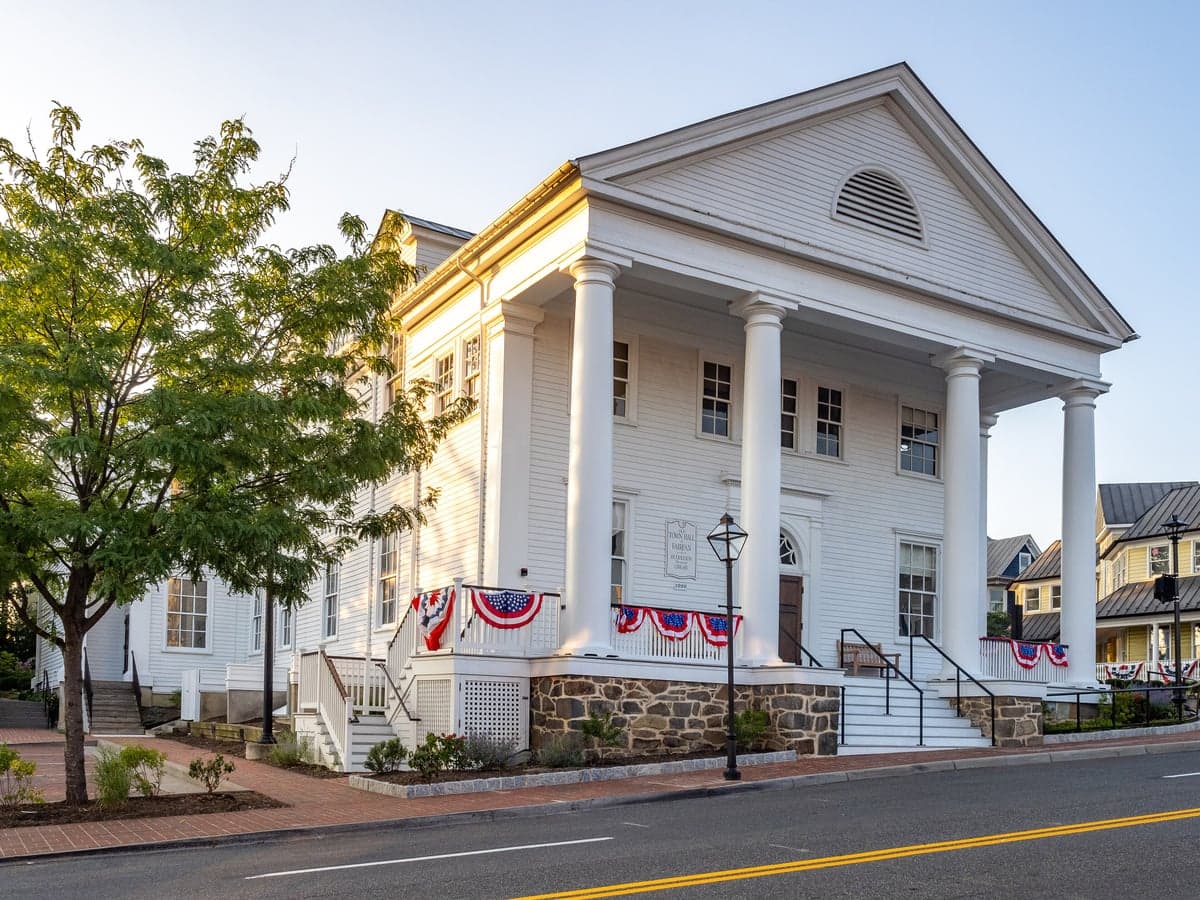
Photo: Wikipedia
Political ClimatePolitical Climate in Fairfax, VA
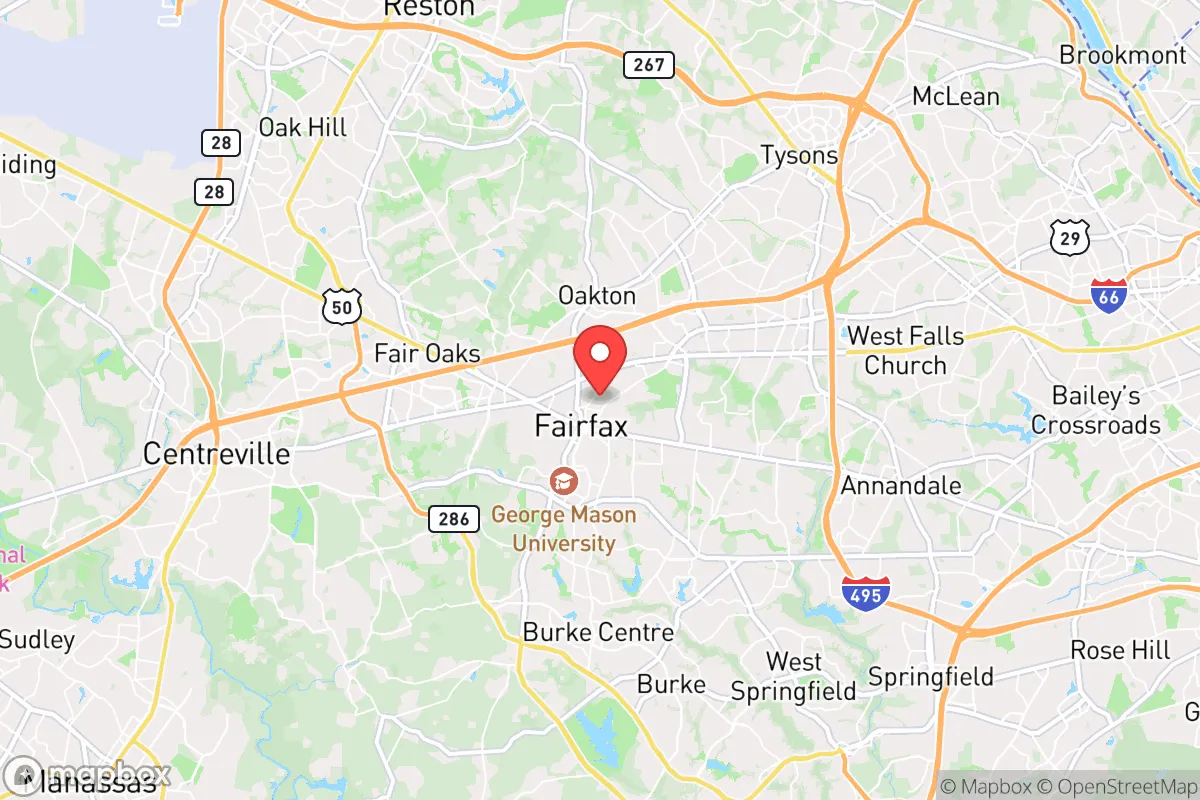
District shown is the primary district for this city’s centroid. Cities may span multiple districts.
Local Political AnalysisPolitical Analysis of Fairfax, VA
Fairfax, Virginia, leans heavily Democratic, with a Cook PVI of D+18, meaning the area votes about 18 points more Democratic than the national average. This wasn’t always the case—back in the 1990s and early 2000s, Fairfax was a classic swing suburb, with a mix of moderate Republicans and independents who valued fiscal responsibility and local control. But over the last two decades, the political center of gravity has shifted dramatically leftward, driven by an influx of federal workers, tech professionals, and transplants from more progressive regions. Today, you’re hard-pressed to find a Republican yard sign in many neighborhoods, and local elections often feel like a foregone conclusion for the Democratic slate.
How it compares
Fairfax’s political climate stands in stark contrast to nearby towns like Clifton or Centreville, which still retain a more conservative, family-oriented vibe. Clifton, just a 15-minute drive south, is a small, rural enclave where you’ll see more Trump signs and pickup trucks with gun racks. Centreville, while increasingly diverse, has a stronger independent streak, with many residents pushing back against the county’s progressive tax hikes and zoning overhauls. Even Vienna, just north of Fairfax, has pockets of moderate resistance, though it’s also trending blue. The real contrast is with Manassas or Prince William County, where conservative voices are louder and more organized, especially on issues like school curriculum and property rights. In Fairfax, you’re surrounded by a political monoculture that can feel stifling if you don’t toe the line.
What this means for residents
For those who value personal freedoms and limited government, living in Fairfax means navigating a landscape where local ordinances and state mandates often feel intrusive. The county has aggressively pushed zoning changes that limit single-family home expansions, making it harder for families to add a deck or a home office without jumping through bureaucratic hoops. School board decisions have become increasingly ideological, with a focus on equity initiatives that sometimes sideline parental input. Property taxes have crept up steadily, funding programs that many residents feel don’t reflect their priorities. If you’re a gun owner, you’ll face stricter regulations than in neighboring Loudoun or Fauquier counties, and the local police are often under pressure to deprioritize enforcement of certain laws. The long-term trajectory is concerning: as the county becomes more uniformly progressive, dissent is often met with social pressure rather than open debate.
One cultural distinction that stands out is Fairfax’s strong reliance on federal government employment, which shapes both the economy and the political discourse. Many residents work for agencies like the CIA, NSA, or Pentagon, which fosters a culture of deference to federal authority and a reluctance to question government overreach. This isn’t the kind of place where you’ll hear loud calls for term limits or audits of federal spending. The local media and civic groups tend to echo the party line, and alternative viewpoints are often dismissed as out of touch. If you’re considering a move here, be prepared for a community that values conformity over rugged individualism—a far cry from the independent spirit that once defined Northern Virginia.

State Political ClimatePolitical Climate in Virginia
State Political AnalysisPolitical Environment in the State
Virginia has transformed from a reliably conservative Southern state into a purple battleground that leans Democratic at the statewide level, but the picture is far more complicated than the presidential results suggest. Over the past 20 years, the state has shifted from a solidly red stronghold—where George W. Bush won in 2004—to a state that has voted Democratic in every presidential election since 2008, with Joe Biden carrying it by 10 points in 2020. However, the 2024 election showed a tightening, with Donald Trump losing by only about 5 points, driven by massive turnout in rural areas and a rightward shift among Hispanic and working-class voters in places like Woodbridge and Manassas. The dominant coalition is now a split between the urban crescent (Northern Virginia, Richmond, Hampton Roads) and the rest of the state, with the former growing faster and pulling the state leftward, while the latter remains deeply conservative and increasingly frustrated.
Urban vs. rural divide
The political map of Virginia is a tale of two Virginias. The urban crescent—Arlington, Alexandria, Fairfax County, and Richmond—drives the Democratic vote, fueled by federal workers, tech professionals, and a growing immigrant population. In 2024, Fairfax County alone gave Biden a margin of over 300,000 votes, enough to offset Republican gains everywhere else. Meanwhile, rural and exurban areas like Lynchburg, Roanoke, and the Shenandoah Valley are deeply red, with Trump winning some counties by 40 points or more. The suburbs of Virginia Beach and Chesapeake are true swing areas, often deciding statewide races. The divide is not just geographic but cultural: urban voters prioritize transit, diversity, and climate policy, while rural voters focus on gun rights, school choice, and economic freedom. This split has created a legislature that is often gridlocked, with Democrats controlling the House of Delegates and state Senate by narrow margins as of 2025.
Policy environment
Virginia’s policy environment is a mixed bag that reflects its purple status. On taxes, the state has a flat income tax rate of 5.75%, which is moderate by national standards, but property taxes are set locally and can be high in Northern Virginia. The regulatory posture is business-friendly in name but increasingly burdensome in practice, especially for energy and construction projects. Education policy has become a flashpoint: Governor Glenn Youngkin’s 2022 executive order on "parental rights" in schools was a major win for conservatives, allowing parents to opt their children out of sexually explicit materials and requiring schools to notify parents about curriculum changes. However, the Democratic-controlled legislature has pushed back, and the issue remains unresolved. Healthcare is dominated by the expansion of Medicaid under the Affordable Care Act, which Virginia adopted in 2019, and the state has some of the strictest abortion laws in the South post-Dobbs, with no restrictions up to 26 weeks—a major concern for conservative families. Election laws are relatively secure, with voter ID requirements and no-excuse absentee voting, but the state has not adopted the stricter measures seen in Texas or Florida.
Trajectory & freedom
Virginia is becoming less free in several key areas, particularly around personal liberty and government overreach. The 2020 "Red Flag" law, which allows courts to temporarily seize firearms from individuals deemed a threat, was a significant expansion of state power that conservatives view as a due process violation. In 2023, the legislature passed a ban on "assault weapons" for those under 21, further restricting Second Amendment rights. On the other hand, the 2022 repeal of the "one-gun-a-month" law was a small win for gun owners. Parental rights have seen both gains and losses: Youngkin’s executive orders were a victory, but the legislature has blocked efforts to expand school choice and charter schools. Medical autonomy took a hit with the 2021 legalization of marijuana, which was poorly implemented and left many small businesses struggling under heavy regulation. Property rights are under pressure from zoning changes in Northern Virginia that allow higher-density development, often overriding local control. The overall trajectory is one of slow but steady expansion of state control, particularly in the urban crescent, while rural areas fight to preserve local autonomy.
Civil unrest & political movements
Virginia has been a hotbed of political activism on both sides. The 2017 "Unite the Right" rally in Charlottesville was a national flashpoint, leading to violent clashes and a lasting stigma on the city. Since then, left-wing activism has been more visible, with Black Lives Matter protests in Richmond in 2020 leading to the removal of Confederate statues. On the right, the "Parents Matter" movement has been strong in places like Loudoun County, where school board meetings became battlegrounds over critical race theory and transgender policies. Immigration politics are tense: Northern Virginia has several sanctuary cities, including Arlington and Alexandria, which limit cooperation with federal immigration enforcement, while rural counties have passed resolutions opposing these policies. Election integrity remains a concern for conservatives, with the 2020 election seeing widespread use of drop boxes and mail-in ballots, though no major fraud was proven. The 2024 election saw increased scrutiny, with Republican observers in many precincts, but no major incidents. The overall atmosphere is one of low-grade tension, with occasional flare-ups at school board meetings and local government hearings.
Projection
Over the next 5-10 years, Virginia is likely to continue its slow drift leftward, driven by demographic changes in the urban crescent. Northern Virginia is growing faster than the rest of the state, with a influx of young professionals and immigrants who lean Democratic. The 2024 election showed that Trump made inroads with Hispanic voters in Woodbridge and Manassas, but this may be a temporary shift if the economy improves. Rural areas will continue to lose population and political influence, though they will remain a strong conservative base. The state legislature is likely to remain narrowly divided, with occasional Republican wins like Youngkin’s 2021 gubernatorial victory. However, the long-term trend is toward more progressive policies on guns, abortion, and education, with conservatives fighting rearguard actions. A new resident moving in now should expect to see more state-level control over local issues, higher taxes in urban areas, and a continued culture war over schools and parental rights.
For a conservative family or individual considering a move to Virginia, the bottom line is this: the state offers a high quality of life, strong schools in the suburbs, and a relatively low tax burden compared to the Northeast, but you will be living in a purple state that is trending blue. If you choose to settle in Lynchburg or the Shenandoah Valley, you will find a conservative community that aligns with your values, but you will still be subject to state-level policies on guns and education that may feel restrictive. If you move to Northern Virginia, you will be in a deep-blue area with high costs and progressive governance, but you will have access to excellent jobs and schools. The key is to choose your locality carefully, as Virginia’s political climate varies dramatically from one county to the next. Expect continued battles over parental rights, gun laws, and local control, and be prepared to engage in local politics to protect your freedoms.
* Values derived from national, state, county, city and local statistics and may differ in a specific area. Last updated: 2026-05-01T06:07:57.000Z
Narrative content on this page is AI-generated and may contain mistakes. Verify any details that matter before acting on them.
ReloMaps may earn a commission from affiliate links at no extra cost to you.

