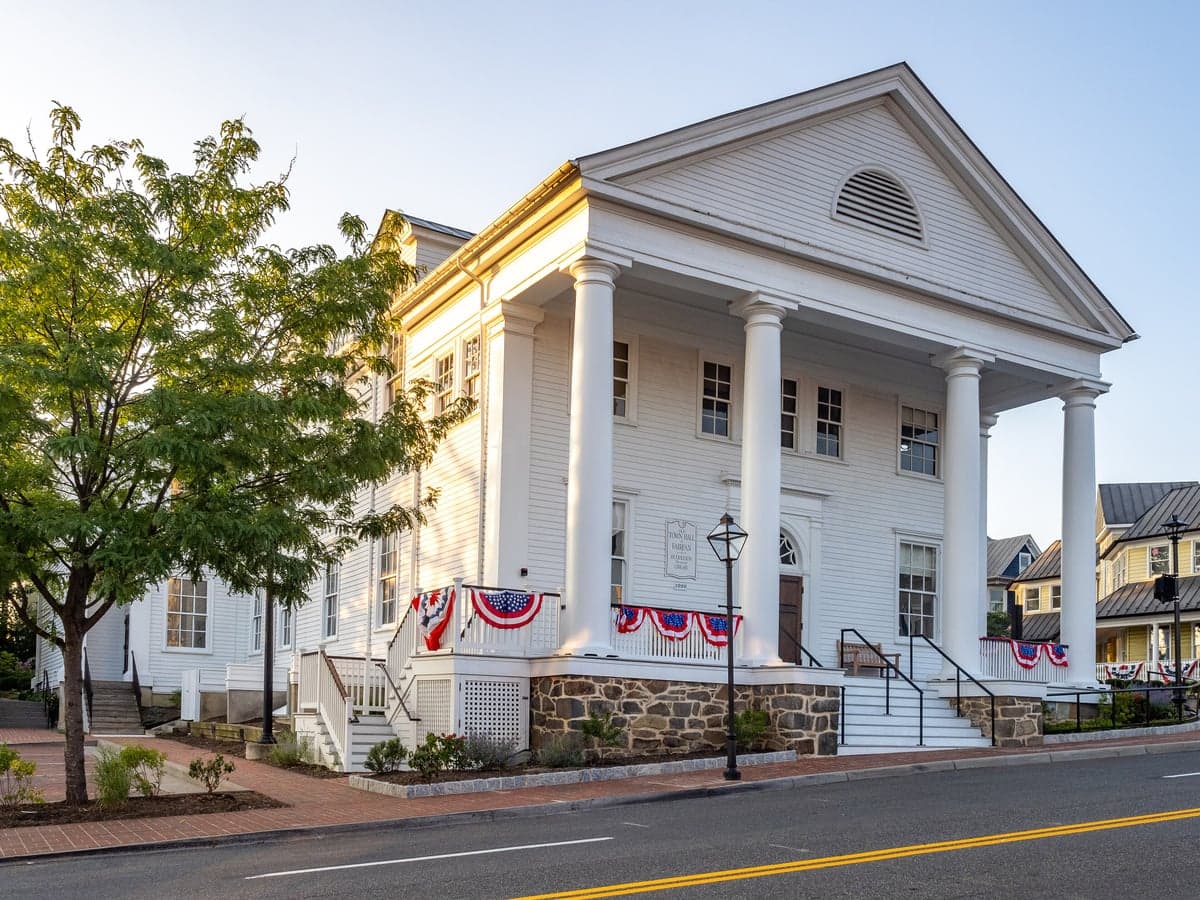
Photo: Wikipedia
Strategic Assessment of Fairfax, VA
Meaningful friction. Expect exposure to either population pressure, blast zones, or natural disaster risk. Consider buying a retreat property.
What does the Strategic Assessment tell us?
Our Strategic Assessment grades tactical survivability of an area. Major population centers, military targets, fallout zones, natural disasters, and border exposure all drive risk — lower exposure means a more defensible position in a crisis.
This is heavily inspired by Joel Skousen's Strategic Relocation book. Highly recommended you checkout the book ($)What does this tell us?
Our Strategic Assessment grades tactical survivability of an area. Major population centers, military targets, fallout zones, natural disasters, and border exposure all drive risk — lower exposure means a more defensible position in a crisis.
This is heavily inspired by Joel Skousen's Strategic Relocation book. Highly recommended you checkout the book ($)Strategic Pillars

Key Distances
Regional Safe Places
Below is our recommended "safe zones" in Virginia and the surrounding area based on our strategic heuristics. For most people, it's unrealistic to live in a “safe zone” full-time due to work, family or other personal reasons. They tend to be more rural. However, many of these areas are perfect for second homes and retreat properties that double as a vacation home or even a short-term rental.
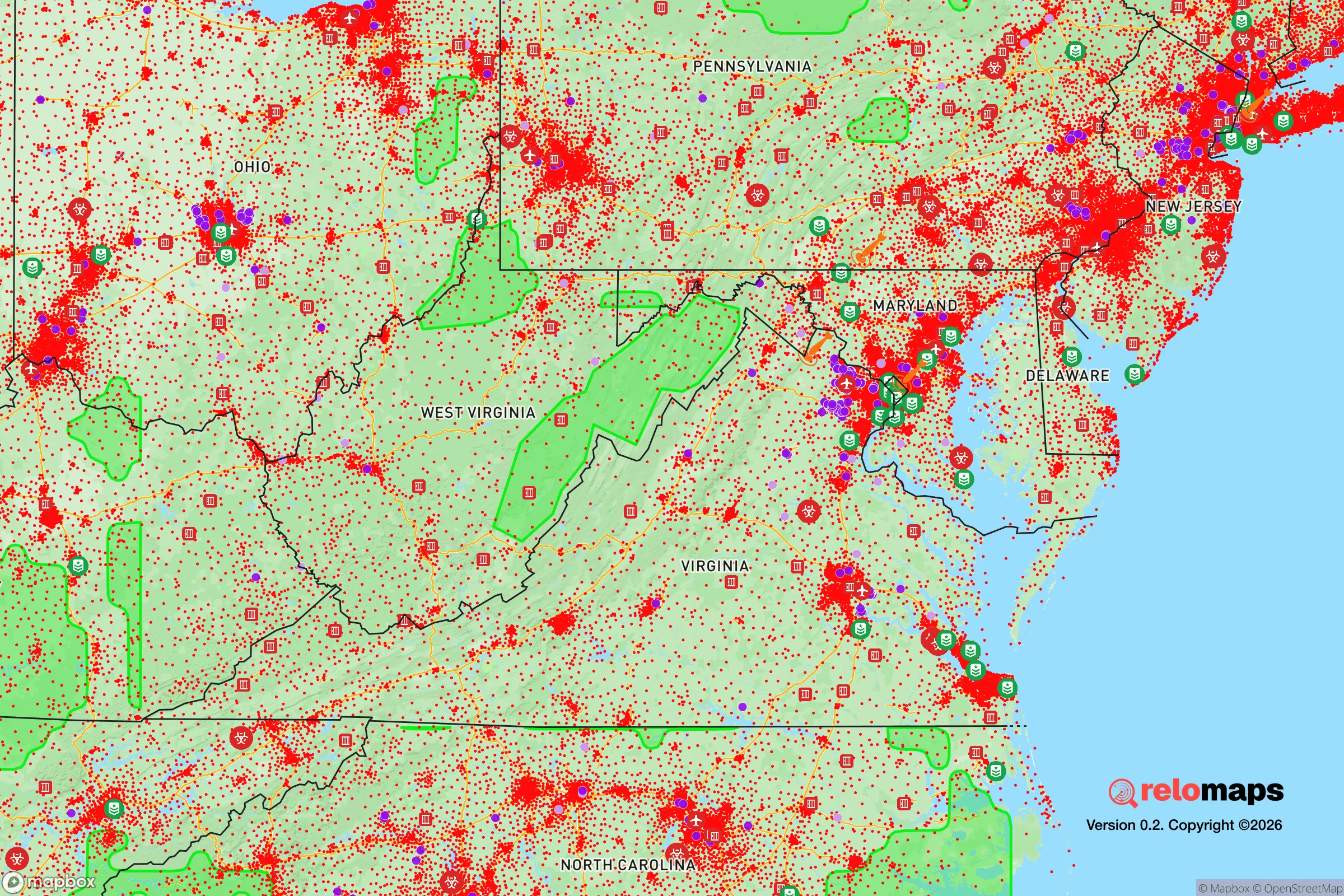
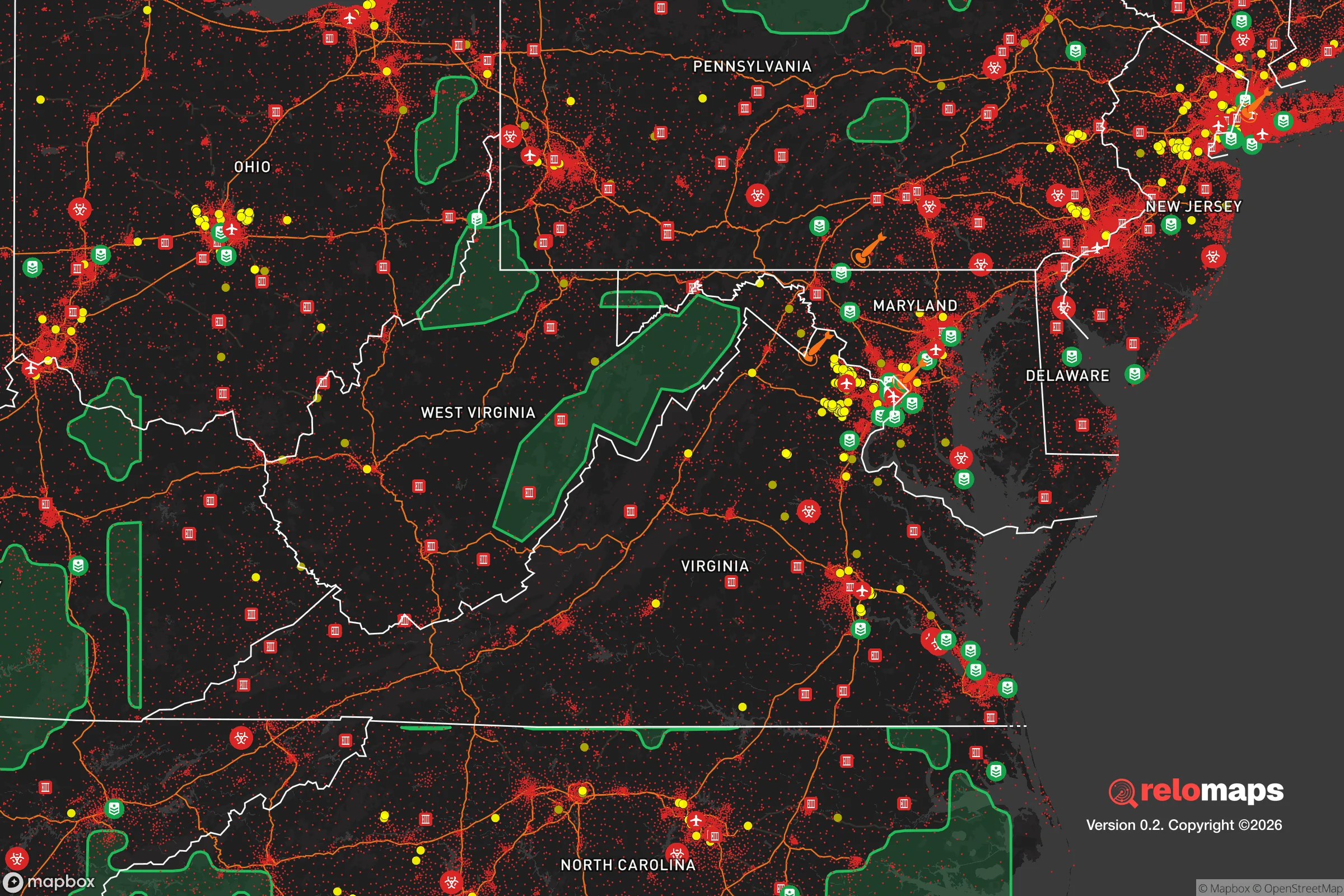


Important Note: For informational purposes only. This does not mean nothing bad ever happens in the green zones. Please use common sense. This is based on public data and modeled with AI. We tried to take a conservative approach but mistakes happen. We update this regularly as new information becomes available.
Solar Generator Recommendations
Backup power matters more here than in safer locations. We've picked three solar generators across budgets and capacity tiers — start with the budget unit if you only need a few essentials, or step up if you want to run a fridge and HVAC for days at a time.

Jackery Portable Power Station Explorer 300
Budget OptionPower on the Go: Weighing only 11 lbs, it's convenient to set up and store with book-sized foldable solar panels

BLUETTI Portable Power Station AC180
Designed for both indoor and outdoor scenarios, AC180 is highly capable as it has a robost capacity and continuous output power.

EF ECOFLOW DELTA Pro Ultra Power Station
Upgraded PickEcoFlow DELTA Pro Ultra is a whole-home energy system designed to grow with your family. Integrated with the Smart Home Panel 2, it scales to meet your evolving energy needs — keeping your home powered, intelligent, and secure through every stage of life.
We earn a commission, at no additional cost to you.
Strategic Assessment Analysis
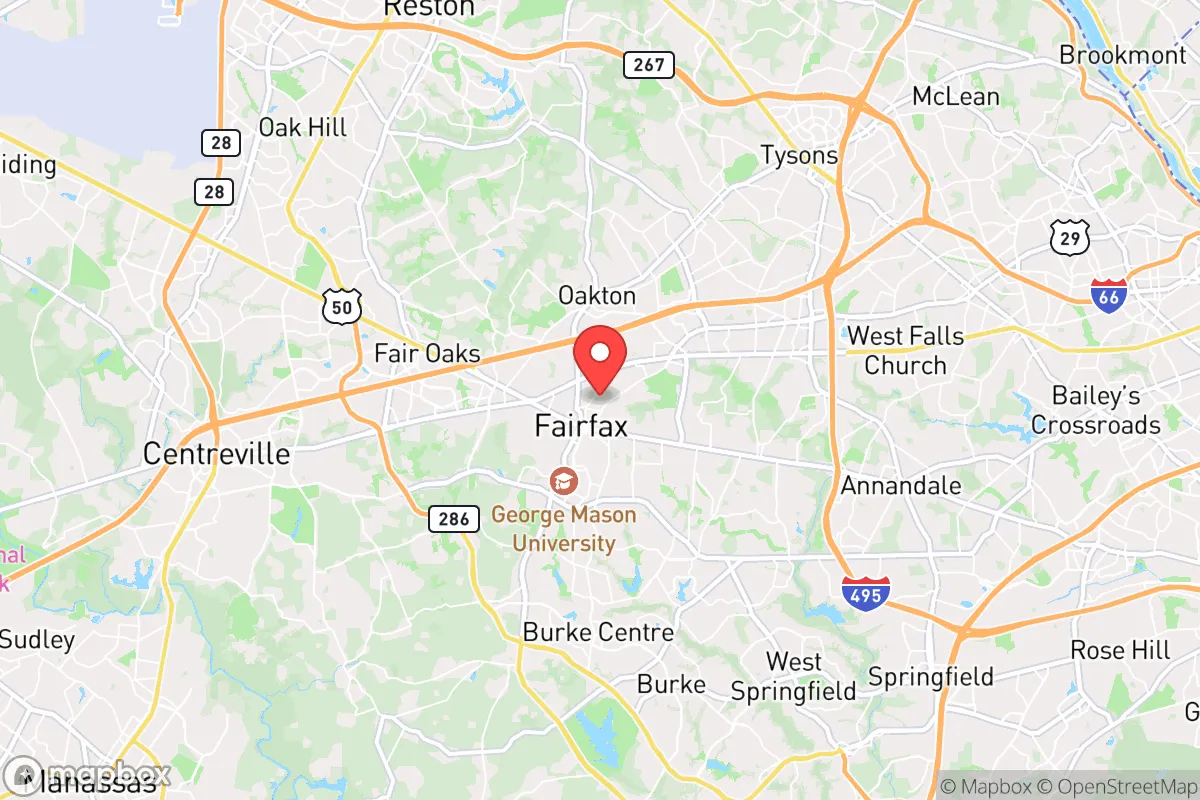
Fairfax, Virginia, presents a complex strategic picture for the conservative prepper: it offers exceptional institutional resilience and economic stability, but its proximity to Washington, D.C., and dense suburban infrastructure creates significant vulnerabilities. While the area boasts robust emergency services, a diversified economy, and strong community networks, its location within the bullseye of federal power makes it a high-priority target for civil unrest, mass casualty events, and potential fallout from a major disaster. For the relocator prioritizing self-sufficiency and low-profile security, Fairfax demands a clear-eyed assessment of its trade-offs.
Geographic position and natural advantages for long-term stability
Fairfax sits in a strategically advantageous pocket of Northern Virginia, roughly 20 miles west of the District of Columbia. Its position along the fall line—where the Piedmont plateau meets the Coastal Plain—provides a mix of rolling hills, hardwood forests, and access to the Potomac River watershed. This geography offers several natural advantages: the area is not prone to hurricanes, tornadoes, or earthquakes, and its elevation (averaging 400 feet above sea level) reduces flood risk compared to coastal Virginia. The region’s temperate climate supports a growing season of about 180 days, which is meaningful for anyone serious about food security. The nearby Bull Run Mountains and Prince William Forest Park provide natural buffers and potential retreat zones, though they are not remote. For a prepper, the key takeaway is that Fairfax’s natural environment is stable and resource-rich, but it is not a bug-out location—it is a base of operations that requires deliberate hardening.
Risks, exposures, and proximity to fallout-relevant landmarks
The single greatest strategic liability of Fairfax is its proximity to Washington, D.C., and the concentration of federal infrastructure within a 15-mile radius. The Pentagon, CIA headquarters in Langley, and the White House are all within a 30-minute drive, making the region a primary target for any adversary seeking to decapitate U.S. command and control. In a nuclear exchange scenario, Fairfax sits within the moderate fallout zone for a ground burst on D.C., with prevailing winds likely carrying radioactive debris east-northeast—meaning Fairfax could see measurable contamination within hours. Beyond nuclear threats, the area’s dense population (over 1.1 million in Fairfax County alone) and heavy reliance on the Capital Beltway (I-495) and I-66 create choke points for evacuation. During the 2020 civil unrest, Fairfax experienced localized protests and supply chain disruptions, but the real risk is a cascading failure: a major cyberattack on the federal grid or a coordinated terror event could paralyze the region’s transportation and communications within minutes. The presence of multiple military bases (Fort Belvoir, Quantico Marine Corps Base) means a rapid security response, but it also means the area will be locked down first in any crisis. For the conservative relocator, the calculus is clear: you are trading proximity to power for proximity to danger.
Practical resilience for a relocator: food, water, energy, and defensibility
Fairfax’s practical resilience is a mixed bag. On the positive side, the county’s water supply is sourced from the Potomac River and treated by the Washington Aqueduct and Fairfax Water, a system with redundant intake points and backup generators. However, a single point of failure—a sabotage of the Little Falls Pumping Station or a major chemical spill upstream—could disrupt water for days. Preppers should plan for at least two weeks of stored water per person, plus a Berkey or similar gravity filter for local streams like Accotink Creek or Difficult Run. Food security is more challenging: Fairfax has no significant agricultural base, and the county’s 40+ grocery stores rely on just-in-time delivery from regional distribution centers in Maryland and Pennsylvania. A prolonged grid-down event would empty shelves within 48 hours. Community gardens and farmers markets exist (e.g., the Fairfax Farmers Market on Saturdays), but they are not scalable for a crisis. Energy resilience is better: Dominion Energy’s grid is relatively modern, and many homes have natural gas hookups for backup heating. Solar panels are increasingly common, though HOAs in planned communities like Burke or Vienna may restrict installations. Defensibility is the weakest link. Fairfax is a suburban sprawl of cul-de-sacs, strip malls, and multi-family housing—hard to secure, easy to infiltrate, and impossible to isolate. A single-family home on a half-acre lot in Clifton or Oakton offers better perimeter control than a townhouse in Tysons Corner, but no property in Fairfax is truly defensible against a determined mob or organized looters. The best strategy is to layer security: reinforced doors, window film, a monitored alarm system, and a neighborhood watch network. For the single individual or family, the practical takeaway is that Fairfax requires a high degree of self-reliance and a low profile—blending in is your best defense.
The overall strategic picture for Fairfax is one of calculated risk. It is not a survivalist’s paradise, nor is it a doomed city. For the conservative prepper who values economic opportunity, quality schools, and access to medical infrastructure, Fairfax offers a stable platform—provided you accept the inherent vulnerabilities of living near the nation’s capital. The key is to treat Fairfax as a hub, not a haven: maintain a bug-out vehicle with a pre-packed kit, establish a retreat location west of the Blue Ridge (e.g., Shenandoah Valley or West Virginia), and build a local network of like-minded individuals. The area’s greatest strength is its institutional resilience—police, fire, and emergency management are well-funded and professional. Its greatest weakness is its target value. If you can live with that tension, and if you are willing to invest in preparation rather than paranoia, Fairfax can be a viable long-term base. But if your priority is true independence and low-profile security, you would be better served looking farther west, where the fallout zones are thinner and the neighbors are fewer.

* Values derived from national, state, county, city and local statistics and may differ in a specific area. Last updated: 2026-05-01T06:07:57.000Z
Narrative content on this page is AI-generated and may contain mistakes. Verify any details that matter before acting on them.
ReloMaps may earn a commission from affiliate links at no extra cost to you.

