Quality of Life in Falling Waters, WV
Above-average quality of iife. The area offers a reasonable cost of living, decent mobility, and a mix of neighborhood amenities.
What does Quality of Life tell us?
Quality of Life blends cost of living, nearby amenities, socioeconomic signals, and neighborhood character. City-level scores represent the whole municipality; individual neighborhoods can differ.
What does this tell us?
Quality of Life blends cost of living, nearby amenities, socioeconomic signals, and neighborhood character. City-level scores represent the whole municipality; individual neighborhoods can differ.
Cost of Living
1% below national average
The Real Cost of Living in Falling Waters, WV for 2026
| Tier | Individual | Family (4) |
|---|---|---|
| Survival | $23k | $44k |
| Comfortable | $48k | $71k |
| Luxury | $158k+ | $245k+ |
123%
The Area Signal
A metric tracking the socioeconomic signals of the area.
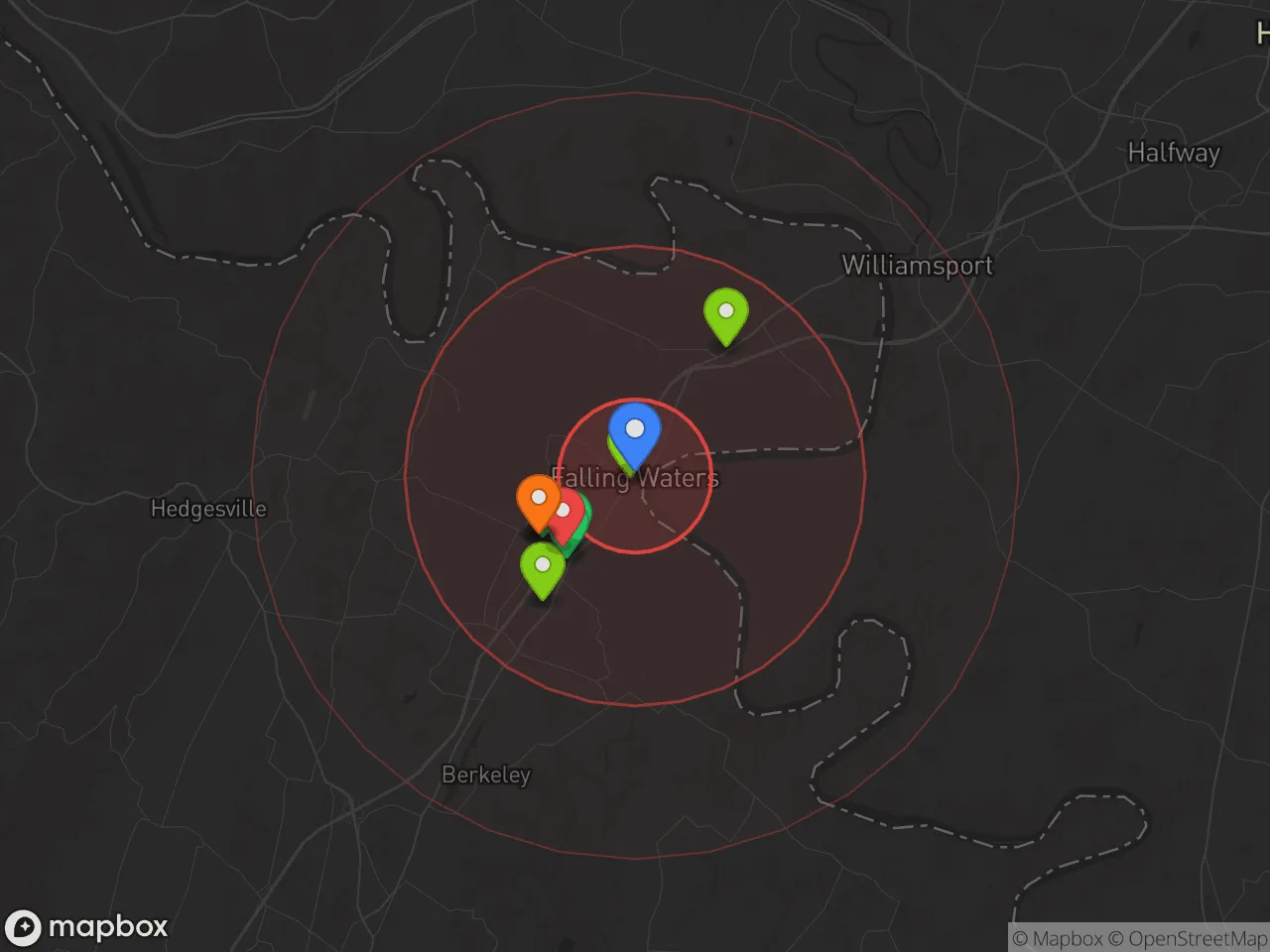
Hobbies
Explore the areaGroceries
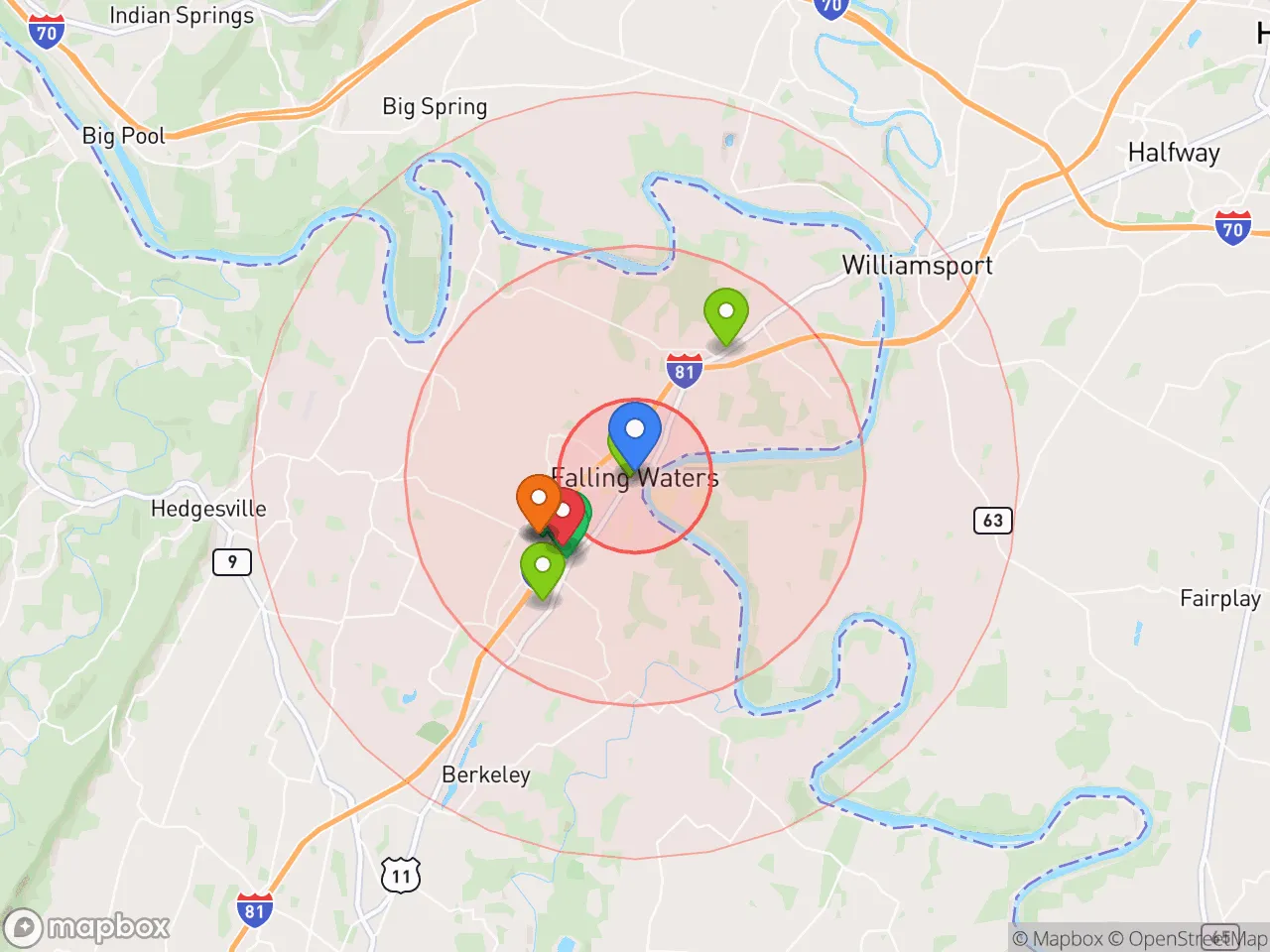
5 within 10 miles
Gas
20 within 10 miles
Hospital
9 within 20 miles
Airport
IAD — Washington Dulles International
Post Office
USPS — Falling Waters, WV
Critical Amenities
Quality-of-Life Analysis
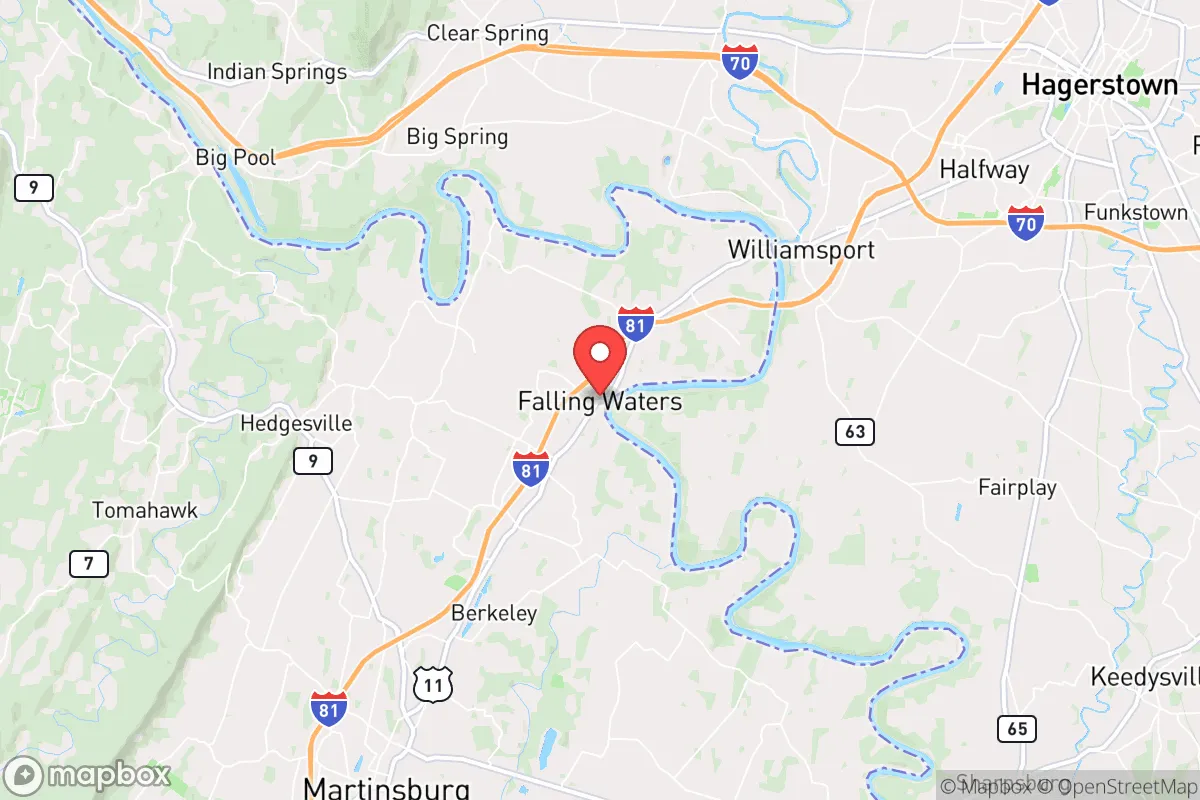
Falling Waters, West Virginia, presents a quality of life defined by suburban tranquility and relative affluence within the Eastern Panhandle. The community attracts a mix of long-term residents, commuters working in the Washington, D.C. and Baltimore metros, and families seeking more space and a lower cost of living than what is available across the state line in Maryland or Virginia. With a cost-of-living index of 99—essentially on par with the national average—the area offers a financial sweet spot for those priced out of the D.C. suburbs but unwilling to sacrifice access to urban job markets.
Cost of living, housing affordability, and how it compares to nearby areas
Falling Waters’ housing market is a primary driver of its appeal. The median home value sits at $207,200, a figure that is roughly half of the median home value in neighboring Berkeley County, WV, and less than a third of comparable homes in Hagerstown, MD, or Frederick, MD. Median rent is $1,341, which is significantly lower than the $1,800+ averages found in the Maryland suburbs just 15 to 20 miles east. This affordability gap means that a household earning a middle-class income can often afford a single-family home with a yard in Falling Waters, whereas the same income would likely require a condo or townhouse in Maryland. The trade-off is a longer average commute of 26.6 minutes, which is higher than the national average of 26 minutes but still manageable for those working in Martinsburg or Hagerstown; for those commuting to D.C., the drive can stretch to 90 minutes each way, a reality that shapes daily life for many residents.
Local amenities, schools, and what daily life is like for families
Daily life in Falling Waters is oriented around the nearby towns of Martinsburg (10 minutes south) and Hagerstown (15 minutes north). The community itself is largely residential, with limited commercial development, meaning most errands require a short drive. The area is served by Berkeley County Schools, with Falling Waters Elementary School and Spring Mills High School being the primary public schools; both have received above-average ratings from GreatSchools for academic performance. For recreation, residents use the Chesapeake and Ohio Canal National Historical Park for hiking and biking, and the Potomac River for fishing and kayaking. The Berkeley County Youth Fair and local farmers' markets provide seasonal community gathering points. The rhythm of life is quiet and car-dependent, with most social and dining options concentrated in Martinsburg’s retail corridor along Interstate 81. The area lacks a walkable downtown core, which is a notable trade-off for those accustomed to urban amenities.
Falling Waters is best suited for families and professionals who prioritize housing affordability and space over walkability and urban convenience. It works well for remote workers who can avoid the long commute, or for those with jobs in Hagerstown or Martinsburg who want a low-crime, suburban setting with good schools. Commuters to D.C. or Baltimore should carefully weigh the 90-minute-plus drive against the financial savings. Retirees on a fixed income may also find the lower housing costs appealing, though the lack of public transit and limited healthcare facilities within the immediate area are drawbacks. Overall, Falling Waters offers a stable, family-oriented quality of life at a price point that is increasingly rare in the Mid-Atlantic region.

Crime in Falling Waters, WV
Generally safer than 69% of comparable U.S. locations.
Violent CrimeViolent Crime Analysis
Property CrimeProperty Crime Analysis
Crime Analysis
Falling Waters, West Virginia, presents a mixed safety profile for prospective residents. The town’s violent crime rate of 220 incidents per 100,000 people is notably lower than the national average, while its property crime rate of 923 per 100,000 sits slightly above the national benchmark. These figures place Falling Waters in a middle tier for safety within the Eastern Panhandle, offering a quieter environment than nearby Hagerstown or Martinsburg, but requiring standard precautions against theft and burglary.
Crime in context
When compared to West Virginia’s statewide violent crime rate of approximately 340 per 100,000, Falling Waters is significantly safer, with a rate roughly 35% lower. The town’s property crime rate, however, exceeds the state average of about 780 per 100,000, driven largely by vehicle break-ins and package thefts common in bedroom communities near the I-81 corridor. Nationally, Falling Waters’ violent crime rate is about 40% below the U.S. average of 380 per 100,000, while its property crime rate is roughly 10% above the national figure of 840 per 100,000. The proximity to Berkeley County’s larger population centers means that crime patterns here are influenced by regional trends, including spillover from areas with more lenient prosecutorial policies. Progressive district attorneys in neighboring jurisdictions, particularly in Maryland’s Washington County, have been associated with reduced incarceration rates for repeat property offenders, a factor that residents and local law enforcement cite as contributing to a revolving-door effect for criminals who target West Virginia border towns.
What residents experience
Daily life in Falling Waters is generally calm, with most violent crime being domestic or acquaintance-based rather than random. Residents report that the most common safety concerns are non-violent property offenses, including theft from unlocked vehicles and mail theft, which occur with some frequency along the US-11 corridor. The town’s small size—roughly 900 households—means that neighborhood watch efforts and community policing are more effective than in anonymous suburban subdivisions. However, the lack of a dedicated municipal police force means that law enforcement response times can vary, with the Berkeley County Sheriff’s Office covering the area. Residents should be aware that the broader legal environment in the Eastern Panhandle has seen a shift toward progressive criminal justice reforms in recent years, including bail reform and diversion programs that critics argue reduce accountability for repeat offenders. This ideological trend, while intended to reduce incarceration, has been linked to increased recidivism in nearby communities, a pattern that Falling Waters residents should factor into their safety calculus.
Neighborhood-level variation in Falling Waters is modest but worth noting. The older, established residential areas near the Potomac River tend to have lower crime rates, while newer developments along the I-81 frontage roads see more transient-related incidents. Properties on dead-end streets or in small cul-de-sac subdivisions generally report the fewest incidents, while homes directly on US-11 or within a quarter-mile of the interstate exchange experience higher rates of opportunistic crime. Prospective buyers should prioritize homes with off-street parking and visible street lighting, and consider joining or forming a neighborhood watch group to mitigate the property crime risk that defines this otherwise safe community.
* Values derived from national, state, county, city and local statistics and may differ in a specific area. Last updated: 2026-04-23T05:59:21.000Z
Narrative content on this page is AI-generated and may contain mistakes. Verify any details that matter before acting on them.
ReloMaps may earn a commission from affiliate links at no extra cost to you.

