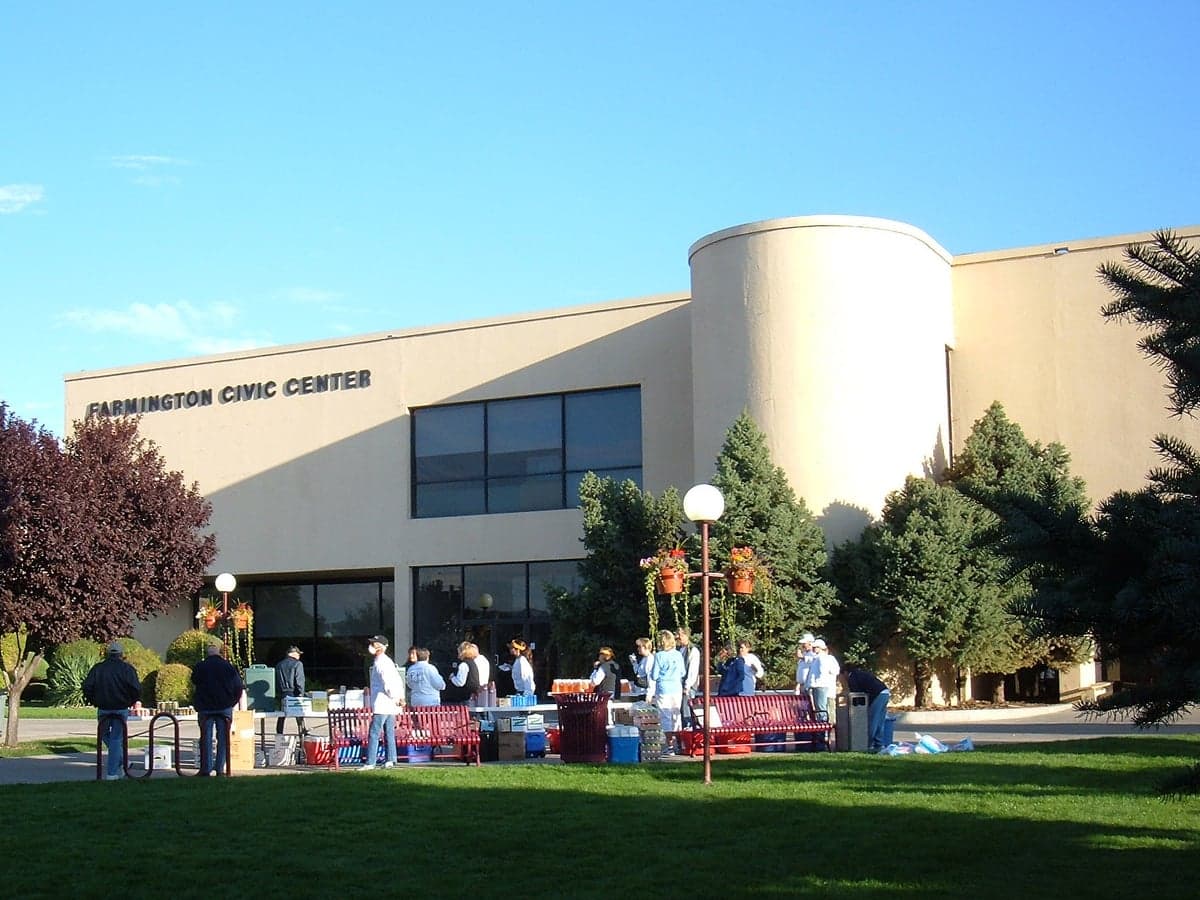
Photo: Wikipedia
Political ClimatePolitical Climate in Farmington, NM
District shown is the primary district for this city’s centroid. Cities may span multiple districts.
Local Political AnalysisPolitical Analysis of Farmington, NM
Farmington, New Mexico, sits in a unique political spot that might surprise folks who only look at the state’s overall blue lean. While the town itself and San Juan County have historically leaned more conservative—often voting red in statewide races—the area’s Cook PVI of D+3 tells you the broader district has shifted slightly toward Democrats in recent years. That D+3 rating means the district is about three points more Democratic than the national average, but don’t let that fool you into thinking Farmington has gone full progressive. The real story is a slow, uneasy drift leftward, driven mostly by new arrivals from places like Albuquerque and Durango, and by younger voters who don’t remember the old days when local politics were a straight-up Republican affair. Longtime residents will tell you the town’s heart is still conservative, but the political winds are changing, and not everyone is happy about it.
How it compares
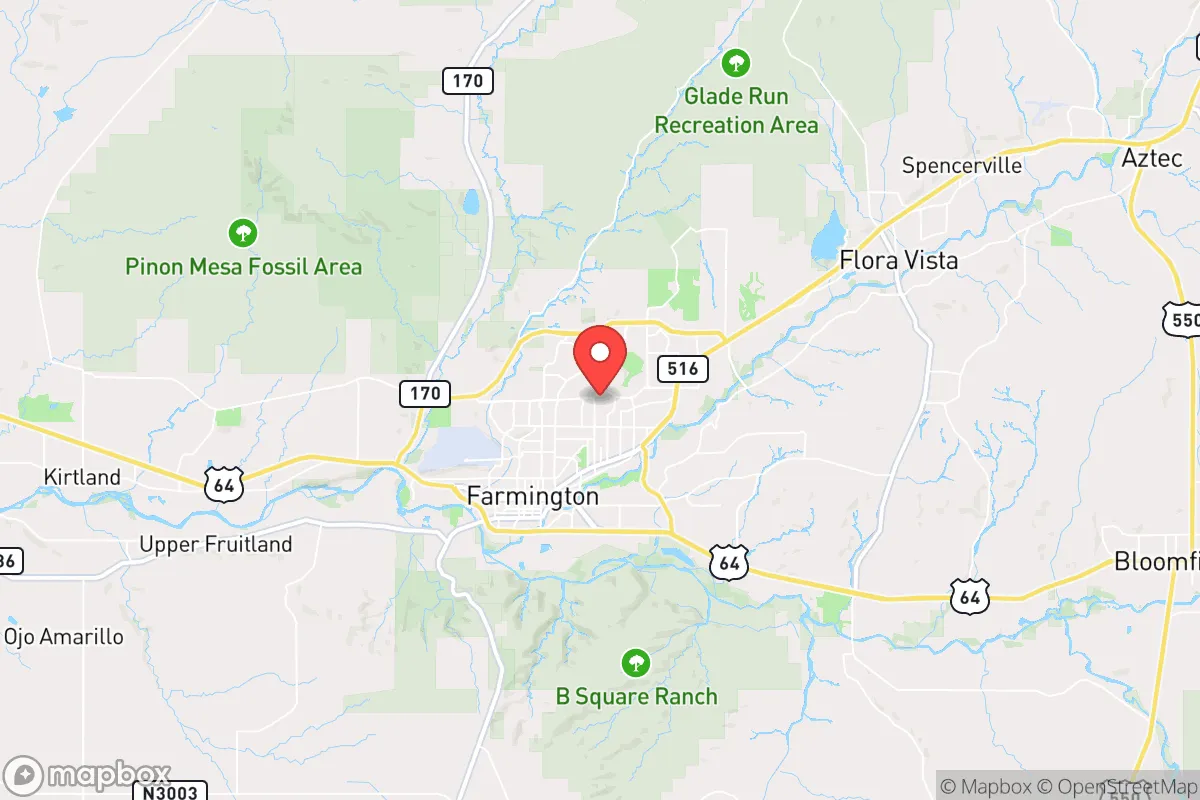
If you drive thirty miles east to Aztec or forty miles south to Bloomfield, you’ll find communities that feel more reliably conservative—places where the local chatter is still about property rights, low taxes, and keeping government out of your business. But Farmington itself, as the biggest city in the Four Corners region, has become a bit of a political island. It’s noticeably more moderate than the surrounding rural areas, and that gap is widening. Compare it to Durango, Colorado, just an hour north: Durango is a full-on progressive hub, with bike lanes, organic co-ops, and city council debates about carbon neutrality. Farmington isn’t there yet, but the creeping influence of that kind of thinking is what worries locals. The D+3 rating reflects a district that includes some of those more liberal-leaning pockets, so the town’s conservative base is increasingly outnumbered in federal elections. In state and local races, though, the old guard still holds a lot of sway—for now.
What this means for residents
For folks who value personal freedoms and want to keep government out of their lives, the trend is concerning. You’re seeing more local ordinances that feel like overreach—things like stricter noise regulations, limits on short-term rentals, and even talk of “equity” initiatives in the school district that sound a lot like top-down social engineering. Property taxes have crept up, and there’s a growing push for higher impact fees on new construction, which hits homeowners and small builders hard. The real red flag is the school board: a few years back, it was a reliably conservative body, but now you’ve got members pushing for curriculum changes that prioritize ideology over basics like math and reading. If you’re a parent who wants your kid to learn how to think, not what to think, that’s a battle you’ll have to fight. On the plus side, the Second Amendment is still respected here—most folks carry, and there’s no serious talk of local gun bans—but the cultural pressure is mounting.
Culturally, Farmington still feels like a Western town at heart, with a strong oil and gas industry, plenty of hunting and fishing, and a general “live and let live” attitude. But the policy distinctions are starting to show. The city has embraced some state-level green energy mandates, which have made it harder for local energy companies to operate. And while the Navajo Nation influence adds a unique layer to local politics—often more focused on tribal sovereignty than partisan fights—the overall trajectory is toward a more progressive, centralized approach. If you’re thinking of moving here, keep an eye on the next few election cycles. The old Farmington is still here, but it’s fighting for its identity.

State Political ClimatePolitical Climate in New Mexico
State Political AnalysisPolitical Environment in the State
New Mexico has been a reliably blue state in presidential elections for two decades, voting Democratic by margins of 10-11 points in 2020 and 2024, but that top-line number hides a deeply fractured political landscape. The state’s dominant coalition is a mix of urban progressives from Albuquerque and Santa Fe, combined with a large Hispanic electorate that leans Democratic but is culturally moderate on many social issues. Over the last 10-20 years, the state has shifted leftward on cultural and economic policy, driven by a growing progressive activist class in the Rio Grande corridor, even as rural and oil-patch counties have become more Republican. For a conservative considering relocation, the key question isn’t whether the state is red or blue—it’s where you land on the map and how much state-level policy you’re willing to tolerate.
Urban vs. rural divide
The political map of New Mexico is a tale of two worlds. The urban core—Bernalillo County (Albuquerque) and Santa Fe County—generates roughly half the state’s vote and is overwhelmingly Democratic. Santa Fe County gave Biden 76% in 2020, while Albuquerque’s East Mountains and North Valley precincts are the only pockets of red within the city limits. Meanwhile, the southeastern corner of the state, anchored by Lea County (Hobbs) and Eddy County (Carlsbad), is deep red—Trump won Lea by 50 points in 2024. The oil and gas boom in the Permian Basin has made these counties economic powerhouses and reliably Republican. The rural north, including Taos and Rio Arriba County, is culturally Hispanic and historically Democratic but has seen some drift toward the GOP in recent cycles, though not enough to flip. The real battleground is the Las Cruces area (Doña Ana County), a growing border metro that voted for Biden by 12 points but has a large military and veteran population that could shift right with the right candidate. If you’re a conservative, you’re looking at Hobbs, Carlsbad, or the rural East Mountains as your best bets for a like-minded community.
Policy environment
New Mexico’s state-level policy is a mixed bag that leans progressive but with some surprising brakes. The state has a progressive income tax with rates from 1.7% to 5.9%, and a gross receipts tax (GRT) that functions like a sales tax but is applied to many services, making the effective tax burden higher than the nominal rate suggests. Property taxes are low—around 0.8% of assessed value—which is a plus for homeowners. On education, the state has poured money into early childhood programs and universal pre-K, but reading and math proficiency remain among the worst in the nation, and school choice is limited. The legislature passed a red flag law in 2020 and a ban on carrying firearms in polling places, which rankles Second Amendment advocates. Healthcare is heavily regulated, with a state-run insurance exchange and Medicaid expansion under the Affordable Care Act. Election laws are relatively loose: same-day voter registration, no voter ID requirement, and universal mail-in ballots for all registered voters. For a conservative, the policy environment is a net negative, but the low property taxes and lack of a state-level estate tax are bright spots.
Trajectory & freedom
Over the last five years, New Mexico has become less free by most conservative metrics. The 2021 legislative session saw the passage of the Energy Transition Act, which mandates 100% carbon-free electricity by 2045 and effectively phases out coal and natural gas, a direct hit to the state’s largest industry. In 2023, the legislature passed the Reproductive and Gender-Affirming Health Care Act, which protects abortion access and gender-transition procedures from local restrictions, overriding any county or city ordinances. On gun rights, the 2020 red flag law allows courts to temporarily seize firearms from individuals deemed a risk, and a 2023 law banned firearms at public schools and polling places. Parental rights took a hit with the 2023 Healthy Families Act, which mandates paid sick leave and could be used to override parental consent for medical procedures. Property rights are under pressure from the state’s Oil and Gas Act updates, which give the state more authority to deny drilling permits on private land. The trajectory is clearly toward more state control over energy, healthcare, and firearms, with little sign of reversal.
Civil unrest & political movements
New Mexico has seen its share of political flashpoints. The 2020 protests in Albuquerque over George Floyd’s death turned violent, with the toppling of a statue of Juan de Oñate and clashes between protesters and counter-protesters. The state’s sanctuary policies are a major issue: Albuquerque and Santa Fe are “welcoming cities” that limit cooperation with federal immigration enforcement, and the state legislature has repeatedly blocked bills that would require local law enforcement to honor ICE detainers. In 2023, the Otero County Commission briefly refused to certify primary election results over concerns about Dominion voting machines, sparking a statewide debate about election integrity. The New Mexico Civil Guard, a militia group, has been active in border areas, conducting patrols near Sunland Park and Columbus. On the left, the Pueblo Action Alliance and other Indigenous groups have staged protests at the state capitol over missing and murdered Indigenous women and land rights. A new resident would notice the visible presence of both border-security activism and progressive protest culture, especially in Santa Fe and Albuquerque.
Projection
Over the next 5-10 years, New Mexico is likely to continue its leftward drift on cultural and environmental policy, but demographic shifts could create new political dynamics. The influx of remote workers and retirees from California and Colorado is accelerating, particularly in Santa Fe and the Albuquerque foothills, and these newcomers tend to be more progressive on social issues. At the same time, the oil and gas industry in the southeast is booming, drawing workers from Texas and Oklahoma who are reliably conservative. The state’s Hispanic population, which makes up nearly half the electorate, is not monolithic—younger voters are more progressive, while older voters are more culturally conservative and could be swayed by a GOP candidate who focuses on economic opportunity and parental rights. The wildcard is the 2026 gubernatorial race: if a Republican can win in the Las Cruces area and hold the southeast, the state could become competitive again. But realistically, the legislature is likely to remain Democratic-controlled, meaning more progressive policies on energy, healthcare, and gun control. A conservative moving in now should expect a state that is moderately blue at the state level but deeply divided by region, with the best quality of life for conservatives found in the oil patch or the rural East Mountains.
For a conservative relocating to New Mexico, the bottom line is this: you can find a community that shares your values in the southeastern oil towns or the rural outskirts of Albuquerque, but you’ll be living under a state government that is increasingly hostile to gun rights, energy development, and parental autonomy. The low property taxes and stunning landscapes are real draws, but the policy trajectory is concerning. If you’re willing to fight for your local school board and county commission, you can make a difference. If you’re looking for a state that already aligns with your values, you might be better off in Texas or Arizona. New Mexico is a beautiful, complicated place—but it’s not getting more conservative anytime soon.
* Values derived from national, state, county, city and local statistics and may differ in a specific area. Last updated: 2026-05-01T06:34:18.000Z
Narrative content on this page is AI-generated and may contain mistakes. Verify any details that matter before acting on them.
ReloMaps may earn a commission from affiliate links at no extra cost to you.

