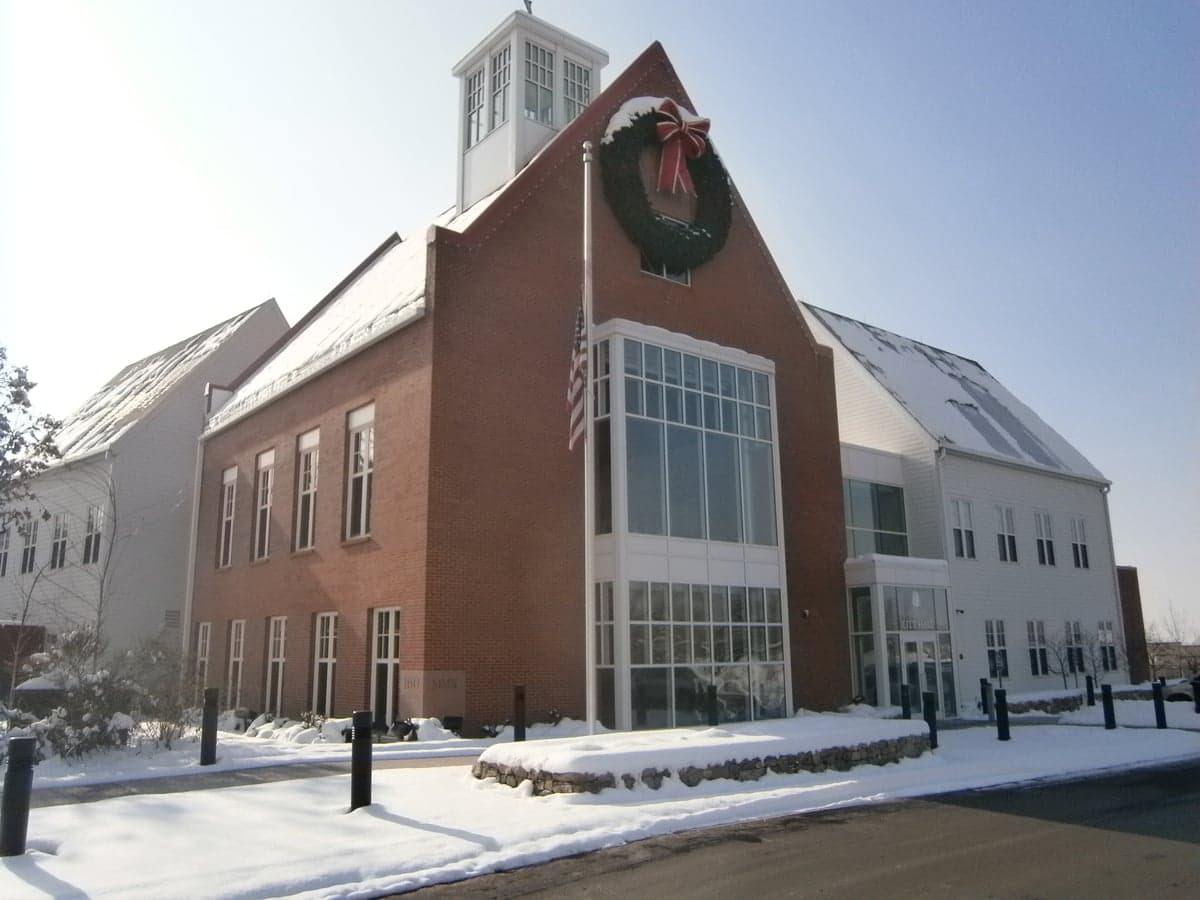
Photo: Wikipedia
Personal Sovereignty in Farmington, UT
Viable for self-reliance. Generally workable, though some barriers may limit total independence.
What does Personal Sovereignty tell us?
Personal Sovereignty measures your capacity for self-reliance and independence with minimal government friction. Higher scores mean fewer barriers between you and the way you want to live... but it assumes you have the space you need and good neighbors.
What does this tell us?
Personal Sovereignty measures your capacity for self-reliance and independence with minimal government friction. Higher scores mean fewer barriers between you and the way you want to live... but it assumes you have the space you need and good neighbors.
State Policy
Energy independence: Self-sufficient (80% of energy produced in-state)
Personal Liberty
Homesteading

Personal Liberty Analysis
Farmington, Utah, offers a notably high degree of personal sovereignty relative to most of the United States, largely because the state legislature has consistently acted to preempt local ordinances that infringe on individual rights, from firearm carry to parental authority. For the strategic relocator—whether a single professional or a parent—this means the legal environment is tilted toward personal autonomy, not government convenience. While no place is a libertarian utopia, Farmington’s position within Davis County, combined with Utah’s aggressive preemption laws, creates a buffer against the kind of municipal overreach that plagues coastal cities. The key is understanding where the state draws the line between collective safety and individual liberty, and in Utah, that line is drawn firmly on the side of the individual.
Tax burden and regulatory posture: How Utah’s fiscal policies protect your autonomy
Utah’s tax structure is designed to minimize the state’s claim on your income and property, which directly translates to more money in your pocket for self-reliance investments. The state levies a flat income tax rate of 4.65% (as of 2025), with no progressive brackets that punish higher earners or small business owners. Property taxes in Farmington are assessed at a relatively low effective rate—typically around 0.6% to 0.7% of market value—and the state caps annual increases on primary residences. More importantly, Utah has a strong constitutional and statutory framework against regulatory creep. The state’s “private property rights” laws require government agencies to justify any regulation that diminishes property value, and the legislature has repeatedly passed bills limiting local governments’ ability to impose zoning restrictions that would prevent you from building a workshop, storing supplies, or keeping livestock on your land. For the prepper, this means you are far less likely to face a knock on the door from a code enforcement officer demanding you remove a water barrel or a chicken coop than you would in, say, Oregon or Colorado. The regulatory posture is “yes, unless there’s a compelling safety reason not to,” which is the opposite of the precautionary principle that governs blue states.
Self-defense and gun law specifics: What the prepper needs to know about carry and castle doctrine
Utah is a constitutional carry state, meaning any law-abiding adult 21 or older can carry a concealed firearm without a permit. This is not a “may issue” or “shall issue” gray zone—it is a straightforward right. Farmington sits in Davis County, where the sheriff’s office is known for a pro-Second Amendment stance and does not engage in the kind of “good cause” gamesmanship seen in California or New York. The state’s castle doctrine is expansive: there is no duty to retreat in any place where you have a legal right to be, including your vehicle. This is codified in Utah Code § 76-2-402, which presumes that a person who uses force against an unlawful intruder in their home or occupied vehicle acted reasonably. For the survivalist, this means your home is a legal fortress, not a legal trap. Stand-your-ground protections extend to public spaces, so if you are forced to defend yourself while hiking in the nearby Wasatch Mountains or walking through Farmington’s Station Park, the law is on your side. The only notable restriction is that firearms are prohibited in secure areas of airports and in K–12 schools (unless you have a concealed carry permit and the school hasn’t posted a specific restriction). Magazine capacity and “assault weapon” bans do not exist at the state level, and local governments are preempted from enacting them. This is a critical point: Farmington cannot become another Boulder or Seattle because state law explicitly strips cities of the power to regulate firearms.
Self-reliance and homesteading viability: Lot sizes, zoning, and off-grid feasibility in Farmington
Farmington is a suburban city, not a rural homesteading paradise, but it offers more room for self-reliance than most metro areas. Standard residential lots in the older parts of town (near Main Street and the foothills) range from 0.25 to 0.5 acres, while newer developments closer to the I-15 corridor tend toward smaller lots. However, Davis County’s zoning code allows for “urban agriculture” as a permitted use in most residential zones, meaning you can keep chickens, bees, and even a small number of goats or sheep without a special permit, provided you meet setback requirements. Off-grid living is legally challenging but not impossible. The city requires connection to municipal water and sewer for new construction, so full independence from utilities is not feasible within city limits. However, you can install solar panels (Utah has net metering laws that are favorable, though the state’s solar incentive structure has weakened in recent years), and rainwater collection is legal without a permit for non-potable uses. For the serious prepper, the better play is to buy a home on the east bench (closer to the mountains) where lots are larger and HOAs are rare, or look at unincorporated Davis County just north of Farmington, where zoning is looser. The city’s stance on “storage sheds” and “accessory structures” is permissive—you can build a 1,000-square-foot shop on a half-acre lot without triggering a conditional use review. This is the kind of detail that matters when you are stockpiling supplies or setting up a workshop for self-sufficiency.
Personal liberties: Parental rights, medical autonomy, speech, and property protections
Utah has become a national leader in protecting parental rights, which is a core component of personal sovereignty for families. The state’s “Parental Rights in Education” laws require schools to notify parents of any curriculum involving human sexuality and to obtain parental consent before administering mental health surveys. More broadly, Utah Code § 53G-6-803 gives parents the explicit right to direct their child’s education, healthcare, and moral training, and this has been upheld in state courts against challenges from school districts. Medical autonomy is a mixed bag: Utah has not mandated COVID-19 vaccines for children or adults, and the legislature passed a law prohibiting employers from requiring vaccines as a condition of employment (with narrow exceptions for healthcare settings). However, the state does have a mandatory vaccination schedule for school entry (MMR, DTaP, polio, etc.), though philosophical exemptions are available for those who object. On the speech front, Utah has no “hate speech” laws that criminalize political or religious expression, and the state’s public universities are required to uphold the First Amendment without the kind of “bias response teams” that have chilled speech elsewhere. Property rights are further strengthened by Utah’s “takings” law, which requires the government to compensate property owners if a regulation reduces their property value by more than 20%. This is a powerful check on zoning overreach and environmental restrictions that could otherwise limit your ability to use your land as you see fit.
Overall, Farmington offers a sovereignty profile that is among the strongest in the Intermountain West, particularly for those who value gun rights, parental control, and low taxes. The state legislature’s consistent preemption of local authority means that the city cannot easily drift toward the kind of progressive governance that erodes personal freedoms. Compared to areas like the Pacific Northwest or the Front Range of Colorado, where county-level regulations can strangle self-reliance, Farmington provides a legal environment where a prepared individual can live largely unbothered by government. The trade-off is that you are still in a suburban setting with neighbors close by, so if total off-grid autonomy is your goal, you will need to look further into the rural counties. But for the strategic relocator who wants a strong community, good schools, and a legal system that respects individual sovereignty, Farmington is a solid bet.

* Values derived from national, state, county, city and local statistics and may differ in a specific area. Last updated: 2026-05-03T20:38:22.000Z
Narrative content on this page is AI-generated and may contain mistakes. Verify any details that matter before acting on them.
ReloMaps may earn a commission from affiliate links at no extra cost to you.

