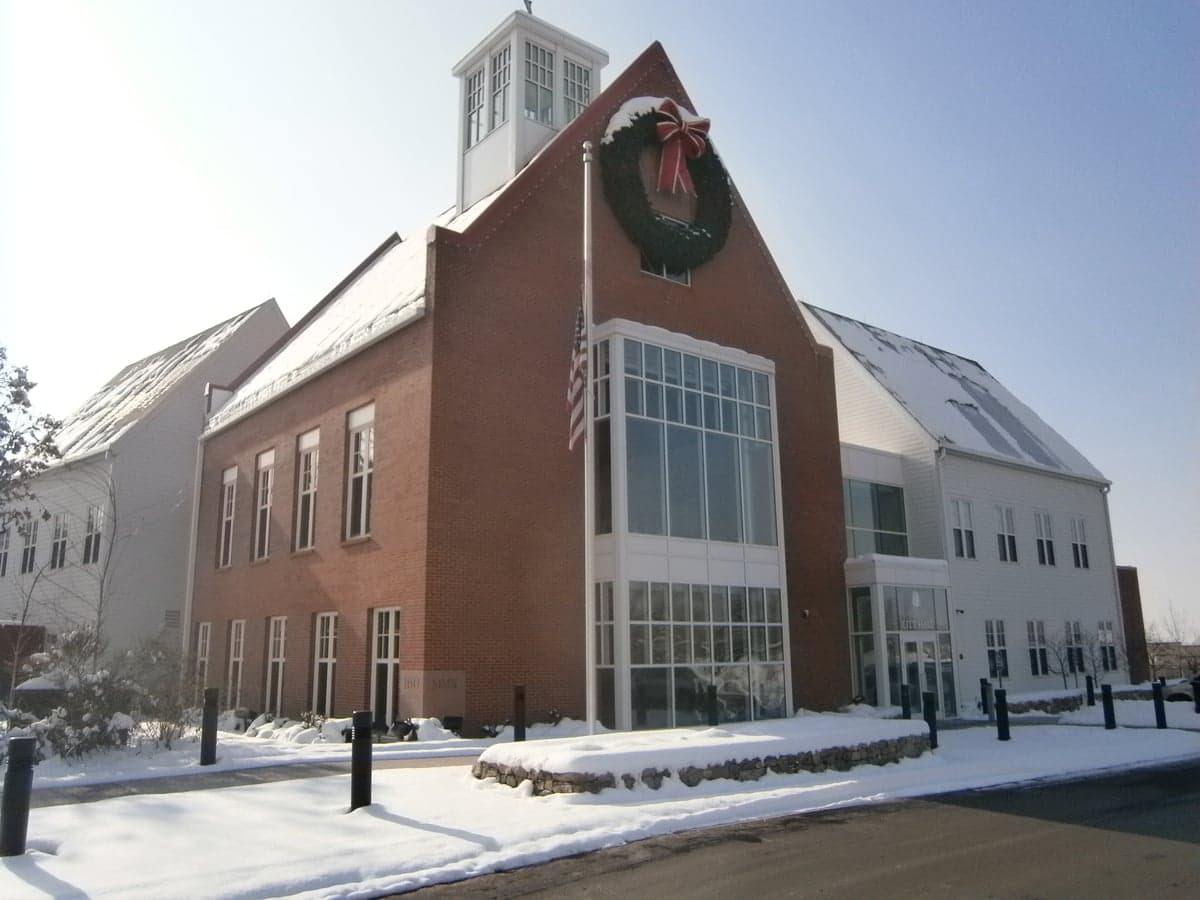
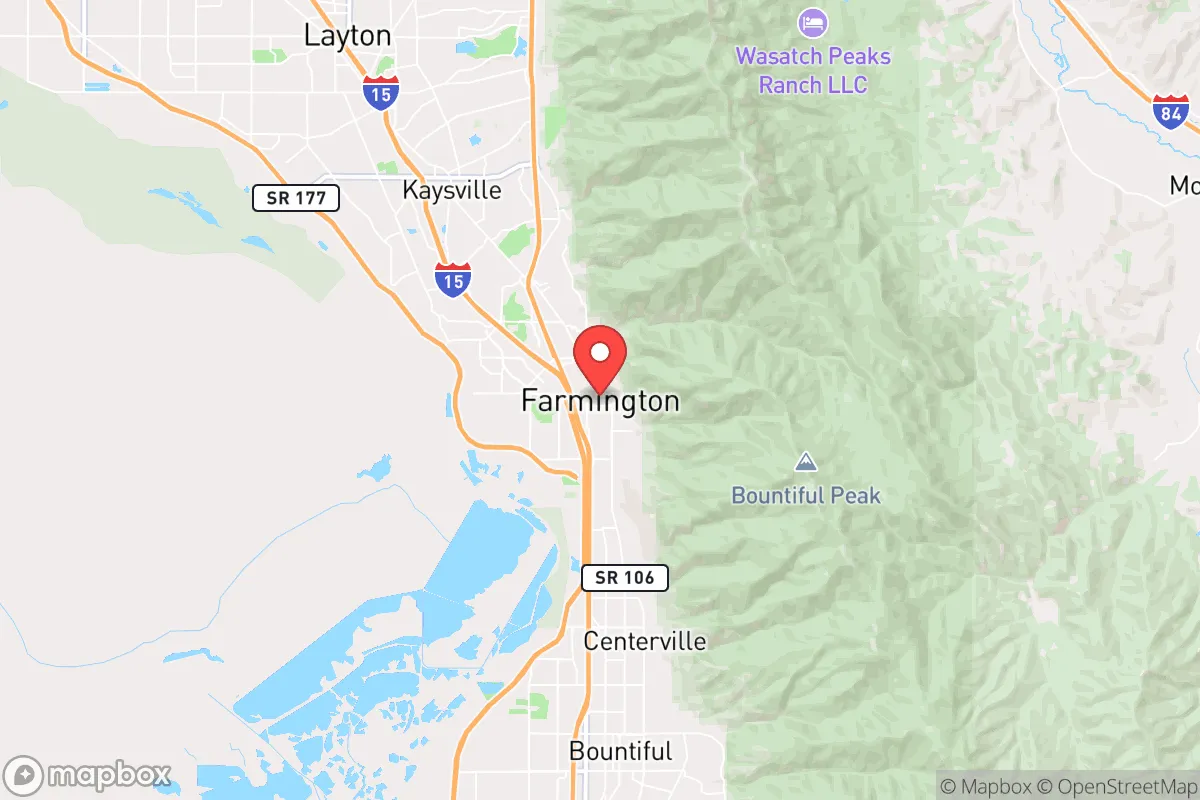
Photo: Wikipedia
Demographics of Farmington, UT
Affluence Level in Farmington, UT
An upper-middle-class area. Household wealth, education levels, and homeownership run ahead of national benchmarks.
People of Farmington, UT
Farmington, Utah, is a predominantly white, highly educated city of 24,934 residents where 86.6% of the population identifies as white, 7.0% as Hispanic, and 1.9% as East or Southeast Asian. With a foreign-born population of just 1.4% and over half of adults holding a college degree, the city projects an image of affluence, family stability, and cultural homogeneity. Its residents are overwhelmingly native-born, Latter-day Saint-influenced, and concentrated in well-maintained single-family neighborhoods that reflect the city’s historic role as a Mormon settlement and its modern identity as a bedroom community for Salt Lake City and Ogden.
How the city was settled and grew
Farmington’s human history begins with Mormon pioneers dispatched by Brigham Young in the late 1840s to settle the fertile valleys north of Salt Lake City. The first permanent settlers arrived in 1847, led by figures like Hector Haight and John Green, who claimed land along the banks of the Weber River. These early families were almost exclusively of English, Scottish, and Scandinavian descent, drawn by the promise of irrigated farmland and religious community. The original settlement clustered around what is now Main Street and State Street, an area still known as Historic Farmington, where pioneer-era homes and the Davis County Courthouse anchor the old town core. By the 1860s, the population had grown to a few hundred, sustained by dryland wheat farming, orchards, and livestock. The arrival of the transcontinental railroad in 1869—with a depot just south in Woods Cross—connected Farmington to broader markets but did not trigger rapid growth; the city remained a small agricultural hamlet through the early 1900s. A second wave of settlement came in the 1920s and 1930s, when families from rural Cache Valley and southern Idaho moved into the Shepherd’s Lane area, drawn by affordable land and the expanding sugar beet industry. These newcomers were also predominantly white and Latter-day Saint, reinforcing the city’s cultural and religious character.
Modern era (post-1965)
The post-1965 period transformed Farmington from a quiet farm town into a suburban commuter hub. The Immigration and Nationality Act of 1965 had minimal direct effect here—Farmington’s foreign-born share remains negligible at 1.4%—but the broader shift toward suburbanization reshaped the city. The opening of Interstate 15 in the 1970s made Farmington a viable bedroom community for professionals working in Salt Lake City (20 miles south) and Ogden (10 miles north). This triggered a wave of domestic in-migration from other parts of Utah and the Intermountain West. New subdivisions like Oakridge Estates and Foxboro were built in the 1980s and 1990s, attracting upper-middle-class families seeking larger lots and newer schools. These neighborhoods remain overwhelmingly white and Latter-day Saint. The Hispanic population, now 7.0%, began to grow in the 1990s as construction and service-sector jobs drew families from Mexico and Central America. Most Hispanic residents settled in the Park Lane area and along the 500 West corridor, where older, more affordable housing stock exists. East and Southeast Asian residents (1.9%) arrived later, primarily in the 2000s and 2010s, as tech and healthcare professionals from China, Korea, and the Philippines moved into newer developments like Harvest Hills. The Indian subcontinent population remains tiny at 0.1%, with no distinct neighborhood concentration. Black residents (0.8%) are scattered across the city, with no single enclave. Overall, Farmington’s modern growth has been driven by white domestic migration, with minority groups remaining small and spatially dispersed.
The future
Farmington’s population is trending toward continued homogenization, not tribalization. The city’s high home prices (median above $600,000) and low rental stock filter for affluent, college-educated buyers, most of whom are white and native-born. The Hispanic share is growing slowly—from roughly 5% in 2010 to 7.0% today—but this growth is plateauing as housing costs push lower-income families to more affordable cities like Clearfield or Roy. East and Southeast Asian communities are likely to grow modestly as the nearby Farmington Station transit-oriented development attracts professionals, but the absolute numbers will remain small. The Indian subcontinent population is unlikely to increase significantly given the lack of a tech anchor employer within city limits. Over the next 10–20 years, Farmington will likely become slightly more diverse at the margins—Hispanic share may reach 10–12%, East/Southeast Asian 3–4%—but the city will remain overwhelmingly white, Latter-day Saint, and politically conservative. The biggest demographic shift will be generational: as baby boomers age out, younger families with children will continue to replace them, keeping the median age low (currently 31.5) and the school-age population stable.
For someone moving in now, Farmington offers a predictable, family-oriented environment where the population is stable, affluent, and culturally cohesive. The city is not becoming a melting pot of distinct enclaves; rather, it is a place where minority groups are small and integrated into a dominant white, Latter-day Saint mainstream. New residents should expect a community that values order, education, and religious tradition, with demographic change occurring slowly and incrementally over decades.

* Values derived from national, state, county, city and local statistics and may differ in a specific area. Last updated: 2026-05-03T20:38:22.000Z
Narrative content on this page is AI-generated and may contain mistakes. Verify any details that matter before acting on them.
ReloMaps may earn a commission from affiliate links at no extra cost to you.

