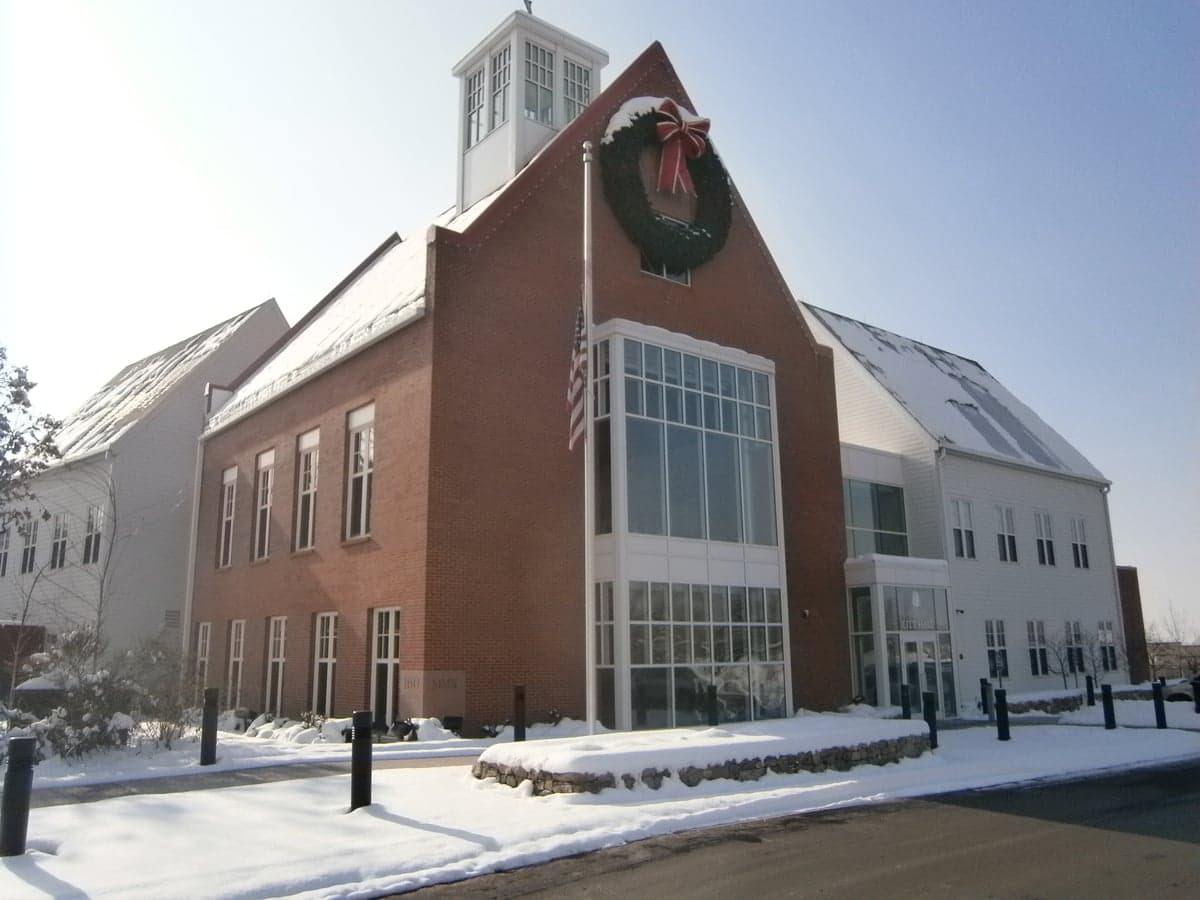
Photo: Wikipedia
Political ClimatePolitical Climate in Farmington, UT
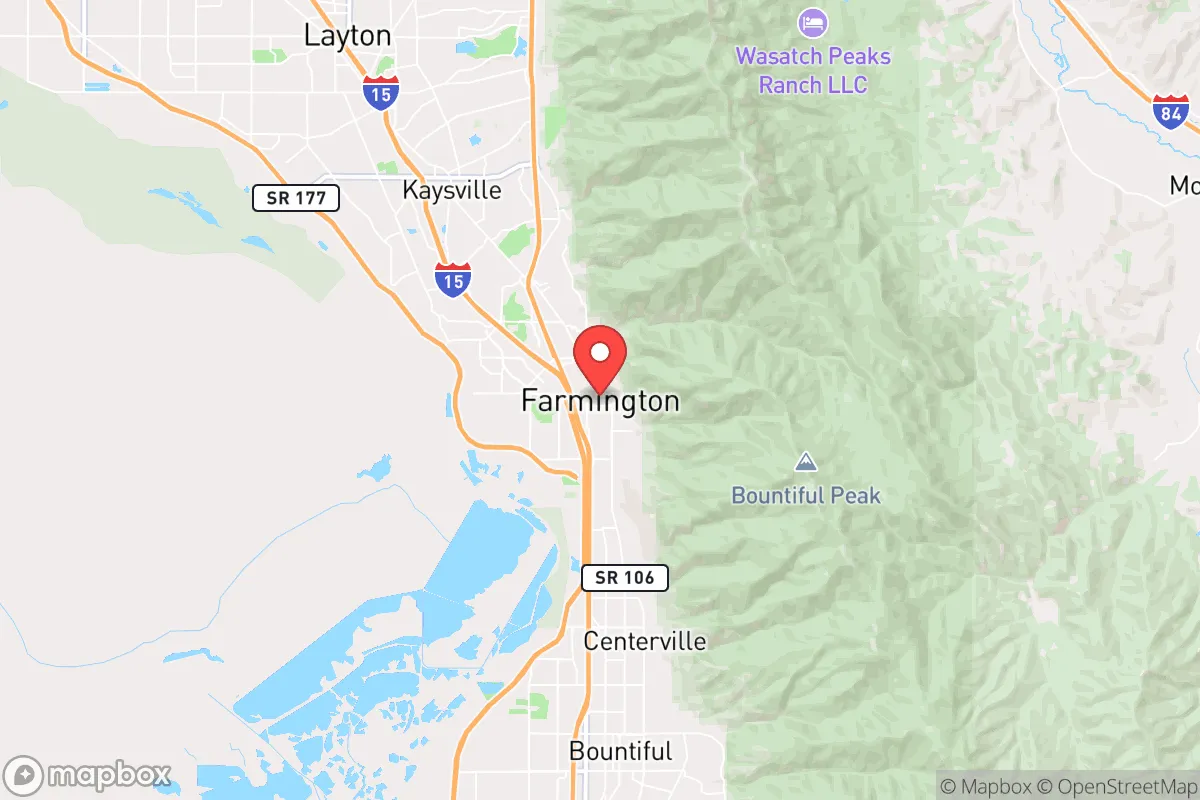
District shown is the primary district for this city’s centroid. Cities may span multiple districts.
Local Political AnalysisPolitical Analysis of Farmington, UT
Farmington, Utah, has long been a solidly conservative community, and that hasn't changed much despite the rapid growth along the Wasatch Front. The Cook PVI of R+10 tells you the baseline, but living here you feel it more than any number can show. This is a place where folks still believe in personal responsibility, limited government, and the right to live your life without a bunch of red tape or nanny-state rules. The political trajectory here is steady—conservative, with a healthy skepticism of any government overreach, whether it comes from Salt Lake City or Washington D.C.
How it compares
Drive ten minutes south to Bountiful or Centerville, and you'll find a similar vibe—strong Republican leanings, lots of families, and a general distrust of progressive policies. But head north to Ogden, and the political landscape shifts noticeably. Ogden has a more libertarian-leaning, sometimes blue-collar progressive streak, with a city council that's flirted with more left-leaning social policies. Farmington, by contrast, has held the line. We don't see the same push for things like density zoning overhauls or "equity" initiatives that you hear about in Salt Lake County. The Davis County Commission and local school board here have consistently pushed back against state-level mandates that feel like overreach, especially around COVID-era restrictions and curriculum battles. It's a place where the phrase "keep government out of my backyard" isn't just a bumper sticker—it's how people vote.
What this means for residents
For someone moving here, the biggest takeaway is that your personal freedoms are generally respected. You won't find heavy-handed business regulations, and the local government tends to stay out of your way when it comes to property rights, homeschooling, or how you raise your kids. Property taxes are reasonable, and there's no city income tax. The downside? If you're hoping for rapid public transit expansion or big government-funded projects, you'll be disappointed. The community prefers slow, organic growth over master-planned social engineering. The biggest concern among long-time residents is the creeping influence of progressive ideology from the state's urban core. We've seen attempts to bring "equity" training into Davis School District, and there's always a fight to keep curriculum focused on fundamentals, not activism. So far, Farmington has held strong, but it takes constant vigilance at the ballot box and school board meetings.
Cultural and policy distinctions
One thing that sets Farmington apart is the strong sense of local control. The city council and mayor are accessible—you can literally run into them at the grocery store. There's a real culture of "we handle our own problems" rather than looking to higher levels of government. You see it in how they've managed development around Station Park and the Lagoon area—mostly market-driven, with minimal taxpayer subsidies. The biggest cultural distinction is the LDS Church's influence, which reinforces conservative values on family, community service, and self-reliance. That said, the area is becoming more diverse religiously and politically, but the core remains deeply skeptical of any government that tries to tell you how to live your life. If you value freedom, low taxes, and a community that minds its own business, Farmington is a rare find in an increasingly over-regulated world. Just keep an eye on the school board elections—that's where the real battles are fought.

State Political ClimatePolitical Climate in Utah
State Political AnalysisPolitical Environment in the State
Utah has long been one of the most reliably conservative states in the nation, with a Republican trifecta controlling the governorship and both legislative chambers for decades. The state’s dominant political coalition is a blend of the Church of Jesus Christ of Latter-day Saints (LDS) cultural influence, a strong free-market ethos, and a deeply ingrained skepticism of federal overreach. Over the past 10-20 years, the partisan lean has only solidified: Donald Trump won the state by 20 points in 2020 and 21 points in 2024, while the state legislature has passed some of the most aggressive conservative policies in the country. However, beneath the surface, a quiet demographic shift is underway, driven by rapid growth in the Wasatch Front and an influx of out-of-state transplants, which is slowly nudging the state’s political center of gravity.
Urban vs. rural divide
The political map of Utah is starkly divided between the booming Wasatch Front and the vast, sparsely populated rural counties. The urban core—Salt Lake City, Provo, and Ogden—is where the state’s political diversity lives. Salt Lake County, home to over 1.1 million people, has trended purple in recent cycles; it voted for Joe Biden in 2020 by a narrow margin, making it the only county to flip blue in the state. Provo and Utah County remain deeply red, driven by the BYU and LDS influence, but even there, younger voters and tech workers are showing slightly more libertarian leanings. Meanwhile, rural counties like Duchesne, Uintah, and San Juan vote Republican by margins of 70-80% or more, fueled by energy extraction, ranching, and a fierce independence from Salt Lake City’s bureaucracy. The divide isn’t just about party—it’s about worldview: urbanites prioritize growth and infrastructure, while rural residents see every new regulation as a threat to their way of life.
Policy environment
Utah’s policy environment is a textbook example of conservative governance with a pragmatic twist. The state has a flat income tax rate of 4.65% (down from 5% in 2022) and no state-level property tax on vehicles, which keeps the tax burden low compared to neighbors like Colorado or Nevada. The regulatory posture is business-friendly, with right-to-work laws and minimal zoning restrictions in most areas outside Salt Lake City proper. On education, Utah passed a universal school choice voucher program in 2023, allowing families to use state funds for private or homeschool expenses—a major win for parental rights. Healthcare policy is mixed: the state expanded Medicaid under the Affordable Care Act in 2019 via a ballot initiative, but the legislature has since added work requirements and a per-capita cap. Election laws are among the most secure in the nation: Utah requires voter ID, has automatic voter registration tied to DMV data, and uses paper ballots with risk-limiting audits. The state also passed a 2024 law banning ranked-choice voting in most local elections, a move that pleased conservatives wary of progressive electoral experiments.
Trajectory & freedom
On the freedom front, Utah is moving in a decidedly more conservative direction, which is a double-edged sword for personal liberty. The state passed a constitutional carry law in 2021, allowing permitless concealed carry for anyone 21 or older—a clear expansion of Second Amendment rights. In 2023, the legislature enacted a parental rights bill (HB 261) that requires schools to notify parents of any curriculum involving “human sexuality” and bans instruction on gender identity for K-3 students, a move that has drawn both praise and legal challenges. On medical autonomy, Utah banned nearly all abortions in 2020 with a trigger law that took effect after Dobbs, though a court injunction has kept it partially blocked. Property rights remain strong: the state has no statewide rent control and limits eminent domain use. However, a 2024 law (SB 152) gave the state legislature power to override local zoning decisions for housing projects, which some rural counties see as a government overreach into local control. The biggest red flag for liberty-minded residents is the state’s aggressive use of sales tax on services—Utah taxes streaming services, ride-sharing, and even some professional services, which feels like a creeping expansion of the tax base.
Civil unrest & political movements
Utah has seen relatively little civil unrest compared to coastal states, but the political movements here are organized and vocal. The most visible flashpoint is the “Sovereign Utah” movement, which gained steam in 2023-2024, pushing for nullification of federal gun laws and environmental regulations. In Moab and St. George, there have been heated protests over the Bureau of Land Management’s public lands policies, with locals arguing that federal control stifles economic development. On the left, the Utah Poor People’s Campaign and the Salt Lake City chapter of Black Lives Matter have held rallies, but they remain small and largely confined to the capital. Immigration politics are a simmering issue: Utah passed a 2024 law (HB 234) requiring local law enforcement to cooperate with ICE detainer requests, effectively ending any “sanctuary” policies in the state. Election integrity controversies are minimal—Utah’s mail-in voting system is widely trusted, and the 2020 and 2024 elections saw no major fraud allegations. The most visible political movement right now is the “Parents for Educational Freedom” coalition, which successfully pushed the school choice voucher law and continues to monitor school board meetings for “woke” curriculum.
Projection
Over the next 5-10 years, Utah’s political trajectory is likely to remain conservative, but with a growing libertarian and populist strain. The state is adding about 50,000 new residents per year, many from California and the Pacific Northwest, who are fleeing high taxes and crime but may bring more moderate social views. This in-migration is concentrated in Lehi, Draper, and Park City, where tech workers and remote employees are creating a new demographic bloc that is fiscally conservative but socially liberal on issues like marijuana and LGBTQ rights. The LDS Church’s influence is slowly waning among younger members, which could loosen the cultural grip on politics. Expect the legislature to double down on school choice, gun rights, and tax cuts, but also to face increasing pressure on housing affordability and water rights. A decade from now, Utah will likely still be a red state, but the margin in Salt Lake County could shrink to 5 points or less, and the state may see its first competitive gubernatorial race since the 1990s.
Bottom line for a new resident: If you’re moving to Utah for freedom from government overreach, you’ll find a state that largely delivers—low taxes, strong gun rights, school choice, and a culture of self-reliance. But keep an eye on the Wasatch Front’s growth: the influx of out-of-state transplants is slowly shifting the political winds, and the state’s libertarian streak may be tested by the need for more government spending on infrastructure and water. For now, Utah remains a safe harbor for conservative values, but the next decade will determine whether it stays that way or becomes a more purple version of itself.
* Values derived from national, state, county, city and local statistics and may differ in a specific area. Last updated: 2026-05-03T20:38:22.000Z
Narrative content on this page is AI-generated and may contain mistakes. Verify any details that matter before acting on them.
ReloMaps may earn a commission from affiliate links at no extra cost to you.

