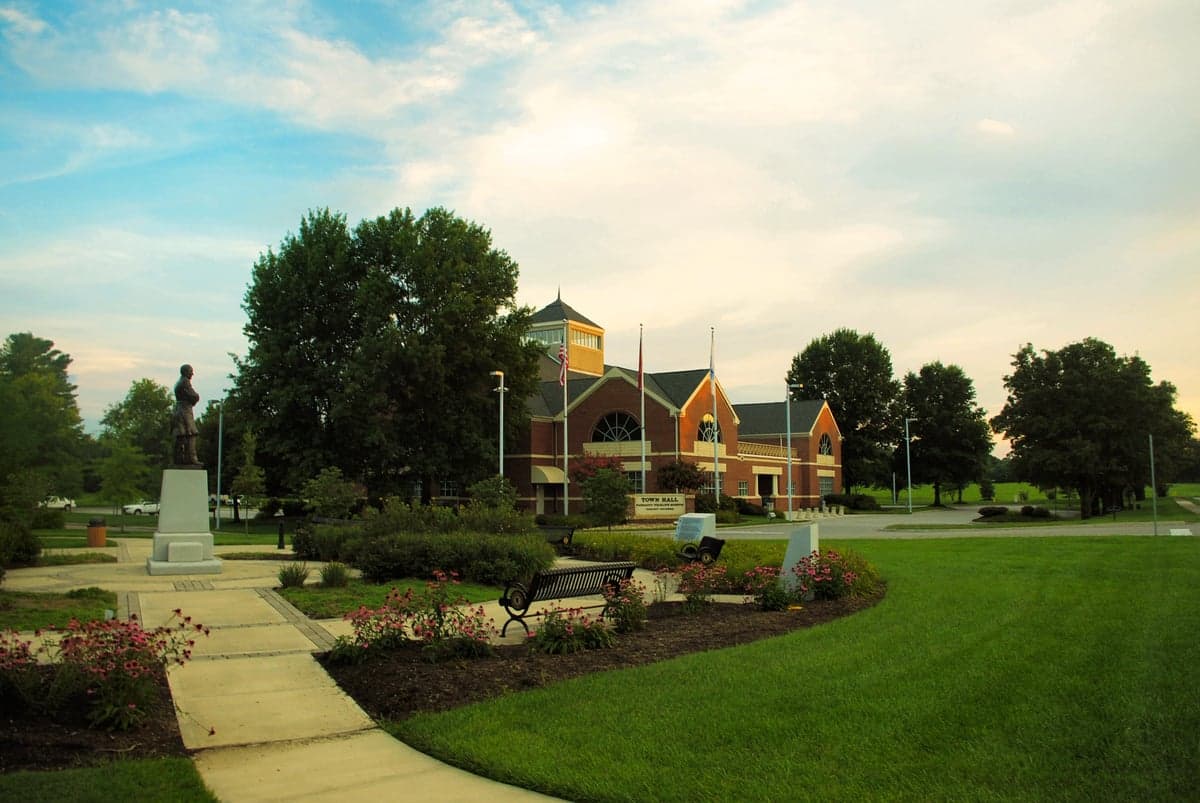
Photo: Wikipedia
Political ClimatePolitical Climate in Farragut, TN
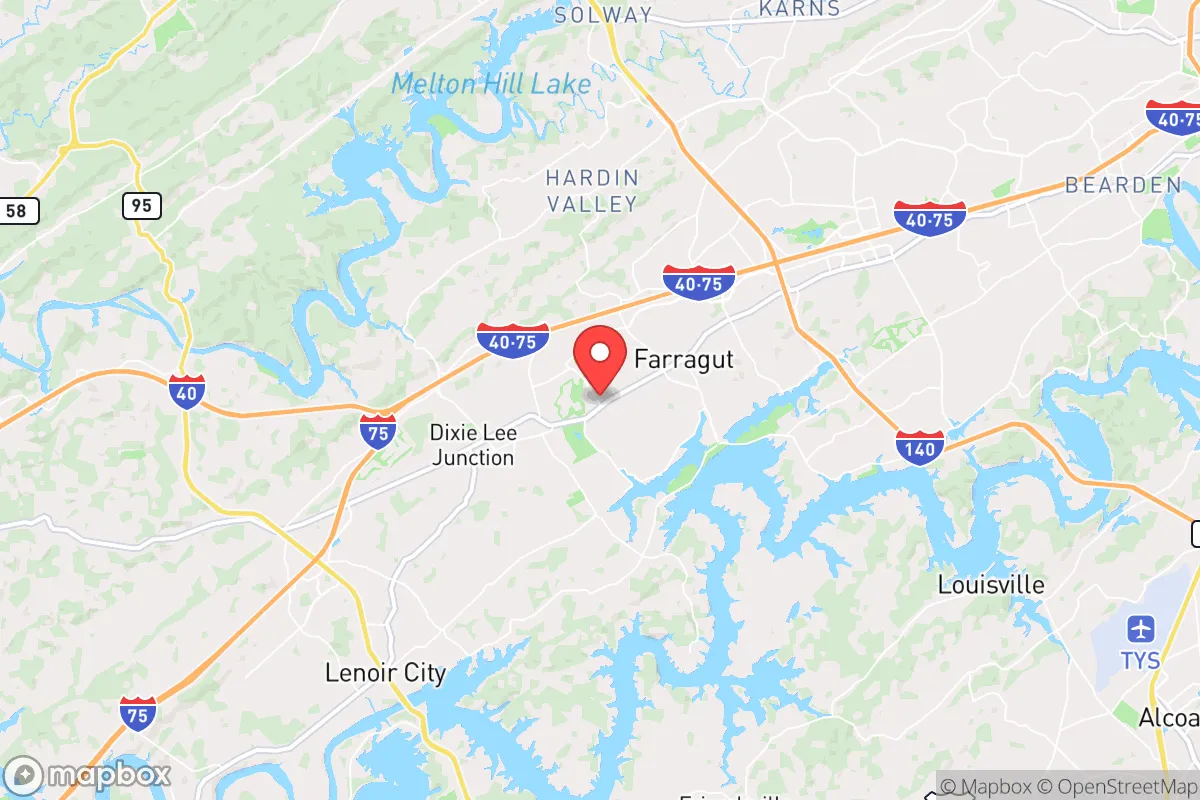
District shown is the primary district for this city’s centroid. Cities may span multiple districts.
Local Political AnalysisPolitical Analysis of Farragut, TN
Farragut, Tennessee, has long been a rock-solid conservative stronghold, and the numbers back that up with a Cook PVI of R+17. That means this town votes about 17 points more Republican than the national average, and honestly, it feels even redder than that on the ground. The political lean here isn't just a statistic; it's woven into the fabric of daily life, from the local school board decisions to the way folks talk about taxes and property rights. You don't see a lot of hand-wringing over progressive policies in Farragut, and that's exactly how most of us like it.
How it compares
If you drive just a few miles north into Knoxville proper, you'll hit a very different political atmosphere. Knoxville's urban core and the University of Tennessee campus have been trending bluer over the last decade, with city council races and local initiatives increasingly reflecting progressive priorities. Farragut, by contrast, feels like a deliberate counterweight to that. We're not a suburb that's slowly turning purple; we're holding the line. Compare us to places like Oak Ridge or Maryville, which are also conservative but have more of a blue-collar, manufacturing base. Farragut's conservatism is more rooted in professional-class values—low taxes, strong property rights, and a deep skepticism of government overreach into personal freedoms. You won't find many "defund the police" signs here, but you will find a lot of "Keep Farragut Farragut" bumper stickers.
What this means for residents
For the people who live here, the political climate translates into a pretty straightforward, low-friction lifestyle. The local government is generally hands-off when it comes to business and personal choices. Zoning is strict enough to keep the town looking clean and orderly, but you're not drowning in red tape if you want to start a small business or put up a fence. The school system, consistently ranked among the best in Tennessee, reflects the community's values—there's a strong emphasis on traditional academics and local control, not on pushing ideological agendas. The biggest concern I hear from neighbors is about the slow creep of state-level or federal mandates that try to override local decisions. Any shift towards progressive ideology, especially on things like land use or school curriculum, is met with immediate, organized pushback. People here moved to Farragut specifically to get away from that kind of overreach.
One cultural distinction that sets Farragut apart is the near-total absence of the kind of performative activism you see in bigger cities. There's no downtown protest scene, no city council meetings dominated by culture war debates. Instead, the political energy goes into practical stuff: keeping the roads paved, maintaining the parks, and making sure the tax rate stays low. The long-term trajectory, though, is something to watch. As Knoxville's urban sprawl pushes further west, we're seeing more families move in from out of state. Most of them are drawn here by the same conservative values, but a few bring different ideas. So far, the town's character has held strong, but it's something we keep an eye on. If you value personal freedom, low taxes, and a community that doesn't try to micromanage your life, Farragut is still one of the best bets in East Tennessee. Just don't expect it to stay that way if we get complacent.

State Political ClimatePolitical Climate in Tennessee
State Political AnalysisPolitical Environment in the State
Tennessee has been a reliably red state for decades, but the political climate has shifted significantly in the last 10-15 years, moving from a moderate conservative posture to a deeply red, culturally conservative stronghold. The state’s dominant coalition is a mix of rural and suburban voters, with a growing influence from the Nashville and Knoxville exurbs, while the major metros—Nashville, Memphis, and Chattanooga—have become increasingly blue. The 2020 and 2024 elections saw Trump win the state by roughly 30 points, but the real story is the hardening of the partisan divide: the state legislature has become more aggressively conservative, passing laws on abortion, guns, and education that would have been unthinkable even a decade ago.
Urban vs. rural divide
The political map of Tennessee is a textbook case of the urban-rural split. Nashville (Davidson County) and Memphis (Shelby County) are the two deep-blue anchors, with Nashville’s booming tech and healthcare economy attracting a younger, more liberal population, while Memphis remains a heavily Democratic, majority-Black city. Chattanooga (Hamilton County) has been trending blue in recent cycles, flipping to Biden in 2020 by a narrow margin, driven by its growing downtown and tech sector. Knoxville (Knox County) is more of a purple-to-light-red area, with the University of Tennessee providing a liberal counterweight to the surrounding rural counties. The real red power base is in the exurbs and rural areas: Williamson County (south of Nashville) is one of the wealthiest and most reliably Republican counties in the nation, while Rutherford County (Murfreesboro) and Wilson County (Lebanon) are fast-growing, deeply red suburbs. The rural counties in Middle and East Tennessee—like Lincoln, Marshall, and Hawkins—vote 70-80% Republican, while West Tennessee’s rural areas are more mixed but still lean red. The state’s 9 congressional districts reflect this: 5 are solidly red, 2 are solidly blue (Nashville and Memphis), and 2 are competitive but lean Republican.
Policy environment
Tennessee’s policy environment is one of the most conservative in the country, with a strong emphasis on low taxes, limited regulation, and cultural conservatism. The state has no income tax on wages, a 7% sales tax on most goods (with a lower rate on groceries), and a relatively low property tax burden. The regulatory posture is business-friendly, with right-to-work laws and a tort reform system that caps non-economic damages in lawsuits. On education, the state has a robust school choice program, including a new Education Savings Account (ESA) program passed in 2023 that allows families in certain counties to use public funds for private school tuition. The state also passed a law in 2021 banning the teaching of critical race theory in public schools, and in 2024 expanded parental rights with a law requiring schools to notify parents of any changes to a student’s health or emotional well-being. On healthcare, Tennessee did not expand Medicaid under the ACA, and the state has a strict abortion ban (triggered by Dobbs) that prohibits the procedure at conception with narrow exceptions. Election laws are restrictive: voter ID is required, early voting is limited to 14 days, and the state purged over 100,000 voters from the rolls in 2023 under a new law targeting inactive registrations. The state also passed a law in 2024 banning ranked-choice voting and limiting ballot drop boxes.
Trajectory & freedom
Tennessee is becoming more free in several key areas, particularly on gun rights, parental rights, and tax policy, but there are concerning trends on government overreach in other areas. In 2021, the state passed a constitutional carry law, allowing any adult 21 or older to carry a handgun without a permit, and in 2023 expanded that to allow permitless carry of long guns. The state also passed a law in 2024 prohibiting any local government from enforcing federal gun laws, a direct challenge to federal authority. On parental rights, the 2024 “Parental Bill of Rights” law gives parents the right to opt their children out of any curriculum they find objectionable, and requires schools to get parental consent before teaching about sexual orientation or gender identity. However, there are red flags on medical autonomy: the state passed a law in 2023 banning gender-affirming care for minors, which some conservatives see as a necessary protection, but others view as government overreach into private medical decisions. On property rights, the state has a strong eminent domain law that requires just compensation, but there have been controversies over pipeline projects in rural areas where landowners felt steamrolled. The state’s tax burden remains low, but the sales tax is regressive, and there is no homestead exemption for property taxes, which can hit retirees on fixed incomes hard.
Civil unrest & political movements
Tennessee has seen its share of political flashpoints, particularly around the 2023 Nashville Covenant School shooting, which sparked massive protests at the state capitol demanding gun control. The state legislature responded by passing a law in 2024 that made it a felony to protest within 50 feet of a legislator’s home, which critics called a suppression of free speech. The “Tennessee Three” incident in 2023—where two Democratic state representatives were expelled for leading a gun control protest on the House floor—became a national story and galvanized progressive activism in Nashville and Memphis. On the right, the state has a strong Second Amendment movement, with groups like the Tennessee Firearms Association pushing for even looser gun laws. Immigration politics are relatively quiet, as Tennessee is not a border state, but there have been local controversies over sanctuary city policies: in 2023, the state passed a law banning any city or county from adopting sanctuary policies, and in 2024, a bill was introduced to require local law enforcement to cooperate with ICE. Election integrity remains a hot topic: the 2023 voter purge law was defended as a way to clean up the rolls, but critics said it disproportionately affected minority and low-income voters. There has been no serious secession or nullification rhetoric in Tennessee, though the state did pass a resolution in 2024 affirming its sovereignty under the Tenth Amendment.
Projection
Over the next 5-10 years, Tennessee is likely to become more conservative, not less, driven by in-migration from blue states and the continued growth of its red exurbs. The Nashville metro area is growing fast, but the new arrivals are not all liberals: many are conservatives from California and Illinois moving for lower taxes and a more traditional culture. The state’s rural areas are losing population, but the exurbs are booming, and those voters are even more conservative than the rural base. The state legislature is likely to continue passing culturally conservative laws on education, guns, and abortion, and may push for a school voucher program that covers the entire state. The biggest wildcard is the growth of Nashville and Chattanooga: if those cities continue to attract young, liberal professionals, they could flip more state legislative seats blue, but the state’s gerrymandered districts make that unlikely. A new resident moving in now should expect a state that is deeply red, with a government that is actively hostile to progressive policies, but also one that offers low taxes, strong gun rights, and a high degree of personal freedom in most areas. The trade-off is that the state’s social safety net is thin, public schools are underfunded in rural areas, and the healthcare system is strained, especially in rural counties.
For a new resident, the bottom line is this: Tennessee is a great fit if you value low taxes, gun rights, and a traditional culture, and you’re willing to accept that the state government will be actively involved in shaping that culture through legislation. If you’re moving from a blue state, you’ll find a government that is much more hands-on in some areas (like education and healthcare) and much less hands-on in others (like taxes and regulation). The state is not a libertarian paradise—it has a strong regulatory bent on social issues—but for a conservative-leaning individual or family, it offers a level of cultural alignment and fiscal freedom that is increasingly rare in the United States. Just be aware that the political climate is not static: the urban areas are becoming more liberal, and the state government is responding by digging in its heels, which means the culture wars will likely intensify in the coming years.
* Values derived from national, state, county, city and local statistics and may differ in a specific area. Last updated: 2026-04-21T10:49:11.000Z
Narrative content on this page is AI-generated and may contain mistakes. Verify any details that matter before acting on them.
ReloMaps may earn a commission from affiliate links at no extra cost to you.

