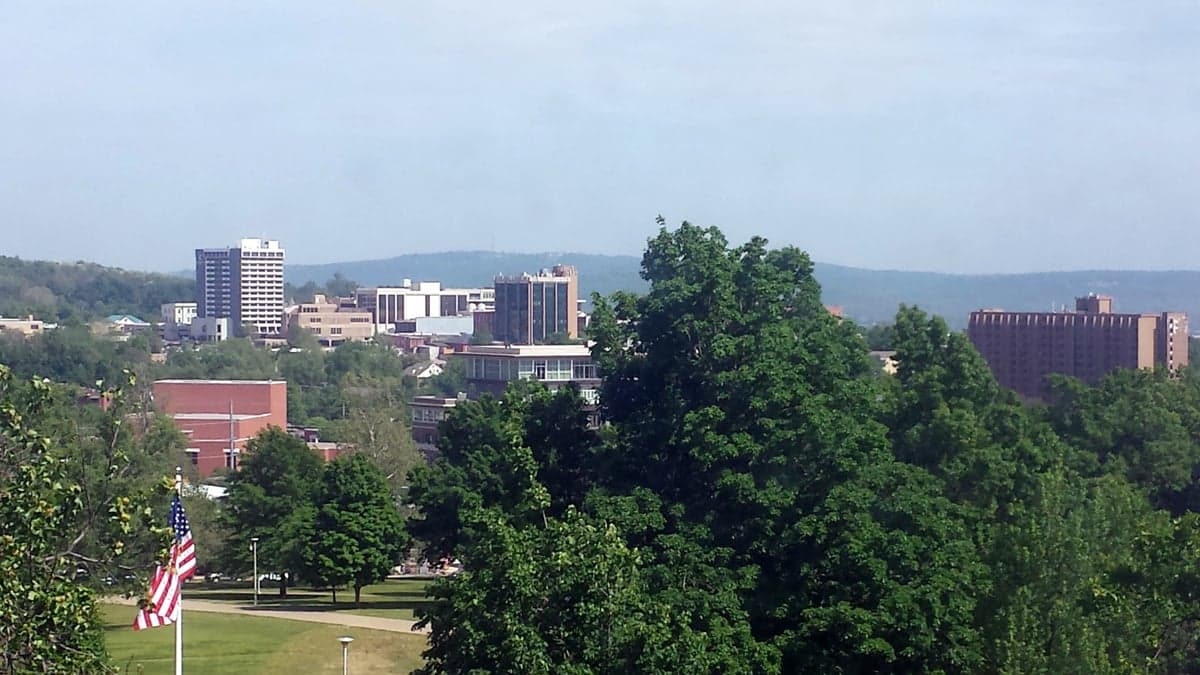
Photo: Wikipedia
Quality of Life in Fayetteville, AR
Above-average quality of iife. The area offers a reasonable cost of living, decent mobility, and a mix of neighborhood amenities.
What does Quality of Life tell us?
Quality of Life blends cost of living, nearby amenities, socioeconomic signals, and neighborhood character. City-level scores represent the whole municipality; individual neighborhoods can differ.
What does this tell us?
Quality of Life blends cost of living, nearby amenities, socioeconomic signals, and neighborhood character. City-level scores represent the whole municipality; individual neighborhoods can differ.
Cost of Living
2% below national average
The Real Cost of Living in Fayetteville, AR for 2026
| Tier | Individual | Family (4) |
|---|---|---|
| Survival | $16k | $30k |
| Comfortable | $63k | $92k |
| Luxury | $107k+ | $165k+ |
| Elite (Top 5%) | $157k+ | $243k+ |
64%
The Area Signal
A metric tracking the socioeconomic signals of the area.
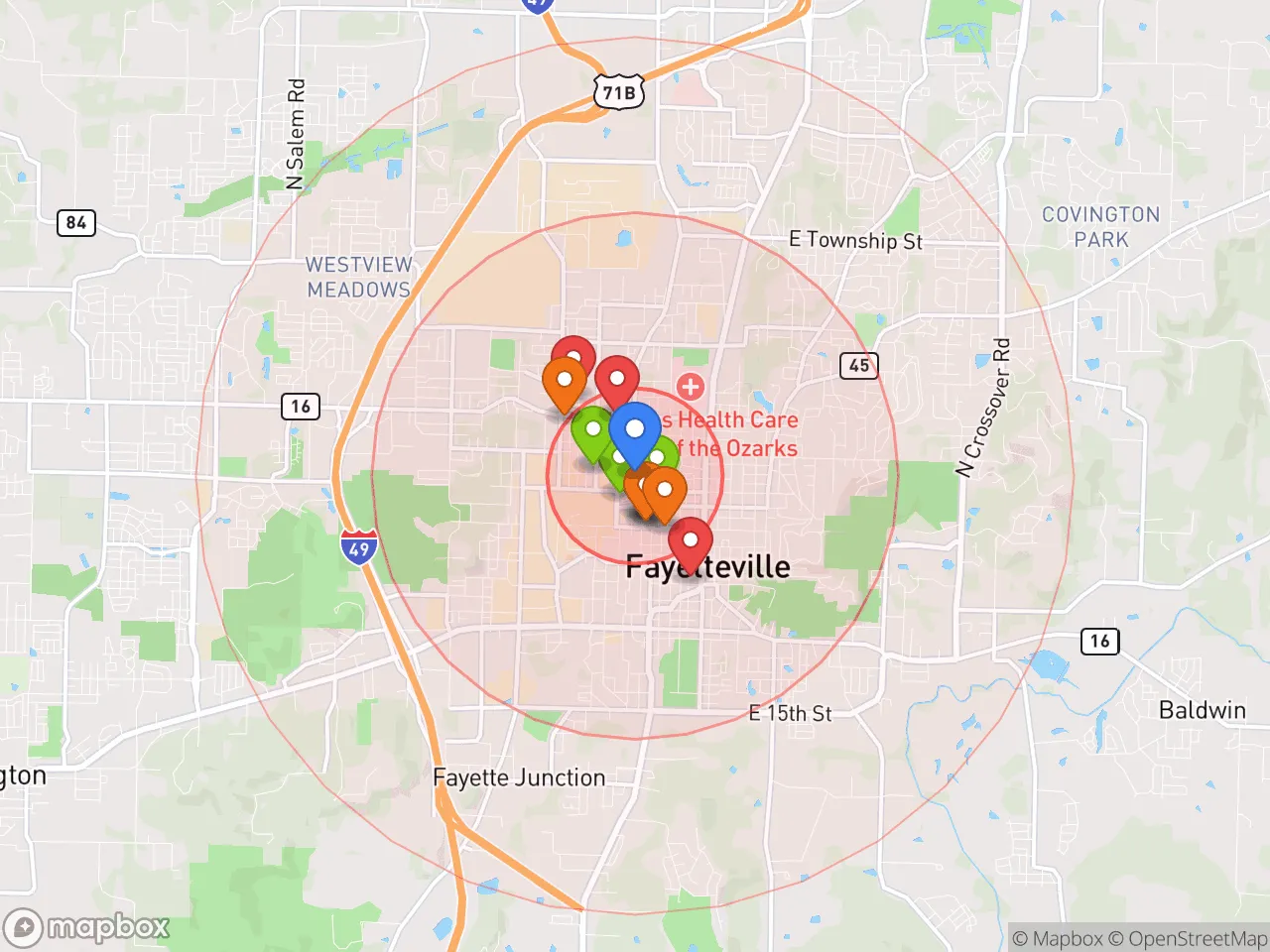
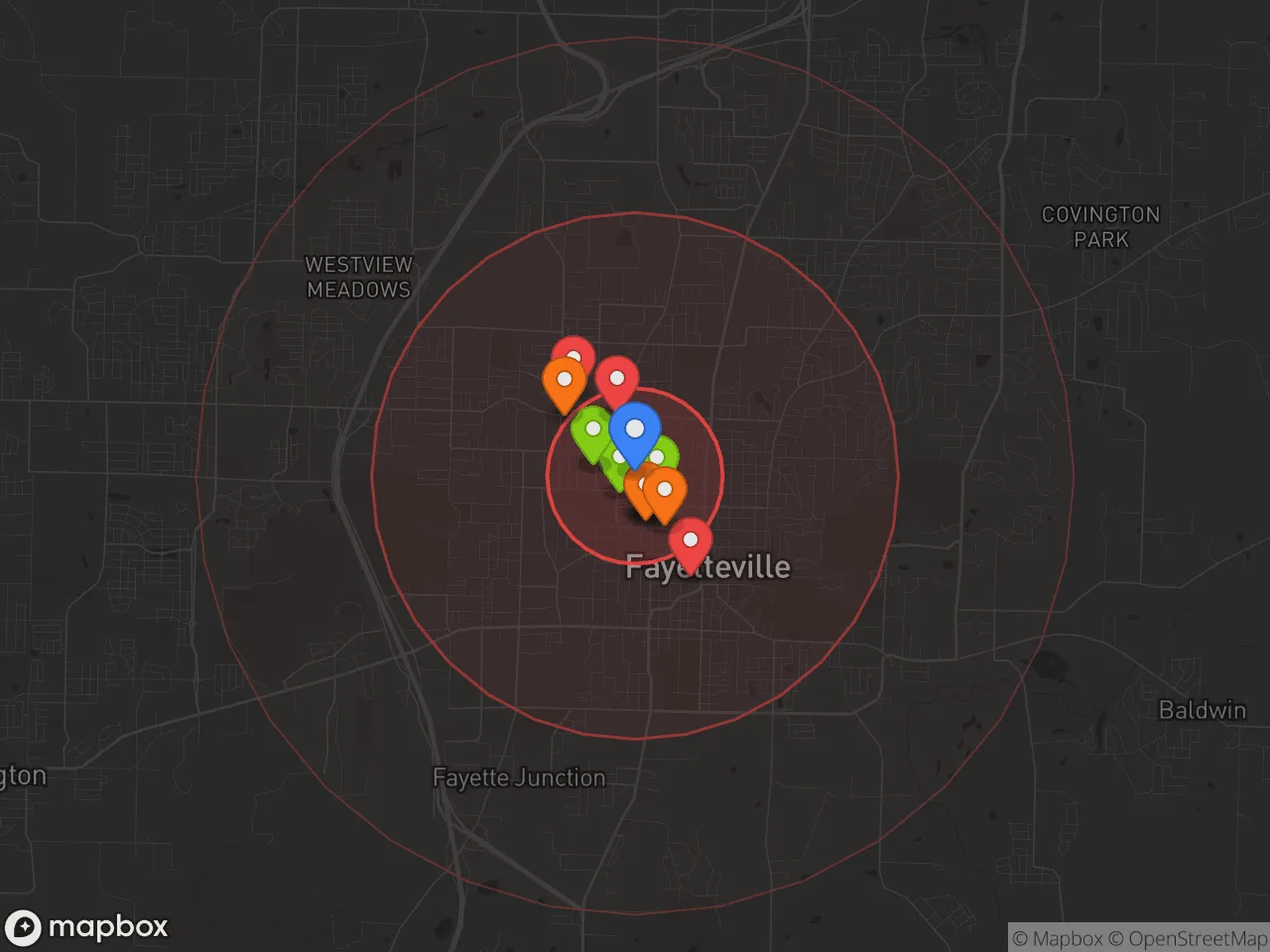
Hobbies
Explore the areaGroceries
6 within 10 miles
Gas
20 within 10 miles
Hospital
13 within 20 miles
Airport
MCI — Kansas City International
Post Office
USPS — Fayetteville, AR
Critical Amenities
Quality-of-Life Analysis
Fayetteville, Arkansas, presents a quality of life defined by a blend of college-town energy and Ozark Mountain affluence, attracting a population that skews younger, more educated, and more economically stable than the national average. The city's cost of living index of 98 (100 = US average) sits just below the national baseline, a notable advantage given the area's rapid growth and rising desirability. This combination of relative affordability and high local income levels—driven largely by the University of Arkansas and the corporate headquarters of Walmart, Tyson Foods, and J.B. Hunt—creates a demographic profile heavy with professionals, academics, and remote workers seeking a balance of opportunity and outdoor lifestyle.
Cost of living, housing affordability, and how Fayetteville compares to nearby cities
While Fayetteville's overall cost of living is slightly below the national average, the housing market tells a more nuanced story. The median home value of $322,500 is significantly higher than in neighboring Springdale ($275,000) or rural Washington County, reflecting Fayetteville's premium as the region's cultural and educational hub. However, this figure remains well below the national median of roughly $420,000, and the median rent of $1,003 is a clear bargain compared to the national average of $1,200. For context, a comparable rental in Bentonville, the region's most expensive market, often exceeds $1,300. The average commute of 18.2 minutes is notably short—far below the national average of 26 minutes—meaning residents can live in more affordable outlying areas like Farmington or Greenland and still reach downtown Fayetteville quickly. This commute advantage is a major quality-of-life factor, freeing up time for family, recreation, or work.
What daily life is like: amenities, schools, and the local rhythm
Daily life in Fayetteville revolves around a compact, walkable downtown core anchored by the Fayetteville Square, the Razorback Greenway trail system, and the University of Arkansas campus. The Fayetteville Public Library, a state-of-the-art facility that won a 2022 IMLS National Medal, serves as a community hub. The Fayetteville School District consistently ranks among the top in Arkansas, with an overall Niche grade of A+, and its high school offers the International Baccalaureate program. The local rhythm is defined by a strong outdoor culture—hiking Mount Kessler, biking the 36-mile Razorback Regional Greenway, and floating the Buffalo National River are weekend staples. The city's entertainment scene is anchored by the Walton Arts Center and George's Majestic Lounge, which draw national touring acts. The presence of the university means a steady calendar of Division I sports, lectures, and cultural events, giving the city a vibrancy rare for a metro area of its size (roughly 100,000 residents).
Fayetteville is best suited for professionals and families who value a high-amenity, medium-cost lifestyle with immediate access to nature. The city's strong public schools, short commute, and relatively affordable rent make it a strong fit for young families and early-career professionals, particularly those in tech, supply chain, or academia. Retirees and remote workers are also drawn here for the mild four-season climate and low crime rates relative to similarly sized Southern cities. Those seeking a dense, walkable urban environment or a very low cost of living may find Fayetteville's housing prices and car-dependent suburbs a drawback, but for the majority of newcomers, the trade-off between cost, culture, and commute is a winning one.

Crime in Fayetteville, AR
Crime rates similar to the national median for U.S. locations.
Violent CrimeViolent Crime Analysis
Property CrimeProperty Crime Analysis
Crime Analysis
Fayetteville, Arkansas, presents a mixed safety profile for prospective residents. The city's violent crime rate of 444.3 incidents per 100,000 residents is notably higher than both the national average and the Arkansas state average, signaling a significant concern for those considering a move. Property crime, at 1,884.5 per 100,000, also exceeds national benchmarks, making it a key factor in neighborhood and daily life decisions.
Crime in context
To understand Fayetteville's safety landscape, it's essential to compare its rates to broader averages. The city's violent crime rate is roughly 20% higher than the national average and significantly above the Arkansas state average. Property crime in Fayetteville, while lower than in some larger Arkansas cities like Little Rock, still outpaces the national property crime rate by a considerable margin. These figures place Fayetteville in a higher-risk category than many similarly sized college towns in the region, such as Columbia, Missouri, or Lawrence, Kansas. The elevated rates are partly attributable to the city's status as a regional hub for commerce, entertainment, and the University of Arkansas, which draws a large transient population and creates more opportunities for crime.
What residents experience
Residents report that crime is not evenly distributed, with property crimes like vehicle break-ins and package theft being the most common daily nuisances. The downtown entertainment district and areas near the university campus see higher concentrations of theft and vandalism. Violent crime, while less frequent, is a serious concern, with aggravated assault being the most reported category. Fayetteville is located in Washington County, which has a progressive-leaning judicial system and a district attorney's office that has emphasized diversion programs and alternative sentencing for non-violent offenders. While these policies aim to reduce recidivism, critics argue they contribute to a revolving-door effect for property crimes and some violent offenses, potentially emboldening repeat offenders and undermining public confidence in the justice system. This ideological approach, sympathetic to offenders, can lead to more criminals on the street and negatively impact justice for victims and the public.
Neighborhood-level variation
Safety in Fayetteville varies dramatically by neighborhood. Areas like the historic Wilson Park district and the more affluent Mount Sequoyah neighborhood generally report lower crime rates, benefiting from strong community watch programs and higher property values. In contrast, the southwest corridor along Highway 71 and the areas immediately surrounding the University of Arkansas campus experience higher rates of both property and violent crime. Apartments near the college and commercial strips are frequent targets for theft and vehicle break-ins. Prospective renters and buyers should research specific block-level crime maps and consider visiting neighborhoods at different times of day to gauge safety. The city's police department provides an online crime mapping tool that is a valuable resource for identifying safer pockets within the city limits.
* Values derived from national, state, county, city and local statistics and may differ in a specific area. Last updated: 2026-04-29T02:32:23.000Z
Narrative content on this page is AI-generated and may contain mistakes. Verify any details that matter before acting on them.
ReloMaps may earn a commission from affiliate links at no extra cost to you.

