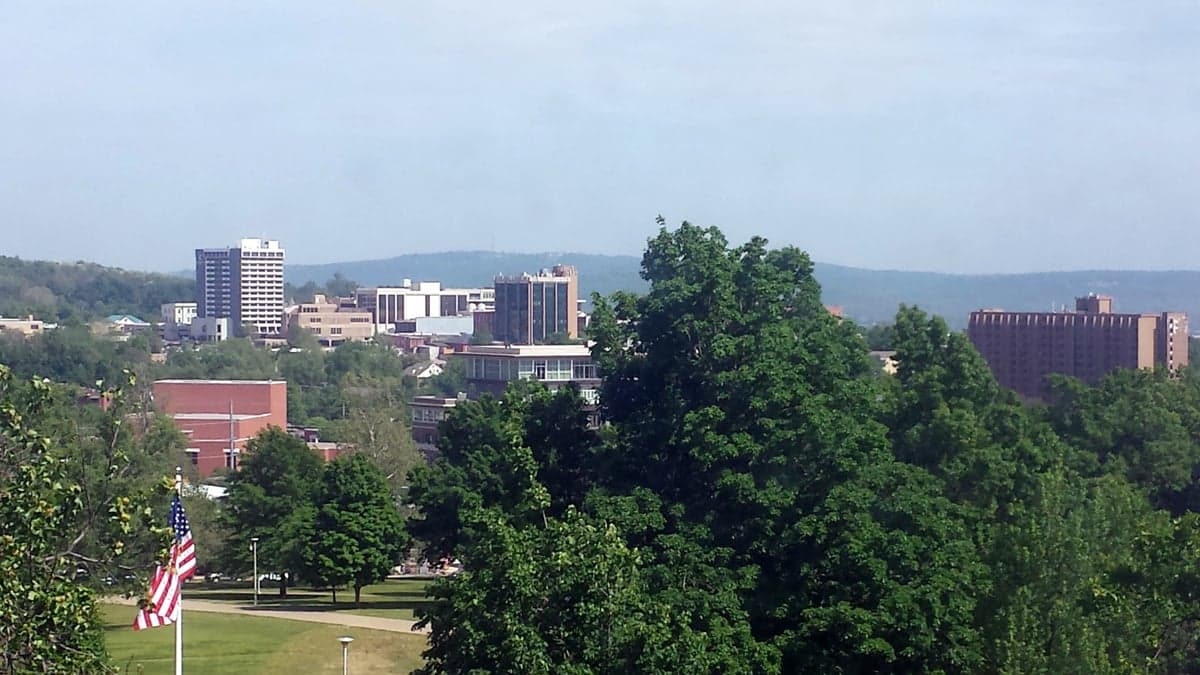
Photo: Wikipedia
Strategic Assessment of Fayetteville, AR
Workable tactical position. Some exposure to population density or targets, but generally defensible in a crisis.
What does the Strategic Assessment tell us?
Our Strategic Assessment grades tactical survivability of an area. Major population centers, military targets, fallout zones, natural disasters, and border exposure all drive risk — lower exposure means a more defensible position in a crisis.
This is heavily inspired by Joel Skousen's Strategic Relocation book. Highly recommended you checkout the book ($)What does this tell us?
Our Strategic Assessment grades tactical survivability of an area. Major population centers, military targets, fallout zones, natural disasters, and border exposure all drive risk — lower exposure means a more defensible position in a crisis.
This is heavily inspired by Joel Skousen's Strategic Relocation book. Highly recommended you checkout the book ($)Strategic Pillars

Key Distances
Regional Safe Places
Below is our recommended "safe zones" in Arkansas and the surrounding area based on our strategic heuristics. For most people, it's unrealistic to live in a “safe zone” full-time due to work, family or other personal reasons. They tend to be more rural. However, many of these areas are perfect for second homes and retreat properties that double as a vacation home or even a short-term rental.
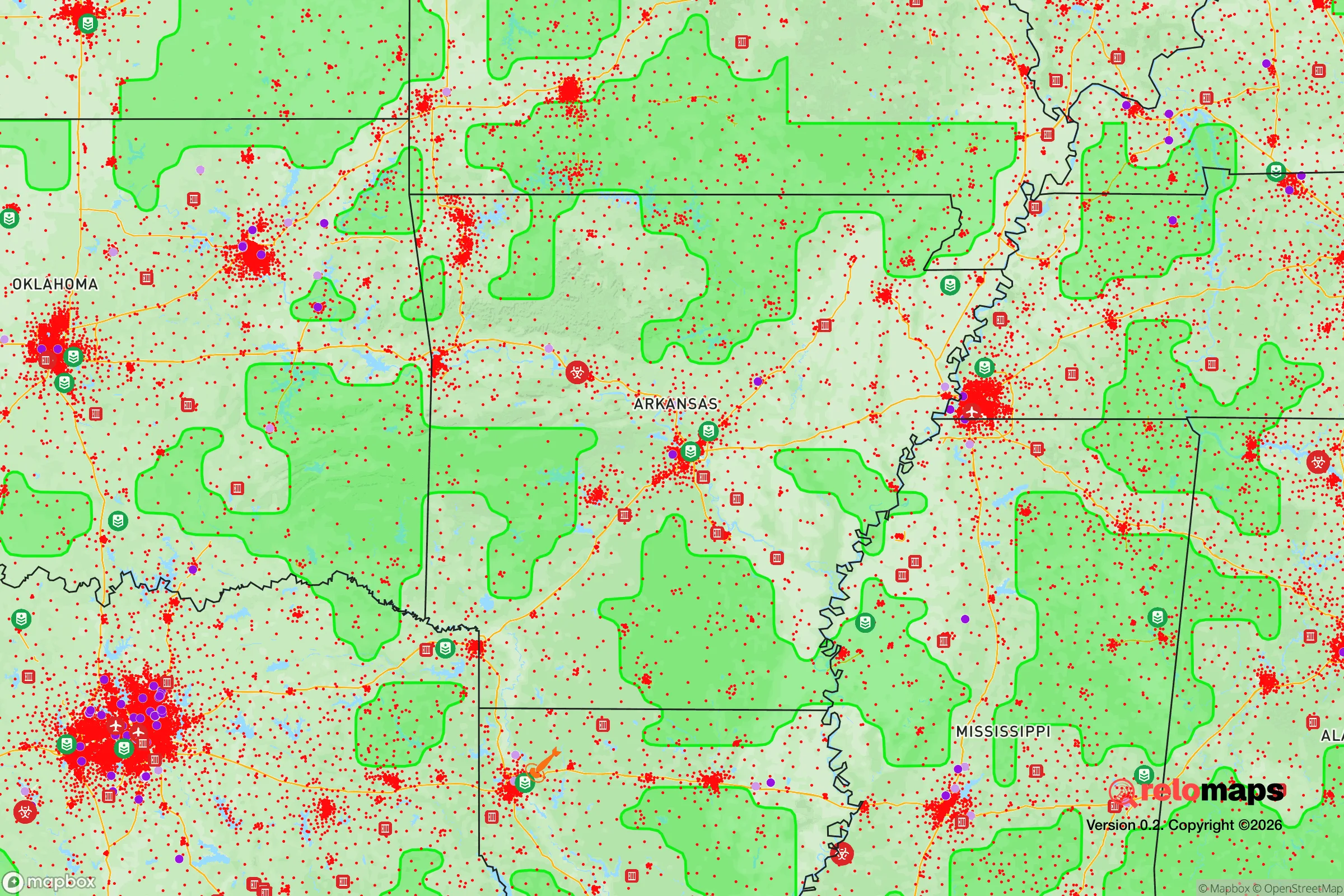
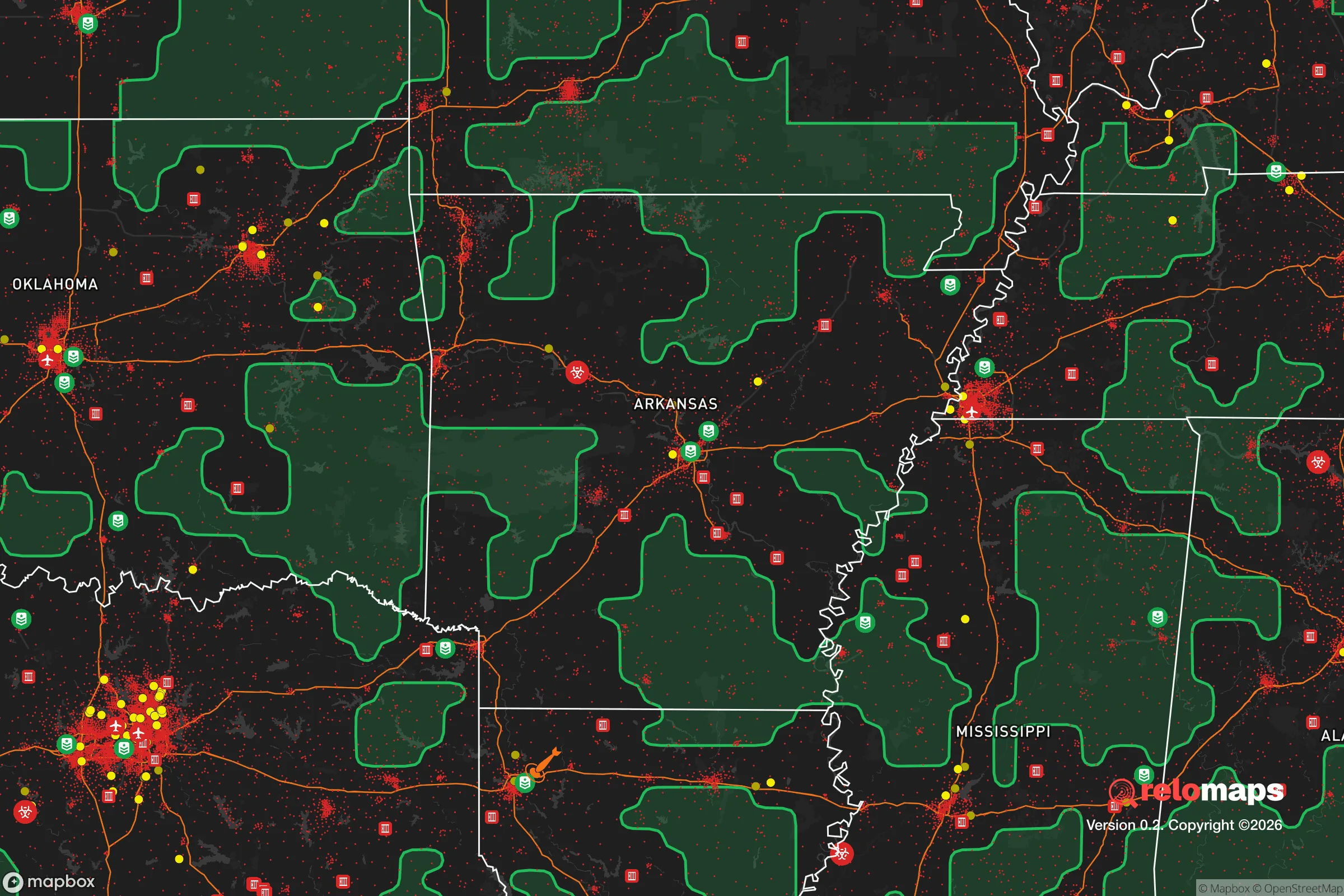


Important Note: For informational purposes only. This does not mean nothing bad ever happens in the green zones. Please use common sense. This is based on public data and modeled with AI. We tried to take a conservative approach but mistakes happen. We update this regularly as new information becomes available.
Solar Generator Recommendations
Backup power matters more here than in safer locations. We've picked three solar generators across budgets and capacity tiers — start with the budget unit if you only need a few essentials, or step up if you want to run a fridge and HVAC for days at a time.

Jackery Portable Power Station Explorer 300
Budget OptionPower on the Go: Weighing only 11 lbs, it's convenient to set up and store with book-sized foldable solar panels

BLUETTI Portable Power Station AC180
Designed for both indoor and outdoor scenarios, AC180 is highly capable as it has a robost capacity and continuous output power.

EF ECOFLOW DELTA Pro Ultra Power Station
Upgraded PickEcoFlow DELTA Pro Ultra is a whole-home energy system designed to grow with your family. Integrated with the Smart Home Panel 2, it scales to meet your evolving energy needs — keeping your home powered, intelligent, and secure through every stage of life.
We earn a commission, at no additional cost to you.
Strategic Assessment Analysis
Fayetteville, Arkansas, sits in a sweet spot that few relocation analysts can point to with a straight face: it’s far enough from the coastal chaos and major population centers to offer genuine buffer, yet close enough to real infrastructure to avoid being a logistical dead end. The city anchors the northwest corner of the state, tucked into the Boston Mountains of the Ozarks, and its growth over the past decade has been driven less by hype and more by a steady migration of people looking for lower crime, cheaper land, and a community that still remembers what self-reliance looks like. For a conservative-leaning relocator—whether single or raising a family—the strategic question isn’t whether Fayetteville is “safe” in the abstract, but whether it can sustain you when the systems that prop up the coasts start to wobble. The short answer: it can, but only if you understand its limits and plan accordingly.
Geographic position and natural advantages for long-term security
Fayetteville’s geography is its strongest card. The city sits at roughly 1,400 feet elevation in the Ozark Plateau, which means it’s not in a floodplain, not on a fault line, and not downwind of any major nuclear or chemical facilities. The surrounding terrain is a mix of forested hills, limestone bluffs, and spring-fed creeks—ground that’s defensible by nature, not by design. The Buffalo National River and the Ozark National Forest lie within an hour’s drive, offering both raw resources and escape routes if things go sideways. Unlike flat, open country where you’re visible for miles, the Ozarks provide cover, water, and game. The region’s karst topography means groundwater is plentiful if you know where to dig or find a spring, and the growing season runs about 200 days—long enough to put in a serious garden. For a prepper mindset, this is the kind of terrain that rewards boots-on-the-ground knowledge, not just a stockpile in the garage.
Risks, exposures, and proximity to fallout-relevant landmarks
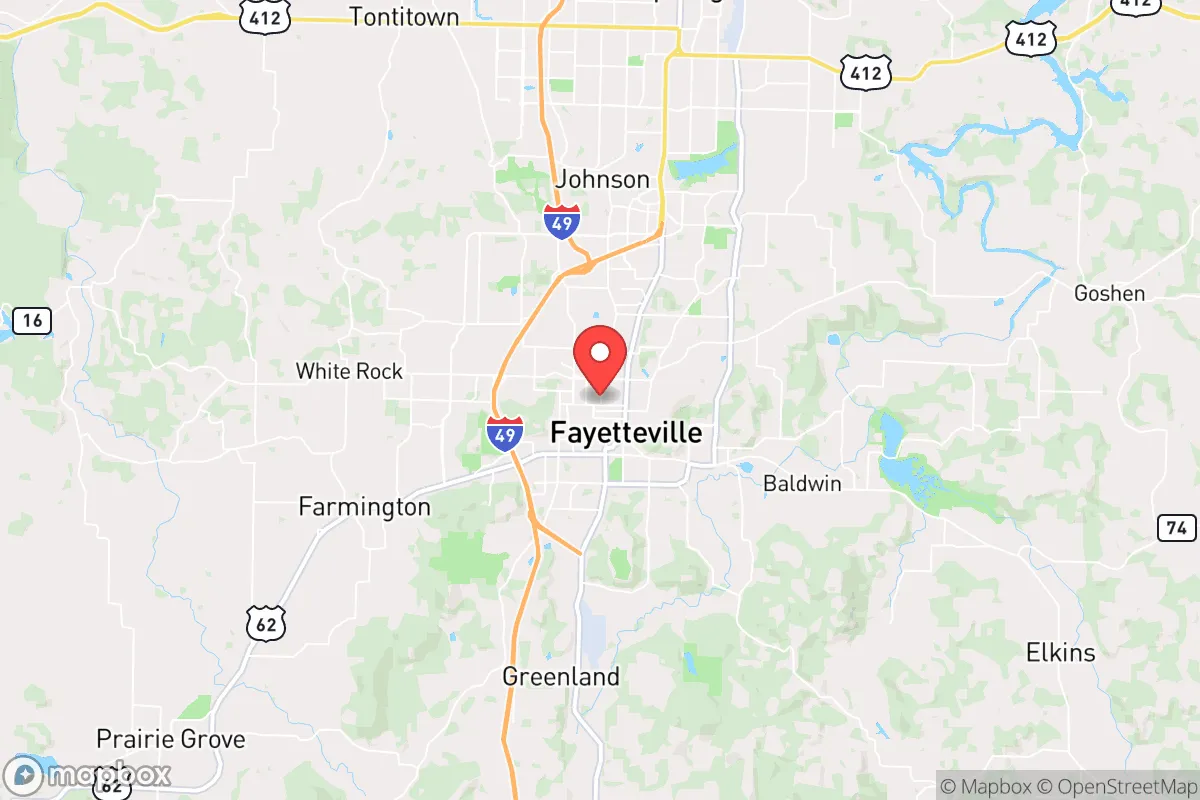
No place is a fortress, and Fayetteville has its share of vulnerabilities. The biggest strategic concern is its proximity to the I-49 corridor, which runs straight through town and connects to the Dallas-Fort Worth metroplex (about 300 miles south) and Kansas City (about 250 miles north). In a mass evacuation event—think a major earthquake on the New Madrid fault or a coordinated attack on a major city—that highway becomes a funnel for desperate people. Fayetteville itself isn’t a primary target for a nuclear strike; there’s no major military base, no strategic command center, and no critical infrastructure that would put it on a first-wave list. But the nearby Tyson Foods headquarters in Springdale and the Walmart home office in Bentonville (both about 20 minutes away) are high-profile corporate targets that could draw secondary chaos—riots, supply chain disruptions, or even targeted attacks during civil unrest. The region also sits within 200 miles of the Arkansas Nuclear One plant in Russellville, which, while not an immediate fallout zone, is close enough that a worst-case release would require careful wind monitoring and a pre-planned evacuation route north or west.
Practical resilience for a relocator: food, water, energy, and defensibility
For a single person or a family looking to harden their position, Fayetteville offers a mix of advantages and gaps that need to be filled before a crisis hits. Water is the first win: the city draws from Beaver Lake, a 28,000-acre reservoir that’s fed by the White River and has enough capacity to supply the region for months even in drought. But municipal water is only as reliable as the grid that pumps it, so a well on your own property—or at least a rainwater catchment system—is non-negotiable for serious preparedness. The Ozarks have decent groundwater, but drilling depths vary wildly; budget $5,000–$15,000 for a well depending on location. Food resilience is solid if you’re willing to work for it. The growing season is long enough for tomatoes, squash, beans, and root vegetables, and the local farmers’ markets (the Fayetteville Farmers’ Market is one of the oldest in the state) are a good source for seed stock and heirloom varieties. Deer and turkey are abundant in the national forest, and fishing in the White River is reliable year-round. Energy is the weak link. The local grid is served by Southwestern Electric Power Company (SWEPCO), which has a mixed record on outage recovery—ice storms in 2020 and 2021 left parts of the city without power for over a week. Solar is viable here (about 200 sunny days per year), but battery storage is a must if you want to keep a fridge running through a winter storm. Defensibility is decent for a town of 95,000. The city is laid out in a bowl surrounded by ridges, which means you can control access points if you’re in a rural pocket outside the core. The University of Arkansas campus is a potential liability during civil unrest—large crowds, young demographics, and a history of protests—but if you live in the outlying areas like West Fork, Elkins, or south of town near the Arkansas Wildlife Management Area, you’re far enough from the noise to have time to react.
The overall strategic picture for Fayetteville is cautiously optimistic, but only for the relocator who treats it as a base camp rather than a bunker. It’s not a place where you can sit back and assume the government will handle things—the local emergency management is competent but underfunded, and the county sheriff’s office (Washington County) is stretched thin across a growing population. What Fayetteville offers is a realistic starting point: good water, defensible terrain, low risk of direct attack, and a community that still values neighborly reciprocity over bureaucratic dependency. The downsides—proximity to a major evacuation corridor, corporate targets nearby, and a grid that can’t handle ice—are manageable if you plan ahead. For a conservative-leaning individual or family who wants to be prepared for the next decade’s shocks without moving to a remote compound in Montana, Fayetteville is one of the better bets in the lower 48. Just don’t expect it to save you from yourself. The work is still yours to do.

* Values derived from national, state, county, city and local statistics and may differ in a specific area. Last updated: 2026-04-29T02:32:23.000Z
Narrative content on this page is AI-generated and may contain mistakes. Verify any details that matter before acting on them.
ReloMaps may earn a commission from affiliate links at no extra cost to you.

