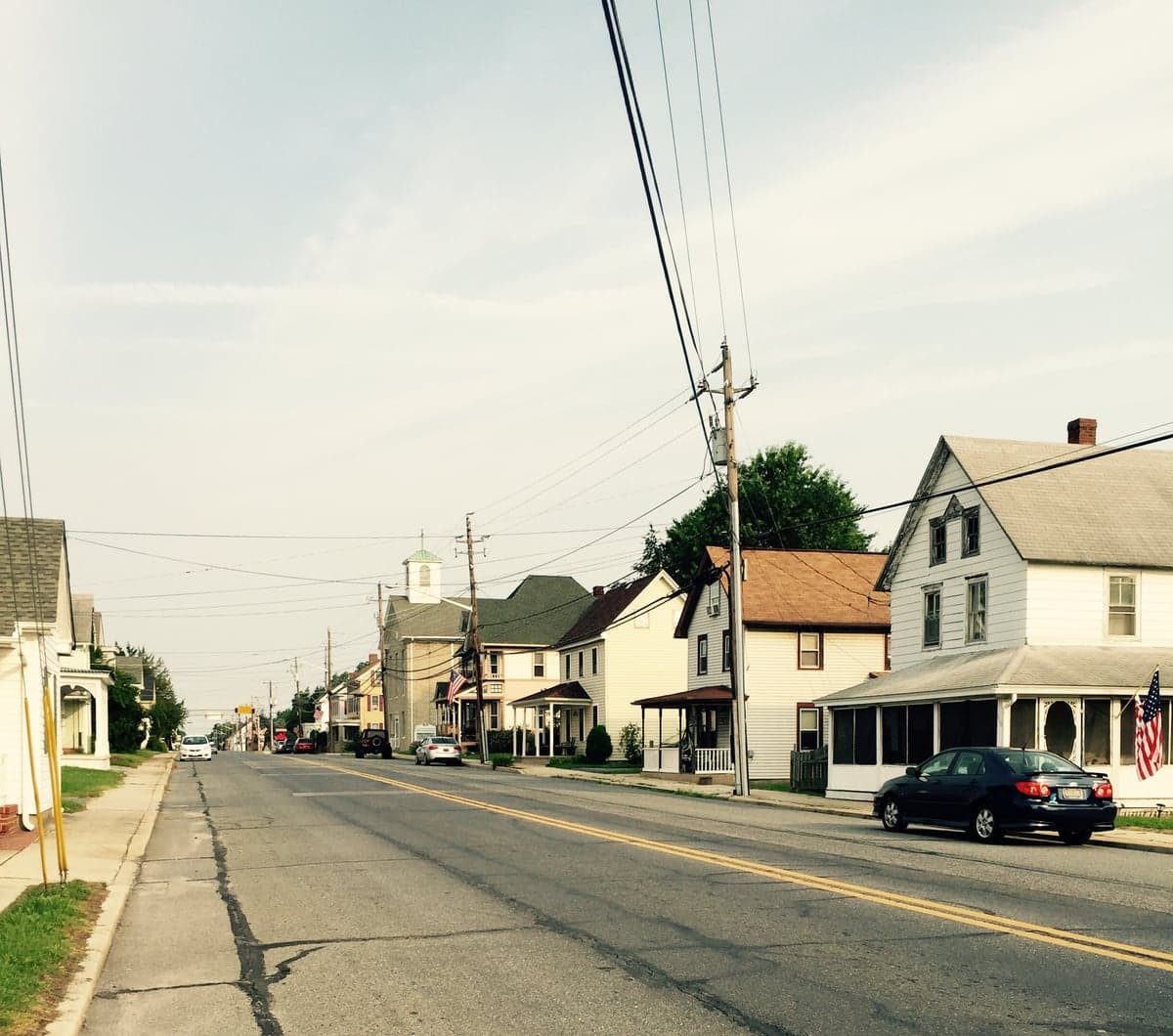
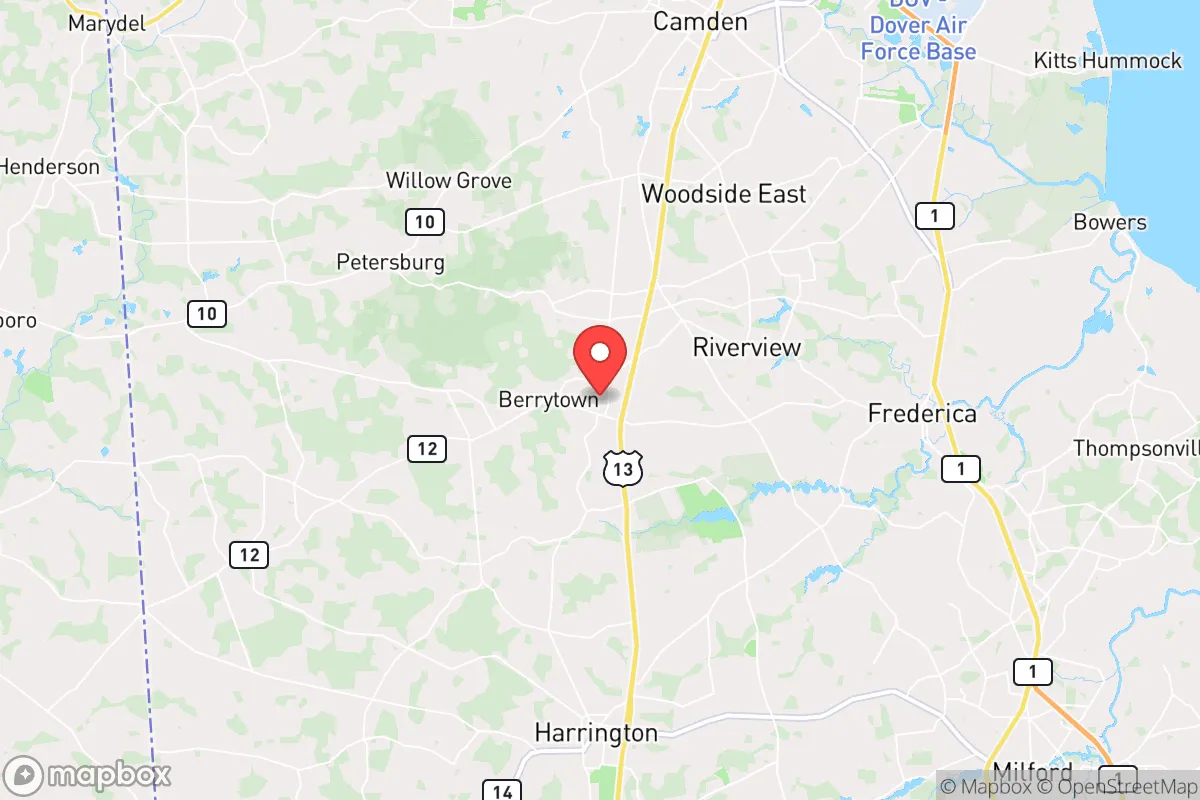
Photo: Wikipedia
Demographics of Felton, DE
Affluence Level in Felton, DE
A middle-class area roughly in line with national averages across income, home values, education, and employment.
People of Felton, DE
Felton, Delaware, is a small, tight-knit town of 1,129 residents where a predominantly white population (74.0%) coexists with a significant Black minority (15.6%) and a small Hispanic community (3.1%). With a foreign-born rate of just 0.8% and a college attainment level of 27.5%, the town retains a working-to-middle-class character rooted in its agricultural and railroad past. Residents often describe Felton as a place where families have known each other for generations, and where newcomers are expected to integrate into established local networks rather than form separate enclaves.
How the city was settled and grew
Felton’s human history begins with the Lenape people, who inhabited the region along the Murderkill River before European contact. The town itself was formally laid out in 1856, following the arrival of the Delaware Railroad, which connected the area to larger markets. The original white settlers were primarily of English and Scots-Irish descent, drawn by land grants from the Penn family and later by the promise of fertile soil for grain and fruit farming. These founding families built their homes along what is now Main Street and the surrounding blocks of East and West Felton, a historic core that still contains many 19th-century houses. A small number of free Black families also settled in the area before the Civil War, establishing a community in the South Felton district near the railroad tracks, where they worked as laborers and domestic servants. The town’s growth remained slow through the early 1900s, with the population hovering around 500 until the post-World War II era.
Modern era (post-1965)
The 1965 Hart-Cellar Act had minimal direct impact on Felton, as the town’s foreign-born population remains negligible at 0.8%. Instead, the major demographic shift came from domestic in-migration during the 1970s and 1980s, as families from the Philadelphia and Baltimore metropolitan areas sought affordable housing in Kent County. This wave settled primarily in the Pleasant Hill neighborhood, a subdivision of ranch-style homes built on former farmland east of the historic core. The Black population, which had been a small but steady presence since the 19th century, grew modestly during this period, with many families moving into the Lake View area, a cluster of mid-century homes near the town’s eastern boundary. The Hispanic share (3.1%) is a recent development, driven by a small number of migrant workers employed in the region’s poultry processing plants, who have settled in scattered rental properties along Route 12 rather than forming a distinct ethnic neighborhood. The Asian population remains at 0.0%, and the Indian subcontinent population is also 0.0%, reflecting Felton’s lack of the professional job base that attracts those groups to larger Delaware cities like Newark or Wilmington.
The future
Felton’s population is projected to remain stable or grow slowly, as the town lacks the land and infrastructure for large-scale development. The white majority is aging, with many younger adults leaving for college or jobs in Dover (10 miles north) or the Wilmington metro area. The Black community, concentrated in South Felton and Lake View, is likely to maintain its share as families remain rooted in the area. The Hispanic population, while small, may grow incrementally if the poultry industry continues to recruit labor, but it is unlikely to reach a critical mass that would create a distinct ethnic enclave. The town is not homogenizing into a single identity, but rather tribalizing along the existing racial lines of white and Black, with little intermixing between the two groups in social or civic life. New housing developments, such as the proposed Felton Meadows subdivision on the western edge, could attract a modest influx of white families from the Dover area, but the overall demographic profile will remain largely unchanged for the next decade.
For a conservative-leaning individual or family considering a move to Felton, the town offers a stable, low-crime environment where community ties are strong and change comes slowly. The population is unlikely to diversify significantly, and newcomers—especially those who are not white—should expect to navigate a social landscape where racial lines are quietly but firmly drawn. The bottom line: Felton is a place where tradition and continuity matter more than growth or transformation, making it best suited for those who value predictability and a small-town pace over demographic dynamism.

* Values derived from national, state, county, city and local statistics and may differ in a specific area. Last updated: 2026-04-29T19:11:56.000Z
Narrative content on this page is AI-generated and may contain mistakes. Verify any details that matter before acting on them.
ReloMaps may earn a commission from affiliate links at no extra cost to you.

