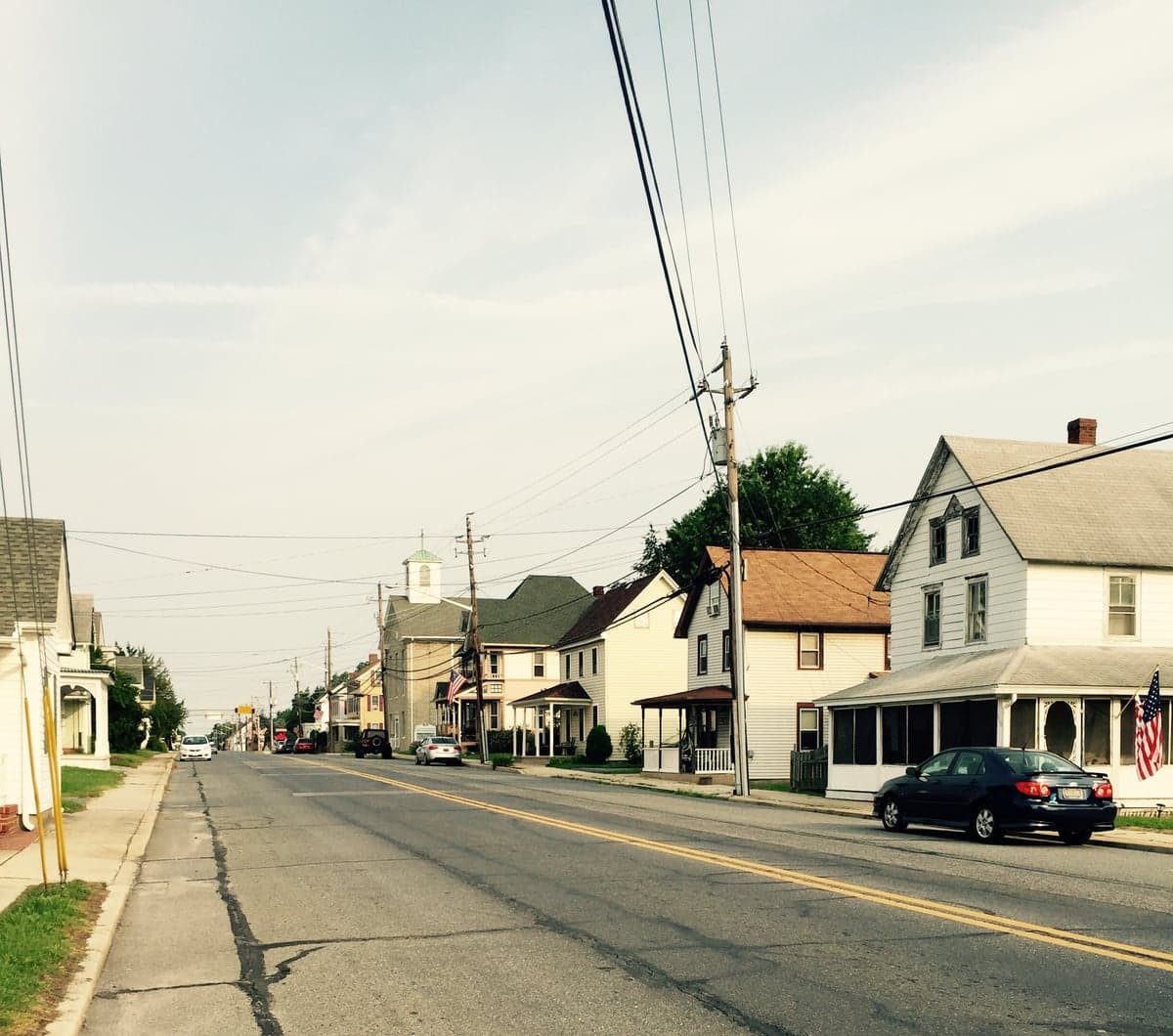
Photo: Wikipedia
Political ClimatePolitical Climate in Felton, DE
District shown is the primary district for this city’s centroid. Cities may span multiple districts.
Inherited from parent state — no local data available.
Local Political AnalysisPolitical Analysis of Felton, DE
Felton, Delaware, sits in a political climate that has shifted noticeably leftward in recent years, with a Cook PVI of D+8 that places it firmly in Democratic territory. This wasn't always the case—just a couple of decades ago, this area was a lot more balanced, with conservative values holding their own in local elections and community life. Today, the trend is clear: progressive policies are gaining ground, and that's something a lot of us longtime residents watch with a wary eye, especially when it comes to government overreach into personal freedoms and local decision-making.
How it compares
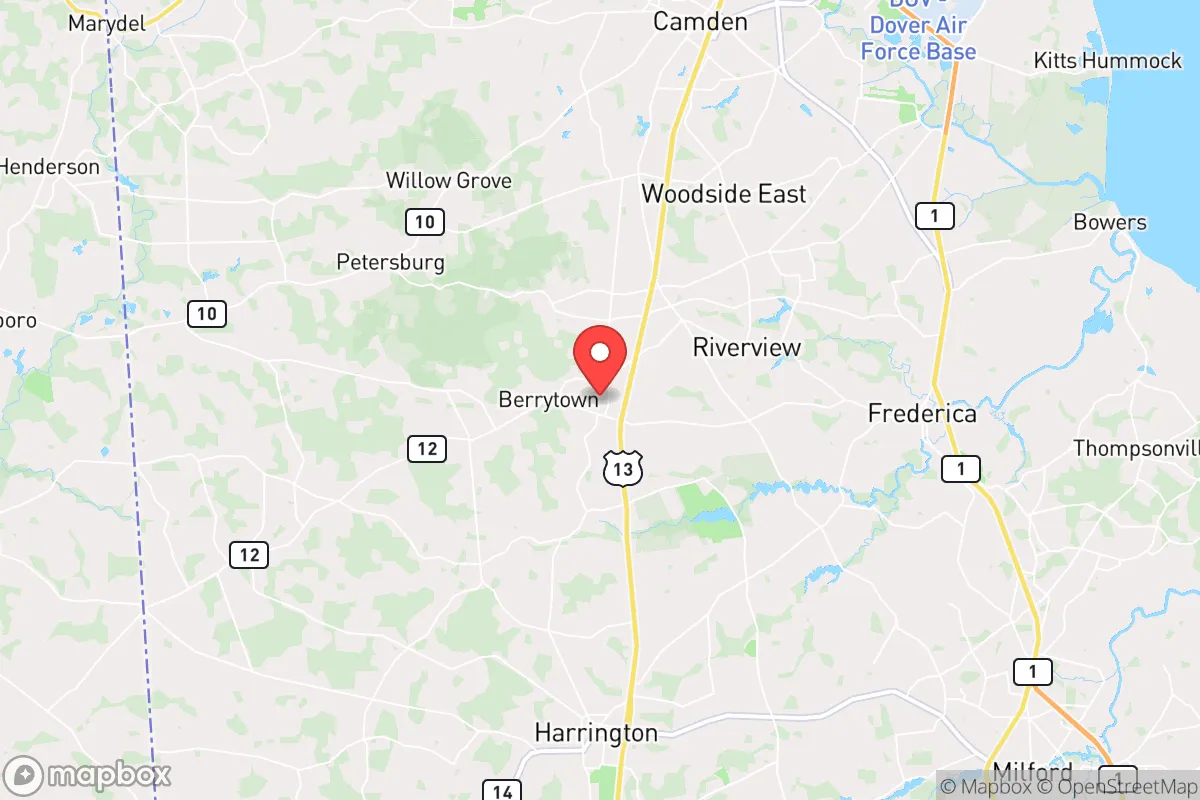
To understand Felton's politics, you have to look at the surrounding towns. Head north to Dover, the state capital, and you'll find a much more liberal environment, driven by state government workers and a younger, more transient population. That D+8 rating for Felton is actually a bit of a surprise to some of us who remember when the town itself leaned more purple. Compare that to Harrington, just a few miles south, which still feels more conservative in its local culture, or Milford to the east, which has seen its own progressive shifts but retains a stronger independent streak. The real contrast is with rural Kent County outside the town limits, where you'll find precincts that vote reliably Republican. Felton is essentially a blue island in a redder rural sea, and the pressure from Dover's politics is constant.
What this means for residents
For those of us who value limited government and personal responsibility, the D+8 lean translates into real concerns. You see it in local zoning debates, where state-level mandates sometimes override what the community wants. There's a growing push for policies that feel like they're coming from Dover rather than from Felton's own residents—things like stricter land-use regulations and school curriculum changes that don't always align with traditional values. The tax burden has crept up as state spending increases, and there's a sense that our voices in local government are being drowned out by party-line voting. If you're someone who believes in keeping government out of your business, you'll want to pay close attention to town council meetings and school board elections, because that's where the rubber meets the road.
Cultural and policy distinctions
Despite the political shift, Felton still holds onto some of its small-town character. You won't find the same level of progressive activism here as in Newark or Wilmington. The local economy is still rooted in agriculture and small businesses, and many residents are skeptical of rapid change. However, there are warning signs: the push for more affordable housing mandates and environmental regulations that can burden property owners is real. The long-term trajectory, if current trends hold, points toward more state control and less local autonomy. For a conservative-minded person, Felton is still livable, but it's a place where you need to stay engaged and vote in every local election to keep things from sliding further. The days of it being a reliably conservative community are fading, and that's a loss for those who cherish personal freedom and common-sense governance.

State Political ClimatePolitical Climate in Delaware
State Political AnalysisPolitical Environment in the State
Delaware has long been a blue state in presidential elections, but its political climate is far more nuanced than a simple party label suggests. The state has voted for Democrats in every presidential election since 2000, but the margins have tightened, with Joe Biden winning his home state by 19 points in 2020, down from Hillary Clinton’s 11-point margin in 2016. Over the past 20 years, the northern, suburban corridor—particularly New Castle County—has driven the Democratic lean, while the rural southern counties of Kent and Sussex have become increasingly Republican strongholds. For a conservative considering relocation, the state offers a mixed bag: low taxes and business-friendly policies in some areas, but a growing progressive regulatory apparatus in others.
Urban vs. rural divide
The political map of Delaware is a tale of three counties. New Castle County, home to Wilmington and the state’s population center, is the Democratic engine. Wilmington itself is a deep-blue urban core, with surrounding suburbs like Newark and Bear also leaning left, driven by a mix of government workers, university faculty at the University of Delaware, and a growing professional class. In contrast, Sussex County, the state’s southernmost and most rural region, has become a Republican stronghold. Towns like Georgetown and Lewes vote reliably red, fueled by a conservative-leaning agricultural and retiree population. Kent County, with Dover as its seat, is the swing area—Dover’s military and government presence creates a more moderate electorate, but the rural parts of Kent lean right. The divide is stark: in 2020, Biden won New Castle County by 36 points, while Trump carried Sussex by 13 points and Kent by a narrow 2 points. This geographic split means a conservative moving to Sussex or rural Kent will find a very different political environment than someone settling in Newark or Wilmington.
Policy environment
Delaware’s policy environment is a study in contradictions. On the plus side for conservatives, the state has no sales tax, and property taxes are among the lowest in the nation—a major draw for families and retirees. The corporate-friendly legal environment, anchored by the Court of Chancery, makes it a haven for business incorporation. However, the state’s income tax is progressive, with a top rate of 6.6%, and recent years have seen a push for higher taxes on the wealthy. Education policy is a flashpoint: the state has a school choice program, but it’s limited, and the powerful teachers’ union often blocks reforms like charter school expansion. Healthcare is heavily regulated, with the state expanding Medicaid under the Affordable Care Act and imposing strict insurance mandates. Election laws are a concern for conservatives—Delaware has no voter ID requirement, offers same-day registration, and has expanded mail-in voting, which critics argue undermines election integrity. The state also has a Democratic trifecta in government, meaning progressive bills often pass with little opposition.
Trajectory & freedom
Over the past five years, Delaware has moved decisively toward greater government control in several areas, which should give conservatives pause. In 2022, the state passed a sweeping gun control package that included a ban on “assault weapons,” magazine capacity limits, and a requirement for a permit to purchase a handgun—one of the strictest such laws in the nation. This was a direct blow to Second Amendment rights. On parental rights, the state has moved in the opposite direction of many red states: in 2023, it passed a law prohibiting schools from notifying parents if a child changes their gender identity or pronouns, effectively eroding parental authority. Medical autonomy has also been curtailed—Delaware has no religious or philosophical exemptions for vaccine mandates, and the state imposed strict COVID-19 restrictions longer than many neighbors. Property rights are relatively strong, with no statewide rent control, but local zoning in New Castle County can be onerous. The trajectory is clear: the state is becoming less free, particularly on gun rights, education, and medical choice.
Civil unrest & political movements
Delaware has not seen the level of civil unrest seen in larger states, but there have been notable flashpoints. In 2020, Wilmington saw protests and some property damage during the George Floyd demonstrations, though they were smaller than in nearby Philadelphia. The state has a vocal progressive activist network, particularly around gun control and environmental issues, with groups like the Delaware Coalition for Open Government pushing for transparency. On the right, the Sussex County Republican Party is well-organized, and there have been grassroots efforts to push back against vaccine mandates and school curriculum changes. Immigration politics are relatively quiet—Delaware is not a sanctuary state, but Wilmington has some sanctuary-like policies, and the state does not cooperate fully with ICE detainers. Election integrity remains a hot topic: the 2020 election saw no major scandals, but the expansion of mail-in voting and lack of voter ID have fueled ongoing concerns among conservatives. A new resident in Sussex County will likely hear more about these issues than someone in Newark.
Projection
Looking ahead five to ten years, Delaware’s political trajectory is concerning for conservatives. In-migration patterns show a steady flow of people from the Northeast, particularly New Jersey and New York, into Sussex County—many are retirees seeking lower taxes, but they often bring their progressive voting habits with them. This is slowly turning Sussex from a deep-red county into a purple one; in 2020, Trump’s margin there was 13 points, down from 18 points in 2016. Meanwhile, New Castle County continues to densify and diversify, solidifying its Democratic lean. The state’s Democratic trifecta shows no signs of weakening, meaning more gun control, higher taxes on the wealthy, and further erosion of parental rights are likely. The only wildcard is a potential national shift—if a Republican wave sweeps the country, Delaware might see some moderation, but the state’s fundamental demographics are trending blue. Someone moving in now should expect to live in a state that will be more progressive in a decade than it is today, especially if they settle near the coast or in the northern suburbs.
For a conservative considering Delaware, the bottom line is this: the state offers genuine financial advantages—no sales tax, low property taxes, and a business-friendly legal climate—but those come at the cost of living under a government that is actively expanding its control over guns, education, and medical choices. If you’re willing to fight for your values at the local level, Sussex County or rural Kent County can still feel like a red oasis. But if you’re looking for a state that will protect your freedoms without a constant political battle, Delaware is not that place. The best bet for a conservative is to target the southern counties, get involved in local Republican politics, and brace for a state that will likely continue its leftward drift.
* Values derived from national, state, county, city and local statistics and may differ in a specific area. Last updated: 2026-04-29T19:11:56.000Z
Narrative content on this page is AI-generated and may contain mistakes. Verify any details that matter before acting on them.
ReloMaps may earn a commission from affiliate links at no extra cost to you.

