Photo: Wikipedia
Quality of Life in Ferguson, MO
A high quality of life with strong walkability, manageable living costs, healthy neighborhood signals, and solid amenity access.
What does Quality of Life tell us?
Quality of Life blends cost of living, nearby amenities, socioeconomic signals, and neighborhood character. City-level scores represent the whole municipality; individual neighborhoods can differ.
What does this tell us?
Quality of Life blends cost of living, nearby amenities, socioeconomic signals, and neighborhood character. City-level scores represent the whole municipality; individual neighborhoods can differ.
Cost of Living
31% below national average
The Real Cost of Living in Ferguson, MO for 2026
| Tier | Individual | Family (4) |
|---|---|---|
| Survival | $17k | $32k |
| Comfortable | $27k | $39k |
| Luxury | $80k+ | $124k+ |
| Elite (Top 5%) | $94k+ | $146k+ |
117%
The Area Signal
A metric tracking the socioeconomic signals of the area.
Hobbies
Explore the areaGroceries
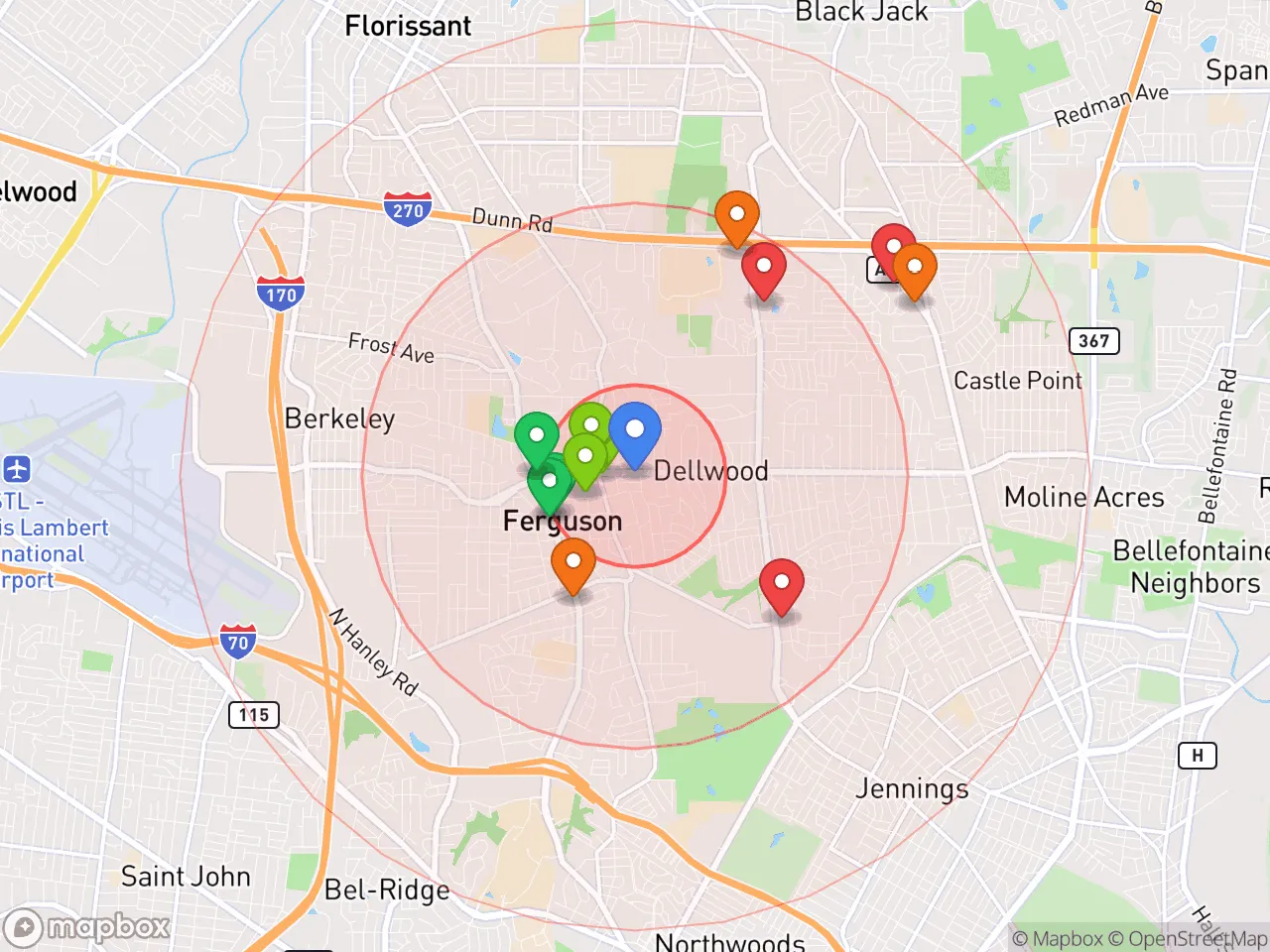
5 within 10 miles
Gas
20 within 10 miles
Hospital
20 within 20 miles
Airport
Indianapolis International Airport
Post Office
USPS — Ferguson, MO
Critical Amenities
Quality-of-Life Analysis
Ferguson, Missouri, presents a notably affordable quality of life within the St. Louis metropolitan area, with a cost of living index of 69—31% below the national average—making it one of the most budget-friendly communities in the region. The area is predominantly composed of working-class families and long-term residents, with a median household income around $42,000 and a population that is roughly 67% Black or African American. While the city gained national attention in 2014, its daily reality today is that of a modest, close-knit suburb where affordability is the primary draw for those seeking to stretch their housing dollar within commuting distance of downtown St. Louis.
Cost of living and housing affordability compared to nearby suburbs
Ferguson’s housing market is its strongest asset for affordability. The median home value sits at $99,300, a fraction of the St. Louis metro median of roughly $220,000 and dramatically lower than pricier western suburbs like Clayton ($400,000+) or Chesterfield ($350,000+). Median rent is $1,066, which is about 20% below the national median rent of $1,350. For context, a renter in Ferguson pays roughly $300 less per month than in nearby Florissant or Hazelwood. The average commute time of 24.6 minutes is slightly shorter than the national average of 26 minutes, and most residents drive to jobs in St. Louis County or the city of St. Louis via I-270 or I-70. Property taxes in Ferguson are around 1.2% of assessed value, in line with St. Louis County averages, but the low home prices keep annual tax bills manageable—often under $1,500.
Local amenities, schools, and daily life for families
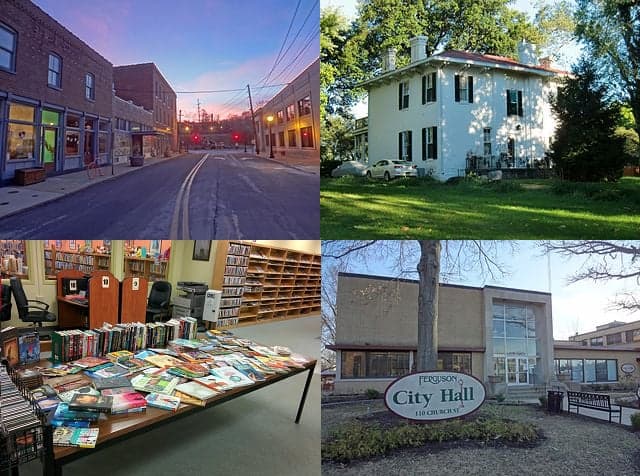
Daily life in Ferguson centers on a small but walkable downtown area along South Florissant Road, which hosts a farmers market, the Ferguson Brewing Company, and several locally owned shops. The city’s 10 parks, including January-Wabash Park with its lake and walking trails, provide basic recreation. The Ferguson-Florissant School District (R-2) serves the area, with an overall rating of 4 out of 10 on GreatSchools, though individual schools vary: McCluer High School has a 93% graduation rate, while elementary schools like Griffith and Holman score higher in parent reviews. For groceries and errands, residents typically drive to the nearby Walmart Supercenter or Schnucks in Florissant. The St. Louis MetroLink light rail has a stop at the Ferguson station, offering a 25-minute ride to downtown St. Louis for those who prefer public transit. Healthcare access is adequate, with SSM Health DePaul Hospital in nearby Bridgeton and BJC Medical Group clinics within 10 minutes.
Who will thrive in Ferguson’s current environment
Ferguson is best suited for budget-conscious first-time homebuyers, young families, and retirees who prioritize low housing costs over high-end amenities or top-tier schools. The city’s affordability allows residents to own a home outright or save significantly compared to renting in pricier suburbs. However, the trade-offs include a higher-than-average property crime rate—about 50% above the national average per FBI data—and a limited local job base, with most residents commuting to St. Louis or Clayton for employment. Those who value a diverse, working-class community with a slower pace and easy access to urban St. Louis will find Ferguson a practical choice. It is not a destination for luxury living or elite school districts, but for anyone seeking a genuinely low-cost entry point into the St. Louis housing market, it remains one of the most accessible options in the region.

Crime in Ferguson, MO
Significantly higher crime rates than 85% of comparable U.S. locations.
Violent CrimeViolent Crime Analysis
Property CrimeProperty Crime Analysis
Crime Analysis
Ferguson, Missouri, reports a violent crime rate of 1,087.3 per 100,000 residents and a property crime rate of 3,417.9 per 100,000, placing it among the higher-crime suburbs within the St. Louis metropolitan area. These figures reflect a community where safety is a significant concern, influenced by both local socioeconomic factors and the broader criminal justice policies of St. Louis County. The city’s proximity to a major metro area, combined with a progressive prosecutorial environment, creates conditions that residents should weigh carefully when considering relocation.
Crime in context
Ferguson’s violent crime rate is more than double the national average of roughly 380 per 100,000 and significantly exceeds the Missouri state average of approximately 540 per 100,000. Property crime in Ferguson is also elevated, running well above the national benchmark of about 2,000 per 100,000. These numbers place Ferguson in the top 10% of most dangerous municipalities in Missouri. A key driver of this disparity is the criminal justice approach in St. Louis County, where progressive district attorneys have implemented policies such as reduced cash bail, diversion programs for repeat offenders, and lenient plea deals. While intended to reduce incarceration, these policies have been linked to higher recidivism and a perception that property and violent crimes carry minimal consequences, directly contributing to the area’s elevated crime statistics.
What residents experience
Daily life in Ferguson is marked by a heightened awareness of personal and property security. Residents frequently report incidents of vehicle break-ins, package theft, and vandalism as routine nuisances. Violent crime, while less common in daily interactions, includes aggravated assaults and robberies that cluster in specific areas, particularly near commercial corridors like West Florissant Avenue. The presence of a progressive judiciary means that even when arrests are made, offenders often face minimal jail time or are released on their own recognizance, eroding public trust in the justice system. Many long-term residents describe a cycle where repeat offenders are quickly back on the street, undermining community safety efforts. This environment pushes many households to invest in private security systems, neighborhood watch groups, and even personal protection measures that are less common in surrounding, more conservative jurisdictions.
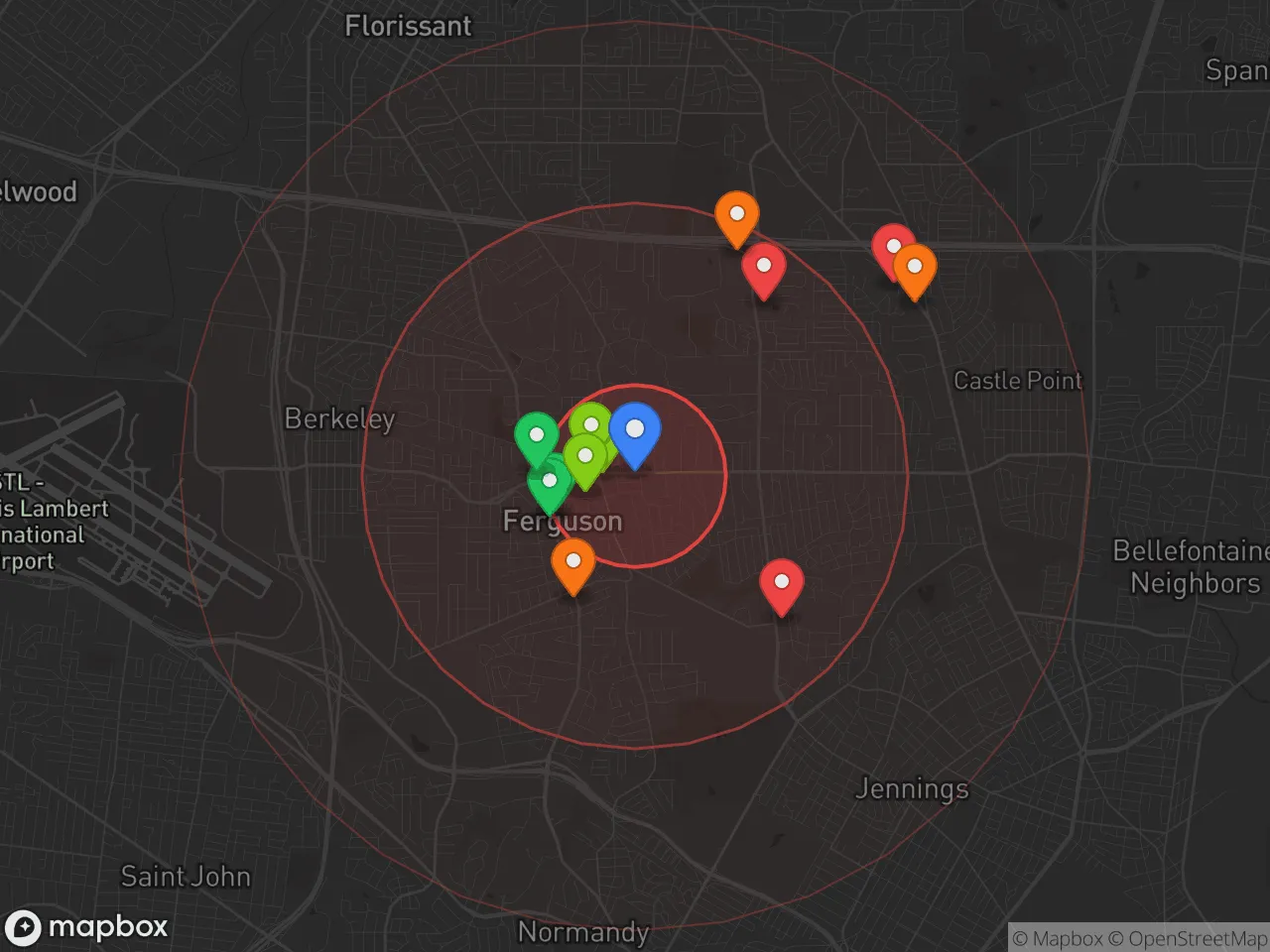
Neighborhood-level variation is stark within Ferguson’s 6.2 square miles. The eastern and southern sections, closer to the city’s commercial core and major roads, see the highest concentrations of both violent and property crime. In contrast, the northern and western residential areas—particularly those bordering the more affluent communities of Florissant and Hazelwood—report lower crime rates, though still above national averages. Prospective residents should focus on blocks north of Interstate 270 and west of North Elizabeth Avenue for relatively safer options, while avoiding areas immediately adjacent to the Ferguson Police Department’s highest-call-volume zones. Even in these safer pockets, the spillover effect from the city’s overall crime climate and the county’s lenient justice policies means no neighborhood is fully insulated from the risks that define Ferguson’s current safety landscape.
* Values derived from national, state, county, city and local statistics and may differ in a specific area. Last updated: 2026-04-21T10:43:02.000Z
Narrative content on this page is AI-generated and may contain mistakes. Verify any details that matter before acting on them.
ReloMaps may earn a commission from affiliate links at no extra cost to you.

