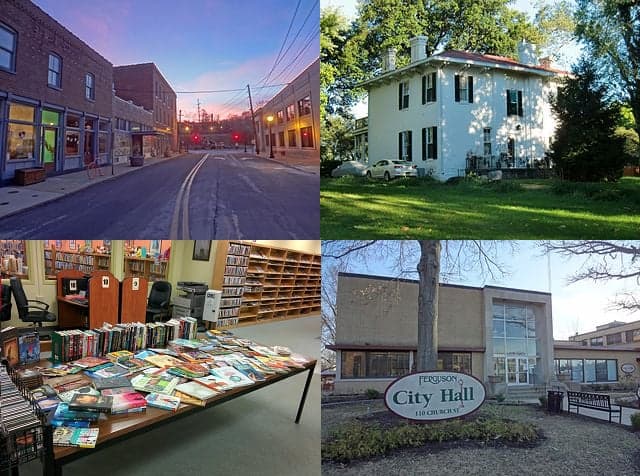
Photo: Wikipedia
Strategic Assessment of Ferguson, MO
Multiple tactical vulnerabilities. Population density, target proximity, or disaster risk are likely compounding. A retreat property and exit planning is required.
What does the Strategic Assessment tell us?
Our Strategic Assessment grades tactical survivability of an area. Major population centers, military targets, fallout zones, natural disasters, and border exposure all drive risk — lower exposure means a more defensible position in a crisis.
This is heavily inspired by Joel Skousen's Strategic Relocation book. Highly recommended you checkout the book ($)What does this tell us?
Our Strategic Assessment grades tactical survivability of an area. Major population centers, military targets, fallout zones, natural disasters, and border exposure all drive risk — lower exposure means a more defensible position in a crisis.
This is heavily inspired by Joel Skousen's Strategic Relocation book. Highly recommended you checkout the book ($)Strategic Pillars

Key Distances
Regional Safe Places
Below is our recommended "safe zones" in Missouri and the surrounding area based on our strategic heuristics. For most people, it's unrealistic to live in a “safe zone” full-time due to work, family or other personal reasons. They tend to be more rural. However, many of these areas are perfect for second homes and retreat properties that double as a vacation home or even a short-term rental.


Important Note: For informational purposes only. This does not mean nothing bad ever happens in the green zones. Please use common sense. This is based on public data and modeled with AI. We tried to take a conservative approach but mistakes happen. We update this regularly as new information becomes available.
Solar Generator Recommendations
Backup power matters more here than in safer locations. We've picked three solar generators across budgets and capacity tiers — start with the budget unit if you only need a few essentials, or step up if you want to run a fridge and HVAC for days at a time.

Jackery Portable Power Station Explorer 300
Budget OptionPower on the Go: Weighing only 11 lbs, it's convenient to set up and store with book-sized foldable solar panels

BLUETTI Portable Power Station AC180
Designed for both indoor and outdoor scenarios, AC180 is highly capable as it has a robost capacity and continuous output power.

EF ECOFLOW DELTA Pro Ultra Power Station
Upgraded PickEcoFlow DELTA Pro Ultra is a whole-home energy system designed to grow with your family. Integrated with the Smart Home Panel 2, it scales to meet your evolving energy needs — keeping your home powered, intelligent, and secure through every stage of life.
We earn a commission, at no additional cost to you.
Strategic Assessment Analysis
Ferguson, Missouri, sits in a precarious strategic position that demands a clear-eyed assessment from anyone serious about long-term preparedness. While its location within the St. Louis metro area offers certain logistical advantages, the same proximity to a major urban center introduces significant vulnerabilities for those prioritizing self-reliance and security. For a conservative-leaning individual or family evaluating this area through a survivalist lens, the calculus involves weighing access to regional resources against the very real risks of being caught in the fallout—literal and figurative—of a destabilized city.
Geographic position and natural advantages for a prepper household
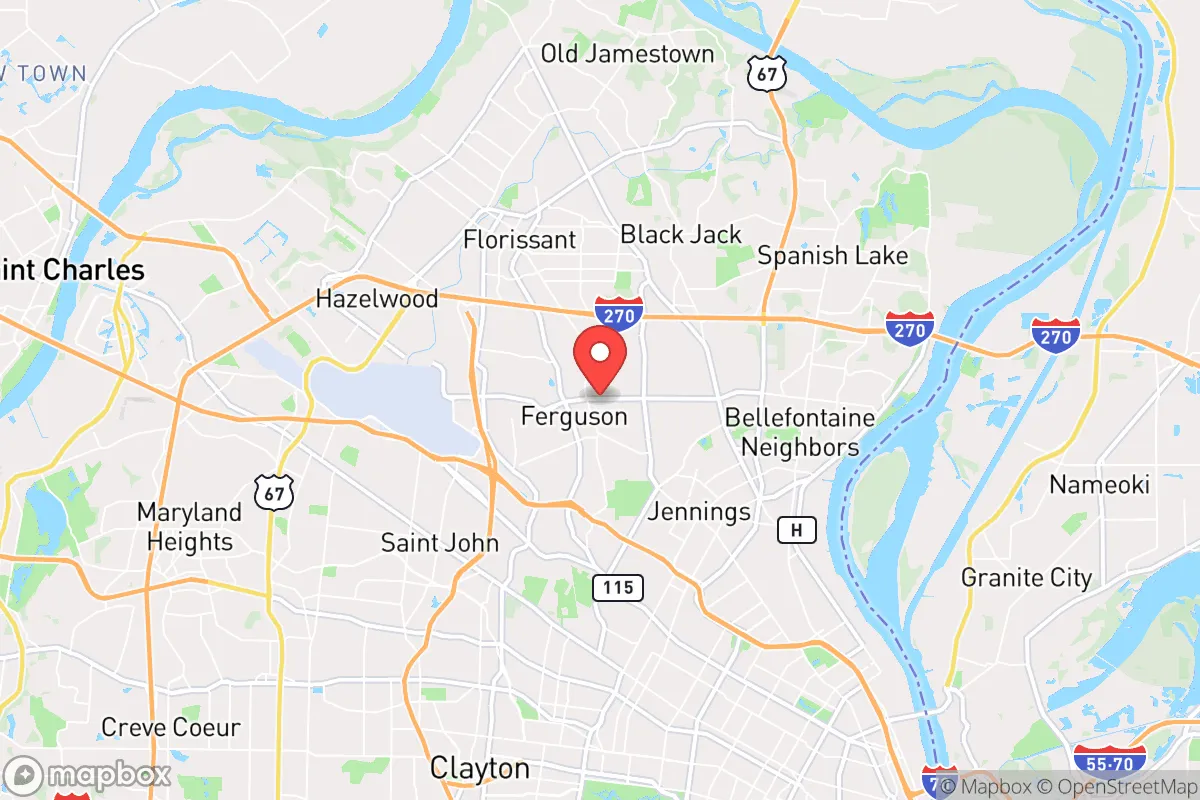
Ferguson’s geography is a double-edged sword. It lies roughly 10 miles northwest of downtown St. Louis, placing it within the suburban ring of a major metropolitan area. This positioning gives residents access to the region’s transportation arteries—Interstate 270 runs just south of the city, and Interstate 70 is a short drive north. For a prepper, this means relatively quick egress routes to rural Missouri, particularly toward the Ozarks or the less densely populated counties to the west and south. The area sits on the Mississippi River floodplain, but Ferguson itself is elevated enough to avoid the worst of river flooding, a minor but real advantage for long-term stability. The natural landscape is typical of the Missouri River Valley: rolling hills, mixed hardwood forests, and clay-heavy soil. While not ideal for large-scale agriculture, the surrounding region offers decent hunting and foraging potential, especially in the conservation areas north of the city. The climate is continental, with hot, humid summers and cold winters—meaning any prepper setup must account for both extremes. Water access is a concern: Ferguson relies on the St. Louis County water system, which draws from the Missouri River. In a grid-down scenario, that supply is vulnerable. However, the nearby Missouri and Mississippi Rivers provide a raw water source, though purification would be mandatory. The area’s natural advantages are modest but real—proximity to rural escape corridors and a defensible suburban layout with older homes that often have basements and space for storage.
Risks, exposures, and proximity to fallout-relevant landmarks
This is where the strategic picture darkens. Ferguson’s greatest liability is its location within the St. Louis metropolitan statistical area, home to over 2.8 million people. In any scenario involving civil unrest, economic collapse, or a mass casualty event, the city would be directly in the path of urban spillover. The 2014 protests and subsequent unrest are not ancient history—they are a live demonstration of how quickly Ferguson can become a flashpoint. For a prepper, the risk is not just the unrest itself but the secondary effects: supply chain disruptions, roadblocks, and the influx of desperate populations from the city core. Proximity to critical infrastructure is another concern. Lambert-St. Louis International Airport is less than 5 miles south, making Ferguson a potential target or secondary impact zone in a terrorist event or EMP strike. The city is also near major rail lines and interstate highways that could become choke points or targets. On the industrial side, the region has numerous chemical plants and refineries along the Mississippi River, including the Wood River Refinery complex about 15 miles north. A major accident or attack on these facilities could release toxic plumes that would drift over Ferguson depending on wind direction. Additionally, the presence of the St. Louis Arch and other symbolic landmarks makes the metro area a higher-probability target for any coordinated attack. For a relocator, the calculus is clear: Ferguson is not a retreat location. It is a suburban buffer zone that could become a danger zone in a crisis. The city’s demographics and political climate also merit consideration—Ferguson has a history of strained police-community relations and a local government that has been under federal scrutiny. For a conservative-leaning individual, this may signal a lack of institutional stability when it matters most.
Practical resilience for a relocator: food, water, energy, and defensibility
If you are determined to make Ferguson work as a base, you must approach it with a hardened mindset. Food security is a challenge. The city has limited agricultural land, and most residential lots are small. Community gardens exist but are not reliable for a family’s needs. The best bet is to establish relationships with farmers in surrounding St. Charles or Lincoln counties, which are more rural and have a stronger agricultural base. Stockpiling is non-negotiable—you need at least a 90-day supply of non-perishable food, given the risk of supply chain interruptions. Water is the more pressing issue. As noted, the municipal supply is centralized and vulnerable. A well is not feasible in most Ferguson properties due to urban zoning and soil conditions. Rainwater collection is legal in Missouri but must be done carefully—rooftop runoff in an urban area can contain contaminants from roads and industrial activity. A high-quality filtration system, such as a Berkey or a reverse osmosis setup, is essential. Energy resilience is slightly better. Missouri has net metering policies that allow for solar panel installation, and many homes in Ferguson have south-facing roofs. A backup generator running on propane or natural gas is a wise investment, as the grid in this part of the metro area has shown vulnerability during storms. Defensibility is the weakest link. Ferguson’s suburban layout—grid streets, close-set houses, multiple points of entry—makes it hard to secure a single property against a determined group. Overt security measures like fences or reinforced doors can draw unwanted attention. The better approach is operational security: low profile, good relationships with neighbors who share your mindset, and a plan to bug out to a rural property if the situation deteriorates. The city’s police force has been understaffed and under pressure since 2014, so do not count on rapid law enforcement response in a crisis.
The overall strategic picture for Ferguson is one of calculated risk with a low ceiling for long-term survival. It offers the logistical benefits of suburban infrastructure—access to hospitals, hardware stores, and supply routes—but those advantages evaporate quickly in a grid-down or civil unrest scenario. For a single individual or family with a conservative, prepper mindset, Ferguson is best viewed as a temporary staging ground, not a final retreat. Its location near St. Louis makes it a potential trap, and its history of instability suggests that local governance may not hold up under pressure. If you are already here, invest in mobility—a reliable vehicle with a full tank and a pre-planned route to rural Missouri. If you are considering relocation, look further west or south, where population density drops and self-reliance becomes more feasible. Ferguson is not a dead end, but it is a place where you must stay sharp, stay low, and always have an exit plan.

* Values derived from national, state, county, city and local statistics and may differ in a specific area. Last updated: 2026-04-21T10:43:02.000Z
Narrative content on this page is AI-generated and may contain mistakes. Verify any details that matter before acting on them.
ReloMaps may earn a commission from affiliate links at no extra cost to you.

