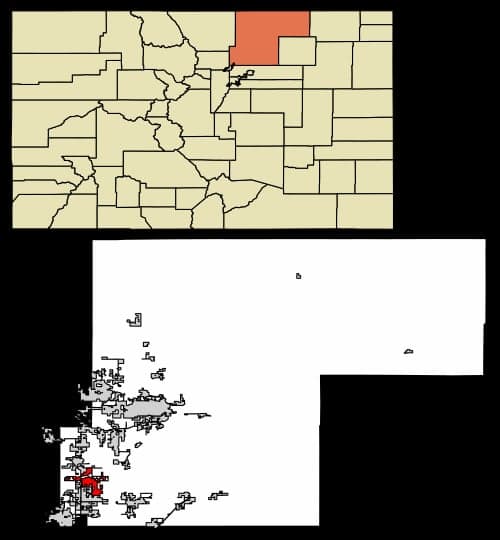
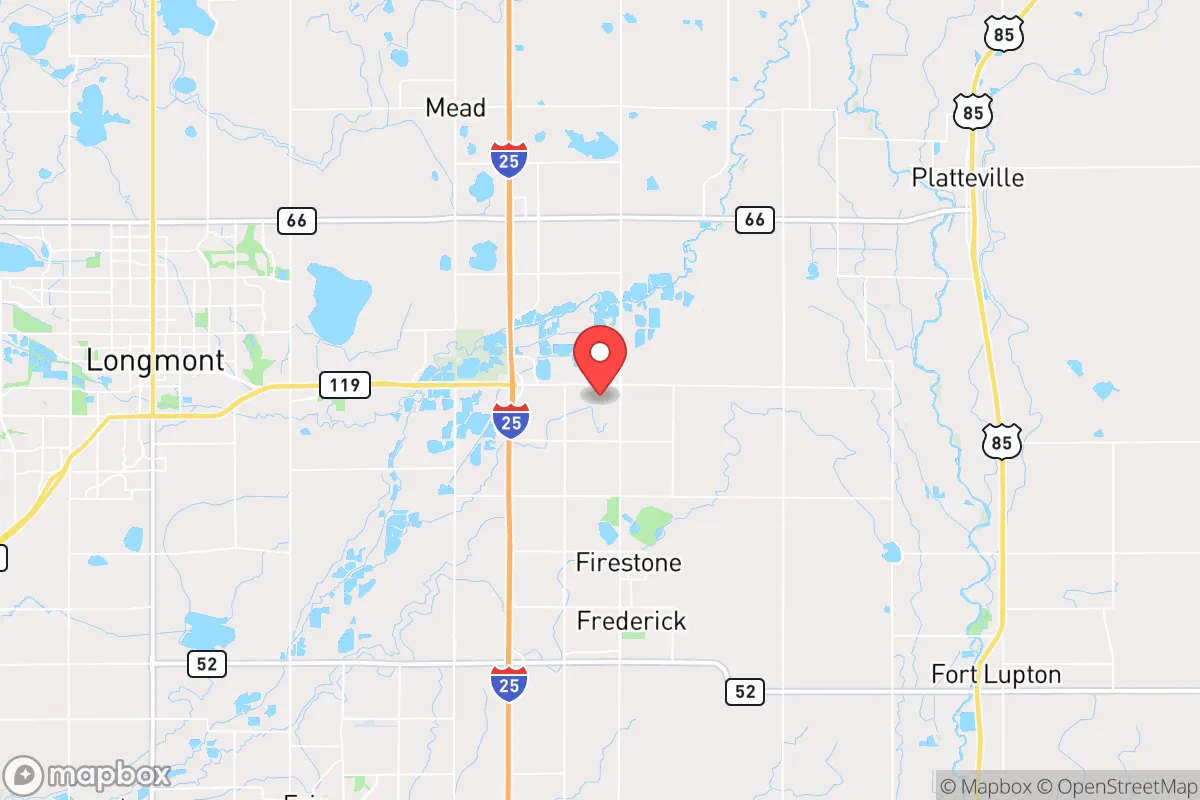
Photo: Wikipedia
Personal Sovereignty in Firestone, CO
Viable for self-reliance. Generally workable, though some barriers may limit total independence.
What does Personal Sovereignty tell us?
Personal Sovereignty measures your capacity for self-reliance and independence with minimal government friction. Higher scores mean fewer barriers between you and the way you want to live... but it assumes you have the space you need and good neighbors.
What does this tell us?
Personal Sovereignty measures your capacity for self-reliance and independence with minimal government friction. Higher scores mean fewer barriers between you and the way you want to live... but it assumes you have the space you need and good neighbors.
State Policy
Energy independence: Net exporter (110% of energy produced in-state)
Personal Liberty
Homesteading

Personal Liberty Analysis
Firestone, Colorado, offers a mixed but generally favorable environment for personal sovereignty, particularly when compared to the increasingly restrictive corridors of the Front Range. While it sits within a state that has trended toward progressive governance, the town itself and its surrounding Weld County area retain a stronger ethos of self-reliance and limited government interference. For the individual or family prioritizing autonomy—whether in financial decisions, self-defense, or lifestyle choices—Firestone represents a pragmatic middle ground where state-level overreach is somewhat buffered by local culture and county-level policies.
Tax burden and regulatory posture in Weld County
Colorado’s state-level tax structure is relatively moderate, but the real advantage for Firestone residents lies in Weld County’s fiscal conservatism. The state income tax is a flat 4.4%, and sales tax in Firestone sits around 8.1% (combining state, county, and local rates). Property taxes are notably low by national standards, with Weld County’s effective rate hovering near 0.5% of assessed value—a significant draw for those looking to minimize recurring government claims on their income. The county has consistently resisted adopting overly burdensome business regulations and zoning overlays, which translates into fewer hoops for property owners and entrepreneurs. However, be aware that Colorado’s state-level regulatory creep is real: energy codes, emissions standards, and land-use mandates from Denver can still reach into Firestone. The key is that local enforcement is often more lenient, and the county commission has a track record of pushing back against state overreach, particularly on oil and gas development and agricultural land use.
Self-defense and gun law specifics in Colorado’s legal landscape
Colorado is a shall-issue state for concealed carry permits, meaning that as long as you meet basic criteria (age 21, no disqualifying criminal history, completion of a training course), the county sheriff must issue the permit. Weld County is particularly friendly in this regard, with the sheriff’s office processing applications efficiently and without the administrative delays seen in more urban counties like Boulder or Denver. Firestone itself has no local gun ordinances beyond state law, so you won’t encounter city-level magazine bans or registration requirements. That said, Colorado has enacted magazine capacity limits (15 rounds for handguns, though this is under ongoing legal challenge) and universal background checks for private sales. The state also has a red flag law (Extreme Risk Protection Orders) that allows for temporary firearm seizure based on a court order—a tool that critics argue is ripe for abuse. For the prepper mindset, the key takeaway is that while Colorado is not a constitutional carry state (permitless carry was briefly allowed but overturned), Weld County’s enforcement culture is generally respectful of the Second Amendment. Open carry is legal without a permit, and many rural residents exercise that right without issue.
Self-reliance and homesteading viability: lot sizes, zoning, and off-grid feasibility
Firestone’s zoning is a patchwork, but the town and its unincorporated outskirts offer genuine opportunities for self-reliant living. Standard residential lots in newer subdivisions are typically 6,000 to 10,000 square feet—tight for serious homesteading but workable for a large garden, chickens, and small livestock with proper permits. The real prize is in the surrounding unincorporated Weld County areas, where zoning allows for agricultural use on parcels as small as 2.5 acres. Here, you can keep horses, goats, and even a few head of cattle without the bureaucratic headaches common in more urbanized counties. Off-grid feasibility is a mixed bag: Colorado state law does not explicitly prohibit off-grid living, but building codes and health department regulations require approved septic systems and well permits. Solar panels are widely accepted, and net metering is available through Xcel Energy, but going fully off-grid (disconnecting from the grid) may trigger pushback from the utility and local building officials. Rainwater collection was legalized at the state level in 2016 for residential use, but only if you have a well permit—a bureaucratic catch that frustrates many preppers. Still, compared to the Pacific Northwest or the Northeast, Firestone’s regulatory environment for self-sufficiency is relatively permissive, especially if you choose a property outside town limits.
Personal liberties: parental rights, medical autonomy, speech, and property
Parental rights in Colorado have become a flashpoint, with state law increasingly favoring centralized education mandates and health decisions. Firestone sits within the St. Vrain Valley School District, which has implemented comprehensive sex education and LGBTQ+ inclusive policies that some conservative parents find overreaching. However, Colorado does have a robust open enrollment system, and homeschooling is relatively straightforward—you simply file a notice of intent with the school district and provide a quarterly progress report. Medical autonomy is a more contentious area: Colorado has legalized assisted suicide (End of Life Options Act) and has broad vaccine mandates for school attendance, though religious and medical exemptions exist. The state also has a prescription drug monitoring program that some view as an infringement on doctor-patient privacy. Free speech protections are strong under both the U.S. and Colorado constitutions, and Firestone has no local ordinances restricting political expression or signage beyond standard time-place-manner rules. Property rights are generally respected, but be aware that Colorado’s severance tax and mineral rights laws can complicate ownership if you’re on land with oil and gas potential—the state allows forced pooling, meaning you can be compelled to allow drilling under your property even if you object. This is a real concern for those seeking absolute control over their land.
Overall, Firestone offers a sovereignty profile that is better than most of the Denver metro area but falls short of the truly libertarian enclaves found in parts of the rural West. The state-level headwinds—red flag laws, magazine limits, education mandates, and forced pooling—are real and require active engagement to resist. But the local culture in Weld County, combined with low property taxes, a pro-Second Amendment sheriff, and viable homesteading options on the outskirts, makes this a solid choice for the strategic relocator who values personal freedom and is willing to navigate a few bureaucratic hurdles. If you’re looking for a place where you can live largely on your own terms without constant government intrusion, Firestone deserves a serious look—just keep one eye on Denver, because the political winds from the capital can shift quickly.

* Values derived from national, state, county, city and local statistics and may differ in a specific area. Last updated: 2026-05-01T08:22:19.000Z
Narrative content on this page is AI-generated and may contain mistakes. Verify any details that matter before acting on them.
ReloMaps may earn a commission from affiliate links at no extra cost to you.

