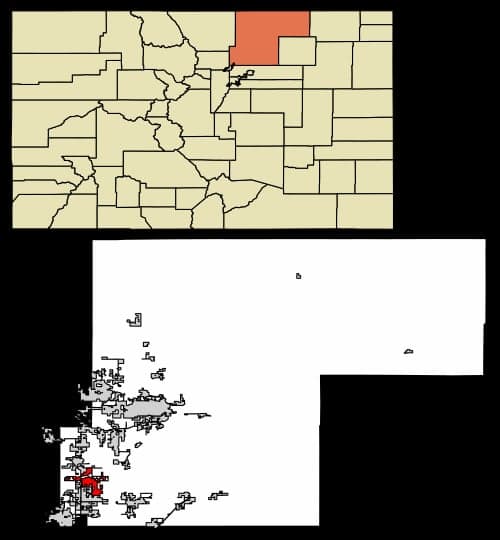
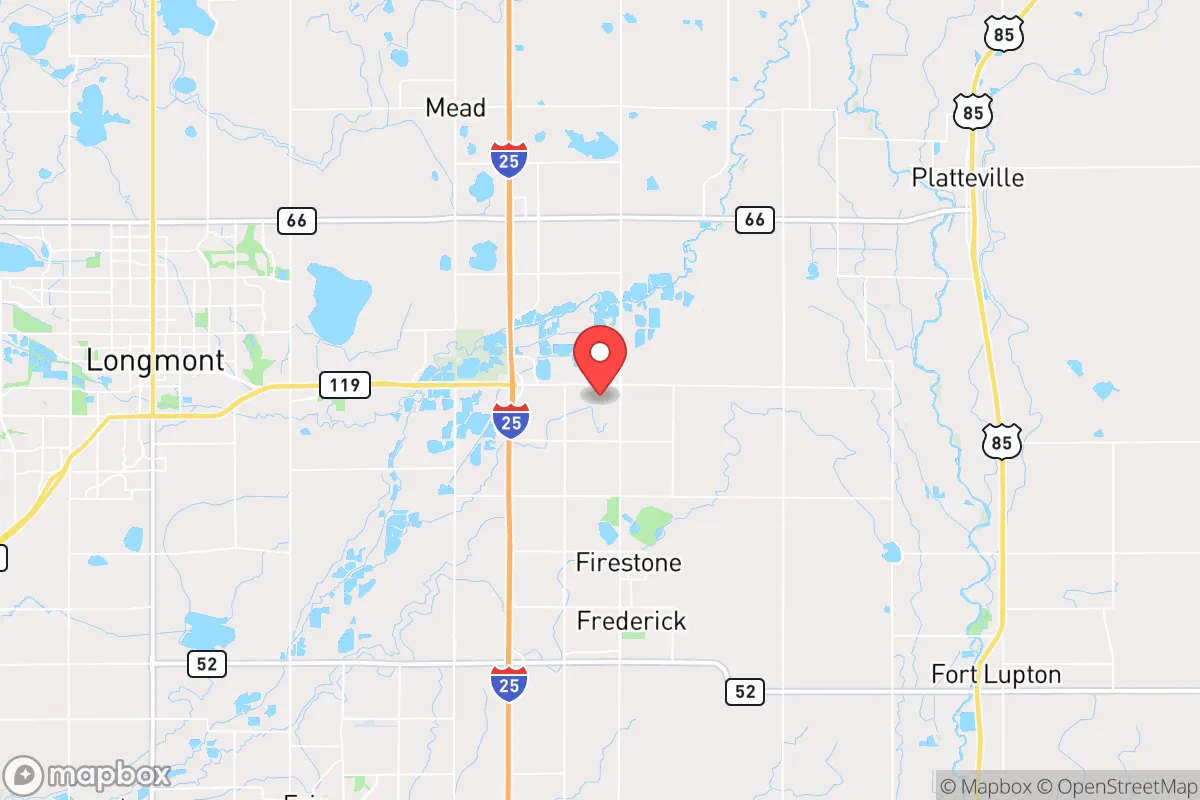
Photo: Wikipedia
Strategic Assessment of Firestone, CO
Meaningful friction. Expect exposure to either population pressure, blast zones, or natural disaster risk. Consider buying a retreat property.
What does the Strategic Assessment tell us?
Our Strategic Assessment grades tactical survivability of an area. Major population centers, military targets, fallout zones, natural disasters, and border exposure all drive risk — lower exposure means a more defensible position in a crisis.
This is heavily inspired by Joel Skousen's Strategic Relocation book. Highly recommended you checkout the book ($)What does this tell us?
Our Strategic Assessment grades tactical survivability of an area. Major population centers, military targets, fallout zones, natural disasters, and border exposure all drive risk — lower exposure means a more defensible position in a crisis.
This is heavily inspired by Joel Skousen's Strategic Relocation book. Highly recommended you checkout the book ($)Strategic Pillars

Key Distances
Regional Safe Places
Below is our recommended "safe zones" in Colorado and the surrounding area based on our strategic heuristics. For most people, it's unrealistic to live in a “safe zone” full-time due to work, family or other personal reasons. They tend to be more rural. However, many of these areas are perfect for second homes and retreat properties that double as a vacation home or even a short-term rental.
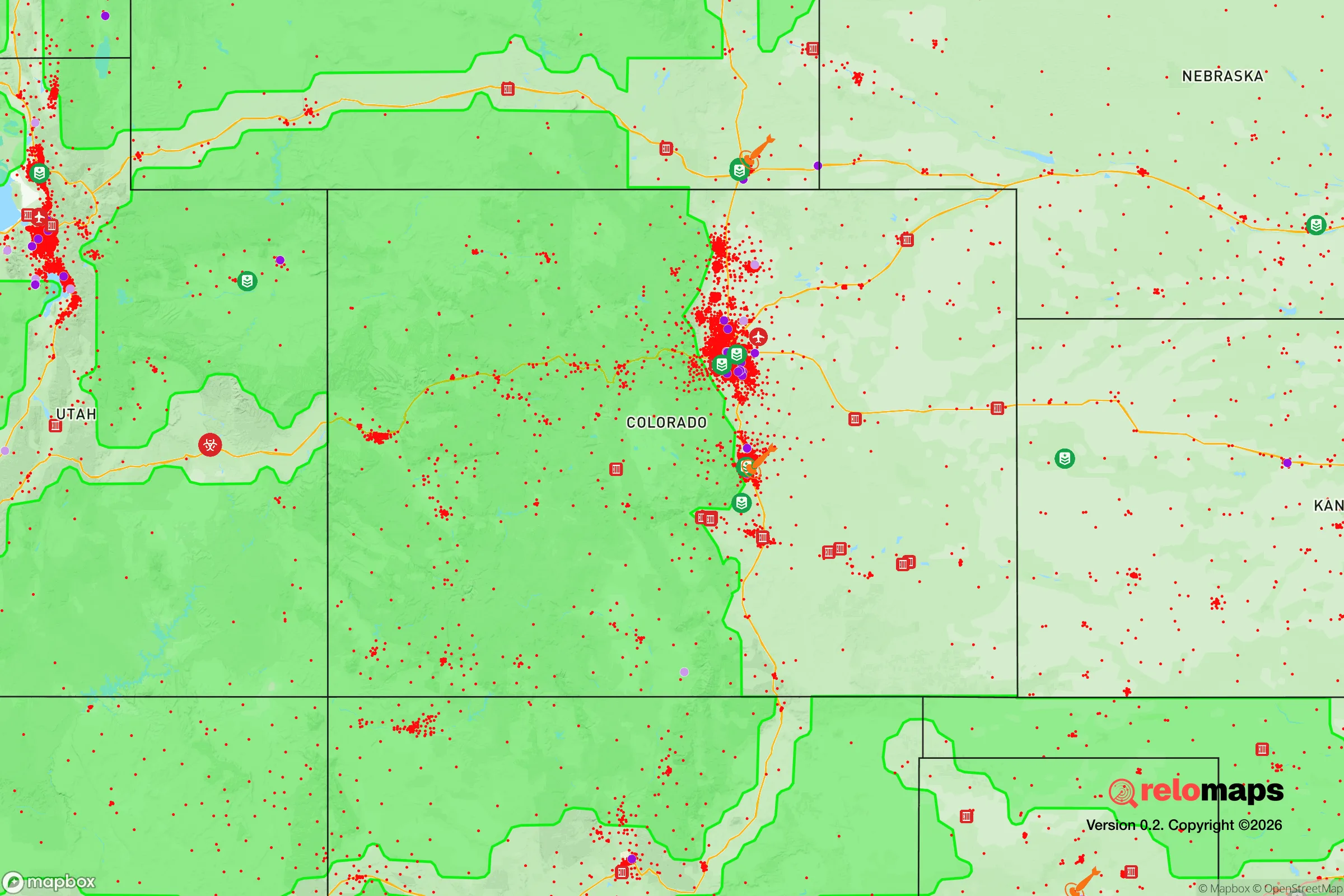
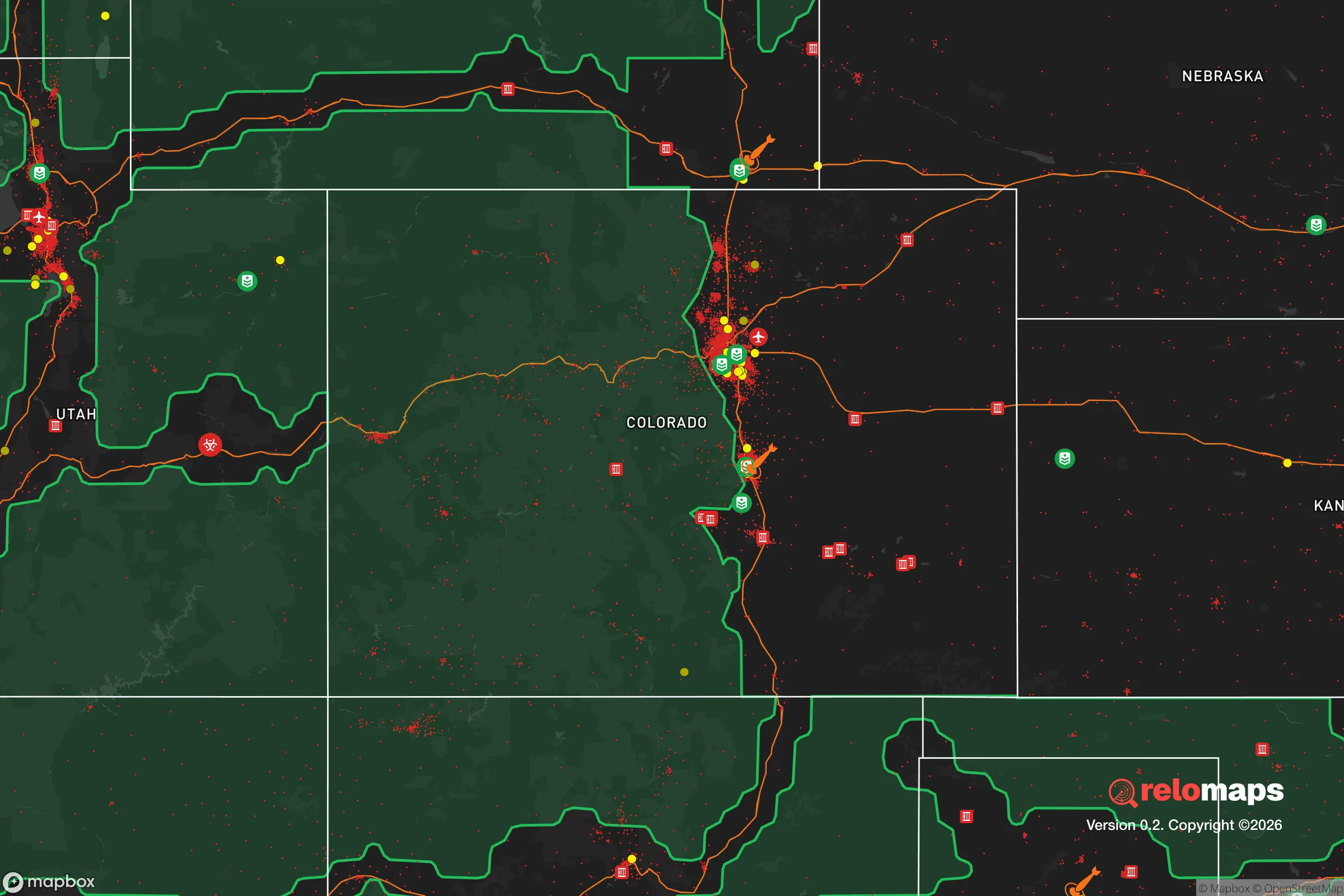


Important Note: For informational purposes only. This does not mean nothing bad ever happens in the green zones. Please use common sense. This is based on public data and modeled with AI. We tried to take a conservative approach but mistakes happen. We update this regularly as new information becomes available.
Solar Generator Recommendations
Backup power matters more here than in safer locations. We've picked three solar generators across budgets and capacity tiers — start with the budget unit if you only need a few essentials, or step up if you want to run a fridge and HVAC for days at a time.

Jackery Portable Power Station Explorer 300
Budget OptionPower on the Go: Weighing only 11 lbs, it's convenient to set up and store with book-sized foldable solar panels

BLUETTI Portable Power Station AC180
Designed for both indoor and outdoor scenarios, AC180 is highly capable as it has a robost capacity and continuous output power.

EF ECOFLOW DELTA Pro Ultra Power Station
Upgraded PickEcoFlow DELTA Pro Ultra is a whole-home energy system designed to grow with your family. Integrated with the Smart Home Panel 2, it scales to meet your evolving energy needs — keeping your home powered, intelligent, and secure through every stage of life.
We earn a commission, at no additional cost to you.
Strategic Assessment Analysis
Firestone, Colorado, occupies a strategic niche in the Front Range corridor that offers a rare blend of agricultural self-sufficiency, geographic defensibility, and proximity to critical infrastructure—without being swallowed by the urban sprawl of Denver or Boulder. Sitting at roughly 5,000 feet elevation in the semi-arid high plains, this town of about 12,000 residents benefits from a location that is far enough from major population centers to avoid the worst of civil unrest fallout, yet close enough to leverage regional resources. For a relocator with a prepper mindset, Firestone’s position between the Rocky Mountains and the South Platte River valley provides a natural buffer against both natural disasters and human-caused chaos, though it is not without its own vulnerabilities.
Geographic position and natural advantages for long-term security
Firestone’s location at the intersection of Weld and Boulder counties places it in a sweet spot for those prioritizing resilience. The town sits roughly 30 miles north of Denver and 15 miles east of the foothills, meaning it is far enough from the Denver metro’s 3 million residents to reduce exposure to urban unrest, yet close enough to access medical facilities, supply chains, and evacuation routes if needed. The surrounding landscape is dominated by agricultural land—corn, wheat, and hay fields—which offers a dual advantage: local food production capacity and open sightlines that make the area difficult to approach undetected. The nearby St. Vrain Creek and the South Platte River provide surface water sources, though these are not pristine and require treatment. The high plains climate means fewer natural disasters than coastal or mountain regions; tornadoes are the primary weather threat, but Firestone’s position in a relatively flat, open area means warning times are typically adequate. The town’s elevation also offers a degree of protection against electromagnetic pulse (EMP) effects, as the thinner atmosphere reduces the coupling of high-altitude EMP waves, though this is a marginal benefit compared to deeper mountain valleys.
Risks, exposures, and proximity to fallout-relevant landmarks
No strategic assessment is complete without acknowledging the liabilities. Firestone’s primary exposure is its proximity to the Denver-Aurora metropolitan area, which is a likely target for civil unrest, supply chain disruptions, or even a mass casualty event given its size and political tensions. The town is also within 20 miles of the Rocky Mountain Arsenal National Wildlife Refuge, a former chemical weapons manufacturing site that, while now remediated, still contains underground contamination and could become a secondary hazard if infrastructure fails. More concerning is the proximity to the Front Range’s energy and transportation corridors: Interstate 25 runs just west of Firestone, and major natural gas pipelines and electrical transmission lines cross the area. A coordinated attack on these lines could cripple power and fuel supplies for weeks. The town itself experienced a devastating home explosion in 2017 caused by a natural gas leak from an abandoned pipeline—a reminder that aging energy infrastructure is a real, localized risk. Additionally, the nearby Platteville and Longmont areas have experienced fracking-related seismic activity, though minor, it underscores the region’s industrial energy footprint. For a relocator, the biggest strategic weakness is the lack of natural barriers: the flat terrain offers no defensible high ground, and the town is surrounded by open fields that provide little cover in a grid-down scenario.
Practical resilience for a relocator: food, water, energy, and defensibility
For a prepper or survivalist family, Firestone offers a mixed bag of practical advantages and challenges. On the positive side, the agricultural character of Weld County means local food production is robust. The town is within 10 miles of several large-scale farms and ranches, and the nearby Carbon Valley area has a growing network of farmers’ markets and CSAs. Soil quality is decent for small-scale gardening, though irrigation is essential given the 12–15 inches of annual precipitation. Water rights are a critical issue here—Colorado water law is complex, and any property purchase should include a thorough check of senior water rights. The town’s municipal water supply comes from the South Platte River and groundwater wells, but in a prolonged grid-down scenario, residents without well access would be dependent on stored water or surface sources that require filtration. Energy resilience is more promising: Firestone is in a region with high solar insolation (over 300 sunny days per year), making solar panels a viable primary or backup power source. Natural gas is widely available, but a prepper should plan for propane or wood as a secondary heating fuel. Defensibility is the weakest link. The town’s layout is suburban—cul-de-sacs, tract homes, and open parks—which offers little tactical advantage. However, the surrounding rural areas provide options for those willing to live on the outskirts. The local law enforcement presence is modest (Weld County Sheriff’s Office covers the area), and response times in a widespread event could be hours. Community resilience is a wildcard: Firestone has a strong sense of local identity, but it is not a tight-knit prepper community like some rural Colorado towns. Building relationships with neighbors and joining local preparedness groups (such as the Weld County CERT) is essential.
The overall strategic picture for Firestone is one of cautious optimism for the prepared relocator. It is not a hardened bunker location, nor is it a remote mountain retreat. Instead, it offers a middle-ground option: close enough to urban resources to be practical for work and supply runs, yet far enough to avoid the worst of civil unrest and fallout from a major Denver event. The town’s agricultural base, solar potential, and water access provide a foundation for long-term self-sufficiency, but only if the relocator invests in storage, filtration, and community building. The biggest threats are not natural disasters but human-caused disruptions—energy grid attacks, supply chain collapses, or civil unrest spilling out from the Front Range. For a conservative-leaning individual or family who wants to maintain a suburban lifestyle while hedging against collapse, Firestone is a viable option, but it requires active preparation, not passive hope. The key takeaway: treat Firestone as a base of operations, not a final redoubt, and plan for the possibility that you may need to relocate further into the mountains if the situation deteriorates beyond local resilience capacity.

* Values derived from national, state, county, city and local statistics and may differ in a specific area. Last updated: 2026-05-01T08:22:19.000Z
Narrative content on this page is AI-generated and may contain mistakes. Verify any details that matter before acting on them.
ReloMaps may earn a commission from affiliate links at no extra cost to you.

