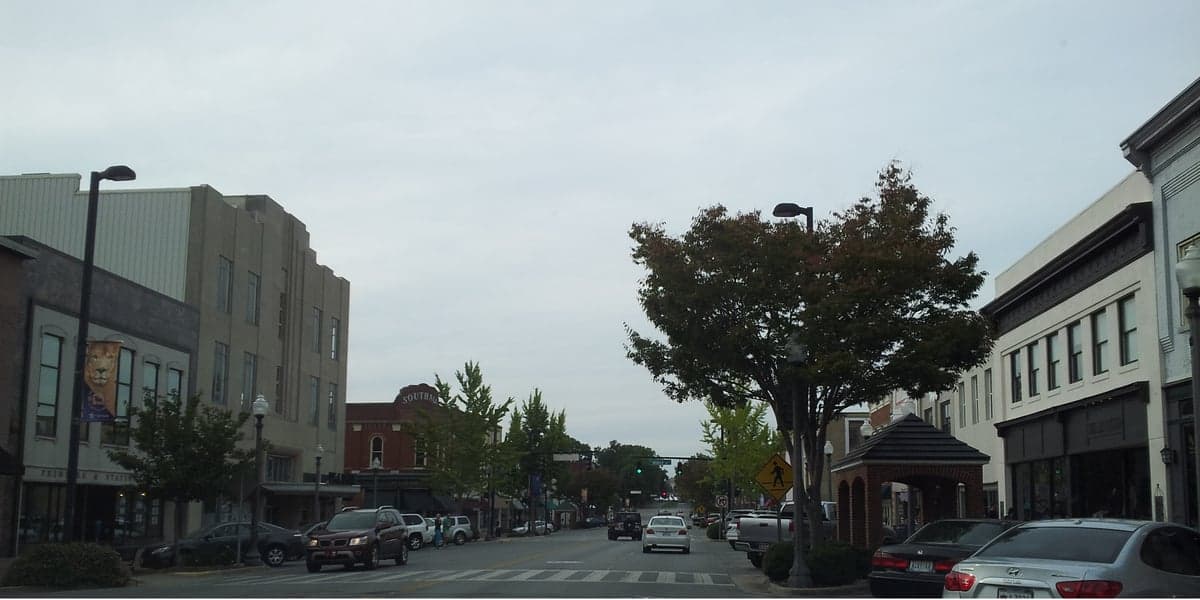
Photo: Wikipedia
Strategic Assessment of Florence, AL
Workable tactical position. Some exposure to population density or targets, but generally defensible in a crisis.
What does the Strategic Assessment tell us?
Our Strategic Assessment grades tactical survivability of an area. Major population centers, military targets, fallout zones, natural disasters, and border exposure all drive risk — lower exposure means a more defensible position in a crisis.
This is heavily inspired by Joel Skousen's Strategic Relocation book. Highly recommended you checkout the book ($)What does this tell us?
Our Strategic Assessment grades tactical survivability of an area. Major population centers, military targets, fallout zones, natural disasters, and border exposure all drive risk — lower exposure means a more defensible position in a crisis.
This is heavily inspired by Joel Skousen's Strategic Relocation book. Highly recommended you checkout the book ($)Strategic Pillars

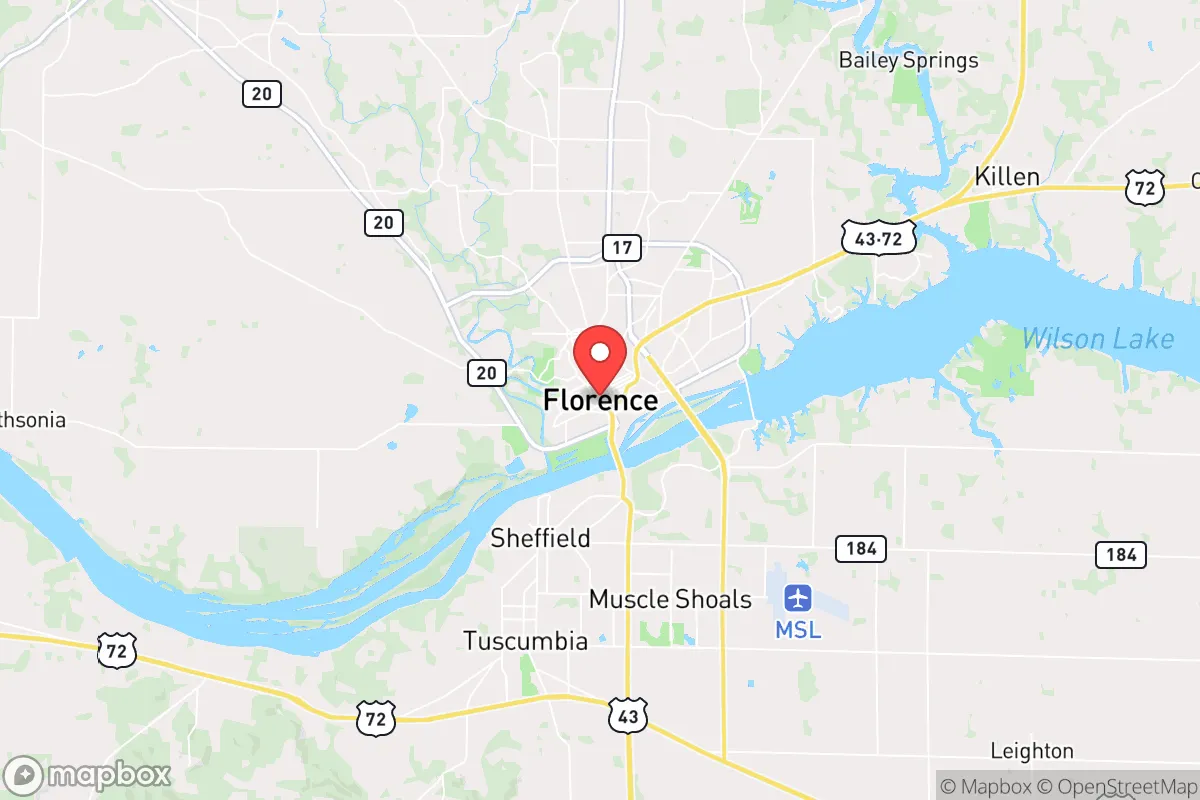
Key Distances
Regional Safe Places
Below is our recommended "safe zones" in Alabama and the surrounding area based on our strategic heuristics. For most people, it's unrealistic to live in a “safe zone” full-time due to work, family or other personal reasons. They tend to be more rural. However, many of these areas are perfect for second homes and retreat properties that double as a vacation home or even a short-term rental.
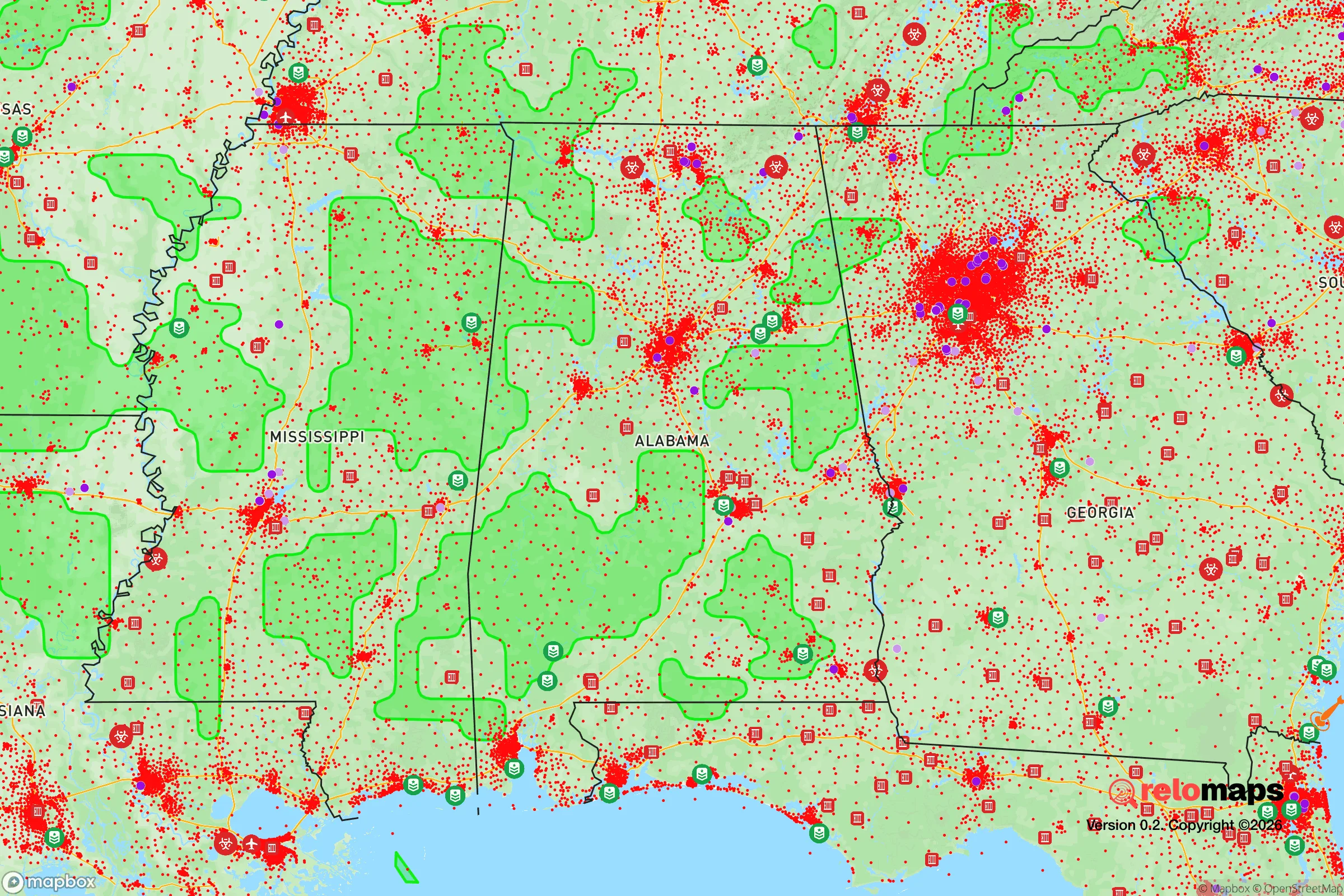
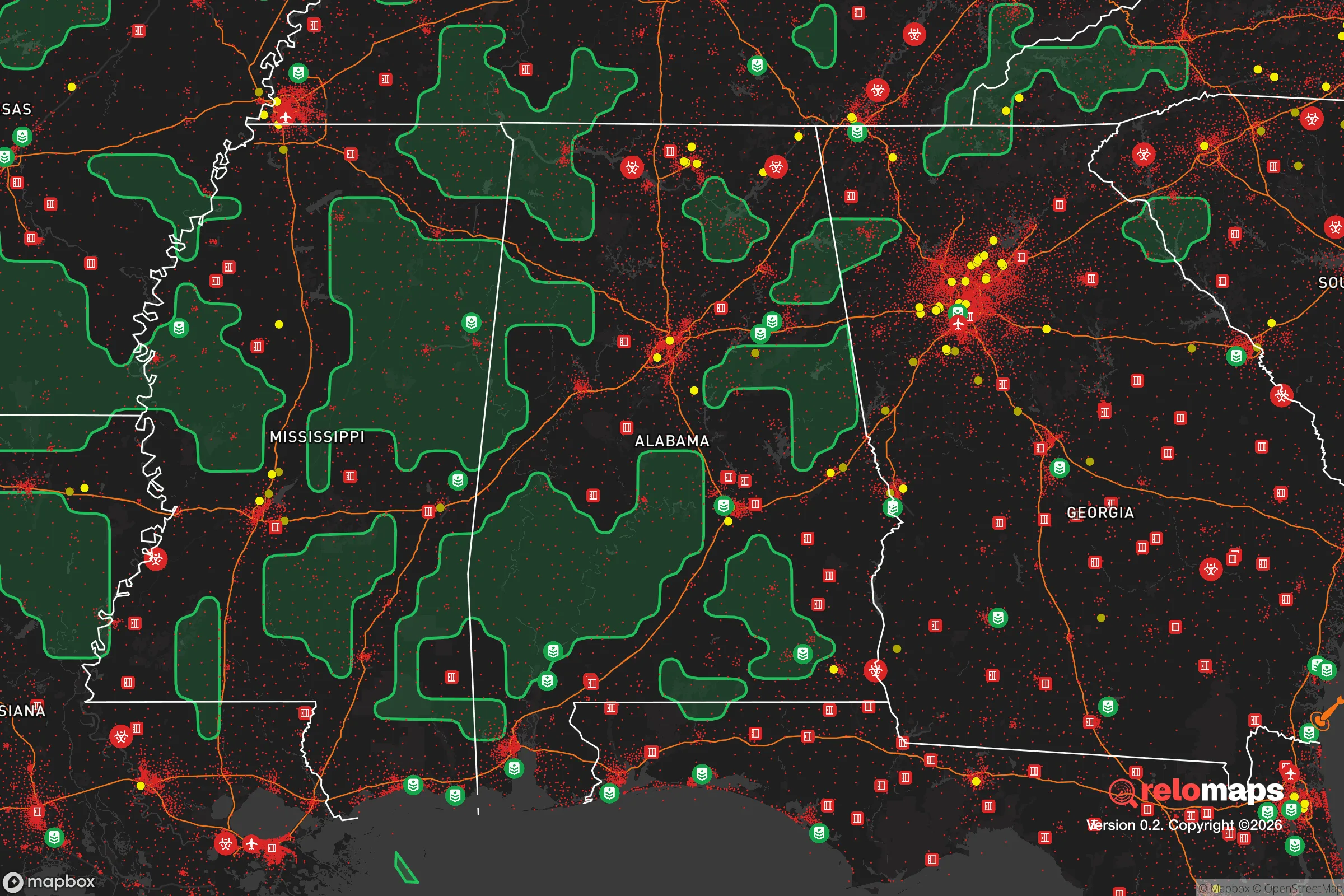


Important Note: For informational purposes only. This does not mean nothing bad ever happens in the green zones. Please use common sense. This is based on public data and modeled with AI. We tried to take a conservative approach but mistakes happen. We update this regularly as new information becomes available.
Solar Generator Recommendations
Backup power matters more here than in safer locations. We've picked three solar generators across budgets and capacity tiers — start with the budget unit if you only need a few essentials, or step up if you want to run a fridge and HVAC for days at a time.

Jackery Portable Power Station Explorer 300
Budget OptionPower on the Go: Weighing only 11 lbs, it's convenient to set up and store with book-sized foldable solar panels

BLUETTI Portable Power Station AC180
Designed for both indoor and outdoor scenarios, AC180 is highly capable as it has a robost capacity and continuous output power.

EF ECOFLOW DELTA Pro Ultra Power Station
Upgraded PickEcoFlow DELTA Pro Ultra is a whole-home energy system designed to grow with your family. Integrated with the Smart Home Panel 2, it scales to meet your evolving energy needs — keeping your home powered, intelligent, and secure through every stage of life.
We earn a commission, at no additional cost to you.
Strategic Assessment Analysis
Florence, Alabama, offers a strategic relocation option for those prioritizing resilience, sitting comfortably outside the blast radius of major metropolitan targets while maintaining access to critical supply chains and regional infrastructure. Its position in the northwestern corner of the state, roughly 120 miles from Nashville and 140 from Birmingham, places it in a sweet spot—close enough to tap into urban resources during stable times, yet far enough to avoid the immediate fallout zones and civil unrest cascades that would likely engulf larger cities during a national crisis. The Tennessee River provides a natural barrier and water resource, while the surrounding rural landscape offers defensible terrain and agricultural potential that many preppers find compelling.
Geographic position and natural advantages for long-term security
Florence sits on the southern bank of the Tennessee River, which acts as both a strategic moat and a reliable freshwater source—critical for any long-term survival scenario. The river’s width and current create natural chokepoints for any potential movement, making the city more defensible than flat, open terrain. The surrounding area is part of the Tennessee Valley, characterized by rolling hills, mixed hardwood forests, and limestone bluffs, which provide cover, natural resources, and ample opportunities for off-grid living. The region’s moderate climate means fewer extreme weather events compared to the Gulf Coast or the Plains, though tornadoes remain a seasonal risk. The Tennessee Valley Authority (TVA) maintains a robust electrical grid here, including the nearby Browns Ferry Nuclear Plant in Limestone County, which is a double-edged sword—reliable power in normal times, but a potential target or hazard during a major event. For a relocator, the key advantage is that Florence is not a primary target for any strategic strike, unlike Huntsville (home to Redstone Arsenal and NASA) or Nashville (a major transportation and logistics hub). The city’s population of roughly 40,000, with a metro area around 150,000, is large enough to sustain essential services but small enough to avoid the chaos of a major urban collapse.
Risks, exposures, and proximity to fallout-relevant landmarks
The most significant risk for Florence is its proximity to critical infrastructure that could become targets or sources of secondary disasters. The Browns Ferry Nuclear Plant, located about 30 miles southeast near Athens, is a boiling water reactor that has experienced incidents in the past, including a 1975 fire that was one of the worst nuclear accidents in U.S. history at the time. In a major conflict or terrorist event, this plant could be a target for sabotage or a source of radiological release, though prevailing winds typically carry fallout eastward, away from Florence. The Tennessee River itself is a strategic asset that could become a chokepoint for transportation or a target for sabotage, potentially disrupting water supply or causing flooding. Huntsville’s Redstone Arsenal, about 60 miles east, is a primary center for missile defense, space command, and chemical weapons storage—making it a high-value target in any major conflict. While Florence is outside the immediate blast zone, fallout patterns and secondary effects like refugee flows from Huntsville or Nashville could strain local resources. The city’s location along U.S. Highway 72 and proximity to Interstate 65 mean it sits on potential evacuation routes, which could become clogged with fleeing populations during a crisis. For a prepper, the key is to have a plan for securing a rural retreat further into the surrounding counties—like Lauderdale, Colbert, or Franklin—where population density drops and natural barriers increase.
Practical resilience for a relocator: food, water, energy, and defensibility
Florence’s practical resilience for a relocator is solid but requires proactive preparation. The Tennessee River provides an almost limitless water source, but it requires treatment—boiling, filtration, or chemical purification—before consumption, as agricultural runoff and industrial discharge are concerns. The surrounding farmland is fertile, with a growing season long enough for multiple crop cycles, and the region has a strong hunting and fishing culture, with deer, turkey, and catfish readily available. Local agriculture includes poultry, cattle, and row crops like soybeans and corn, meaning food supply chains are more robust than in purely urban areas. Energy is a mixed bag: TVA power is reliable, but a grid-down scenario would leave most residents dependent on generators or solar. The area has decent solar potential, with about 200 sunny days per year, and wood is abundant for heating and cooking. Defensibility is moderate—the river provides a natural barrier to the north, but the city itself is spread out with multiple access points via highways and secondary roads. A better strategy for a serious prepper is to secure property in the rural areas south or west of Florence, where the terrain becomes more rugged and population density drops below 50 people per square mile. The local culture is heavily conservative, with a strong sense of community and self-reliance, which means neighbors are more likely to band together than turn on each other during a crisis. Gun ownership is common, and the state has constitutional carry, so legal barriers to self-defense are minimal. The biggest practical challenge is that Florence is not a major medical hub—the nearest Level 1 trauma center is in Huntsville or Birmingham—so serious injuries or illnesses during a collapse would require significant travel or improvisation.
Overall, Florence presents a balanced strategic picture for a conservative relocator focused on resilience. It avoids the high-risk zones of major cities and strategic targets while offering natural defenses, water access, and a supportive cultural environment. The risks from nearby nuclear infrastructure and potential refugee flows are real but manageable with proper planning—namely, securing a rural buffer property and maintaining independent water and power systems. For someone looking to ride out national instability without going completely off-grid, Florence is a strong contender that combines small-town stability with enough regional infrastructure to avoid total isolation. The key is to treat it as a base of operations, not a final redoubt, and to have a plan for deeper retreat if the situation deteriorates further.

* Values derived from national, state, county, city and local statistics and may differ in a specific area. Last updated: 2026-04-19T18:50:36.000Z
Narrative content on this page is AI-generated and may contain mistakes. Verify any details that matter before acting on them.
ReloMaps may earn a commission from affiliate links at no extra cost to you.

