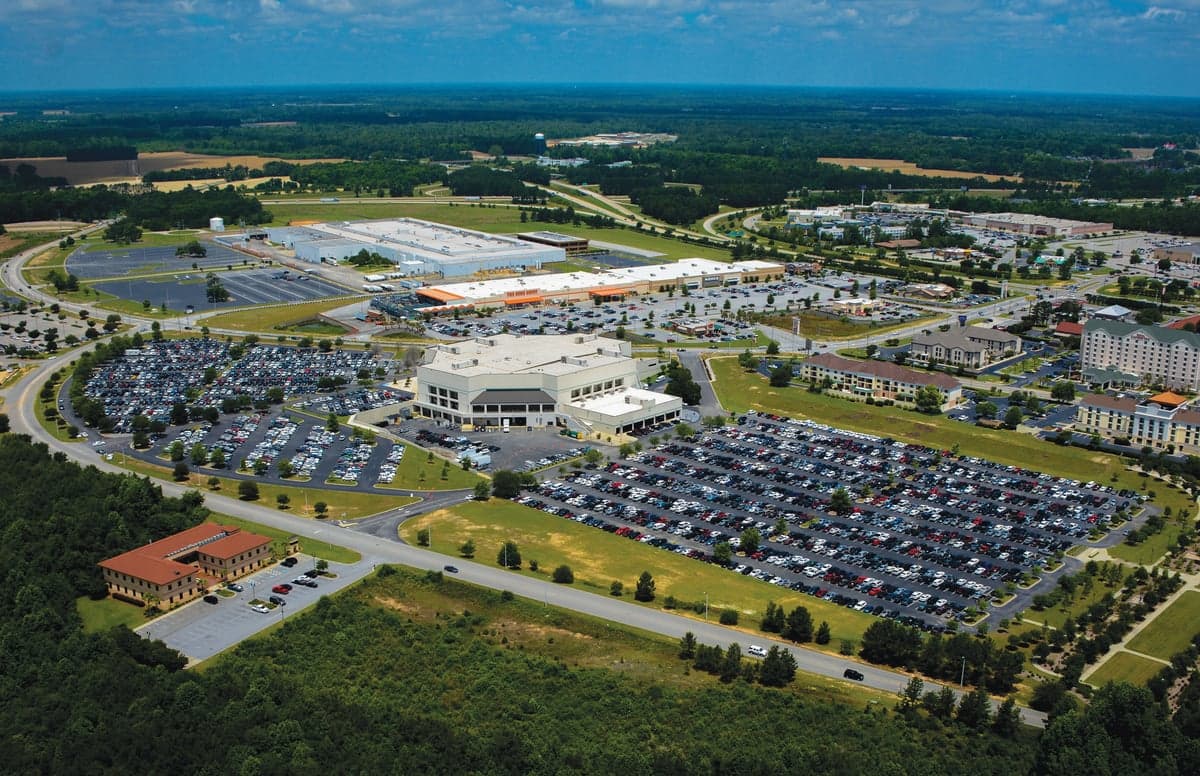
Photo: Wikipedia
Strategic Assessment of Florence, SC
Meaningful friction. Expect exposure to either population pressure, blast zones, or natural disaster risk. Consider buying a retreat property.
What does the Strategic Assessment tell us?
Our Strategic Assessment grades tactical survivability of an area. Major population centers, military targets, fallout zones, natural disasters, and border exposure all drive risk — lower exposure means a more defensible position in a crisis.
This is heavily inspired by Joel Skousen's Strategic Relocation book. Highly recommended you checkout the book ($)What does this tell us?
Our Strategic Assessment grades tactical survivability of an area. Major population centers, military targets, fallout zones, natural disasters, and border exposure all drive risk — lower exposure means a more defensible position in a crisis.
This is heavily inspired by Joel Skousen's Strategic Relocation book. Highly recommended you checkout the book ($)Strategic Pillars

Key Distances
Regional Safe Places
Below is our recommended "safe zones" in South Carolina and the surrounding area based on our strategic heuristics. For most people, it's unrealistic to live in a “safe zone” full-time due to work, family or other personal reasons. They tend to be more rural. However, many of these areas are perfect for second homes and retreat properties that double as a vacation home or even a short-term rental.
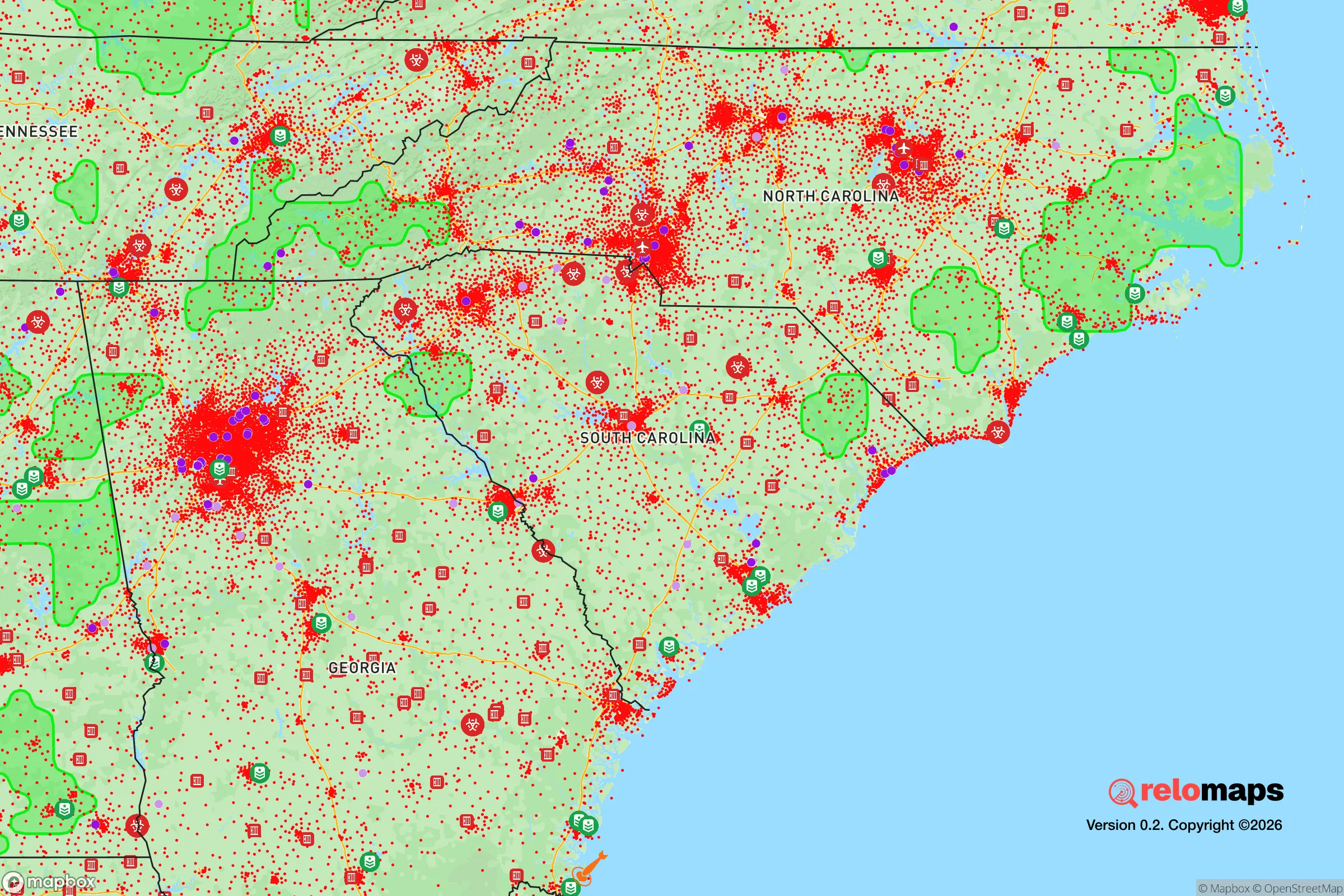
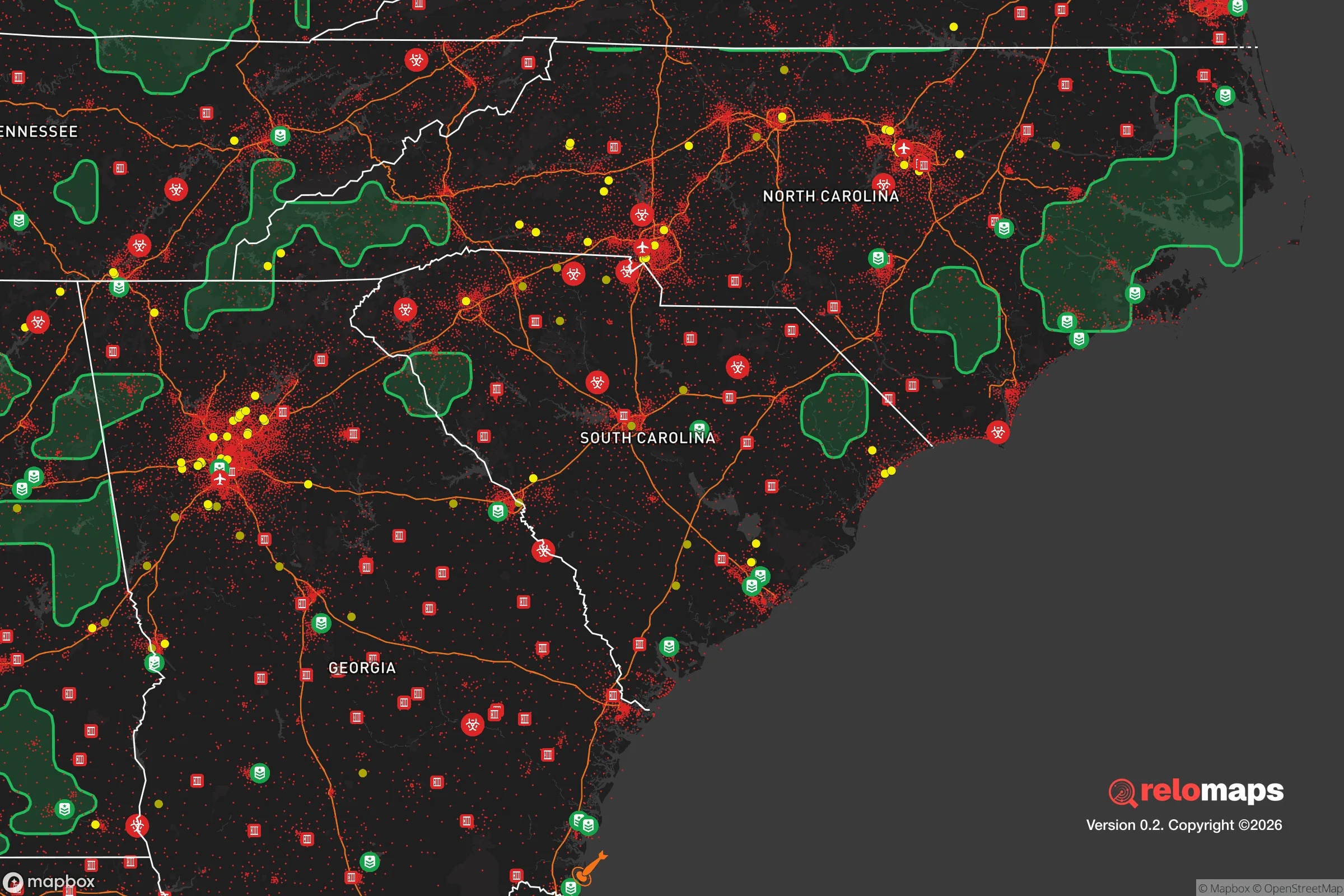


Important Note: For informational purposes only. This does not mean nothing bad ever happens in the green zones. Please use common sense. This is based on public data and modeled with AI. We tried to take a conservative approach but mistakes happen. We update this regularly as new information becomes available.
Solar Generator Recommendations
Backup power matters more here than in safer locations. We've picked three solar generators across budgets and capacity tiers — start with the budget unit if you only need a few essentials, or step up if you want to run a fridge and HVAC for days at a time.

Jackery Portable Power Station Explorer 300
Budget OptionPower on the Go: Weighing only 11 lbs, it's convenient to set up and store with book-sized foldable solar panels

BLUETTI Portable Power Station AC180
Designed for both indoor and outdoor scenarios, AC180 is highly capable as it has a robost capacity and continuous output power.

EF ECOFLOW DELTA Pro Ultra Power Station
Upgraded PickEcoFlow DELTA Pro Ultra is a whole-home energy system designed to grow with your family. Integrated with the Smart Home Panel 2, it scales to meet your evolving energy needs — keeping your home powered, intelligent, and secure through every stage of life.
We earn a commission, at no additional cost to you.
Strategic Assessment Analysis
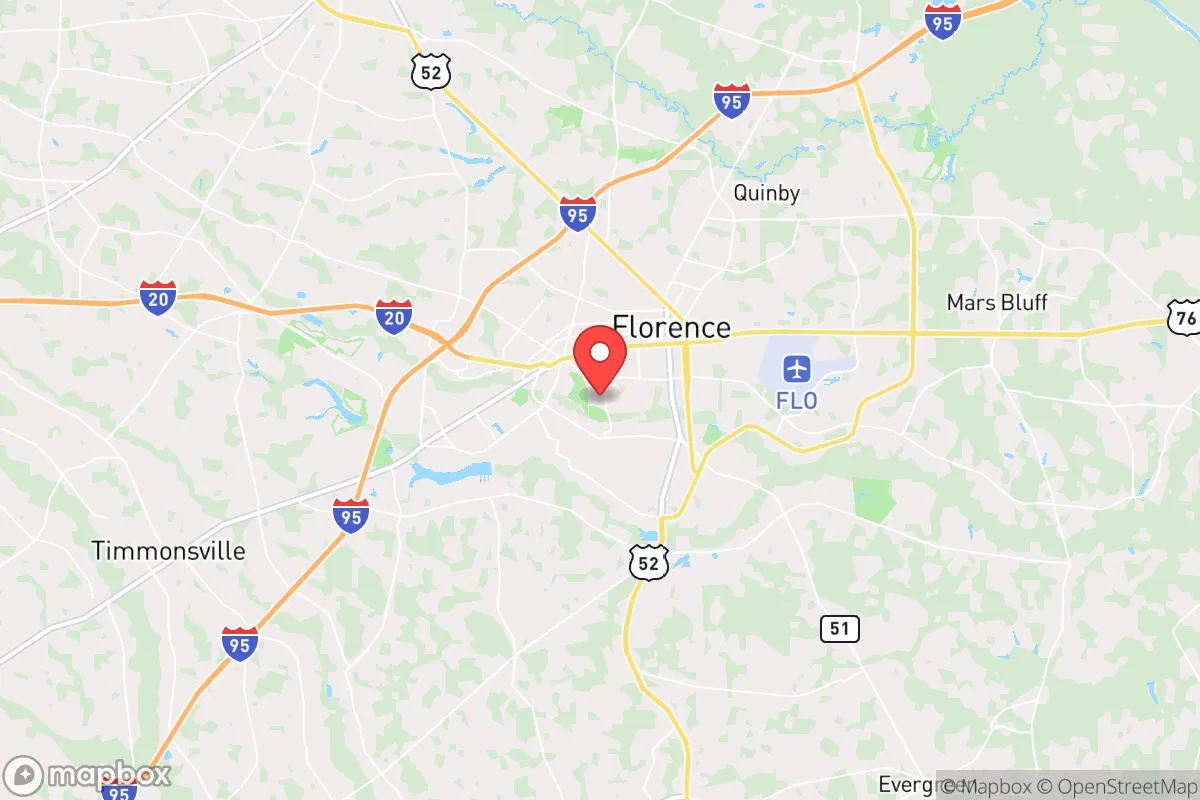
Florence, South Carolina, sits at the strategic crossroads of I-95 and I-20, roughly 80 miles from the coast and 70 miles from the state capital, Columbia. This positioning offers a meaningful buffer zone—close enough to access major medical and logistical hubs, yet far enough from the immediate blast radius of coastal hurricane surges or the concentrated chaos of a major metropolitan collapse. For a relocator with a prepper mindset, Florence presents a mixed bag: genuine geographic advantages in terms of inland safety and transportation redundancy, but also real exposure to the vulnerabilities that come with being a regional transportation and logistics nexus.
Geographic position and natural advantages for long-term security
Florence’s primary strategic asset is its location at the intersection of two major interstate corridors. I-95 runs the entire Eastern Seaboard, while I-20 provides a direct line to Atlanta and the Deep South. This gives a relocator multiple evacuation routes in any direction—north toward the Piedmont, west toward the mountains, or south toward the coast if necessary. The city itself sits on the fall line, where the coastal plain meets the Sandhills region, meaning the terrain is gently rolling rather than flat and flood-prone. The Pee Dee River runs just east of town, and the Great Pee Dee River is about 20 miles east, providing a natural water source that is less likely to be contaminated by upstream industrial runoff than rivers near Charlotte or Columbia. The area’s water table is generally high, and private wells are common in the surrounding rural counties (Florence, Darlington, and Marion), which is a significant plus for off-grid water security. The climate is humid subtropical, with a growing season of roughly 220 days—long enough for serious food production, though the summer heat and humidity require careful planning for root cellars and food storage.
Risks, exposures, and proximity to fallout-relevant landmarks
The biggest downside to Florence is its role as a regional transportation and logistics hub. The city is home to a major CSX rail yard and a large intermodal facility, meaning it’s a natural target for any disruption to supply chains—whether from cyberattacks, labor strikes, or civil unrest. During a national emergency, I-95 and I-20 would become chokepoints, and Florence would likely see heavy military or law enforcement traffic, as well as refugees fleeing the coast. The city is also within 70 miles of the Savannah River Site, a nuclear weapons facility and waste storage site near Aiken, SC. While a catastrophic release from SRS is statistically unlikely, the proximity is a real concern for anyone serious about fallout avoidance. Additionally, the McQueen Branch of the Pee Dee River flows through the city, and the area has a history of flooding from tropical systems—Hurricane Florence in 2018 caused significant damage, and the region is prone to flash flooding during heavy rain events. The local power grid is served by Duke Energy and Santee Cooper, both of which have faced reliability issues in recent years, including rolling blackouts during winter storms. For a prepper, the combination of transportation choke points, nuclear proximity, and flood risk means that a Florence retreat requires serious hardening: a well-stocked bug-out vehicle, a secondary water filtration system, and a plan for self-sufficiency during a multi-day grid outage.
Practical resilience for a relocator: food, water, energy, and defensibility
On the practical side, Florence offers some genuine advantages for a self-sufficient lifestyle. The surrounding rural areas—particularly in Florence County and neighboring Darlington County—have affordable land with good soil for gardening and small-scale farming. The average price per acre for undeveloped land in the region is around $3,000–$5,000, which is reasonable compared to the Upstate or the Lowcountry. The growing season is long enough for two crops of most vegetables, and the area is suitable for raising chickens, goats, and even cattle. Water is relatively easy to access via shallow wells (30–60 feet in most places), and the Pee Dee River system provides a backup source if properly filtered. Solar potential is decent—the region averages about 5.5 peak sun hours per day, enough for a modest off-grid solar array with battery storage. The local climate is mild enough that heating needs are moderate, but cooling in the summer is a significant energy draw; a well-designed passive solar home or a wood-burning stove for winter backup is a smart investment. Defensibility is a mixed bag: the terrain is open and relatively flat, so a rural property with a long driveway and good sightlines is preferable to a suburban subdivision. The local law enforcement presence is adequate but not overwhelming—the Florence Police Department has about 150 officers for a city of 40,000, and the county sheriff’s office covers the rest. In a crisis, response times in rural areas could be 20–30 minutes or more, so personal security measures—fencing, cameras, a reliable firearm—are essential. The local hospital system, McLeod Health, is a major regional medical center with a Level II trauma center, which is a significant plus for any medical emergency, but it would also be a magnet for people during a disaster, so proximity to it is a double-edged sword.
The overall strategic picture for Florence is one of cautious viability. It is not a remote mountain redoubt, nor is it a coastal city that will be underwater in a decade. It is a middle-ground location that offers genuine logistical advantages—multiple evacuation routes, affordable land, decent water and growing conditions—but also carries real risks from its role as a transportation hub and its proximity to nuclear infrastructure. For a conservative-leaning relocator who values community, self-reliance, and a slower pace of life, Florence can work, but only with deliberate planning. The key is to buy land outside the city limits—ideally 10–15 miles out, in a rural area with good road access but low population density—and to invest in redundancy: a backup generator, a well, a large garden, and a solid network of like-minded neighbors. The local culture is generally conservative and church-oriented, which can be a stabilizing factor during times of stress. If you are looking for a place that balances access to resources with a reasonable buffer from the worst of the chaos, Florence deserves a serious look—but it is not a set-it-and-forget-it location. It requires active preparation and a clear-eyed understanding of both its strengths and its vulnerabilities.

* Values derived from national, state, county, city and local statistics and may differ in a specific area. Last updated: 2026-04-24T20:52:47.000Z
Narrative content on this page is AI-generated and may contain mistakes. Verify any details that matter before acting on them.
ReloMaps may earn a commission from affiliate links at no extra cost to you.

